Dana Nightingale
Where to hear and read about Dana Nightingale1 episode or test
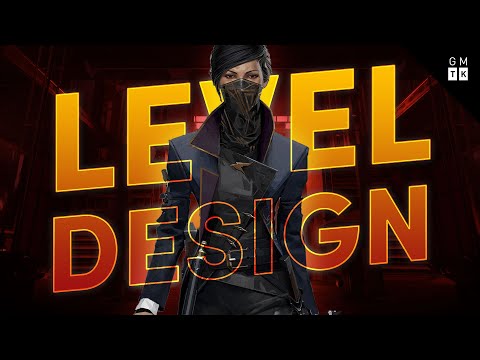
Dana Nightingale is a level designer at Arkane who designed the Clockwork Mansion in Dishonored 2. The thing most worth learning from her is to prototype the core idea first, let players decide what to do from what they notice, and cut scope to the most conservative version that still serves the goal.
What you notice completely dictates what your goals are now.
Dishonored 2 Devs Explain the Clockwork Mansion
Dana Nightingale: the story and the lessons
1How Dana Nightingale built the Clockwork Mansion
Nightingale picked the clockwork mansion on sight and began prototyping with almost nothing fixed. She was shown a long list of level ideas right after finishing The Knife of Dunwall. Only three things were certain: the inventor, Sokolov's role and the clockwork soldiers.
There was no layout and no set challenges, only different moving rooms and layouts. She designed the layout and gameplay beats with flowcharts and prototypes, while artist David Di Giacomo built the mansion and its mechanisms.
She paired the level's theme with a mechanic that lets players enter the machinery. From day zero the mansion split the space for normal people from the space where the supernatural assassin can go. That matched the Dishonored idea of a threshold between the two.
The mansion goes a step further by letting players move inside the mechanisms. She describes it as the divide between 'the space for normal people and the space where the player could go in the guts of the building.'
She prototyped the transitions of the moving rooms, not just their two end states. Every prototype was built around all the possibilities during a transformation. That is why the changes are slow and why players can slip through gaps in the walls while rooms move.
The in-between becomes a playable space.
She grew Jindosh's bedroom from one human whim. The seed was a bed where Jindosh pulls a lever, waits three seconds and finds a bathtub behind him. She asked what he would find comfortable, then built three rooms around a central rotating part, each with two configurations.
Two tricky hidden closets reward players who watch how the mechanisms move.
2How Nightingale lets player curiosity drive a level
Nightingale makes what the player notices decide their goal. In the visitor's area an arc pylon blocks the way, with rooms on both sides. A player who sees only the elevator aims to get past the pylon, while a grating with a hole or an openable window sets a different goal.
The only player fully blocked is one who takes in nothing, which pushes people to look around.
She splits a dense map into zones with strong thresholds. The mansion has four clean sections, five with the assessment chamber, and no room has more than three normal ways in or out. Arkane calls it the door effect.
Going through a door lets players forget what is behind them and process what is ahead, even though the map is extremely interconnected.
She wants the level to be a tool the player masters, not an enemy. An early version was a maze that needed destination panels to navigate. She is glad it was dropped, because mastery is impossible when the level is hostile.
In the shipped version players use the transformations deliberately to reach their goals.
She gives cautious and reckless players the same information through different channels. Careful players hear a guard say 'They're blind but they can still hear.' Players who dive in learn from the soldiers' animations and audio cues.
As she puts it, both players 'wind up with the same information' but get it the way they prefer to play.
She leaves the order of play to the player and still plans for speedrunners. For almost everyone, going for Sokolov or Jindosh first comes down to curiosity. Taking Sokolov first makes guards come out of the elevator and soldiers emerge from the walls, because Jindosh is watching and reacting.
Only speedrunners, the 0.1% case, reliably go Jindosh first, since Sokolov must be carried to the exit last. She calls the watching Jindosh 'SHODAN-ness'.
3Nightingale on enemies, antagonists and player reactions
She builds on how players naturally react instead of fighting it. The first idea was an immediately hostile clockwork soldier, which felt overwhelming. She then planned it as neutral, but about 80 percent of players hid anyway, so the team made hiding work.
If the soldier doesn't spot you, Jindosh wonders aloud about a misfiring mechanism, which validates a perfect stealth run. Her question was 'What do we give them to validate this reaction?'
She asked for an easier first version of a hard enemy. The first clockwork soldier could see behind itself and attack in all directions, so the map had no difficulty ramp. She asked the enemy teams for a simpler type for early encounters, which produced two soldier types.
The level's goal of non-human enemies lets players use every tool without touching the chaos system.
She introduces antagonists early, when players cannot fight them. In Dishonored 1 players often saw the target briefly or found them dead. Jindosh speaks to Emily at the start and taunts her throughout.
His loudspeaker taunts are openly modelled on SHODAN from System Shock 2.
She changed the clockwork soldier look once feedback converged. The trailer design stayed in the game for a long time. Feedback from many sources lined up on the same trend, that the soldiers looked goofy, so the look was redesigned.
The old heads now sit in the level as target practice.
4What Nightingale cut and how the level stayed whole
She shrank ideas to the most conservative version that still met the goal. The assessment chamber went from half the map, an obstacle course of ethical situations, to a small rat maze that still answers where Jindosh keeps Sokolov. The wind corridor and a pneumatic tube for Sokolov were also cut for scope.
Her summary: 'we made the most conservative version of this that still achieves the original goal.' She found the ethics course very on the nose for the game.
She made Sokolov tougher as the cheap fix after the bigger idea was cut. She didn't like carrying him out while keeping him alive, so she designed several routes and methods to avoid that. Making him resistant to damage kept the escape fun.
She argued for a third outcome for Jindosh, but it cost too much. Creative direction asked for electroshock to stop him inventing. She wanted players to be able to leave with Sokolov, arguing that choosing not to act is as much a choice as acting.
It was cut because every outcome needed lines from The Outsider and recordings at the Duke's palace. The lesson is to weigh branching outcomes against what they cost downstream.
She worked around technical limits with precise cuts and a large team. Rotating walls did not work well with AI pathfinding. Precision cutting and a huge team kept the level from feeling compromised.
Two almost indie teams worked inside the studio, one on Crack in the Slab and one on the Clockwork Mansion.
She kept detail players may never notice. The lab mechanism works realistically even though many players miss it. She argues unnoticed detail feeds the overall feeling little by little.
'Even if a player isn't consciously aware of everything that's happening it all soaks in.'
Dishonored 2 Devs Explain the Clockwork Mansion
Shows how Arkane planned and built the shape-shifting Clockwork Mansion: prototype first, give players several ways to read and use the space, and cut scope without losing the core idea. The worth-watching example is the mansion itself, from its rotating rooms to the ideas that were dropped, like the ethics obstacle course and the maze with destination panels.
Nightingale picked the clockwork mansion on sight and began prototyping with almost nothing fixed. She was shown a long list of level ideas right after finishing The Knife of Dunwall. Only three things were certain: the inventor, Sokolov's role and the clockwork soldiers.
There was no layout and no set challenges, only different moving rooms and layouts. She designed the layout and gameplay beats with flowcharts and prototypes, while artist David Di Giacomo built the mansion and its mechanisms.
She paired the level's theme with a mechanic that lets players enter the machinery. From day zero the mansion split the space for normal people from the space where the supernatural assassin can go. That matched the Dishonored idea of a threshold between the two.
The mansion goes a step further by letting players move inside the mechanisms. She describes it as the divide between 'the space for normal people and the space where the player could go in the guts of the building.'
She prototyped the transitions of the moving rooms, not just their two end states. Every prototype was built around all the possibilities during a transformation. That is why the changes are slow and why players can slip through gaps in the walls while rooms move.
The in-between becomes a playable space.
She grew Jindosh's bedroom from one human whim. The seed was a bed where Jindosh pulls a lever, waits three seconds and finds a bathtub behind him. She asked what he would find comfortable, then built three rooms around a central rotating part, each with two configurations.
Two tricky hidden closets reward players who watch how the mechanisms move.
Nightingale makes what the player notices decide their goal. In the visitor's area an arc pylon blocks the way, with rooms on both sides. A player who sees only the elevator aims to get past the pylon, while a grating with a hole or an openable window sets a different goal.
The only player fully blocked is one who takes in nothing, which pushes people to look around.
She splits a dense map into zones with strong thresholds. The mansion has four clean sections, five with the assessment chamber, and no room has more than three normal ways in or out. Arkane calls it the door effect.
Going through a door lets players forget what is behind them and process what is ahead, even though the map is extremely interconnected.
She wants the level to be a tool the player masters, not an enemy. An early version was a maze that needed destination panels to navigate. She is glad it was dropped, because mastery is impossible when the level is hostile.
In the shipped version players use the transformations deliberately to reach their goals.
She gives cautious and reckless players the same information through different channels. Careful players hear a guard say 'They're blind but they can still hear.' Players who dive in learn from the soldiers' animations and audio cues.
As she puts it, both players 'wind up with the same information' but get it the way they prefer to play.
She leaves the order of play to the player and still plans for speedrunners. For almost everyone, going for Sokolov or Jindosh first comes down to curiosity. Taking Sokolov first makes guards come out of the elevator and soldiers emerge from the walls, because Jindosh is watching and reacting.
Only speedrunners, the 0.1% case, reliably go Jindosh first, since Sokolov must be carried to the exit last. She calls the watching Jindosh 'SHODAN-ness'.
She builds on how players naturally react instead of fighting it. The first idea was an immediately hostile clockwork soldier, which felt overwhelming. She then planned it as neutral, but about 80 percent of players hid anyway, so the team made hiding work.
If the soldier doesn't spot you, Jindosh wonders aloud about a misfiring mechanism, which validates a perfect stealth run. Her question was 'What do we give them to validate this reaction?'
She asked for an easier first version of a hard enemy. The first clockwork soldier could see behind itself and attack in all directions, so the map had no difficulty ramp. She asked the enemy teams for a simpler type for early encounters, which produced two soldier types.
The level's goal of non-human enemies lets players use every tool without touching the chaos system.
She introduces antagonists early, when players cannot fight them. In Dishonored 1 players often saw the target briefly or found them dead. Jindosh speaks to Emily at the start and taunts her throughout.
His loudspeaker taunts are openly modelled on SHODAN from System Shock 2.
She changed the clockwork soldier look once feedback converged. The trailer design stayed in the game for a long time. Feedback from many sources lined up on the same trend, that the soldiers looked goofy, so the look was redesigned.
The old heads now sit in the level as target practice.
She shrank ideas to the most conservative version that still met the goal. The assessment chamber went from half the map, an obstacle course of ethical situations, to a small rat maze that still answers where Jindosh keeps Sokolov. The wind corridor and a pneumatic tube for Sokolov were also cut for scope.
Her summary: 'we made the most conservative version of this that still achieves the original goal.' She found the ethics course very on the nose for the game.
She made Sokolov tougher as the cheap fix after the bigger idea was cut. She didn't like carrying him out while keeping him alive, so she designed several routes and methods to avoid that. Making him resistant to damage kept the escape fun.
She argued for a third outcome for Jindosh, but it cost too much. Creative direction asked for electroshock to stop him inventing. She wanted players to be able to leave with Sokolov, arguing that choosing not to act is as much a choice as acting.
It was cut because every outcome needed lines from The Outsider and recordings at the Duke's palace. The lesson is to weigh branching outcomes against what they cost downstream.
She worked around technical limits with precise cuts and a large team. Rotating walls did not work well with AI pathfinding. Precision cutting and a huge team kept the level from feeling compromised.
Two almost indie teams worked inside the studio, one on Crack in the Slab and one on the Clockwork Mansion.
She kept detail players may never notice. The lab mechanism works realistically even though many players miss it. She argues unnoticed detail feeds the overall feeling little by little.
'Even if a player isn't consciously aware of everything that's happening it all soaks in.'