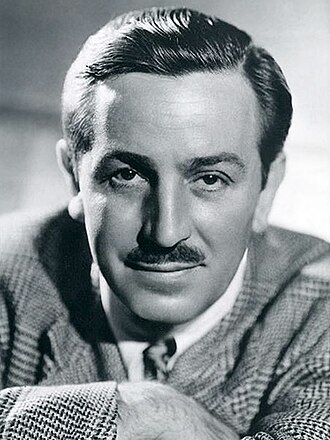
Walt Disney
Founders of the Walt Disney Company
Where to hear and read about Walt Disney2 episodes and tests

 AcquiredThe Walt Disney Company: The most successful enterprise for monetizing human nostalgia

 FoundersThe Biography of Walt Disney
Walt Disney was the animator and founder who, with his brother Roy, built the first company to turn one set of owned characters into films, merchandise, television and theme parks. The lesson most worth taking from him is that owning timeless IP and refusing to compromise on its quality can compound for a century, though his repeated all-in bets nearly sank the company more than once.
We did not know whether the public would go for a cartoon feature, but we were darn sure that audiences would not buy a bad cartoon feature.
The Walt Disney Company: The most successful enterprise for monetizing human nostalgia
Walt Disney: the story and the lessons
1Walt Disney's childhood and the link between art and money
A harsh, failing father pushed Walt toward worlds he could control. Elias Disney was a carpenter, farmer, newspaper route owner and failed jelly factory investor who moved the family from town to town. He made nine-year-old Walt deliver the Kansas City Star and kept his sons' pay.
Walt still woke in a sweat from route nightmares 40 years later. At 14 he held his father's arms when Elias came at him with a hammer, and Elias never touched him again.
Walt learned as a small boy that drawing could earn money. An aunt gave him a Big Chief tablet at six or seven, and a neighbor paid him a nickel for a horse drawing. In Kansas City a barber paid him a nickel or a free haircut per drawing.
A teacher judged him the second dumbest in his class because he sat in a corner drawing. He filled textbook margins and flipped the pages to make the pictures move.
He kept choosing the uncertain path over his father's stable one. He left high school to drive a Red Cross ambulance in France at 17, then turned down a job at his father's jelly factory.
In France he picked up the smoking habit that later killed him. Ray Kroc, in the same unit, remembered a strange duck who stayed in camp drawing while others chased girls.
Walt broke the cycle of violence with his own daughters. Though beaten as a boy, he was a devoted father who chased his daughters around the house as the Snow White witch.
His daughter Diane said, "I thought my father was the strongest man in the world and the most fun."
2Why Walt Disney chose animation and how he went broke twice
He picked animation because he could become the best at it. Animation was barely 20 years old and few had expertise, unlike crowded newspaper cartooning or oil painting.
He built his own curriculum, reading the only animation book in the Kansas City library and working nights in a garage studio. The form also mixed art with technology, cameras and film.
His self-belief came before his skill. At 18 friends described him as having "absolute faith in himself." He took $50 a month at a commercial art shop, where he met Ub Iwerks.
Between poker games he practiced his signature, expecting it to be world famous.
Laugh-O-Gram failed because audiences tired of cartoons. The silent shorts had no real characters, and only 23% of theater managers said audiences liked cartoons. Walt went bankrupt in 1923.
He slept in his office, ate cold beans and showered at the YMCA. A colleague said, "I never once heard Walt say anything that would sound like defeat."
He changed his target, not his aim, and moved to Hollywood. He sold his camera for a train ticket and arrived in 1923 with a borrowed suit. Margaret Winkler ordered his live-action and cartoon Alice comedies at $1,500 to $1,800 each, founding the Disney Brothers Studio.
Roy ran the business and Walt the creative side. Roy was in a tuberculosis ward when Walt showed him the contract, and he got up and left. "There's nothing wrong with my aim I got to change my target."
3How losing Oswald taught Walt Disney to own everything
A distributor took Walt's hit character and nearly all his animators. In 1928 Charles Mintz secretly signed most of the animators, offered $500 less per short, and Universal owned Oswald the Lucky Rabbit. The studio's value fell to effectively zero in one meeting.
Walt had no IP, no staff contracts and no customer contract, and still had to finish the Oswald contract. Disney only got Oswald back in 2006.
He cared about the product, not the business, and paid for it. Walt was naive about people and a demanding taskmaster, which made his staff easy to turn.
His conclusion: "You had to control what you had or it could be taken from you." He later cut out middlemen and dealt with distributors directly.
Disney never sold its catalog afterward. Owning characters outright, unlike rivals who share IP, let the catalog compound for decades.
4How Walt Disney made Mickey a star with sound and his own name
Mickey was a deliberate redesign of Oswald, built to be owned. Walt told of sketching Mortimer Mouse on the train home, and Lillian renamed him Mickey. Iwerks most likely drew the first Mickeys.
Walt also voiced Mickey himself for about 20 years.
Copying failed until synchronized sound gave Mickey life. The first two silent Mickey shorts found no distributor. Steamboat Willie, with truly synced sound, premiered November 18, 1928.
Other animators called sound in cartoons unnatural. Walt reasoned that if live action had sound, cartoons should too, and at the test screening kept saying, "This is it. We've got it."
He bet his house and car and bypassed cautious distributors. Walt and Roy took mortgages and second mortgages, Walt sold his car, and he paid $1,000 to rent the Colony Theater for the premiere.
A Lifesavers lecture made him put his name on every short. A distributor held up Lifesavers and told him, "They don't know Walt Disney and they don't know your mouse." Every Mickey short then carried his name.
When Pat Powers lured Iwerks away in 1930, audiences still asked for Walt Disney cartoons.
He refused to sell the studio even when he badly needed money. After Steamboat Willie distributors wanted to buy the whole studio, and Walt said no because he wanted to be the king of animation.
5The Disney flywheel: merchandise, clubs and comics
Walt's model was great IP, saturated, then pushed into side businesses. Characters spread into comics, merchandise, books and clubs that kept them visible without overexposing the core films.
Side businesses can run at a lower quality bar, which lets the core stay scarce and excellent. Rushing core sequels, as with Marvel, tires audiences.
Animated characters work best because they never age or ask for a cut. Live action IP like Davy Crockett or James Bond fades or needs reboots, while "Mickey is always available to work."
Kay Kamen's licensing deal made merchandise bigger than the films. After a handshake $300 license left Disney blind to its own sales, Kamen became exclusive agent: Disney took 60% of the first $100,000 in royalties, then 50/50. Sales hit $6 million in six months and $70 million a year by 1935.
The Ingersoll Mickey watch sold 2.5 million units in two years and saved a near-bankrupt company. Royalties passed film rentals around 1934, when United Artists advanced $15,000 per short that cost Walt over $30,000.
A theater manager's idea became the Mickey Mouse Club. In 1929 a Fox Dome manager saw about a thousand kids return every weekend and proposed a club. Walt franchised it for a $25 charter.
800 clubs had over a million members, more than the Boy and Girl Scouts combined.
A daily comic strip gave Mickey free advertising. Launched January 1930 with King Features in 60 US papers and 20 other countries, drawn by Floyd Gottfredson for 45 years.
It was never a big profit driver but marketed the films daily.
6Why Walt Disney bet the studio on Snow White
Everyone called a feature cartoon a folly, and Walt went all in. Roy warned it would bankrupt the studio. Walt refused to compromise on money, talent or time.
He estimated $250,000 and kept borrowing from Bank of America, $630,000 and then another $650,000. "I had to mortgage everything I owned including Mickey Mouse and Donald Duck."
The making of Snow White was industrial craft. It took three years, 750 artists and 2 million sketches, with actors filmed in costume as reference and the multiplane camera adding depth.
Demand for animators outran supply, so letters to art schools drew 30,000 applicants over a decade.
Walt's storytelling sold even his banker. After a silent viewing of the rough cut, banker Rosenberg told him, "that thing is going to make you a handful of money."
The hit paid more through the flywheel than at the box office. Snow White cost $1.5 million and rented for $8 million, but after theaters, distributor and debt about $2.2 million was left.
The dwarfs' distinct personalities softened the tale and made seven characters to sell. There were 2,183 Snow White products, including 16.5 million drinking glasses, and the first soundtrack album.
Triumph came alongside the worst loss of his life. His mother Flora died on November 26, 1938 of carbon monoxide from a faulty furnace in the house he bought her.
Walt never spoke of it again.
7Walt Disney's overreach, the 1941 strike and the road back
Walt built more studio and slate than the company could carry. He built the $3 million Burbank campus and started Pinocchio, Bambi and Fantasia at once, leaving Disney $8 million in the hole. War closed Europe and Pinocchio lost over $1 million.
Fantasia recouped only $325,000 of $2.3 million in its first run, though it later became a timeless hit.
Selling 30% of the company left him feeling control had slipped. In April 1940 Disney sold $3.875 million of convertible preferred stock. Henry Ford told him, "Walt, if you sold any of it, you should have sold all of it."
Later he snapped, "You never win with the bankers."
A three-hour speech turned unrest into a strike that broke his bond. Facing a $15,000 a week cost cap, Walt told animators the strong survive and the weak fall by the way. The guild struck on May 29, 1941.
He left for Latin America while Roy settled, and staff fell from 1,200 to under 700. A labor magazine said the speech recruited more members than a year of campaigning.
Cash-starved, Disney invented the seven-year re-release cycle. The 1944 Snow White re-release earned $3 million on a few hundred thousand dollars of cost.
A new generation of children had grown into the audience. Roy said, "Our product is practically eternal."
Walt forced Cinderella with an ultimatum and it restarted the flywheel. He threatened to sell the company, Roy raised $2 million in 1950, and Cinderella earned about $8 million in first-year rentals on $2.2 million.
Every scene was shot in live action first because "We can't afford to animate it and then change it."
8How Walt Disney financed and built Disneyland
A model train obsession became the seed of Disneyland. In 1950 he spent $50,000 on a half-mile backyard railroad, built with Roger Broggie, who became the first Imagineer.
After the strike and war he spent about half a decade depressed, searching for a new obsession, and refused to repeat himself: "You can't top pigs with pigs."
When the board said no, he started his own company. In 1952 he formed WED Enterprises and pulled animators onto the park. He borrowed against his life insurance, took another mortgage and loans from employees.
A 1953 cost-plus contract let the company fund WED. He said, "It was just fun to get back into that small scale again."
He saw television as an ally while Hollywood feared it. He broke with United Artists rather than give up his TV rights when only about 4,000 TVs existed.
"It's not the enemy of the motion picture it's its Ally."
ABC funded the park because it badly needed a hit show. ABC put in $500,000 of equity, guaranteed $4.5 million of loans and paid $5 million a year for a Disneyland series, while Walt kept creative control.
The show ranked second to I Love Lucy, and 83 million watched the opening. Davy Crockett sold 10 million coonskin caps.
He made detail the product and hired no park veterans. Every operator told him it would fail, which made him happier. He insisted on stained glass over cut glass: "if we lose the detail we lose it all."
Staff were cast, not hired. The park was built in 11 months, with cost rising from $5 million to $17 million.
A pleasant park tripled what each visitor spent. Disneyland drew 3.6 million visitors in its first year and over 4 million in its second, more than the Grand Canyon or Yellowstone.
SRI's Harrison Price said "he tripled per capita expenditures because he tripled time." Parks and cruises now earn about $10 billion of profit on $36 billion of revenue.
9How Walt Disney led: excellence, control and divine discontent
Excellence was Walt's only business strategy. He put every dollar back into quality and believed a product so good would make the public demand Disney pictures.
Warren Buffett used Disney as his example of a brand with something special in customers' minds.
He trained young artists rather than hire veterans. He hired for enthusiasm over experience, ran night classes and trained over a thousand artists himself.
"The biggest difference between the Disney Studio and every other Animation Studio was not in preparation or specialization it was an expectation."
Staff felt like an elite team and treated him like a prophet. One said they felt like West Point's elite class, another that "We hated to go home at night."
He led by intuition, so staff had to guess his wishes by "Osmosis."
He refused to delegate creative authority. He memorized the studio's inventory down to light bulbs and held that a studio cannot be run by a committee.
Producers and writers named this as their most common complaint.
His perfectionism raised the industry and wore him down. Endless analysis produced tools other studios adopted and the first story department. He could not watch finished films because he saw only flaws.
He had multiple breakdowns. Ward Kimball said Walt never tried to make money, only something he could be proud of.
10Walt Disney's last bet and what happened after him
Walt's final dream was a city, not another park. Epcot was planned as a domed city for 20,000 residents on 27,000 acres in Florida, tested at the 1964 World's Fair.
He died mid-bet, two months after pitching Epcot on film. Doctors found a lung tumor in November 1966, and he died on December 15, ten days after turning 65.
Even in hospital he was going over Epcot drawings.
After Walt and Roy, the company harvested parks and lost its core. Roy built the Magic Kingdom for $400 million with no debt and no city. By 1984 parks and products earned $250 million of operating income while film and TV earned $2.2 million.
Animation staff fell from about 500 to 125 and raiders circled. As one host put it, "the core is rotting."
The Walt Disney Company: The most successful enterprise for monetizing human nostalgia
Walt Disney's era shows how an artist-led company can turn timeless animated IP into a business that earns from films, merchandise, television and parks, and why that took repeated all-in bets that nearly sank it. The decisions that make it worth hearing are Snow White, the Kay Kamen merchandise deal and the ABC-financed Disneyland.
A harsh, failing father pushed Walt toward worlds he could control. Elias Disney was a carpenter, farmer, newspaper route owner and failed jelly factory investor who moved the family from town to town. He made nine-year-old Walt deliver the Kansas City Star and kept his sons' pay.
Walt still woke in a sweat from route nightmares 40 years later. At 14 he held his father's arms when Elias came at him with a hammer, and Elias never touched him again.
Walt learned as a small boy that drawing could earn money. An aunt gave him a Big Chief tablet at six or seven, and a neighbor paid him a nickel for a horse drawing. In Kansas City a barber paid him a nickel or a free haircut per drawing.
A teacher judged him the second dumbest in his class because he sat in a corner drawing. He filled textbook margins and flipped the pages to make the pictures move.
He kept choosing the uncertain path over his father's stable one. He left high school to drive a Red Cross ambulance in France at 17, then turned down a job at his father's jelly factory.
In France he picked up the smoking habit that later killed him. Ray Kroc, in the same unit, remembered a strange duck who stayed in camp drawing while others chased girls.
He picked animation because he could become the best at it. Animation was barely 20 years old and few had expertise, unlike crowded newspaper cartooning or oil painting.
He built his own curriculum, reading the only animation book in the Kansas City library and working nights in a garage studio. The form also mixed art with technology, cameras and film.
Laugh-O-Gram failed because audiences tired of cartoons. The silent shorts had no real characters, and only 23% of theater managers said audiences liked cartoons. Walt went bankrupt in 1923.
He slept in his office, ate cold beans and showered at the YMCA. A colleague said, "I never once heard Walt say anything that would sound like defeat."
He changed his target, not his aim, and moved to Hollywood. He sold his camera for a train ticket and arrived in 1923 with a borrowed suit. Margaret Winkler ordered his live-action and cartoon Alice comedies at $1,500 to $1,800 each, founding the Disney Brothers Studio.
Roy ran the business and Walt the creative side. Roy was in a tuberculosis ward when Walt showed him the contract, and he got up and left. "There's nothing wrong with my aim I got to change my target."
A distributor took Walt's hit character and nearly all his animators. In 1928 Charles Mintz secretly signed most of the animators, offered $500 less per short, and Universal owned Oswald the Lucky Rabbit. The studio's value fell to effectively zero in one meeting.
Walt had no IP, no staff contracts and no customer contract, and still had to finish the Oswald contract. Disney only got Oswald back in 2006.
Disney never sold its catalog afterward. Owning characters outright, unlike rivals who share IP, let the catalog compound for decades.
Mickey was a deliberate redesign of Oswald, built to be owned. Walt told of sketching Mortimer Mouse on the train home, and Lillian renamed him Mickey. Iwerks most likely drew the first Mickeys.
Walt also voiced Mickey himself for about 20 years.
Copying failed until synchronized sound gave Mickey life. The first two silent Mickey shorts found no distributor. Steamboat Willie, with truly synced sound, premiered November 18, 1928.
Other animators called sound in cartoons unnatural. Walt reasoned that if live action had sound, cartoons should too, and at the test screening kept saying, "This is it. We've got it."
He bet his house and car and bypassed cautious distributors. Walt and Roy took mortgages and second mortgages, Walt sold his car, and he paid $1,000 to rent the Colony Theater for the premiere.
A Lifesavers lecture made him put his name on every short. A distributor held up Lifesavers and told him, "They don't know Walt Disney and they don't know your mouse." Every Mickey short then carried his name.
When Pat Powers lured Iwerks away in 1930, audiences still asked for Walt Disney cartoons.
Walt's model was great IP, saturated, then pushed into side businesses. Characters spread into comics, merchandise, books and clubs that kept them visible without overexposing the core films.
Side businesses can run at a lower quality bar, which lets the core stay scarce and excellent. Rushing core sequels, as with Marvel, tires audiences.
Animated characters work best because they never age or ask for a cut. Live action IP like Davy Crockett or James Bond fades or needs reboots, while "Mickey is always available to work."
Kay Kamen's licensing deal made merchandise bigger than the films. After a handshake $300 license left Disney blind to its own sales, Kamen became exclusive agent: Disney took 60% of the first $100,000 in royalties, then 50/50. Sales hit $6 million in six months and $70 million a year by 1935.
The Ingersoll Mickey watch sold 2.5 million units in two years and saved a near-bankrupt company. Royalties passed film rentals around 1934, when United Artists advanced $15,000 per short that cost Walt over $30,000.
A theater manager's idea became the Mickey Mouse Club. In 1929 a Fox Dome manager saw about a thousand kids return every weekend and proposed a club. Walt franchised it for a $25 charter.
800 clubs had over a million members, more than the Boy and Girl Scouts combined.
A daily comic strip gave Mickey free advertising. Launched January 1930 with King Features in 60 US papers and 20 other countries, drawn by Floyd Gottfredson for 45 years.
It was never a big profit driver but marketed the films daily.
Everyone called a feature cartoon a folly, and Walt went all in. Roy warned it would bankrupt the studio. Walt refused to compromise on money, talent or time.
He estimated $250,000 and kept borrowing from Bank of America, $630,000 and then another $650,000. "I had to mortgage everything I owned including Mickey Mouse and Donald Duck."
The making of Snow White was industrial craft. It took three years, 750 artists and 2 million sketches, with actors filmed in costume as reference and the multiplane camera adding depth.
Demand for animators outran supply, so letters to art schools drew 30,000 applicants over a decade.
The hit paid more through the flywheel than at the box office. Snow White cost $1.5 million and rented for $8 million, but after theaters, distributor and debt about $2.2 million was left.
The dwarfs' distinct personalities softened the tale and made seven characters to sell. There were 2,183 Snow White products, including 16.5 million drinking glasses, and the first soundtrack album.
Walt built more studio and slate than the company could carry. He built the $3 million Burbank campus and started Pinocchio, Bambi and Fantasia at once, leaving Disney $8 million in the hole. War closed Europe and Pinocchio lost over $1 million.
Fantasia recouped only $325,000 of $2.3 million in its first run, though it later became a timeless hit.
Selling 30% of the company left him feeling control had slipped. In April 1940 Disney sold $3.875 million of convertible preferred stock. Henry Ford told him, "Walt, if you sold any of it, you should have sold all of it."
Later he snapped, "You never win with the bankers."
A three-hour speech turned unrest into a strike that broke his bond. Facing a $15,000 a week cost cap, Walt told animators the strong survive and the weak fall by the way. The guild struck on May 29, 1941.
He left for Latin America while Roy settled, and staff fell from 1,200 to under 700. A labor magazine said the speech recruited more members than a year of campaigning.
Cash-starved, Disney invented the seven-year re-release cycle. The 1944 Snow White re-release earned $3 million on a few hundred thousand dollars of cost.
A new generation of children had grown into the audience. Roy said, "Our product is practically eternal."
Walt forced Cinderella with an ultimatum and it restarted the flywheel. He threatened to sell the company, Roy raised $2 million in 1950, and Cinderella earned about $8 million in first-year rentals on $2.2 million.
Every scene was shot in live action first because "We can't afford to animate it and then change it."
A model train obsession became the seed of Disneyland. In 1950 he spent $50,000 on a half-mile backyard railroad, built with Roger Broggie, who became the first Imagineer.
After the strike and war he spent about half a decade depressed, searching for a new obsession, and refused to repeat himself: "You can't top pigs with pigs."
When the board said no, he started his own company. In 1952 he formed WED Enterprises and pulled animators onto the park. He borrowed against his life insurance, took another mortgage and loans from employees.
A 1953 cost-plus contract let the company fund WED. He said, "It was just fun to get back into that small scale again."
ABC funded the park because it badly needed a hit show. ABC put in $500,000 of equity, guaranteed $4.5 million of loans and paid $5 million a year for a Disneyland series, while Walt kept creative control.
The show ranked second to I Love Lucy, and 83 million watched the opening. Davy Crockett sold 10 million coonskin caps.
He made detail the product and hired no park veterans. Every operator told him it would fail, which made him happier. He insisted on stained glass over cut glass: "if we lose the detail we lose it all."
Staff were cast, not hired. The park was built in 11 months, with cost rising from $5 million to $17 million.
A pleasant park tripled what each visitor spent. Disneyland drew 3.6 million visitors in its first year and over 4 million in its second, more than the Grand Canyon or Yellowstone.
SRI's Harrison Price said "he tripled per capita expenditures because he tripled time." Parks and cruises now earn about $10 billion of profit on $36 billion of revenue.
Walt's final dream was a city, not another park. Epcot was planned as a domed city for 20,000 residents on 27,000 acres in Florida, tested at the 1964 World's Fair.
He died mid-bet, two months after pitching Epcot on film. Doctors found a lung tumor in November 1966, and he died on December 15, ten days after turning 65.
Even in hospital he was going over Epcot drawings.
After Walt and Roy, the company harvested parks and lost its core. Roy built the Magic Kingdom for $400 million with no debt and no city. By 1984 parks and products earned $250 million of operating income while film and TV earned $2.2 million.
Animation staff fell from about 500 to 125 and raiders circled. As one host put it, "the core is rotting."
The Biography of Walt Disney
Walt Disney built himself first, using a will to escape a harsh childhood, then built a company on the single bet that quality was the only moat. The decision to mortgage everything on Snow White, and later to treat television as an ally to fund Disneyland, shows how an obsessive founder turned control and excellence into the first modern multimedia company.
A harsh, failing father pushed Walt toward worlds he could control. Elias Disney was a carpenter, farmer, newspaper route owner and failed jelly factory investor who moved the family from town to town. He made nine-year-old Walt deliver the Kansas City Star and kept his sons' pay.
Walt still woke in a sweat from route nightmares 40 years later. At 14 he held his father's arms when Elias came at him with a hammer, and Elias never touched him again.
Walt learned as a small boy that drawing could earn money. An aunt gave him a Big Chief tablet at six or seven, and a neighbor paid him a nickel for a horse drawing. In Kansas City a barber paid him a nickel or a free haircut per drawing.
A teacher judged him the second dumbest in his class because he sat in a corner drawing. He filled textbook margins and flipped the pages to make the pictures move.
He kept choosing the uncertain path over his father's stable one. He left high school to drive a Red Cross ambulance in France at 17, then turned down a job at his father's jelly factory.
In France he picked up the smoking habit that later killed him. Ray Kroc, in the same unit, remembered a strange duck who stayed in camp drawing while others chased girls.
Walt broke the cycle of violence with his own daughters. Though beaten as a boy, he was a devoted father who chased his daughters around the house as the Snow White witch.
His daughter Diane said, "I thought my father was the strongest man in the world and the most fun."
He picked animation because he could become the best at it. Animation was barely 20 years old and few had expertise, unlike crowded newspaper cartooning or oil painting.
He built his own curriculum, reading the only animation book in the Kansas City library and working nights in a garage studio. The form also mixed art with technology, cameras and film.
His self-belief came before his skill. At 18 friends described him as having "absolute faith in himself." He took $50 a month at a commercial art shop, where he met Ub Iwerks.
Between poker games he practiced his signature, expecting it to be world famous.
Laugh-O-Gram failed because audiences tired of cartoons. The silent shorts had no real characters, and only 23% of theater managers said audiences liked cartoons. Walt went bankrupt in 1923.
He slept in his office, ate cold beans and showered at the YMCA. A colleague said, "I never once heard Walt say anything that would sound like defeat."
He changed his target, not his aim, and moved to Hollywood. He sold his camera for a train ticket and arrived in 1923 with a borrowed suit. Margaret Winkler ordered his live-action and cartoon Alice comedies at $1,500 to $1,800 each, founding the Disney Brothers Studio.
Roy ran the business and Walt the creative side. Roy was in a tuberculosis ward when Walt showed him the contract, and he got up and left. "There's nothing wrong with my aim I got to change my target."
A distributor took Walt's hit character and nearly all his animators. In 1928 Charles Mintz secretly signed most of the animators, offered $500 less per short, and Universal owned Oswald the Lucky Rabbit. The studio's value fell to effectively zero in one meeting.
Walt had no IP, no staff contracts and no customer contract, and still had to finish the Oswald contract. Disney only got Oswald back in 2006.
He cared about the product, not the business, and paid for it. Walt was naive about people and a demanding taskmaster, which made his staff easy to turn.
His conclusion: "You had to control what you had or it could be taken from you." He later cut out middlemen and dealt with distributors directly.
Mickey was a deliberate redesign of Oswald, built to be owned. Walt told of sketching Mortimer Mouse on the train home, and Lillian renamed him Mickey. Iwerks most likely drew the first Mickeys.
Walt also voiced Mickey himself for about 20 years.
Copying failed until synchronized sound gave Mickey life. The first two silent Mickey shorts found no distributor. Steamboat Willie, with truly synced sound, premiered November 18, 1928.
Other animators called sound in cartoons unnatural. Walt reasoned that if live action had sound, cartoons should too, and at the test screening kept saying, "This is it. We've got it."
He bet his house and car and bypassed cautious distributors. Walt and Roy took mortgages and second mortgages, Walt sold his car, and he paid $1,000 to rent the Colony Theater for the premiere.
He refused to sell the studio even when he badly needed money. After Steamboat Willie distributors wanted to buy the whole studio, and Walt said no because he wanted to be the king of animation.
Kay Kamen's licensing deal made merchandise bigger than the films. After a handshake $300 license left Disney blind to its own sales, Kamen became exclusive agent: Disney took 60% of the first $100,000 in royalties, then 50/50. Sales hit $6 million in six months and $70 million a year by 1935.
The Ingersoll Mickey watch sold 2.5 million units in two years and saved a near-bankrupt company. Royalties passed film rentals around 1934, when United Artists advanced $15,000 per short that cost Walt over $30,000.
Everyone called a feature cartoon a folly, and Walt went all in. Roy warned it would bankrupt the studio. Walt refused to compromise on money, talent or time.
He estimated $250,000 and kept borrowing from Bank of America, $630,000 and then another $650,000. "I had to mortgage everything I owned including Mickey Mouse and Donald Duck."
The making of Snow White was industrial craft. It took three years, 750 artists and 2 million sketches, with actors filmed in costume as reference and the multiplane camera adding depth.
Demand for animators outran supply, so letters to art schools drew 30,000 applicants over a decade.
Walt's storytelling sold even his banker. After a silent viewing of the rough cut, banker Rosenberg told him, "that thing is going to make you a handful of money."
The hit paid more through the flywheel than at the box office. Snow White cost $1.5 million and rented for $8 million, but after theaters, distributor and debt about $2.2 million was left.
The dwarfs' distinct personalities softened the tale and made seven characters to sell. There were 2,183 Snow White products, including 16.5 million drinking glasses, and the first soundtrack album.
Triumph came alongside the worst loss of his life. His mother Flora died on November 26, 1938 of carbon monoxide from a faulty furnace in the house he bought her.
Walt never spoke of it again.
Selling 30% of the company left him feeling control had slipped. In April 1940 Disney sold $3.875 million of convertible preferred stock. Henry Ford told him, "Walt, if you sold any of it, you should have sold all of it."
Later he snapped, "You never win with the bankers."
A model train obsession became the seed of Disneyland. In 1950 he spent $50,000 on a half-mile backyard railroad, built with Roger Broggie, who became the first Imagineer.
After the strike and war he spent about half a decade depressed, searching for a new obsession, and refused to repeat himself: "You can't top pigs with pigs."
When the board said no, he started his own company. In 1952 he formed WED Enterprises and pulled animators onto the park. He borrowed against his life insurance, took another mortgage and loans from employees.
A 1953 cost-plus contract let the company fund WED. He said, "It was just fun to get back into that small scale again."
He saw television as an ally while Hollywood feared it. He broke with United Artists rather than give up his TV rights when only about 4,000 TVs existed.
"It's not the enemy of the motion picture it's its Ally."
He made detail the product and hired no park veterans. Every operator told him it would fail, which made him happier. He insisted on stained glass over cut glass: "if we lose the detail we lose it all."
Staff were cast, not hired. The park was built in 11 months, with cost rising from $5 million to $17 million.
Excellence was Walt's only business strategy. He put every dollar back into quality and believed a product so good would make the public demand Disney pictures.
Warren Buffett used Disney as his example of a brand with something special in customers' minds.
He trained young artists rather than hire veterans. He hired for enthusiasm over experience, ran night classes and trained over a thousand artists himself.
"The biggest difference between the Disney Studio and every other Animation Studio was not in preparation or specialization it was an expectation."
Staff felt like an elite team and treated him like a prophet. One said they felt like West Point's elite class, another that "We hated to go home at night."
He led by intuition, so staff had to guess his wishes by "Osmosis."
He refused to delegate creative authority. He memorized the studio's inventory down to light bulbs and held that a studio cannot be run by a committee.
Producers and writers named this as their most common complaint.
His perfectionism raised the industry and wore him down. Endless analysis produced tools other studios adopted and the first story department. He could not watch finished films because he saw only flaws.
He had multiple breakdowns. Ward Kimball said Walt never tried to make money, only something he could be proud of.
He died mid-bet, two months after pitching Epcot on film. Doctors found a lung tumor in November 1966, and he died on December 15, ten days after turning 65.
Even in hospital he was going over Epcot drawings.
 The Walt Disney Company