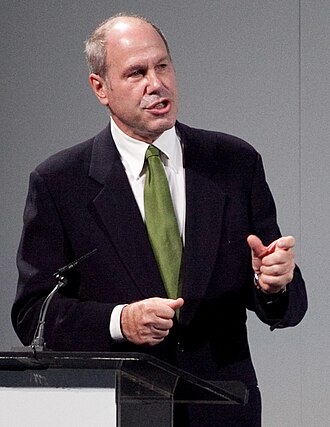
Michael Eisner
The executives who rebuilt Disney in 1984 and again after 2005
Where to hear and read about Michael Eisner1 episode or test

Michael Eisner was the Paramount executive who, with Frank Wells and Jeffrey Katzenberg, took over a near-broken Walt Disney Company in 1984 and grew its market cap from just under $2 billion to about $50 billion before a shareholder revolt pushed him out. His run shows how to multiply the value of great characters by pushing them into every new channel, and how fast that falls apart when key partners and lieutenants are lost.
We have no obligation to make art.
Disney: The Renaissance and the Empire
Michael Eisner: the story and the lessons
1How Michael Eisner took over a broken Disney in 1984
Eisner inherited a Disney worth more in pieces than whole. The stock fell from $82 to $52 in 1983, earnings had dropped 19% in 1982 and 7% in 1983, and offers were on the table to sell the film library to MGM and the parks to hotel operators.
In 1984 parks and consumer products made about $250 million in profit while film and TV made $2 million. Fear of a breakup had already pushed Disney into a defensive deal that handed about a quarter of the company to the Bass family.
A boardroom coup put Eisner and Frank Wells in charge within 14 days. Roy E. Disney, Stanley Gold and the Bass family ousted CEO Ron Miller on September 7, 1984. Wells, Gold's old mentor, would not come alone and named Eisner as his partner.
Eisner had just missed the top job at Paramount. He insisted on being chairman so Disney would look creatively led, and Wells agreed as long as both reported to the board.
Eisner brought a story-first, singles-and-doubles approach from Paramount. At Paramount that strategy produced Indiana Jones, Grease, Flashdance and Footloose by putting concept ahead of stars. His memo said a film needs a strong concept first and that money often requires art or a statement.
Katzenberg later wrote that celebrity can open a film but cannot carry it. Eisner had never seen Snow White, yet wore a Mickey Mouse tie.
2How Eisner paid for and rebuilt Disney's studios
Eisner and Wells raised frozen park prices to fund the turnaround. Ticket prices had barely moved since Walt died, even through 1970s inflation, and parking was still $1. Since park operations did not change, the increase went straight to profit and funded the live-action push.
Silver Screen Partners separately financed all 75 films of the next eight years.
Most of Eisner's early live-action films made money. 27 of the first 33 films were profitable, including Pretty Woman, Three Men and a Baby and Good Morning, Vietnam.
Eisner kept animation alive because Roy E. Disney demanded it. Disney had released only three animated films between 1971 and 1984. Roy made Eisner and Wells promise not to kill animation and became its chairman.
Eisner asked Katzenberg what happened behind the ink and paint door, then admitted, "Neither do I." Peter Schneider took the job saying, "You can't fall off the first floor."
Under Eisner, Disney cartoons became Broadway-style musicals. Katzenberg recruited lyricist Howard Ashman, who brought composer Alan Menken and stage structure like the "I want" song. Beauty and the Beast grossed $330 million on $25 million and Aladdin $500 million on $28 million.
The Lion King grossed $750 million on a $45 million budget. The Little Mermaid earned less in theaters than When Harry Met Sally and only became huge on VHS, while animation headcount grew from 150 to 550.
A $10 million software bet made the films richer and cheaper. The CAPS system removed hand inking and painting and acted as a multiplane camera with unlimited planes. The Little Mermaid had three multiplane shots; The Lion King had hundreds.
The Beauty and the Beast ballroom used Pixar software, Disney's first 3D animation, and CAPS was Pixar's first customer contract.
3Eisner's flywheel extensions: home video, stores, Broadway and resorts
Eisner put Disney classics on VHS over family objections. Until 1985 Disney films could only be seen in theaters. A first run of 1.7 million Pinocchio tapes at $29.95 sold out for about $50 million.
The fear of cannibalizing theatrical re-releases proved wrong: "People buy these tapes, but they break, they lose them." Disney kept $17 to $20 per tape, home video became its second-biggest profit center, and The Lion King sold 32 million tapes, the best-selling tape ever.
Eisner filled American malls with over 750 Disney stores. Stores turned each hit into merchandise sales alongside the tapes and parks.
Eisner took Disney characters to Broadway, creating its biggest earner. After Beauty and the Beast worked on stage, Disney bought the New Amsterdam Theatre. The Lion King musical has grossed over $11 billion in 30 years, about $350 million a year.
It works like an extra hit movie every year; even the biggest films gross under $3 billion at the box office.
Eisner turned theme parks into multi-day vacation resorts. He added the Grand Floridian, Swan and Dolphin hotels, the Vacation Club, Hollywood Studios and Animal Kingdom, raising spend per family from hundreds to thousands of dollars per trip.
Parks now compete with a European vacation and earned $10 billion in operating profit last year. Euro Disney cost $4 billion and lost money for years before becoming Disneyland Paris.
The first decade multiplied Disney's value about tenfold. Operating profit rose from under $300 million to nearly $2 billion, and by 1994 market cap was $22 billion, the highest of any traditional media company.
4Why Eisner bought ABC, and how ESPN became Disney's cash engine
A 1993 rule change opened the door to Eisner's $19 billion ABC deal. The FCC repealed rules barring networks from owning the shows they aired. Eisner struck the Capital Cities/ABC deal at Sun Valley in 1995, pitching Warren Buffett and Tom Murphy.
It was the second-largest acquisition ever at the time, behind only RJR Nabisco.
ESPN, hidden inside ABC, became the company's biggest profit source. ESPN used must-have sports rights to raise cable fees from under a dollar in 1995 to $9.42 per subscriber per month. Cable networks made 60% of Disney's operating income from 2008 to 2011.
Nobody saw it coming. Roy E. Disney said nobody involved would have thought ESPN would be "the weightlifter." Its cash funded parks, hotels and later the Pixar, Marvel and Lucasfilm purchases.
The ABC deal cost Disney its focus on the character flywheel. Disney now ran two unlike businesses: the character flywheel and an ad and subscription TV business. ESPN's cash was judged worth that price.
Roy E. Disney's later case against Eisner included ABC's poor ratings.
Eisner turned down AOL at the height of the dot-com bubble. Disney bought Starwave and Infoseek and floated an internet tracking stock, but Eisner declined Steve Case's merger approach.
AOL's inflated stock went into Time Warner instead and destroyed value, making the refusal probably Eisner's best call.
5Eisner's leadership failures after Frank Wells died
Losing Wells removed the peacekeeper behind Eisner. Wells died in a helicopter crash on Easter Sunday 1994, and within months Eisner had emergency quadruple bypass surgery.
Eisner denied Katzenberg the number two job and created a rival. Katzenberg believed he had been promised the role; he was told he was not ready and left. He sued for bonuses, settled for a reported $280 million, and founded DreamWorks with Spielberg and Geffen.
DreamWorks poached Disney animators, starting with Lion King story head Brenda Chapman, and later made Shrek. Eisner named himself president instead of building a bench.
Eisner hired his friend Michael Ovitz into a job that didn't fit. The CAA founder became president in 1995, but an agent's skills of saying yes across hundreds of projects did not suit a COO job of meetings and saying no. He left in December 1996 with a $140 million severance.
"This was a bad idea from the start."
Animation declined as talent left and costs rose. Howard Ashman had died of AIDS, and after The Lion King, films from Pocahontas through Treasure Planet were smaller. Staff who stayed got rival offers, pushing up costs.
Brother Bear, Home on the Range and Chicken Little kept the slide going, while parks and older characters hid the weakness.
6How Eisner lost Pixar
Disney's first Pixar deal heavily favored Disney. The 1993 Toy Story deal gave Disney the characters and sequel rights and Pixar under 10% of profits, with Disney funding about $30 million.
Katzenberg's notes made Woody cruel, Disney halted production after the December 1993 reel, and Pixar rewrote the story in two to three weeks.
Toy Story's success shifted leverage to Pixar. Steve Jobs took Pixar public a week after Toy Story opened, raising $140 million so Pixar could co-fund films. The new five-film deal split profits 50/50, though Disney's fee made it closer to 65/35.
Disney refused to count Toy Story 2 toward the deal, even though it grossed almost $500 million.
Eisner bet against Finding Nemo in a memo that leaked. After an early story reel, he told the board Nemo would flop and help Disney's negotiating leverage. Nemo grossed $871 million plus roughly $2 billion in DVDs.
In 2002 he also told Congress that Apple's "rip, mix, burn" campaign encouraged piracy. Jobs then demanded far better terms, Eisner refused, and Pixar walked in January 2004.
Fixing the break fell to Eisner's successor at a $7.4 billion price. At a 2005 Hong Kong Disneyland parade, Bob Iger saw no Disney character from the past 10 years, only Pixar ones, and bought Pixar to run Disney Animation.
Jobs first told Iger, after asking how long he had worked for Michael, "I don't see how things will be any different."
7How Michael Eisner's reign ended, 2001 to 2005
September 11 exposed the weakness underneath Eisner's Disney. The stock fell nearly 25%, most mall Disney stores soon closed, and consumer products profit was already falling with no new characters to sell.
A margin call then forced the Bass family to sell $2 billion of stock in one block, removing Eisner's strongest shareholder backing.
Roy E. Disney took the fight against Eisner public. On November 30, 2003, Roy resigned with Stanley Gold and launched savedisney.com, a grassroots proxy campaign.
His letter listed seven failures, including micromanagement, thin park investment, a "rapacious, soulless" image, brain drain and no succession plan.
Comcast's bid and a 43% protest vote cost Eisner the chair. Comcast bid $54 billion in stock in February 2004, mainly to get ESPN. At the March 3, 2004 meeting 43% of shares withheld support, and the board removed Eisner as chairman.
Eisner said he would leave when his contract ended in 2006. Iger, then COO, won the job in March 2005.
Eisner's numbers were strong even as his support collapsed. Market cap went from just under $2 billion to about $50 billion, revenue from $1.7 billion to $31 billion, and net income from $97 million to $2.5 billion.

Disney: The Renaissance and the Empire
Disney was rescued twice by managers who extended its character flywheel into new businesses and bought great storytellers and cash engines instead of building them. The ABC and ESPN deal and the Pixar purchase made the empire, while the later Fox deal and the pivot to streaming show how hard it is to change a business model.
Eisner inherited a Disney worth more in pieces than whole. The stock fell from $82 to $52 in 1983, earnings had dropped 19% in 1982 and 7% in 1983, and offers were on the table to sell the film library to MGM and the parks to hotel operators.
In 1984 parks and consumer products made about $250 million in profit while film and TV made $2 million. Fear of a breakup had already pushed Disney into a defensive deal that handed about a quarter of the company to the Bass family.
A boardroom coup put Eisner and Frank Wells in charge within 14 days. Roy E. Disney, Stanley Gold and the Bass family ousted CEO Ron Miller on September 7, 1984. Wells, Gold's old mentor, would not come alone and named Eisner as his partner.
Eisner had just missed the top job at Paramount. He insisted on being chairman so Disney would look creatively led, and Wells agreed as long as both reported to the board.
Eisner brought a story-first, singles-and-doubles approach from Paramount. At Paramount that strategy produced Indiana Jones, Grease, Flashdance and Footloose by putting concept ahead of stars. His memo said a film needs a strong concept first and that money often requires art or a statement.
Katzenberg later wrote that celebrity can open a film but cannot carry it. Eisner had never seen Snow White, yet wore a Mickey Mouse tie.
Eisner and Wells raised frozen park prices to fund the turnaround. Ticket prices had barely moved since Walt died, even through 1970s inflation, and parking was still $1. Since park operations did not change, the increase went straight to profit and funded the live-action push.
Silver Screen Partners separately financed all 75 films of the next eight years.
Most of Eisner's early live-action films made money. 27 of the first 33 films were profitable, including Pretty Woman, Three Men and a Baby and Good Morning, Vietnam.
Eisner kept animation alive because Roy E. Disney demanded it. Disney had released only three animated films between 1971 and 1984. Roy made Eisner and Wells promise not to kill animation and became its chairman.
Eisner asked Katzenberg what happened behind the ink and paint door, then admitted, "Neither do I." Peter Schneider took the job saying, "You can't fall off the first floor."
Under Eisner, Disney cartoons became Broadway-style musicals. Katzenberg recruited lyricist Howard Ashman, who brought composer Alan Menken and stage structure like the "I want" song. Beauty and the Beast grossed $330 million on $25 million and Aladdin $500 million on $28 million.
The Lion King grossed $750 million on a $45 million budget. The Little Mermaid earned less in theaters than When Harry Met Sally and only became huge on VHS, while animation headcount grew from 150 to 550.
A $10 million software bet made the films richer and cheaper. The CAPS system removed hand inking and painting and acted as a multiplane camera with unlimited planes. The Little Mermaid had three multiplane shots; The Lion King had hundreds.
The Beauty and the Beast ballroom used Pixar software, Disney's first 3D animation, and CAPS was Pixar's first customer contract.
Eisner put Disney classics on VHS over family objections. Until 1985 Disney films could only be seen in theaters. A first run of 1.7 million Pinocchio tapes at $29.95 sold out for about $50 million.
The fear of cannibalizing theatrical re-releases proved wrong: "People buy these tapes, but they break, they lose them." Disney kept $17 to $20 per tape, home video became its second-biggest profit center, and The Lion King sold 32 million tapes, the best-selling tape ever.
Eisner filled American malls with over 750 Disney stores. Stores turned each hit into merchandise sales alongside the tapes and parks.
Eisner took Disney characters to Broadway, creating its biggest earner. After Beauty and the Beast worked on stage, Disney bought the New Amsterdam Theatre. The Lion King musical has grossed over $11 billion in 30 years, about $350 million a year.
It works like an extra hit movie every year; even the biggest films gross under $3 billion at the box office.
Eisner turned theme parks into multi-day vacation resorts. He added the Grand Floridian, Swan and Dolphin hotels, the Vacation Club, Hollywood Studios and Animal Kingdom, raising spend per family from hundreds to thousands of dollars per trip.
Parks now compete with a European vacation and earned $10 billion in operating profit last year. Euro Disney cost $4 billion and lost money for years before becoming Disneyland Paris.
The first decade multiplied Disney's value about tenfold. Operating profit rose from under $300 million to nearly $2 billion, and by 1994 market cap was $22 billion, the highest of any traditional media company.
A 1993 rule change opened the door to Eisner's $19 billion ABC deal. The FCC repealed rules barring networks from owning the shows they aired. Eisner struck the Capital Cities/ABC deal at Sun Valley in 1995, pitching Warren Buffett and Tom Murphy.
It was the second-largest acquisition ever at the time, behind only RJR Nabisco.
ESPN, hidden inside ABC, became the company's biggest profit source. ESPN used must-have sports rights to raise cable fees from under a dollar in 1995 to $9.42 per subscriber per month. Cable networks made 60% of Disney's operating income from 2008 to 2011.
Nobody saw it coming. Roy E. Disney said nobody involved would have thought ESPN would be "the weightlifter." Its cash funded parks, hotels and later the Pixar, Marvel and Lucasfilm purchases.
The ABC deal cost Disney its focus on the character flywheel. Disney now ran two unlike businesses: the character flywheel and an ad and subscription TV business. ESPN's cash was judged worth that price.
Roy E. Disney's later case against Eisner included ABC's poor ratings.
Eisner turned down AOL at the height of the dot-com bubble. Disney bought Starwave and Infoseek and floated an internet tracking stock, but Eisner declined Steve Case's merger approach.
AOL's inflated stock went into Time Warner instead and destroyed value, making the refusal probably Eisner's best call.
Losing Wells removed the peacekeeper behind Eisner. Wells died in a helicopter crash on Easter Sunday 1994, and within months Eisner had emergency quadruple bypass surgery.
Eisner denied Katzenberg the number two job and created a rival. Katzenberg believed he had been promised the role; he was told he was not ready and left. He sued for bonuses, settled for a reported $280 million, and founded DreamWorks with Spielberg and Geffen.
DreamWorks poached Disney animators, starting with Lion King story head Brenda Chapman, and later made Shrek. Eisner named himself president instead of building a bench.
Eisner hired his friend Michael Ovitz into a job that didn't fit. The CAA founder became president in 1995, but an agent's skills of saying yes across hundreds of projects did not suit a COO job of meetings and saying no. He left in December 1996 with a $140 million severance.
"This was a bad idea from the start."
Animation declined as talent left and costs rose. Howard Ashman had died of AIDS, and after The Lion King, films from Pocahontas through Treasure Planet were smaller. Staff who stayed got rival offers, pushing up costs.
Brother Bear, Home on the Range and Chicken Little kept the slide going, while parks and older characters hid the weakness.
Disney's first Pixar deal heavily favored Disney. The 1993 Toy Story deal gave Disney the characters and sequel rights and Pixar under 10% of profits, with Disney funding about $30 million.
Katzenberg's notes made Woody cruel, Disney halted production after the December 1993 reel, and Pixar rewrote the story in two to three weeks.
Toy Story's success shifted leverage to Pixar. Steve Jobs took Pixar public a week after Toy Story opened, raising $140 million so Pixar could co-fund films. The new five-film deal split profits 50/50, though Disney's fee made it closer to 65/35.
Disney refused to count Toy Story 2 toward the deal, even though it grossed almost $500 million.
Eisner bet against Finding Nemo in a memo that leaked. After an early story reel, he told the board Nemo would flop and help Disney's negotiating leverage. Nemo grossed $871 million plus roughly $2 billion in DVDs.
In 2002 he also told Congress that Apple's "rip, mix, burn" campaign encouraged piracy. Jobs then demanded far better terms, Eisner refused, and Pixar walked in January 2004.
Fixing the break fell to Eisner's successor at a $7.4 billion price. At a 2005 Hong Kong Disneyland parade, Bob Iger saw no Disney character from the past 10 years, only Pixar ones, and bought Pixar to run Disney Animation.
Jobs first told Iger, after asking how long he had worked for Michael, "I don't see how things will be any different."
September 11 exposed the weakness underneath Eisner's Disney. The stock fell nearly 25%, most mall Disney stores soon closed, and consumer products profit was already falling with no new characters to sell.
A margin call then forced the Bass family to sell $2 billion of stock in one block, removing Eisner's strongest shareholder backing.
Roy E. Disney took the fight against Eisner public. On November 30, 2003, Roy resigned with Stanley Gold and launched savedisney.com, a grassroots proxy campaign.
His letter listed seven failures, including micromanagement, thin park investment, a "rapacious, soulless" image, brain drain and no succession plan.
Comcast's bid and a 43% protest vote cost Eisner the chair. Comcast bid $54 billion in stock in February 2004, mainly to get ESPN. At the March 3, 2004 meeting 43% of shares withheld support, and the board removed Eisner as chairman.
Eisner said he would leave when his contract ended in 2006. Iger, then COO, won the job in March 2005.
Eisner's numbers were strong even as his support collapsed. Market cap went from just under $2 billion to about $50 billion, revenue from $1.7 billion to $31 billion, and net income from $97 million to $2.5 billion.
 The Walt Disney Company
