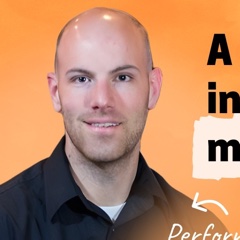
Timothy Davis
Head of performance marketing at Shopify; former consultant to Pinterest, LinkedIn, Redfin and Eventbrite
Where to hear and read about Timothy Davis1 episode or test

Timothy Davis leads performance marketing at Shopify and previously helped Pinterest, LinkedIn, Redfin and Eventbrite build their paid teams as a consultant. The thing most worth learning from him is to judge paid channels by the few signals tied to the campaign goal, and to test small before scaling.
I can teach anyone how to do Google ads. The data is the hard part.
The ultimate guide to paid growth | Timothy Davis (Shopify)
Timothy Davis: the story and the lessons
1Who Timothy Davis is and how he got into paid growth
Davis has led performance marketing at Shopify for two and a half years. Before that he consulted for Pinterest, LinkedIn, Redfin and Eventbrite, helping each kickstart and scale a performance marketing team. He has also scaled paid channels at IBM.
His work spans small direct brands to enterprise, and he is reported to beat agency performance within a month of taking over an account.
Casey Winters pushed him into digital marketing by showing him Urchin. At a wedding, Winters showed him Urchin, the original Google Analytics, and Davis chose digital marketing.
They still talk often, and no call runs under an hour.
Davis defines performance marketing as marketing whose results you can measure. Measurability is what lets a team scale spend with confidence. Offline and affiliates count too if they are measurable, though his default meaning is online only.
He says to name which kind of paid you mean, or two people talk past each other.
Baseball stats trained his eye for signal over noise. He loves baseball statistics, where the question is which number tells you where to put a batter. He ties the idea to Nate Silver's The Signal and the Noise.
It now shapes how he reads ad accounts and how he hires.
2Davis on where and when to start paid growth
Davis says nearly every company should run paid search first. Paid takes the first four spots on Google, and Meta reach is close to pay to play. Search is user driven, since an ad shows only when someone types a relevant keyword.
His order for beginners is Google Search, then Meta, then YouTube if you can feed it video. Add TikTok only if your data shows users there.
He turns up paid on platforms where users already find the company. Check your analytics tool for the platforms already sending visitors, then pay to increase that flow. At Hairstory, Meta and TikTok were already sending traffic, and a small paid test lifted results sharply.
His phrase: "Users are already finding us here. How can we turn that knob up to 11?"
Davis builds awareness with display or video, not search keywords. If demand does not exist yet, nobody is searching for the product. A romantic hotel suite add-on moved its spend from keywords like booking hotel rooms to the Google Display Network, and results started to come.
If your product resembles a known one, he suggests bidding on its name to ride its demand.
He refuses to run ads where users cannot yet convert. IBM sold across Africa in USD only and converted poorly. After starting in South Africa and adding the rand, results improved tremendously.
Ads before product fit only annoy people, and some users hold one bad experience against you for good.
Davis sets the bar for a new channel before adopting it. He defines what makes a channel business as usual, such as 1,000 conversions a month at a set spend and lift, then plans milestones backward, one ad unit at a time.
On LinkedIn the units are feed, conversation, video and carousel. He has not tested VR or AI ads and prefers to let others be the guinea pig.
3How Davis tests a new paid channel
Davis starts every test with a 1% lookalike of existing customers. He uploads the customer list to build lookalikes. With a tight budget he runs only the 1% set, and with more budget adds 2 to 4%, 5 to 7% and 8% plus.
The 8% plus set usually fails but has worked at times, so it is worth trying with spare budget.
A sign of life earns a proper campaign, not full spend. He puts a little money into a new platform, and if there is signal, builds the right creative, campaign and messaging before scaling. Hairstory's Meta testimonial creative did not work on TikTok.
His director calls it "signs of life", and the warning is against running a hundred miles an hour the moment something shows life.
He sizes test budgets to what finance will give, then projects upward. Statistical relevance is often limited by budget, so he runs the test with the money available. He uses click-through and conversion rates from a $1,000 test to estimate the return on $10,000.
He works with platform partners on the projection and shares it with finance.
Davis treats a failed experiment as learning. Each platform has different user behavior and features, so he expects to misread things at first. He wants it safe to fail as long as the team learns.
"We're either winning or we're learning."
At SoftLayer he used LinkedIn ads to help win Coca-Cola. Coke wanted a cloud for its Freestyle machines, and SoftLayer was up against AWS and Microsoft. Coke's worries were recency and private security, so ads on those themes reached its staff, geo-fenced to LA where the decision maker sat.
The salesperson's next call went: security is fine, recency is fine, we hear you. Davis notes LinkedIn runs about three times costlier, so he tests Google and Meta first.
4How Davis reads an ad account
Davis judges a campaign only by the metrics tied to its goal. Impressions suit awareness, funnel entries suit consideration, and clicks and conversions suit conversion campaigns. In interviews he hands candidates a pile of data, and strong ones first ask what the campaign is for.
"Who cares about how many impressions you're getting?" if the goal is conversions.
He uses Google's quality reports to find where an account leaks. He exports expected click-through rate, landing page experience and ad relevance, split by brand and non-brand. In one report landing page experience was 84% above average but ad relevance only 35%, so the fix was ad copy.
He pauses ads rated poor, such as one brand ad at a $7 CPC, and follows Google's listed fixes, which most people skip.
Davis optimizes for click share, not impression share. He calls chasing impression share ego marketing. In a 2023 test, impression share stayed flat while click share rose after targeting changes, and the control reached many people who did not care.
"It's about showing to the right person as often as possible."
He uses Auction Insights to separate real competitors from accidents. He combines position above rate with how often a competitor shows when he does not, a metric from PPC Hero's Jacob Brown. One competitor's line stayed steady while another faded once a close variant keyword error was fixed.
Google's close variants can surface Square on a Shopify search. He reacts to consistent conquesting in the data, not to ego.
He asks platform reps for anonymized competitor benchmarks. Given five competitors, a Google, Meta or LinkedIn rep says whether his click-through rate, conversion rate and CPC are above or below the group. They cannot share CAC.
Healthcare and law have some of the highest CPCs he has seen.
Davis proves what ads add with geo or conversion lift tests. Attribution alone cannot say whether the person would have converted anyway. He prefers multi-touch attribution with time decay and feeds lift results into an incrementality adjusted factor by channel or region.
eBay cut almost all brand spend after finding those users would have come through organic. Below about $50K a month on a platform, he says the test costs more effort than it is worth.
5Davis on creative and ad copy
He tests every ad idea, because the winner is often a surprise. For ADT, a short ad reading $0 setup fee, $0 install fee beat a polished ad that used every slot for value props, on both conversions and click-through rate. Combining the winner with the value props then did better.
He often thinks an ad is brilliant and it flops, since he is not the target audience. "No idea should be left on the cutting room floor."
Davis leads video ads with emotion. Comedy or happiness both work, because people remember how an ad made them feel and later act. He cites Dollar Shave Club as a story people still recall years later.
He says people are way underestimating the power of creative.
6How Davis builds and runs a lean paid team
He says agencies underperform by running one playbook across many clients. They turn on automated bidding, run search query reports and move on to the next of 50 clients. Landing page tests and shorter funnels, such as five steps down to three, get skipped.
A good agency or consultant helps you outgrow them, and one that reacts badly to hiring milestones is a major red flag.
Davis starts with an agency and agrees a hire milestone up front. A founder has no time to log into ad accounts between payroll, HR and sales. He suggests starting hiring talks near $50K a month in spend, since a hire takes about three months.
The agency may stay on for what the new hire cannot do, at a lower fee. "I'm a big believer in forward thinking, backwards planning."
He hires a data-minded generalist first, then a creative, then a data scientist. The first hire must separate signal from noise, since platform mechanics can be taught. The creative matches brand tone and tests faster than an agency's capped hours, and the data scientist builds incrementality tests and reports.
He uses a general title like growth marketing manager and specializes as the team grows.
Davis keeps a shared ops cadence spreadsheet of recurring account tasks. Big rocks such as finance, keywords, ad copy, quality score and targeting hold smaller tasks like search query reports and negatives. Each is marked weekly, biweekly or monthly.
It holds the team accountable, lets a manager spot check, and gives partners an instant answer on how often ad copy is updated.
He adds headcount only after a capacity calculator stays red. His manager Dean built a monthly tally of meetings, PTO, optimizations and reporting against the days in the quarter. Red means more commitments than days.
He waits out one red quarter, since a summit may explain it. If it repeats, he cuts meetings first and hires only if the freed work fills a full head.
He aims for new hires to have impact in 30 to 45 days. Instead of handbooks in week one and intros in week two, he gives a real campaign with last year's results and clear expectations. Kat, hired about eight months ago, got the additions campaign right away.
In one-on-ones he opens the account and shows how he works, as if sitting side by side. He starts from the book The First 90 Days and does not expect perfection.

The ultimate guide to paid growth | Timothy Davis (Shopify)
Covers how to start, run and staff performance marketing: signs of life tests, which platforms to try first, which metrics to trust, and how to build a lean team. Comes from someone who has scaled paid channels at Shopify, IBM, Pinterest and others and who reportedly beats agency performance within a month of taking over.
Davis has led performance marketing at Shopify for two and a half years. Before that he consulted for Pinterest, LinkedIn, Redfin and Eventbrite, helping each kickstart and scale a performance marketing team. He has also scaled paid channels at IBM.
His work spans small direct brands to enterprise, and he is reported to beat agency performance within a month of taking over an account.
Casey Winters pushed him into digital marketing by showing him Urchin. At a wedding, Winters showed him Urchin, the original Google Analytics, and Davis chose digital marketing.
They still talk often, and no call runs under an hour.
Davis defines performance marketing as marketing whose results you can measure. Measurability is what lets a team scale spend with confidence. Offline and affiliates count too if they are measurable, though his default meaning is online only.
He says to name which kind of paid you mean, or two people talk past each other.
Baseball stats trained his eye for signal over noise. He loves baseball statistics, where the question is which number tells you where to put a batter. He ties the idea to Nate Silver's The Signal and the Noise.
It now shapes how he reads ad accounts and how he hires.
Davis says nearly every company should run paid search first. Paid takes the first four spots on Google, and Meta reach is close to pay to play. Search is user driven, since an ad shows only when someone types a relevant keyword.
His order for beginners is Google Search, then Meta, then YouTube if you can feed it video. Add TikTok only if your data shows users there.
He turns up paid on platforms where users already find the company. Check your analytics tool for the platforms already sending visitors, then pay to increase that flow. At Hairstory, Meta and TikTok were already sending traffic, and a small paid test lifted results sharply.
His phrase: "Users are already finding us here. How can we turn that knob up to 11?"
Davis builds awareness with display or video, not search keywords. If demand does not exist yet, nobody is searching for the product. A romantic hotel suite add-on moved its spend from keywords like booking hotel rooms to the Google Display Network, and results started to come.
If your product resembles a known one, he suggests bidding on its name to ride its demand.
He refuses to run ads where users cannot yet convert. IBM sold across Africa in USD only and converted poorly. After starting in South Africa and adding the rand, results improved tremendously.
Ads before product fit only annoy people, and some users hold one bad experience against you for good.
Davis sets the bar for a new channel before adopting it. He defines what makes a channel business as usual, such as 1,000 conversions a month at a set spend and lift, then plans milestones backward, one ad unit at a time.
On LinkedIn the units are feed, conversation, video and carousel. He has not tested VR or AI ads and prefers to let others be the guinea pig.
Davis starts every test with a 1% lookalike of existing customers. He uploads the customer list to build lookalikes. With a tight budget he runs only the 1% set, and with more budget adds 2 to 4%, 5 to 7% and 8% plus.
The 8% plus set usually fails but has worked at times, so it is worth trying with spare budget.
A sign of life earns a proper campaign, not full spend. He puts a little money into a new platform, and if there is signal, builds the right creative, campaign and messaging before scaling. Hairstory's Meta testimonial creative did not work on TikTok.
His director calls it "signs of life", and the warning is against running a hundred miles an hour the moment something shows life.
He sizes test budgets to what finance will give, then projects upward. Statistical relevance is often limited by budget, so he runs the test with the money available. He uses click-through and conversion rates from a $1,000 test to estimate the return on $10,000.
He works with platform partners on the projection and shares it with finance.
Davis treats a failed experiment as learning. Each platform has different user behavior and features, so he expects to misread things at first. He wants it safe to fail as long as the team learns.
"We're either winning or we're learning."
At SoftLayer he used LinkedIn ads to help win Coca-Cola. Coke wanted a cloud for its Freestyle machines, and SoftLayer was up against AWS and Microsoft. Coke's worries were recency and private security, so ads on those themes reached its staff, geo-fenced to LA where the decision maker sat.
The salesperson's next call went: security is fine, recency is fine, we hear you. Davis notes LinkedIn runs about three times costlier, so he tests Google and Meta first.
Davis judges a campaign only by the metrics tied to its goal. Impressions suit awareness, funnel entries suit consideration, and clicks and conversions suit conversion campaigns. In interviews he hands candidates a pile of data, and strong ones first ask what the campaign is for.
"Who cares about how many impressions you're getting?" if the goal is conversions.
He uses Google's quality reports to find where an account leaks. He exports expected click-through rate, landing page experience and ad relevance, split by brand and non-brand. In one report landing page experience was 84% above average but ad relevance only 35%, so the fix was ad copy.
He pauses ads rated poor, such as one brand ad at a $7 CPC, and follows Google's listed fixes, which most people skip.
Davis optimizes for click share, not impression share. He calls chasing impression share ego marketing. In a 2023 test, impression share stayed flat while click share rose after targeting changes, and the control reached many people who did not care.
"It's about showing to the right person as often as possible."
He uses Auction Insights to separate real competitors from accidents. He combines position above rate with how often a competitor shows when he does not, a metric from PPC Hero's Jacob Brown. One competitor's line stayed steady while another faded once a close variant keyword error was fixed.
Google's close variants can surface Square on a Shopify search. He reacts to consistent conquesting in the data, not to ego.
He asks platform reps for anonymized competitor benchmarks. Given five competitors, a Google, Meta or LinkedIn rep says whether his click-through rate, conversion rate and CPC are above or below the group. They cannot share CAC.
Healthcare and law have some of the highest CPCs he has seen.
Davis proves what ads add with geo or conversion lift tests. Attribution alone cannot say whether the person would have converted anyway. He prefers multi-touch attribution with time decay and feeds lift results into an incrementality adjusted factor by channel or region.
eBay cut almost all brand spend after finding those users would have come through organic. Below about $50K a month on a platform, he says the test costs more effort than it is worth.
He tests every ad idea, because the winner is often a surprise. For ADT, a short ad reading $0 setup fee, $0 install fee beat a polished ad that used every slot for value props, on both conversions and click-through rate. Combining the winner with the value props then did better.
He often thinks an ad is brilliant and it flops, since he is not the target audience. "No idea should be left on the cutting room floor."
Davis leads video ads with emotion. Comedy or happiness both work, because people remember how an ad made them feel and later act. He cites Dollar Shave Club as a story people still recall years later.
He says people are way underestimating the power of creative.
He says agencies underperform by running one playbook across many clients. They turn on automated bidding, run search query reports and move on to the next of 50 clients. Landing page tests and shorter funnels, such as five steps down to three, get skipped.
A good agency or consultant helps you outgrow them, and one that reacts badly to hiring milestones is a major red flag.
Davis starts with an agency and agrees a hire milestone up front. A founder has no time to log into ad accounts between payroll, HR and sales. He suggests starting hiring talks near $50K a month in spend, since a hire takes about three months.
The agency may stay on for what the new hire cannot do, at a lower fee. "I'm a big believer in forward thinking, backwards planning."
He hires a data-minded generalist first, then a creative, then a data scientist. The first hire must separate signal from noise, since platform mechanics can be taught. The creative matches brand tone and tests faster than an agency's capped hours, and the data scientist builds incrementality tests and reports.
He uses a general title like growth marketing manager and specializes as the team grows.
Davis keeps a shared ops cadence spreadsheet of recurring account tasks. Big rocks such as finance, keywords, ad copy, quality score and targeting hold smaller tasks like search query reports and negatives. Each is marked weekly, biweekly or monthly.
It holds the team accountable, lets a manager spot check, and gives partners an instant answer on how often ad copy is updated.
He adds headcount only after a capacity calculator stays red. His manager Dean built a monthly tally of meetings, PTO, optimizations and reporting against the days in the quarter. Red means more commitments than days.
He waits out one red quarter, since a summit may explain it. If it repeats, he cuts meetings first and hires only if the freed work fills a full head.
He aims for new hires to have impact in 30 to 45 days. Instead of handbooks in week one and intros in week two, he gives a real campaign with last year's results and clear expectations. Kat, hired about eight months ago, got the additions campaign right away.
In one-on-ones he opens the account and shows how he works, as if sitting side by side. He starts from the book The First 90 Days and does not expect perfection.
 Shopify