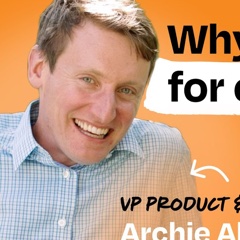
Archie Abrams
VP of Product and Head of Growth at Shopify
Where to hear and read about Archie Abrams1 episode or test

Archie Abrams is VP of Product and Head of Growth at Shopify, where he runs a 600-person growth org that judges its work by the long-term GMV of each merchant cohort. The lesson most worth taking is to keep multi-year holdouts on experiments, because 30 to 40% of early wins show no lasting impact a year later.
It's actually almost always easier to just make it harder to do the thing right before your step in the funnel to increase your conversion rate.
Breaking the rules of growth: Why Shopify bans KPIs, optimizes for churn, and prioritizes intuition
Archie Abrams: the story and the lessons
1Archie Abrams and how Shopify's growth org is built
Abrams runs all of growth at Shopify, about 600 people. As VP of Product and head of growth he oversees product, design, engineering, data, ops and growth marketing.
The company powers about 10% of US e-commerce and $235B of global GMV, mostly behind storefronts where buyers never see the Shopify name.
Three product groups work on different time horizons, and Shopify has no single North Star. Core builds for commerce a hundred years out, merchant services builds payments and shipping on a medium horizon, and growth owns the end-to-end merchant journey.
Most companies rally around one North Star. Shopify purposely does not.
Growth splits into R&D and marketing, with customer support inside it. Growth R&D covers growth products, tooling and support. Growth marketing runs paid acquisition, media buying, affiliates, email, content and SEO.
Support sits in growth because it is part of the merchant journey. The team builds tools for advisers, the Help Center and AI self-serve, not the agents themselves.
Shopify has no CMO, so marketers sit next to the goal they serve. Growth marketing sits in growth, revenue marketing near sales, brand under president Harley, and product marketing with product managers in core.
It moves faster with less coordination, but only works because Toby and Harley hold the brand story. Abrams admits it is sometimes very messy.
2Why Abrams measures growth by cohort GMV, not conversion rates
Abrams wants many people to try, because a few big winners pay for everyone. Most revenue is payments tied to merchant success, not the $39 monthly subscription. He compares a cohort to an angel portfolio where a couple of hits make it work.
Most new businesses fail eventually, and some merchants fail first and still build big companies. He names Allbirds and Figs as merchants that became extremely big. Unlike typical SaaS, Shopify does not fight every departure.
He judges each quarter's cohort like a fund vintage. The question is how much total GMV a quarter's new merchants produce over one to five years. GMV follows a power law, so a few outliers set the cohort's value.
Efficiency comes from LTV and CAC guardrails per marketing channel. Goals are set as lift above an organic forecast, and a conversion rate going up or down over the year is, in his words, "kind of irrelevant".
He measures teams on people getting through, not stage conversion rates. When teams own funnel stages, the easiest way to raise a rate is to make the step before theirs harder, which shrinks the funnel.
Easing signup lowers the rate and can dip retention and LTV, but CAC usually falls by more, leaving room to spend and activate more people.
3How Abrams keeps experiments honest with long holdouts
Every experiment keeps a holdout and gets rechecked for years. An experiment is called after about 3 weeks and the winner ships to 100%, but the assigned cohort keeps being tracked. Tooling re-sends results to experimenters at 3, 9 and 12 months.
A second layer holds out 5% of users from all changes each quarter. New-merchant tests run 50-50 for a few weeks. The key curve is GMV over time, which correlates better than retention, with gross profit and merchant counts alongside.
Abrams finds 30 to 40% of early experiment wins vanish. Lifts in paying shops or first sales often show no extra GMV a year later. The team had pulled forward success that would have come anyway, or added marginal users.
He suggests reviewing your biggest past winners a year or two on, and bets the downstream metric differs from what you thought. A faded win still shows what not to double down on.
Payment-failure alerts looked great early and did nothing for GMV. Better alerts and a million emails brought people back, but there was little GMV lift at 6, 12 and 18 months.
The merchants letting payments fail were probably not committed to entrepreneurship. The team moved on to bigger fish.
Abrams ships neutral experiments when intuition says they help merchants. Pre-configured store sections did not lift conversion to paying. Six months later they produced a large lift in merchants selling, since better stores earned early sales and momentum.
If neither version wins, ship what you would have built from a blank slate, because the old control was only the previous choice. He has seen neutral results turn positive but never negative.
Without long holdouts, he ships early lifts but discounts their size. He advises instrumenting early signs of success and looking as deep in the funnel as you can for as long as you can wait.
If up-funnel lift is all you have, ship it but don't overestimate its impact.
4What Abrams knows about onboarding, friction and pricing
He tests monetary friction again and again. It covers trial length and amount, incentives such as app store credits, and price point. The $39 monthly fee is a real expense for someone with no revenue yet.
Despite the belief that discounts bring lower-quality merchants, these changes causally raised the chance of success and unlocked people who would have quit.
He collects more signup information than most teams dare. The answers drive personalized guidance, since Shopify merchants sell in very different ways and channels.
He says the impact of getting signup and onboarding right has never ceased to amaze him, even at a company that does not optimize retention directly.
Growth built a wizard's benefits into the real product instead of a wizard. Shopify has a "no wizard" principle, so growth took what a wizard does well, lowering the bar to try, and built it into the editor.
Instead of a flow that generates sections from a few inputs, sections are pre-generated from what Shopify knows about the merchant and placed in the product itself.
At Udemy he learned that a high list price with deep discounts signals value. In 2012 people did not know what to pay for online courses. A $100 list price tied a course to college, and a typical deal cut it to $10, at 90 to 99% off.
Buying a course is itself the progress many learners want, so urgency discounts brought people back and gave very good retention.
5How Shopify runs product on a hundred-year view and taste
Toby's hundred-year view puts product ahead of metrics and quick revenue. The principles are to build the best product in the world, make money to do more of it, and never reverse the first two. Abrams says employees have seen the slide 10,000 times.
Chasing big brands pays now, but many will be gone in 30 to 50 years, so entrepreneurs are the lasting bet.
Core product bans KPIs and OKRs and runs on conviction and taste. Nothing ships without approval from a group lead, who reviews a short video of each project. Glenn, who heads core, goes deep on every release, and he and Toby hold a consistent quality bar.
Data is one piece of the puzzle and never the override. The cost is subjective debate and squishiness.
He warns that dropping KPIs only works with an opinionated founder. Teams need accountability from metrics or from a founder with firm taste. Shopify once drifted into teams building whatever they liked, which Abrams called a very very bad state.
He says most companies do better driving testable metrics, because founders on the level of Brian Chesky or Elon Musk are rare and hard to recognize as not being one.
Every six weeks, leaders review every project in person with Toby. R&D group leads go through all core, merchant services and growth projects, including the technical how, and settle disagreements in the room.
Architecture is treated as strategy. One review spent 30 minutes on CSV importers: open source or in-house, core codebase or separate app. Big additions ship twice a year as one launch.
Growth and core are set a little at odds, and trust resolves it. No list of surfaces is off limits to growth. The typical path is to run the test, watch short-term lift, monitor it long term, and polish before shipping to 100%.
Abrams describes a partnership built over three and a half years, resting on following through on commitments.
6Abrams on adding sales to a product-led business
Shopify moved from two separate funnels to hybrid merchant journeys. The sales funnel only said contact us, and the self-service funnel never mentioned sales. Merchants now move from self-service to sales and back.
This broke many metrics and needed a cultural reset. Sales deals are too few for quantitative data, so decisions lean on qualitative insight and empathy.
Abrams relies on incrementality tests, not attribution, to value channels. A merchant who signed up via an ad and then moved to sales was valued only on the self-service LTV model, so spend on valuable campaigns risked being cut.
Fixing it meant rebuilding instrumentation, LTV modeling, attribution and incrementality testing. An example test withholds Meta ads from one group and compares lift. He calls incrementality the gold standard.

Breaking the rules of growth: Why Shopify bans KPIs, optimizes for churn, and prioritizes intuition
Shopify's growth head explains how the company measures growth by long-term cohort GMV instead of local conversion rates, keeps multi-year holdouts on experiments, and runs core product on taste instead of KPIs. The standout result is that 30 to 40% of experiments that show early lift have no lasting impact a year later.
Abrams runs all of growth at Shopify, about 600 people. As VP of Product and head of growth he oversees product, design, engineering, data, ops and growth marketing.
The company powers about 10% of US e-commerce and $235B of global GMV, mostly behind storefronts where buyers never see the Shopify name.
Three product groups work on different time horizons, and Shopify has no single North Star. Core builds for commerce a hundred years out, merchant services builds payments and shipping on a medium horizon, and growth owns the end-to-end merchant journey.
Most companies rally around one North Star. Shopify purposely does not.
Growth splits into R&D and marketing, with customer support inside it. Growth R&D covers growth products, tooling and support. Growth marketing runs paid acquisition, media buying, affiliates, email, content and SEO.
Support sits in growth because it is part of the merchant journey. The team builds tools for advisers, the Help Center and AI self-serve, not the agents themselves.
Shopify has no CMO, so marketers sit next to the goal they serve. Growth marketing sits in growth, revenue marketing near sales, brand under president Harley, and product marketing with product managers in core.
It moves faster with less coordination, but only works because Toby and Harley hold the brand story. Abrams admits it is sometimes very messy.
Abrams wants many people to try, because a few big winners pay for everyone. Most revenue is payments tied to merchant success, not the $39 monthly subscription. He compares a cohort to an angel portfolio where a couple of hits make it work.
Most new businesses fail eventually, and some merchants fail first and still build big companies. He names Allbirds and Figs as merchants that became extremely big. Unlike typical SaaS, Shopify does not fight every departure.
He judges each quarter's cohort like a fund vintage. The question is how much total GMV a quarter's new merchants produce over one to five years. GMV follows a power law, so a few outliers set the cohort's value.
Efficiency comes from LTV and CAC guardrails per marketing channel. Goals are set as lift above an organic forecast, and a conversion rate going up or down over the year is, in his words, "kind of irrelevant".
He measures teams on people getting through, not stage conversion rates. When teams own funnel stages, the easiest way to raise a rate is to make the step before theirs harder, which shrinks the funnel.
Easing signup lowers the rate and can dip retention and LTV, but CAC usually falls by more, leaving room to spend and activate more people.
Every experiment keeps a holdout and gets rechecked for years. An experiment is called after about 3 weeks and the winner ships to 100%, but the assigned cohort keeps being tracked. Tooling re-sends results to experimenters at 3, 9 and 12 months.
A second layer holds out 5% of users from all changes each quarter. New-merchant tests run 50-50 for a few weeks. The key curve is GMV over time, which correlates better than retention, with gross profit and merchant counts alongside.
Abrams finds 30 to 40% of early experiment wins vanish. Lifts in paying shops or first sales often show no extra GMV a year later. The team had pulled forward success that would have come anyway, or added marginal users.
He suggests reviewing your biggest past winners a year or two on, and bets the downstream metric differs from what you thought. A faded win still shows what not to double down on.
Payment-failure alerts looked great early and did nothing for GMV. Better alerts and a million emails brought people back, but there was little GMV lift at 6, 12 and 18 months.
The merchants letting payments fail were probably not committed to entrepreneurship. The team moved on to bigger fish.
Abrams ships neutral experiments when intuition says they help merchants. Pre-configured store sections did not lift conversion to paying. Six months later they produced a large lift in merchants selling, since better stores earned early sales and momentum.
If neither version wins, ship what you would have built from a blank slate, because the old control was only the previous choice. He has seen neutral results turn positive but never negative.
Without long holdouts, he ships early lifts but discounts their size. He advises instrumenting early signs of success and looking as deep in the funnel as you can for as long as you can wait.
If up-funnel lift is all you have, ship it but don't overestimate its impact.
He tests monetary friction again and again. It covers trial length and amount, incentives such as app store credits, and price point. The $39 monthly fee is a real expense for someone with no revenue yet.
Despite the belief that discounts bring lower-quality merchants, these changes causally raised the chance of success and unlocked people who would have quit.
He collects more signup information than most teams dare. The answers drive personalized guidance, since Shopify merchants sell in very different ways and channels.
He says the impact of getting signup and onboarding right has never ceased to amaze him, even at a company that does not optimize retention directly.
Growth built a wizard's benefits into the real product instead of a wizard. Shopify has a "no wizard" principle, so growth took what a wizard does well, lowering the bar to try, and built it into the editor.
Instead of a flow that generates sections from a few inputs, sections are pre-generated from what Shopify knows about the merchant and placed in the product itself.
At Udemy he learned that a high list price with deep discounts signals value. In 2012 people did not know what to pay for online courses. A $100 list price tied a course to college, and a typical deal cut it to $10, at 90 to 99% off.
Buying a course is itself the progress many learners want, so urgency discounts brought people back and gave very good retention.
Toby's hundred-year view puts product ahead of metrics and quick revenue. The principles are to build the best product in the world, make money to do more of it, and never reverse the first two. Abrams says employees have seen the slide 10,000 times.
Chasing big brands pays now, but many will be gone in 30 to 50 years, so entrepreneurs are the lasting bet.
Core product bans KPIs and OKRs and runs on conviction and taste. Nothing ships without approval from a group lead, who reviews a short video of each project. Glenn, who heads core, goes deep on every release, and he and Toby hold a consistent quality bar.
Data is one piece of the puzzle and never the override. The cost is subjective debate and squishiness.
He warns that dropping KPIs only works with an opinionated founder. Teams need accountability from metrics or from a founder with firm taste. Shopify once drifted into teams building whatever they liked, which Abrams called a very very bad state.
He says most companies do better driving testable metrics, because founders on the level of Brian Chesky or Elon Musk are rare and hard to recognize as not being one.
Every six weeks, leaders review every project in person with Toby. R&D group leads go through all core, merchant services and growth projects, including the technical how, and settle disagreements in the room.
Architecture is treated as strategy. One review spent 30 minutes on CSV importers: open source or in-house, core codebase or separate app. Big additions ship twice a year as one launch.
Growth and core are set a little at odds, and trust resolves it. No list of surfaces is off limits to growth. The typical path is to run the test, watch short-term lift, monitor it long term, and polish before shipping to 100%.
Abrams describes a partnership built over three and a half years, resting on following through on commitments.
Shopify moved from two separate funnels to hybrid merchant journeys. The sales funnel only said contact us, and the self-service funnel never mentioned sales. Merchants now move from self-service to sales and back.
This broke many metrics and needed a cultural reset. Sales deals are too few for quantitative data, so decisions lean on qualitative insight and empathy.
Abrams relies on incrementality tests, not attribution, to value channels. A merchant who signed up via an ad and then moved to sales was valued only on the self-service LTV model, so spend on valuable campaigns risked being cut.
Fixing it meant rebuilding instrumentation, LTV modeling, attribution and incrementality testing. An example test withholds Meta ads from one group and compares lift. He calls incrementality the gold standard.
More from Shopify
 Guest
Timothy Davis
Head of performance marketing at Shopify; former consultant to Pinterest, LinkedIn, Redfin and Eventbrite
 Shopify1 source · 23 tips
 Founder story
Tobi Lütke
Co-founder and CEO of Shopify
Shopify 1 source · 19 tips
Luc Levesque
Chief Growth Officer at Shopify, former Facebook/Meta executive and TripAdvisor VP of Growth
Shopify1 source · 17 tips