Luc Levesque
Chief Growth Officer at Shopify, former Facebook/Meta executive and TripAdvisor VP of Growth
Where to hear and read about Luc Levesque1 episode or test
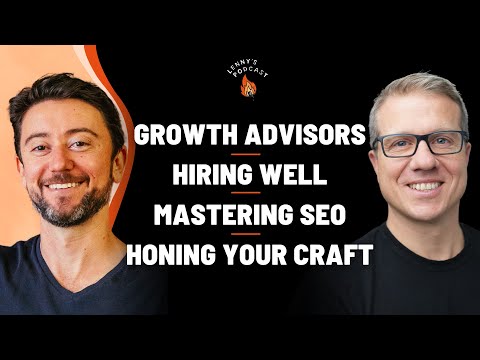
Luc Levesque is Chief Growth Officer at Shopify, who earlier grew Messenger, Instagram and WhatsApp at Facebook and ran growth at TripAdvisor. The most useful thing to learn from him is to hire, advise and judge work by impact alone, because one right insight from the right person can change a company.
It's one of those weird disciplines where the right person at the right time can literally say a sentence that changes the trajectory of your company.
Leveraging growth advisors, mastering SEO, and honing your craft | Luc Levesque (Shopify, Meta)
Luc Levesque: the story and the lessons
1Luc Levesque's path and his focus on impact
Levesque went from TripAdvisor to Facebook to Shopify, advising many companies on the way. He is Chief Growth Officer at Shopify, after growing Messenger, Instagram and WhatsApp at Facebook and serving as VP of growth and a GM at TripAdvisor. He has advised Twitter, Pinterest, Patreon, Thumbtack and Canva.
He built his hiring playbook in Ottawa after selling a company to TripAdvisor. He had few mentors there, so he worked from first principles.
He became an advisor by helping a VC's portfolio company for free. At TripAdvisor, a VC connected him to a portfolio company that needed SEO help. One phone call had a significant impact, and he asked for no equity or money, only connections in the Valley.
He was in Canada and wanted to start another company. The connections snowballed from that first call into his advisor career.
Zuckerberg asked him for results three months after he joined Facebook. In his first strategy review, Zuckerberg looked at Levesque's strategy and asked when results would start showing. The room sat silent for what felt like five minutes.
Levesque answered that impact had already started and walked through where it was showing.
Levesque judges people and plans by outcomes, not effort or activity. He anchors performance reviews, strategy reviews and executive reviews on whether work moves the top-level North Star outcome. Hard work correlates with impact but is not the measure.
In growth, impact is measurable, so a leader always knows whether the team has it. His version: "I don't care how hard you've worked I don't care what you're working on."
2How Luc Levesque hires and recruits top talent
He treats hiring as the skill a leader must master. A team's success is the quality of its hires. Levesque splits hiring into finding, assessing and closing, and keeps a written playbook.
He keeps a list of past mistakes and runs small experiments to improve the playbook. He also shares a blueprint of his personal quirks so new hires calibrate fast.
He screens for repeated signs of excellence. Past performance predicts future performance, so he asks about everything a person has done in and outside work. He tallies about three signs against red flags, aiming for the top 1% of candidates.
A strong signal is a former boss who leaves and then comes back to poach the person. For early-career people, signs include founding something, winning an award or earning a gold medal.
He asks candidates to teach him something about growth he doesn't know. The answer shows what the candidate thinks is the smartest thing they know. Whether Levesque already knows it is irrelevant.
It reveals how deeply they know the craft.
He does not hire growth people on public following alone. A big following or conference talks are not a disqualifier, but they are not proof. He checks past performance, the teams they were on and where they learned.
Levesque made this mistake a few times. The best people are often too busy doing the job to tweet or write newsletters.
He closes hires with the whole executive team and the candidate's family. Zuckerberg involved the entire exec team and Levesque's wife Andrea, with a dinner with Mark and Priscilla, because Levesque could not leave Canada for family reasons. At Shopify, Toby flew down with Fiona for breakfast with Andrea and reviewed offers together.
A job change is a family decision, so the family belongs in the process. Peers are glad to help close.
He stays relentless because a no does not necessarily mean no. Facebook's recruiting of Levesque took seven months of talks, and Toby's recruitment to Shopify took over ten years.
Levesque moved from impossible to relocating to Palo Alto through continuous conversation. He says never let momentum drop.
3Luc Levesque on using growth advisors
He says one conversation with the right advisor can change a company. It takes years of experiments to learn what works but seconds to pass it on. One landing page change was rolled out three weeks after a short talk, and right insights have produced lifts of hundreds of percent, sometimes over a thousand.
At one company he asked why a landing page was built a certain way and heard "we think it just looks better that way." Once you know the answer, the problem is easy to spot.
He waits for product-market fit before investing in growth. Growing a product users don't love exposes a weak product, and people rarely try something twice. Waiting costs little because a good advisor is harder to find than to time.
To get usage signal early, he has contained a launch in a small English-speaking country, getting dozens to a couple hundred users a day.
He judges advisors on why growth levers work, not what to do. He asks what they have done and why they think it worked, which separates people who evolve from people who repeat one playbook. Advisors from high-traffic companies have had the experiment reps.
Pinterest has produced strong growth people, and Levesque doesn't think that is a coincidence. Checking who a company used as advisors can point to good candidates.
He finds advisors through VCs, founders and channel-leading companies. Good VCs have strong advisor networks, and other founders can refer people. Companies world class at a channel can be approached directly.
If a founder can't judge growth talent, a trusted expert or existing advisor can vet candidates, even a person too busy to advise. Levesque says nobody has asked him to do this.
He pays advisors in equity with early vesting and a three-month cliff. Levesque prefers to advise purely for equity so outcomes line up. If it isn't working in the first three months, tear up the deal and both sides walk away.
The ideal engagement is about a year: the advisor adds value fast, then trains the team. He thinks four-year vesting is wrong for advisors, and probably two-year too.
As an advisor, he picks few companies and plans for ten years. He keeps a spreadsheet of criteria and questions, chooses companies with a likely exit, and negotiates a long window to exercise options or RSUs.
The worst outcome is putting in heart and soul and then watching the equity expire. He also advises rarely, and only to have impact.
4Luc Levesque's playbook for SEO and AI search
He argues almost every company has an SEO angle. Google is a funnel of existing demand, so even a brand-new product can rank for related queries. SEO is close to free and keeps working for a while after the effort stops.
TripAdvisor was his learning ground, where the team innovated and built a playbook. A truly new product may first need to create demand.
He splits SEO into sites with user-generated pages and sites without. Glassdoor, Quora, TripAdvisor, Pinterest and LinkedIn get pages from users as a by-product, giving thousands to millions of pages to optimize. Small sites should optimize their few pages, then write content that answers audience questions.
LinkedIn's viral loop of invites feeds an SEO loop, since each new profile is an indexed landing page. The second bucket can still be a big channel.
He fights for the top spot on a category's core keyword. His travel blogging site ranked number two for "travel blog" for a long time while a rival ten times bigger owned the term. Whole companies were bought and sold over one keyword ranking.
Most people click the first result and SEO growth is exponential, so a full team on a single keyword is not crazy.
He wants an internal SEO owner first, advisors second, agencies last. Without an SEO expert, hire an engineer or a relentless doer who wants to learn, and surround them with advisors. Agencies serve several companies, so their impact is harder to get.
An internal hire keeps the keyword knowledge in the company. Outside experts still help because a few specific SEO facts have a big impact.
He gives SEO three to twelve months, with quick wins on existing pages. A page already ranking around eighth on page one can gain hundreds of percent quickly, sometimes on day one. New sections can take about a quarter before a big lift.
New content is slow because Google must build trust. If nothing shows by 12 months, he thinks something is wrong.
He expects AI answers to cut informational search traffic within 12 to 24 months. Google's AI answer box puts the answer above the links, so informational keywords are most at risk and may lose clicks or turn into paid traffic. ChatGPT now handles 50% of his daily searches.
He calls it the biggest platform change since Google's inception. The new game is "teaching the AI what you do and why you're the best in the world at it."
He tests many growth channels and goes deep on the one to three that work. Channels include search, social, viral loops, partnerships and ChatGPT. Priceline won at paid search, and Facebook won with a viral loop where a friend's photo tag emailed you and you had to register to see it.
Look at where user intent is now, because it changes over time. Run a wide funnel of tests, pivot when something stops working, then go deep.
5How Luc Levesque works and keeps improving
He runs an hour of structured reflection every morning. He wakes at 5 for cardio, stretching, meditation, a cold plunge and reading, which he calls his bootloader. He then asks what is going well, what is not, and why, and tracks red, yellow and green on a dashboard.
The routine draws on the book Spark. He has had coaches his whole career and calls reflection the most valuable skill he has learned.
He asked his sons for feedback and changed his schedule. He asked his sons, 15 and 12, what he could do more or less of as a dad. After a month one said he wanted more time with him.
Levesque now has a one-on-one date with each son every two weeks, and they choose the activity.
He hosts small dinners at home around one topic. He calls them guild nights, a play on guild and builders. Groups of six to eight meet around one subject such as SEO or consumer product, with catered food and about six to ten at night.
Ten guests was too many. They pay off in friendships, recruiting and a back channel, and he calls it the bright spot of his month.
He ships clearly better changes without running an experiment. Experiments cost time to build, run and analyze, so speed can outweigh the cost of testing. He uses pre-post comparisons and holdouts to catch major damage.
His phrase: "sometimes you just need to YOLO it." If you ship 40 changes and three work, the speed can outweigh the cost.

Leveraging growth advisors, mastering SEO, and honing your craft | Luc Levesque (Shopify, Meta)
Luc Levesque explains how to hire world-class talent, structure and compensate growth advisors, and approach SEO as a growth channel, including what AI search will change. A single advisor conversation can produce lifts of hundreds of percent, sometimes over a thousand percent.
Levesque went from TripAdvisor to Facebook to Shopify, advising many companies on the way. He is Chief Growth Officer at Shopify, after growing Messenger, Instagram and WhatsApp at Facebook and serving as VP of growth and a GM at TripAdvisor. He has advised Twitter, Pinterest, Patreon, Thumbtack and Canva.
He built his hiring playbook in Ottawa after selling a company to TripAdvisor. He had few mentors there, so he worked from first principles.
He became an advisor by helping a VC's portfolio company for free. At TripAdvisor, a VC connected him to a portfolio company that needed SEO help. One phone call had a significant impact, and he asked for no equity or money, only connections in the Valley.
He was in Canada and wanted to start another company. The connections snowballed from that first call into his advisor career.
Zuckerberg asked him for results three months after he joined Facebook. In his first strategy review, Zuckerberg looked at Levesque's strategy and asked when results would start showing. The room sat silent for what felt like five minutes.
Levesque answered that impact had already started and walked through where it was showing.
Levesque judges people and plans by outcomes, not effort or activity. He anchors performance reviews, strategy reviews and executive reviews on whether work moves the top-level North Star outcome. Hard work correlates with impact but is not the measure.
In growth, impact is measurable, so a leader always knows whether the team has it. His version: "I don't care how hard you've worked I don't care what you're working on."
He treats hiring as the skill a leader must master. A team's success is the quality of its hires. Levesque splits hiring into finding, assessing and closing, and keeps a written playbook.
He keeps a list of past mistakes and runs small experiments to improve the playbook. He also shares a blueprint of his personal quirks so new hires calibrate fast.
He screens for repeated signs of excellence. Past performance predicts future performance, so he asks about everything a person has done in and outside work. He tallies about three signs against red flags, aiming for the top 1% of candidates.
A strong signal is a former boss who leaves and then comes back to poach the person. For early-career people, signs include founding something, winning an award or earning a gold medal.
He asks candidates to teach him something about growth he doesn't know. The answer shows what the candidate thinks is the smartest thing they know. Whether Levesque already knows it is irrelevant.
It reveals how deeply they know the craft.
He does not hire growth people on public following alone. A big following or conference talks are not a disqualifier, but they are not proof. He checks past performance, the teams they were on and where they learned.
Levesque made this mistake a few times. The best people are often too busy doing the job to tweet or write newsletters.
He closes hires with the whole executive team and the candidate's family. Zuckerberg involved the entire exec team and Levesque's wife Andrea, with a dinner with Mark and Priscilla, because Levesque could not leave Canada for family reasons. At Shopify, Toby flew down with Fiona for breakfast with Andrea and reviewed offers together.
A job change is a family decision, so the family belongs in the process. Peers are glad to help close.
He stays relentless because a no does not necessarily mean no. Facebook's recruiting of Levesque took seven months of talks, and Toby's recruitment to Shopify took over ten years.
Levesque moved from impossible to relocating to Palo Alto through continuous conversation. He says never let momentum drop.
He says one conversation with the right advisor can change a company. It takes years of experiments to learn what works but seconds to pass it on. One landing page change was rolled out three weeks after a short talk, and right insights have produced lifts of hundreds of percent, sometimes over a thousand.
At one company he asked why a landing page was built a certain way and heard "we think it just looks better that way." Once you know the answer, the problem is easy to spot.
He waits for product-market fit before investing in growth. Growing a product users don't love exposes a weak product, and people rarely try something twice. Waiting costs little because a good advisor is harder to find than to time.
To get usage signal early, he has contained a launch in a small English-speaking country, getting dozens to a couple hundred users a day.
He judges advisors on why growth levers work, not what to do. He asks what they have done and why they think it worked, which separates people who evolve from people who repeat one playbook. Advisors from high-traffic companies have had the experiment reps.
Pinterest has produced strong growth people, and Levesque doesn't think that is a coincidence. Checking who a company used as advisors can point to good candidates.
He finds advisors through VCs, founders and channel-leading companies. Good VCs have strong advisor networks, and other founders can refer people. Companies world class at a channel can be approached directly.
If a founder can't judge growth talent, a trusted expert or existing advisor can vet candidates, even a person too busy to advise. Levesque says nobody has asked him to do this.
He pays advisors in equity with early vesting and a three-month cliff. Levesque prefers to advise purely for equity so outcomes line up. If it isn't working in the first three months, tear up the deal and both sides walk away.
The ideal engagement is about a year: the advisor adds value fast, then trains the team. He thinks four-year vesting is wrong for advisors, and probably two-year too.
As an advisor, he picks few companies and plans for ten years. He keeps a spreadsheet of criteria and questions, chooses companies with a likely exit, and negotiates a long window to exercise options or RSUs.
The worst outcome is putting in heart and soul and then watching the equity expire. He also advises rarely, and only to have impact.
He argues almost every company has an SEO angle. Google is a funnel of existing demand, so even a brand-new product can rank for related queries. SEO is close to free and keeps working for a while after the effort stops.
TripAdvisor was his learning ground, where the team innovated and built a playbook. A truly new product may first need to create demand.
He splits SEO into sites with user-generated pages and sites without. Glassdoor, Quora, TripAdvisor, Pinterest and LinkedIn get pages from users as a by-product, giving thousands to millions of pages to optimize. Small sites should optimize their few pages, then write content that answers audience questions.
LinkedIn's viral loop of invites feeds an SEO loop, since each new profile is an indexed landing page. The second bucket can still be a big channel.
He fights for the top spot on a category's core keyword. His travel blogging site ranked number two for "travel blog" for a long time while a rival ten times bigger owned the term. Whole companies were bought and sold over one keyword ranking.
Most people click the first result and SEO growth is exponential, so a full team on a single keyword is not crazy.
He wants an internal SEO owner first, advisors second, agencies last. Without an SEO expert, hire an engineer or a relentless doer who wants to learn, and surround them with advisors. Agencies serve several companies, so their impact is harder to get.
An internal hire keeps the keyword knowledge in the company. Outside experts still help because a few specific SEO facts have a big impact.
He gives SEO three to twelve months, with quick wins on existing pages. A page already ranking around eighth on page one can gain hundreds of percent quickly, sometimes on day one. New sections can take about a quarter before a big lift.
New content is slow because Google must build trust. If nothing shows by 12 months, he thinks something is wrong.
He expects AI answers to cut informational search traffic within 12 to 24 months. Google's AI answer box puts the answer above the links, so informational keywords are most at risk and may lose clicks or turn into paid traffic. ChatGPT now handles 50% of his daily searches.
He calls it the biggest platform change since Google's inception. The new game is "teaching the AI what you do and why you're the best in the world at it."
He tests many growth channels and goes deep on the one to three that work. Channels include search, social, viral loops, partnerships and ChatGPT. Priceline won at paid search, and Facebook won with a viral loop where a friend's photo tag emailed you and you had to register to see it.
Look at where user intent is now, because it changes over time. Run a wide funnel of tests, pivot when something stops working, then go deep.
He runs an hour of structured reflection every morning. He wakes at 5 for cardio, stretching, meditation, a cold plunge and reading, which he calls his bootloader. He then asks what is going well, what is not, and why, and tracks red, yellow and green on a dashboard.
The routine draws on the book Spark. He has had coaches his whole career and calls reflection the most valuable skill he has learned.
He asked his sons for feedback and changed his schedule. He asked his sons, 15 and 12, what he could do more or less of as a dad. After a month one said he wanted more time with him.
Levesque now has a one-on-one date with each son every two weeks, and they choose the activity.
He hosts small dinners at home around one topic. He calls them guild nights, a play on guild and builders. Groups of six to eight meet around one subject such as SEO or consumer product, with catered food and about six to ten at night.
Ten guests was too many. They pay off in friendships, recruiting and a back channel, and he calls it the bright spot of his month.
He ships clearly better changes without running an experiment. Experiments cost time to build, run and analyze, so speed can outweigh the cost of testing. He uses pre-post comparisons and holdouts to catch major damage.
His phrase: "sometimes you just need to YOLO it." If you ship 40 changes and three work, the speed can outweigh the cost.
More from Shopify
 Guest
Archie Abrams
VP of Product and Head of Growth at Shopify
 Shopify1 source · 17 tips
 Guest
Timothy Davis
Head of performance marketing at Shopify; former consultant to Pinterest, LinkedIn, Redfin and Eventbrite
Shopify1 source · 23 tips Founder story
Tobi Lütke
Co-founder and CEO of Shopify
Shopify 1 source · 19 tips