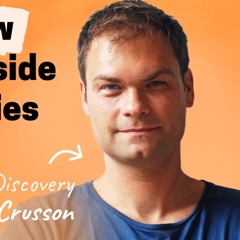
Tanguy Crusson
Head of Jira Product Discovery, Atlassian
Where to hear and read about Tanguy Crusson1 episode or test

Tanguy Crusson is Head of Jira Product Discovery at Atlassian, with ten years of starting new products inside a large company, and about half of them worked. The lesson most worth taking from him is to run a new bet like a startup: keep it small, shield it from company process and test it with a few named customers.
what took you here is not going to take you there
Hard-won lessons building 0 to 1 inside Atlassian | Tanguy Crusson (Head of Jira Product Discovery)
Tanguy Crusson: the story and the lessons
1Tanguy Crusson's ten years of starting products at Atlassian
Crusson spent ten years bootstrapping new products and won about half the time. He joined Atlassian to start the cloud developer ecosystem, so developers could build apps and sell them on the Atlassian Marketplace. HipChat, Stride, an IT operations push and Jira Product Discovery followed.
Only one bet became a big success. Years of talking to product managers across industries convinced him a 50/50 record is not that bad.
His IT operations business case went nowhere, and acquisitions filled the gap. Atlassian bought Statuspage and Opsgenie instead, and he ran the Statuspage integration.
Statuspage became a success only after he left, and at the time he felt it as a personal failure.
Jira Product Discovery became one of Atlassian's fastest growing products. It spent two to three years in the internal incubator Point A and was generally available a year before this conversation. A year after launch it had 8,000 customers and strong CSAT.
Four years earlier he was alone, then the team was three people. The first code came three years before general availability, with dogfooding in between.
2What HipChat taught Crusson about rivals, rewrites and past success
HipChat had product market fit before a costly rewrite let Slack pull ahead. HipChat was an acquired team of about 20, existed before Slack and had hundreds of thousands of daily users. When Slack's growth took off, the "HipChat Go Big" effort added many developers, product managers and designers.
The platform could not absorb that many people, so the team rewrote it. The rewrite became Stride, a great product, but Slack was miles ahead and Teams arrived free with Office.
Selling HipChat and Stride to Slack ended the effort and hurt the team. Atlassian exited enterprise communications. Crusson had been told a month ahead and needed two to three months to find a new rhythm.
After three years of obsessing over every detail, it stopped mattering overnight. The team went through something like the seven stages of grief, and some people are still scarred.
Crusson tests why a past success worked before trusting it in a new market. HipChat assumed developers would adopt first and business teams would follow, but business teams chose Slack. Slack won them with gamified onboarding and a strong look and feel.
His rule is "don't eat your own bullshit", which joins the company value "open company, no bullshit" with dogfooding. For Jira Product Discovery he tested the assumption with an ad instead of code.
Crusson stopped chasing competitor features and went back to users. HipChat kept saying it needed one more feature to match Slack, and fast following replaced serving a set of users really well. He now checks competitors about every three months.
When a rival announces something, the team rewatches recent user interviews together. A shipped feature "is the manifestation of what they were thinking maybe a year ago".
Crusson says never rewrite a live product, and win the problem space first. HipChat rebuilt on a new microservices platform while also growing the team, which was too much at once. About 70% of the Confluence editor's code, which started with the HipChat work, is still in the platform.
If a platform is not ready, he would hack it, test with customers and platformize later. The platform work was a local optimum that hurt the new bet.
3Statuspage, acquisitions and the case for "why now"
Statuspage came from a bet on collaboration during incidents. Around 2015 teams moved to the cloud and DevOps, so developers ran their own software, and a "Jira for operations" looked possible. Atlassian ran a week-long hackathon in San Francisco with companies including New Relic and Statuspage, then Crusson started a business case.
With cash in the bank, Atlassian weighs build, buy or partner. It bought Statuspage.
Crusson treats an acquisition like hiring a team and plans for a slowdown. An acquired team of 20 or 30 loses control of its decisions and gets performance reviews, OKRs, forecasts and engineering allocation all at once. Asked for a three-year plan, the Statuspage founders answered that they did not know and would survive.
Integrations are mostly about people, and the business slows before it speeds up. Keeping two tech stacks creates a frankenstack customers do not want.
Next time he would buy a small company, shut its product and rebuild. This works like an acqui-hire and buys a roadmap about a year faster. Entering a market a year earlier could repay the purchase on its own.
The customer base decides whether this is wise. Rebuilding a product with hundreds of thousands of customers is like rebuilding the plane mid flight, while a small one is like delaying takeoff and switching planes.
Crusson lost months pitching an IT operations product with no clear "why now". He pitched the idea on Jira, with Statuspage inside, to business leaders, the CTO and the CEOs. Nobody said yes or no, and Atlassian entered the market a year later when another team argued the urgency better.
His boss told him to keep going until he lost the passion, which he found unhelpful. His lesson is that shelved opportunities need "a very strong trigger for why now".
4How Crusson built Jira Product Discovery inside Atlassian
Crusson tested demand with a newsletter ad and waitlist before writing code. The ad ran in a Jira newsletter and pointed to a simple site saying product management is hard. It drew more than 3,000 signups in about two weeks.
It tested whether Jira's installed base of product managers could be reached and wanted the product.
Point A gave the bet time, budget and job security. Jira Product Discovery was one of about 100 pitches, and three products went through all the stages. The work was a full-time job with budget, and people were borrowed from other departments and could return if the bet failed.
Crusson met about 20 product management companies and some analysts, who talked to him because Atlassian could partner or buy.
He gated the bet in four named stages with six-pager reviews. Point A used Wonder, Explore, Make and Impact. Each gate was a six-pager the founders read for about 15 minutes, and they could approve, send the team back, kill it or fold it into another product.
Saying "we're in Explore" told other teams not to push opinions yet. In Explore the team validated with Figma in dozens of Zooms, and it was once sent back when it asked to go from alpha to beta and got more time.
Crusson incubated the product beside Jira, then began folding it back. Jira has 120,000 customers and Atlassian 300,000, so open experiments on the core were too risky. Product managers wanted snappy, visual screens and found Jira's UI too strict, so the team built a detached experience on the same platform.
The model, incubate, iterate, integrate, comes from Noah Weiss and his Instagram example. Integration back into Jira is now under way.
5How Crusson shielded an early bet from the company
Crusson told the company the bet would probably fail, so it left the team alone. He put the chance the bet was gone in six months at 70%, a number he says he pulled out of thin air. Help from other teams comes with conditions that slow a bet down.
A seven-person team tested rough prototypes with customers the following week instead of negotiating a six-month plan with a platform team. "Startups have the benefit of starving", so a big company has to create scarcity.
He spent trust chips to break the rules that blocked testing. He led product and engineering himself, used contractors from France and hired only principal engineers who could commit to any repo. With contractors and no engineering manager, the 15% reliability rule never applied.
The aim was to choose which rules helped the mission, not defy them all. He says he would not recommend it in most environments and found it uncomfortable even with leadership support.
Distance from Sydney kept people from interfering with his team. Other teams had to join OKR and vision meetings at Sydney hours, and few cared enough to stay up late arguing with a bet "not going to exist in six months".
That made his group the fastest at first. Point A later built the same autonomy into the program for new teams.
Crusson posted weekly demos and three-minute customer clips to buy time. Updates went through the internal tool Atlas to hundreds of subscribers, were honest about what was tested and learned, and never inflated success. He saved some features for vacation weeks so something new could still be shown.
"No one wants to fuck with a high-speed train." Dogfooding began within two months, the first lighthouse user came at five months, alpha ran about six months and beta close to a year.
A founder blocked general availability until the product was polished. He told the team the product was functional but "way too early", sending it back for two or three more months of polish.
Point A had set the expectation that it would take a while, so the team never felt lost about what to do next.
6How Crusson keeps early users close and judges early bets
Crusson grows exposure from 10 to 100 to 1,000 customers. The first 10 are chosen to prove they stand in for all later customers. From 10 to 100 the team tests variations such as security needs and scenarios, and from 100 to 1,000 it removes the need for Slack help, support tickets and Zoom explanations.
Each stage has its own qualitative success criteria, so stakeholders do not demand MAU or customer counts too early. For the first 10, they see video-call snippets of users solving their problem.
He puts ten named customers in front of the whole product team. The PM, designer and engineers meet the same users on Zoom and Slack for months. He sees formal research and CSAT surveys as "hiding behind research".
Engineers then stop planning meetings to say a customer they spoke to has a different problem that should come first. "It's 10 customers you know by name, you know their context, you know their problems."
Hard exposure limits protect existing customers and early impressions. Reforge calls it the Safety Funnel: a hard stop on how many people see an unready product. Judging by monthly active users would have pushed the team to expose it too early, and early users who leave are very hard to win back.
One outage for millions of Jira users might be forgiven, but by the third the team would have been "asked to pack up and go home".
He judges early bets by questions answered, not by dollars returned. For a long time every Atlassian product faced the same success metrics, and a new bet aimed at a $100 million business looks small early. Point A reassessed bets every three to six months to decide whether to add more chips.
His advice is to forget getting dollars back for a while and watch whether teams answer the right questions and leaders stay excited.
7Crusson on hiring, environment and perspective
His interview question asks candidates what a past colleague would say. He asks for the name of a past colleague, then what that person would say if called after the interview. People get uneasy for a moment, then something real comes out.
The tip came from Scott Farquhar, who also recommended Who: A Method for Hiring. Crusson says he used to be bad at interviewing.
He says push for change only where the environment can take it. Before Atlassian he worked in banks and other heavily regulated industries, where pushing would not have gone well. Atlassian was the first of close to 50 companies where he felt at home from day one.
In past workplaces he became cynical and began to doubt his own ability. "You cannot be the only sane person in a room for long." Leaving is a fair choice.
Two mottos keep his work in proportion. When he feels undervalued or doubts himself, he keeps it about the work, because there is always work to do. He also reminds himself that in 100 years everyone will be dead and forgotten.
He ties the second to the existentialists and Camus. He ranked fourth worldwide in no-fins pool distance and teaches free diving, where most students go from guessing 5 meters to reaching 20 in a weekend.

Hard-won lessons building 0 to 1 inside Atlassian | Tanguy Crusson (Head of Jira Product Discovery)
Lessons from taking HipChat, Statuspage and Jira Product Discovery from zero to one inside a large company, covering how to validate assumptions, protect early bets and break internal rules without losing trust. Jira Product Discovery went from a three-person team to 8,000 customers and became one of the fastest growing products in Atlassian history.
Crusson spent ten years bootstrapping new products and won about half the time. He joined Atlassian to start the cloud developer ecosystem, so developers could build apps and sell them on the Atlassian Marketplace. HipChat, Stride, an IT operations push and Jira Product Discovery followed.
Only one bet became a big success. Years of talking to product managers across industries convinced him a 50/50 record is not that bad.
His IT operations business case went nowhere, and acquisitions filled the gap. Atlassian bought Statuspage and Opsgenie instead, and he ran the Statuspage integration.
Statuspage became a success only after he left, and at the time he felt it as a personal failure.
Jira Product Discovery became one of Atlassian's fastest growing products. It spent two to three years in the internal incubator Point A and was generally available a year before this conversation. A year after launch it had 8,000 customers and strong CSAT.
Four years earlier he was alone, then the team was three people. The first code came three years before general availability, with dogfooding in between.
HipChat had product market fit before a costly rewrite let Slack pull ahead. HipChat was an acquired team of about 20, existed before Slack and had hundreds of thousands of daily users. When Slack's growth took off, the "HipChat Go Big" effort added many developers, product managers and designers.
The platform could not absorb that many people, so the team rewrote it. The rewrite became Stride, a great product, but Slack was miles ahead and Teams arrived free with Office.
Selling HipChat and Stride to Slack ended the effort and hurt the team. Atlassian exited enterprise communications. Crusson had been told a month ahead and needed two to three months to find a new rhythm.
After three years of obsessing over every detail, it stopped mattering overnight. The team went through something like the seven stages of grief, and some people are still scarred.
Crusson tests why a past success worked before trusting it in a new market. HipChat assumed developers would adopt first and business teams would follow, but business teams chose Slack. Slack won them with gamified onboarding and a strong look and feel.
His rule is "don't eat your own bullshit", which joins the company value "open company, no bullshit" with dogfooding. For Jira Product Discovery he tested the assumption with an ad instead of code.
Crusson stopped chasing competitor features and went back to users. HipChat kept saying it needed one more feature to match Slack, and fast following replaced serving a set of users really well. He now checks competitors about every three months.
When a rival announces something, the team rewatches recent user interviews together. A shipped feature "is the manifestation of what they were thinking maybe a year ago".
Crusson says never rewrite a live product, and win the problem space first. HipChat rebuilt on a new microservices platform while also growing the team, which was too much at once. About 70% of the Confluence editor's code, which started with the HipChat work, is still in the platform.
If a platform is not ready, he would hack it, test with customers and platformize later. The platform work was a local optimum that hurt the new bet.
Statuspage came from a bet on collaboration during incidents. Around 2015 teams moved to the cloud and DevOps, so developers ran their own software, and a "Jira for operations" looked possible. Atlassian ran a week-long hackathon in San Francisco with companies including New Relic and Statuspage, then Crusson started a business case.
With cash in the bank, Atlassian weighs build, buy or partner. It bought Statuspage.
Crusson treats an acquisition like hiring a team and plans for a slowdown. An acquired team of 20 or 30 loses control of its decisions and gets performance reviews, OKRs, forecasts and engineering allocation all at once. Asked for a three-year plan, the Statuspage founders answered that they did not know and would survive.
Integrations are mostly about people, and the business slows before it speeds up. Keeping two tech stacks creates a frankenstack customers do not want.
Next time he would buy a small company, shut its product and rebuild. This works like an acqui-hire and buys a roadmap about a year faster. Entering a market a year earlier could repay the purchase on its own.
The customer base decides whether this is wise. Rebuilding a product with hundreds of thousands of customers is like rebuilding the plane mid flight, while a small one is like delaying takeoff and switching planes.
Crusson lost months pitching an IT operations product with no clear "why now". He pitched the idea on Jira, with Statuspage inside, to business leaders, the CTO and the CEOs. Nobody said yes or no, and Atlassian entered the market a year later when another team argued the urgency better.
His boss told him to keep going until he lost the passion, which he found unhelpful. His lesson is that shelved opportunities need "a very strong trigger for why now".
Crusson tested demand with a newsletter ad and waitlist before writing code. The ad ran in a Jira newsletter and pointed to a simple site saying product management is hard. It drew more than 3,000 signups in about two weeks.
It tested whether Jira's installed base of product managers could be reached and wanted the product.
Point A gave the bet time, budget and job security. Jira Product Discovery was one of about 100 pitches, and three products went through all the stages. The work was a full-time job with budget, and people were borrowed from other departments and could return if the bet failed.
Crusson met about 20 product management companies and some analysts, who talked to him because Atlassian could partner or buy.
He gated the bet in four named stages with six-pager reviews. Point A used Wonder, Explore, Make and Impact. Each gate was a six-pager the founders read for about 15 minutes, and they could approve, send the team back, kill it or fold it into another product.
Saying "we're in Explore" told other teams not to push opinions yet. In Explore the team validated with Figma in dozens of Zooms, and it was once sent back when it asked to go from alpha to beta and got more time.
Crusson incubated the product beside Jira, then began folding it back. Jira has 120,000 customers and Atlassian 300,000, so open experiments on the core were too risky. Product managers wanted snappy, visual screens and found Jira's UI too strict, so the team built a detached experience on the same platform.
The model, incubate, iterate, integrate, comes from Noah Weiss and his Instagram example. Integration back into Jira is now under way.
Crusson told the company the bet would probably fail, so it left the team alone. He put the chance the bet was gone in six months at 70%, a number he says he pulled out of thin air. Help from other teams comes with conditions that slow a bet down.
A seven-person team tested rough prototypes with customers the following week instead of negotiating a six-month plan with a platform team. "Startups have the benefit of starving", so a big company has to create scarcity.
He spent trust chips to break the rules that blocked testing. He led product and engineering himself, used contractors from France and hired only principal engineers who could commit to any repo. With contractors and no engineering manager, the 15% reliability rule never applied.
The aim was to choose which rules helped the mission, not defy them all. He says he would not recommend it in most environments and found it uncomfortable even with leadership support.
Distance from Sydney kept people from interfering with his team. Other teams had to join OKR and vision meetings at Sydney hours, and few cared enough to stay up late arguing with a bet "not going to exist in six months".
That made his group the fastest at first. Point A later built the same autonomy into the program for new teams.
Crusson posted weekly demos and three-minute customer clips to buy time. Updates went through the internal tool Atlas to hundreds of subscribers, were honest about what was tested and learned, and never inflated success. He saved some features for vacation weeks so something new could still be shown.
"No one wants to fuck with a high-speed train." Dogfooding began within two months, the first lighthouse user came at five months, alpha ran about six months and beta close to a year.
A founder blocked general availability until the product was polished. He told the team the product was functional but "way too early", sending it back for two or three more months of polish.
Point A had set the expectation that it would take a while, so the team never felt lost about what to do next.
Crusson grows exposure from 10 to 100 to 1,000 customers. The first 10 are chosen to prove they stand in for all later customers. From 10 to 100 the team tests variations such as security needs and scenarios, and from 100 to 1,000 it removes the need for Slack help, support tickets and Zoom explanations.
Each stage has its own qualitative success criteria, so stakeholders do not demand MAU or customer counts too early. For the first 10, they see video-call snippets of users solving their problem.
He puts ten named customers in front of the whole product team. The PM, designer and engineers meet the same users on Zoom and Slack for months. He sees formal research and CSAT surveys as "hiding behind research".
Engineers then stop planning meetings to say a customer they spoke to has a different problem that should come first. "It's 10 customers you know by name, you know their context, you know their problems."
Hard exposure limits protect existing customers and early impressions. Reforge calls it the Safety Funnel: a hard stop on how many people see an unready product. Judging by monthly active users would have pushed the team to expose it too early, and early users who leave are very hard to win back.
One outage for millions of Jira users might be forgiven, but by the third the team would have been "asked to pack up and go home".
He judges early bets by questions answered, not by dollars returned. For a long time every Atlassian product faced the same success metrics, and a new bet aimed at a $100 million business looks small early. Point A reassessed bets every three to six months to decide whether to add more chips.
His advice is to forget getting dollars back for a while and watch whether teams answer the right questions and leaders stay excited.
His interview question asks candidates what a past colleague would say. He asks for the name of a past colleague, then what that person would say if called after the interview. People get uneasy for a moment, then something real comes out.
The tip came from Scott Farquhar, who also recommended Who: A Method for Hiring. Crusson says he used to be bad at interviewing.
He says push for change only where the environment can take it. Before Atlassian he worked in banks and other heavily regulated industries, where pushing would not have gone well. Atlassian was the first of close to 50 companies where he felt at home from day one.
In past workplaces he became cynical and began to doubt his own ability. "You cannot be the only sane person in a room for long." Leaving is a fair choice.
Two mottos keep his work in proportion. When he feels undervalued or doubts himself, he keeps it about the work, because there is always work to do. He also reminds himself that in 100 years everyone will be dead and forgotten.
He ties the second to the existentialists and Camus. He ranked fourth worldwide in no-fins pool distance and teaches free diving, where most students go from guessing 5 meters to reaching 20 in a weekend.

 Atlassian