
Megan Cook
Head of Product, Jira at Atlassian
Where to hear and read about Megan Cook1 episode or test

Megan Cook is Head of Product for Jira at Atlassian, where she has worked for just under 11 years. The thing most worth learning from her is to replace fear with trust, then make small, open bets that other people can join early.
if you have a hypothesis and you can start small, you can get that investment more easily
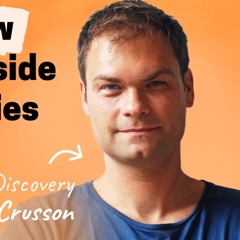
Lessons from Atlassian | Megan Cook (Head of Product, Jira)
Megan Cook: the story and the lessons
1Megan Cook's path to running Jira product
Cook came to Jira's top product job through hands-on roles. She has been at Atlassian for just under 11 years. Before that she was an analyst, a developer and an Agile coach.
She now leads product for a tool used by 75% of Fortune 500 companies, with 125,000 customers.
She runs a product that started as a humble bug tracker. Jira launched in 2003 and has since weathered agile and cloud. Atlassian now offers about 15 product lines around it.
2How Megan Cook builds psychological safety on a product team
Cook treats polished feedback and quiet juniors as signs of fear. She saw the signs at about 15 product managers, once people worked on separate streams: juniors staying quiet, painfully polished work, and incremental ideas.
Ben Crowe coaches Olympic gold medalists and tennis number one Ash Barty. He taught her that flow needs play, and "the opposite of play is fear". Polished work reaches leaders too late, so a change of direction wastes a lot of effort.
She set up peer feedback groups for rough drafts. Small groups meet about every two weeks, with mixed leadership levels. Someone brings a strategy, a new experience or an experiment idea, and the group works to lift it.
Cook brings her own strategies and gets surprising, excellent feedback. Repetition makes sharing early work feel normal. Her product managers designed these fixes themselves when she gathered them to discuss the problem.
Cook holds a weekly 30 minute Fight Club for leadership conflict. She, her engineering leader and her design leader meet every week with the stated purpose of having a conflict.
Everyone arrives expecting to solve a hard problem, and conflict-averse people cannot dodge it. She says the three-way relationship is much better because issues are caught early.
She has senior leaders tell their failure stories at onsites. At the last twice-yearly PM onsite in Sydney, leaders from across the organization shared things that did not work out.
Her point is that a leader must model the behavior they want, including vulnerability. Taking the big swing is a powerful way to learn.
Her team plays a $10 game to test individual priorities. A manager and report list priorities and divide $10 across them to show where time really goes.
The game is usually used for strategy. One person's allocation of 10 cents, about 20 to 30 minutes, showed the item was not worth the attention it was getting.
3How Megan Cook makes remote product work productive
Jira product runs as a team anywhere, with planned in-person weeks. The team has been remote since COVID, about three years, and hit many pitfalls early. Planned in-person weeks mix desk work, workshops and fun.
Atlassian's research found connection and productivity both rise about 30% after bringing people together, lasting months, and about three meetups a year is enough on average. Cook does not know how the productivity gain was measured.
Cook syncs leaders' calendars to protect long deep work blocks. After going remote, calendars filled with meetings and productivity fell. PMs need three to four hours to reach flow, so her leaders sync two long blocks a week, one afternoon and one morning.
Her one-on-ones are short and punchy, with spare calendar space for a longer session when a report hits a hard problem.
She keeps meetings for solving problems and moves status updates async. Status updates are read in Atlas, which bundles them into an email. Confluence holds decisions, strategies and kickoffs so assumptions can be revisited a year later.
"If we're having a meeting, this is to solve a problem."
Recorded video carries her work across time zones. With people in Australia, the US and Europe, short videos are casual, carry tone, and can open a document to explain it. Atlassian bought Loom for this reason.
She and a report in France traded quick videos for a while instead of meeting. She calls it almost a new document type.
4How Megan Cook wins buy-in for ideas
Cook treats buy-in as a journey, not one perfect pitch. A Jira templates and onboarding change touched four products on the platform. She took it to each product's team early and returned as designs, data and user test results arrived.
She does the same with executives such as the CTO, CMO and head of design, so their concerns are folded in and they become advocates before the final room.
She shows hypotheses openly instead of faking certainty. She separates what she knows from what she believes, and brings a plan to prove or disprove each hypothesis so others can add data she lacks.
She wanted an acquisition for quick capability, but the head of engineering pulled in people with the needed knowledge, and building in-house became possible. She stays fixed on the problem and open on the solution.
Cook opens decision meetings with a clear ask, narrative and data. She says whether she wants a decision, feedback or help testing a doubt, then gives the current situation, what changed and the implications.
Executives may see ten proposals a day and lack her detail. Knowing her data lets her go deep where they ask, which builds confidence.
She aligns people on the problem before arguing solutions. Her view is that most disagreements come from people solving different problems. Her three habits are partner early, stay open on the solution, and run a clear meeting.
5How Megan Cook funded Jira's usability push
Cook tied unglamorous usability work to revenue to get it funded. The chief experience officer asked her to look into CSAT about two years ago, but a request from the top did not mean funding. Usability was a core reason for low satisfaction.
She linked it to outcomes: hard-to-use products slow ramp-up for new customers and slow new users in existing accounts. That hit both acquisition and expansion. The CSAT survey gave her the reasons behind ratings.
She showed the pain with designs and customer video. She presented the new experience, the current pain, and a video of a customer struggling. The new experience might cut about 20 clicks.
Head of design Charlie Sutton's mantra is "show don't tell". Customer calls were rich but painful to listen to, which gave the videos their weight.
Cook started with about 40 people and shipped visible wins. Regular updates kept excitement high as changes shipped, including a long-overdue dark mode. One customer called a change the best quality of life improvement they had seen in a long time.
A scrappy start does not feel like a big bet, so it becomes an inroad to more investment.
She gave platform teams a shepherd instead of aligning roadmaps. Aligning three or four platform roadmaps was basically impossible. Each team assigned a shepherd who reviewed code changes and designs while Jira's developers made the changes.
Platform teams got early, impactful change without carrying the development cost.
6How Atlassian launches new product lines under Megan Cook
Jira Work Management started from users stretching Jira beyond developers. Fewer than half of Jira Software users are developers. The rest work in support, operations, sales, marketing, finance, design, HR and legal, and they cobbled together their own setups.
That demand told Atlassian a marketing team should work differently from a developer team, so one setup could not serve both.
Jira Product Discovery came from an internal pitch program. Product manager Tammy Carson saw that PMs needed a place to shape roadmaps before ideas became commitments. Nobody wanted fuzzy ideas in Jira, because anything there was expected to ship.
Earlier new products struggled because company checks were tuned to the success of big products like Jira Software.
Atlassian gates new bets in stages that add people as evidence builds. The stages are wonder, explore, make, impact and scale, with a go or no-go check at each. Explore adds about three people, and make brings a full team of about 12.
A leader who owns the market makes the call at every gate, so a weak idea can end at explore and free money for others. Jira Product Discovery, Atlas and Compass have all gone through it.
Each stage asks for a different proof of progress. Wonder can be a PM and an engineer with an idea at a hackathon. Explore needs a prototype, a design partner and a clear roadmap. Impact means the product earns enough revenue to support itself.
Early partners were customers already using Jira Software, not big companies like Salesforce. The team built something that worked for them before widening and chasing product market fit.

Lessons from Atlassian | Megan Cook (Head of Product, Jira)
Megan Cook explains how Jira's product leadership builds psychological safety, wins buy-in for ideas, makes remote work productive, and launches new product lines through small, stage-gated bets. The result worth hearing is that Atlassian grew to 15 products by backing small teams and customer signals, and used that same small-start approach to fund a CSAT usability push.
Cook came to Jira's top product job through hands-on roles. She has been at Atlassian for just under 11 years. Before that she was an analyst, a developer and an Agile coach.
She now leads product for a tool used by 75% of Fortune 500 companies, with 125,000 customers.
She runs a product that started as a humble bug tracker. Jira launched in 2003 and has since weathered agile and cloud. Atlassian now offers about 15 product lines around it.
Cook treats polished feedback and quiet juniors as signs of fear. She saw the signs at about 15 product managers, once people worked on separate streams: juniors staying quiet, painfully polished work, and incremental ideas.
Ben Crowe coaches Olympic gold medalists and tennis number one Ash Barty. He taught her that flow needs play, and "the opposite of play is fear". Polished work reaches leaders too late, so a change of direction wastes a lot of effort.
She set up peer feedback groups for rough drafts. Small groups meet about every two weeks, with mixed leadership levels. Someone brings a strategy, a new experience or an experiment idea, and the group works to lift it.
Cook brings her own strategies and gets surprising, excellent feedback. Repetition makes sharing early work feel normal. Her product managers designed these fixes themselves when she gathered them to discuss the problem.
Cook holds a weekly 30 minute Fight Club for leadership conflict. She, her engineering leader and her design leader meet every week with the stated purpose of having a conflict.
Everyone arrives expecting to solve a hard problem, and conflict-averse people cannot dodge it. She says the three-way relationship is much better because issues are caught early.
She has senior leaders tell their failure stories at onsites. At the last twice-yearly PM onsite in Sydney, leaders from across the organization shared things that did not work out.
Her point is that a leader must model the behavior they want, including vulnerability. Taking the big swing is a powerful way to learn.
Her team plays a $10 game to test individual priorities. A manager and report list priorities and divide $10 across them to show where time really goes.
The game is usually used for strategy. One person's allocation of 10 cents, about 20 to 30 minutes, showed the item was not worth the attention it was getting.
Jira product runs as a team anywhere, with planned in-person weeks. The team has been remote since COVID, about three years, and hit many pitfalls early. Planned in-person weeks mix desk work, workshops and fun.
Atlassian's research found connection and productivity both rise about 30% after bringing people together, lasting months, and about three meetups a year is enough on average. Cook does not know how the productivity gain was measured.
Cook syncs leaders' calendars to protect long deep work blocks. After going remote, calendars filled with meetings and productivity fell. PMs need three to four hours to reach flow, so her leaders sync two long blocks a week, one afternoon and one morning.
Her one-on-ones are short and punchy, with spare calendar space for a longer session when a report hits a hard problem.
She keeps meetings for solving problems and moves status updates async. Status updates are read in Atlas, which bundles them into an email. Confluence holds decisions, strategies and kickoffs so assumptions can be revisited a year later.
"If we're having a meeting, this is to solve a problem."
Recorded video carries her work across time zones. With people in Australia, the US and Europe, short videos are casual, carry tone, and can open a document to explain it. Atlassian bought Loom for this reason.
She and a report in France traded quick videos for a while instead of meeting. She calls it almost a new document type.
Cook treats buy-in as a journey, not one perfect pitch. A Jira templates and onboarding change touched four products on the platform. She took it to each product's team early and returned as designs, data and user test results arrived.
She does the same with executives such as the CTO, CMO and head of design, so their concerns are folded in and they become advocates before the final room.
She shows hypotheses openly instead of faking certainty. She separates what she knows from what she believes, and brings a plan to prove or disprove each hypothesis so others can add data she lacks.
She wanted an acquisition for quick capability, but the head of engineering pulled in people with the needed knowledge, and building in-house became possible. She stays fixed on the problem and open on the solution.
Cook opens decision meetings with a clear ask, narrative and data. She says whether she wants a decision, feedback or help testing a doubt, then gives the current situation, what changed and the implications.
Executives may see ten proposals a day and lack her detail. Knowing her data lets her go deep where they ask, which builds confidence.
She aligns people on the problem before arguing solutions. Her view is that most disagreements come from people solving different problems. Her three habits are partner early, stay open on the solution, and run a clear meeting.
Cook tied unglamorous usability work to revenue to get it funded. The chief experience officer asked her to look into CSAT about two years ago, but a request from the top did not mean funding. Usability was a core reason for low satisfaction.
She linked it to outcomes: hard-to-use products slow ramp-up for new customers and slow new users in existing accounts. That hit both acquisition and expansion. The CSAT survey gave her the reasons behind ratings.
She showed the pain with designs and customer video. She presented the new experience, the current pain, and a video of a customer struggling. The new experience might cut about 20 clicks.
Head of design Charlie Sutton's mantra is "show don't tell". Customer calls were rich but painful to listen to, which gave the videos their weight.
Cook started with about 40 people and shipped visible wins. Regular updates kept excitement high as changes shipped, including a long-overdue dark mode. One customer called a change the best quality of life improvement they had seen in a long time.
A scrappy start does not feel like a big bet, so it becomes an inroad to more investment.
She gave platform teams a shepherd instead of aligning roadmaps. Aligning three or four platform roadmaps was basically impossible. Each team assigned a shepherd who reviewed code changes and designs while Jira's developers made the changes.
Platform teams got early, impactful change without carrying the development cost.
Jira Work Management started from users stretching Jira beyond developers. Fewer than half of Jira Software users are developers. The rest work in support, operations, sales, marketing, finance, design, HR and legal, and they cobbled together their own setups.
That demand told Atlassian a marketing team should work differently from a developer team, so one setup could not serve both.
Jira Product Discovery came from an internal pitch program. Product manager Tammy Carson saw that PMs needed a place to shape roadmaps before ideas became commitments. Nobody wanted fuzzy ideas in Jira, because anything there was expected to ship.
Earlier new products struggled because company checks were tuned to the success of big products like Jira Software.
Atlassian gates new bets in stages that add people as evidence builds. The stages are wonder, explore, make, impact and scale, with a go or no-go check at each. Explore adds about three people, and make brings a full team of about 12.
A leader who owns the market makes the call at every gate, so a weak idea can end at explore and free money for others. Jira Product Discovery, Atlas and Compass have all gone through it.
Each stage asks for a different proof of progress. Wonder can be a PM and an engineer with an idea at a hackathon. Explore needs a prototype, a design partner and a clear roadmap. Impact means the product earns enough revenue to support itself.
Early partners were customers already using Jira Software, not big companies like Salesforce. The team built something that worked for them before widening and chasing product market fit.
 Atlassian