Carilu Dietrich
Former Head of Marketing at Atlassian (through IPO); advisor to CEOs and CMOs of hypergrowth B2B companies
Where to hear and read about Carilu Dietrich1 episode or test
Carilu Dietrich ran marketing at Atlassian through its IPO and now advises CEOs and CMOs at hypergrowth B2B companies such as Miro, 1Password and Segment. The one thing most worth learning from her: build a product people love enough to spread by word of mouth, and treat sales, ads and bundling as amplifiers, not substitutes.
Getting to virality and getting the hyper growth is not a magic bullet. It's consistency, customer obsession, incremental improvements across all parts of the business.
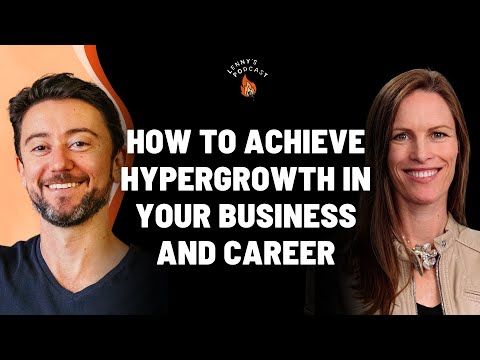
How to achieve hypergrowth in your business and career | Carilu Dietrich (Atlassian)
Carilu Dietrich: the story and the lessons
1Carilu Dietrich's path from Oracle to Atlassian to advising
Dietrich picked high-momentum companies and watched her team grow with them. Her Oracle team grew from five to seven people in five years. Her Atlassian team grew from 15 to 100 in four.
She says career speed depends heavily on company momentum, so early on she aimed at big-name winners and kept applying.
She worked late and took on work outside her job. She worked two hours later than her peers for years, aiming to become a CMO. When the head of product left before a major launch, she ran the beta and did release engineering.
She says covering for a departed department head shows executives you have the appetite for more. She also did tours of duty in every marketing function.
A former boss opened the door to Atlassian. She reached Atlassian through Jay Simons, a president she had worked for at two earlier companies.
Her view is that great companies send great people elsewhere, so relationships built through good work pay off later.
She spent five years looking for a company as good as Atlassian. Classy, a nonprofit fundraising company later acquired by GoFundMe, was fine but no Atlassian. She searched five years for her next big one.
She describes chasing industry waves: nonprofit, tech in 1999, B2B, SaaS, dev tools, collaboration and now AI.
Dietrich now advises only eight to ten companies, in a specific size range. Her sweet spot is companies from about $30M to $500M in revenue, after product-market fit. She was at Atlassian from about $100M to $500M, then through the IPO.
Fast-growing teams haven't yet hired anyone who has seen the next stage, so she helps structure the CMO and CEO roles for it. Each client must pass her company health test.
2How Atlassian grew by funding product instead of sales
Atlassian's founders moved the sales budget into product and engineering. They spent two to three times as many dollars on R&D as the companies Atlassian benchmarked against, to build a product that sells itself. A much smaller sales org handled renewals and enterprise deals.
The founders took no outside money except one late financing for early employee liquidity. A 2020 chart still showed the lowest sales and marketing spend and the highest product spend among peers. In her words: "we took all that money and put it into product".
Atlassian sold to existing customers before chasing new ones. Sales first handled renewals, then grew into enterprise help, cross-sell and upsell. Dietrich calls net new prospecting a really expensive way to get customers.
Airtable and Miro apply the same idea: sales engage only after a threshold of users already pays by credit card, sometimes 20 to 40 people at an account.
Atlassian found bundled landings slowed its product-led motion. Bundles like HipChat, Confluence and Jira, or Jira, Bitbucket and Confluence, made buyers weigh several products. A single-product buy like Jira can close in seven days, while bundles take longer and convert less.
Atlassian went back to landing with one product and expanding later. She says bundling still works for sales-led motion at the right stage.
She says to test everything and distrust pundits. Atlassian tested bundles, no bundles, different bundle contents and different days. That testing is how it learned bundles slowed self-serve.
"data-led insights are better than anything any pundit would say on a podcast."
Dietrich uses time to value to decide if product-led growth fits. If users reach value in a couple of days, a product-led motion can work. If the product needs context, customization or help, or buyers don't buy online, hire salespeople.
Vercel works because developers dislike salespeople. Retool expected self-service but users needed hand-holding, so it went sales-led. Hiring sales too far ahead looks like added revenue but drains the business if the product lacks resonance.
She would turn SDRs into sales engineers for non-intuitive products. The first touch for a self-serve trial is someone who guides the prospect along the path, not someone who books a meeting with another salesperson.
This extends product-led growth where the product can't get users all the way to buying alone.
3What Dietrich says drives hypergrowth: loved products and word of mouth
She pairs an amazing product with built-in viral loops. Hypergrowth needs organic and viral spread because you can't pay enough to grow at those rates. A Miro user inviting colleagues to a board is far cheaper than a salesperson.
Whiteboards were the most uploaded asset in Jira for a long time. She has used 1Password for over ten years, at work and then at home on a family plan.
Atlassian built word of mouth with experts, content and community. Atlassian's CEO kept answering in developer forums, and at $150 to $200 million in revenue it added evangelists and engineers to the forums. User groups ran on beer and pizza.
She cites HubSpot's certifications and Weights & Biases engineers who write the blog. Mixed customer and prospect events beat separate, salesy prospect events.
Dietrich says to watch early customers use the product. Gusto's founder sat with his first 200 or so customers while they ran payroll, watching how they felt at each step.
That insight fades at scale, when product managers meet only junior users or administrators.
She funds brand advertising only after the product is excellent. HipChat's campaign could not fix uptime and feature problems, and Slack pulled ahead. Oracle's spend did not fix poor sales experiences.
She has spent hundreds of millions of dollars on awareness across Oracle and Atlassian. Her view: "it's really the product experience and the advertising just amplifies".
She prefers a small, steady ad spend on a few things. Oracle used one boring red-bar template for years, and tests showed far more people recognized its brand without the logo than SAP or IBM. Snowflake's only ad for many years was one billboard on 101.
The best ads are funny, unexpected and true to the product, such as HipChat's "why you no use HipChat" billboard and New Relic's data nerds campaign.
Dietrich says virality is mostly consistency, not a trick. Going from 100 to 500 million at Atlassian never felt easy. It was a slog of new features and listening to customers.
SEO was Atlassian's number one marketing motion, and paid search brought 15 to 25 percent of its leads at the time.
4Dietrich on growth strategy and the CMO job
She treats big growth levers as company strategy, not department goals. Moving up-market needs marketing leads, enterprise product features, research on those customers, informed support and different sales, all at once.
When it fails, marketing or sales gets blamed for lacking leads. "the big growth levers are strategy problems not individual departmental problems".
She advises hiring leaders who have already seen the next stage. She calls this riding the lightning. Hypergrowth companies jump from 10 to 50 to 100 to 200 people in the time others take five or ten years.
Homegrown talent can stay, but needs 2X and 3X leaders, mentors and friends who know what great looks like at the next scale.
CMOs get fired when the CEO doesn't see a revenue partner. Some CMOs focus on pipeline or awareness, and the CEO doubts they know what will drive revenue. Marketing is a big spend that often doesn't convert in a quarter or even a year.
Her answer is a handle on metrics, a solid prediction of which levers to pull, and fluency in the language of the CEO and board.
She says CPO and CMO roles fail often because results are indirect. When a company underperforms, swapping the head of product feels like a fix. In one case a CFO pushed out a chief product officer who refused to skip re-platforming, and the CFO's plan then failed.
Canva still has its first engineering hire as CTO and its first marketing hire as CMO.
She has teams write the press release first. Borrowed from Amazon, it gives a product a theme marketing can sell and tests whether it will resonate. It avoids handing marketing a bag of doorknobs when people want to buy the door.
Her team tried it at Classy, but not at mass scale.
5Carilu Dietrich's advice on choosing companies and growing a career
Dietrich scores companies on a checklist of health signals. She checks Rule of 40, recent investor rounds, NPS, net dollar retention, last year's growth, burn rate, market rank (Forrester or Gartner) and Glassdoor reviews.
Snowflake was the benchmark for net dollar retention at roughly 165 to 180, where 100 means customers renew at the same dollar amount.
She says to tie your work to revenue and learn the whole business. The C-suite job is about how the business fits together. She advises speaking in CEO and board terms and getting a strong grip on finance, even when junior.
Her short list for executives: deep expertise, hard work, extra responsibility, a great attitude and a strategic mind.
She treats downturns as a chance to move faster. While others ease off, she raised her hand for projects no one covered and didn't fixate on title or salary. Some of her biggest growth came in the 2000s downturn and in 2008.
If unemployed, she says keep your endurance, don't settle for a bad job and work your network. Industry matters too: she cites The Millionaire Next Door on how widely profit margins differ by industry.
Dietrich asks candidates how many people they have fired. The answer shows how long and how many people they have managed, and how they lead under pressure. She follows up on whether it was layoffs, a performance exit or a restructure.
Candidates aren't prepared for it, so she hears the real story, including their compassion and drive for the business.
She filters opportunities by energy: hell yes or no. If an opportunity doesn't excite her and give her energy, she says it is hard to be the best at it. She pairs this with asking better questions, which she calls more Yoda, less Wonder Woman.
For fear, her rule is that worrying is wasted energy: thank it for the urgency, then list what you can control and do next.

How to achieve hypergrowth in your business and career | Carilu Dietrich (Atlassian)
Carilu Dietrich explains what hypergrowth companies share (a product people love, built-in virality, leaders who can scale ahead of the company) and how Atlassian grew with minimal sales spend and heavy product investment. She also covers when to hire sales, why bundling hurts product-led growth, and how to pick a company that will accelerate your career.
Dietrich picked high-momentum companies and watched her team grow with them. Her Oracle team grew from five to seven people in five years. Her Atlassian team grew from 15 to 100 in four.
She says career speed depends heavily on company momentum, so early on she aimed at big-name winners and kept applying.
She worked late and took on work outside her job. She worked two hours later than her peers for years, aiming to become a CMO. When the head of product left before a major launch, she ran the beta and did release engineering.
She says covering for a departed department head shows executives you have the appetite for more. She also did tours of duty in every marketing function.
A former boss opened the door to Atlassian. She reached Atlassian through Jay Simons, a president she had worked for at two earlier companies.
Her view is that great companies send great people elsewhere, so relationships built through good work pay off later.
She spent five years looking for a company as good as Atlassian. Classy, a nonprofit fundraising company later acquired by GoFundMe, was fine but no Atlassian. She searched five years for her next big one.
She describes chasing industry waves: nonprofit, tech in 1999, B2B, SaaS, dev tools, collaboration and now AI.
Dietrich now advises only eight to ten companies, in a specific size range. Her sweet spot is companies from about $30M to $500M in revenue, after product-market fit. She was at Atlassian from about $100M to $500M, then through the IPO.
Fast-growing teams haven't yet hired anyone who has seen the next stage, so she helps structure the CMO and CEO roles for it. Each client must pass her company health test.
Atlassian's founders moved the sales budget into product and engineering. They spent two to three times as many dollars on R&D as the companies Atlassian benchmarked against, to build a product that sells itself. A much smaller sales org handled renewals and enterprise deals.
The founders took no outside money except one late financing for early employee liquidity. A 2020 chart still showed the lowest sales and marketing spend and the highest product spend among peers. In her words: "we took all that money and put it into product".
Atlassian sold to existing customers before chasing new ones. Sales first handled renewals, then grew into enterprise help, cross-sell and upsell. Dietrich calls net new prospecting a really expensive way to get customers.
Airtable and Miro apply the same idea: sales engage only after a threshold of users already pays by credit card, sometimes 20 to 40 people at an account.
Atlassian found bundled landings slowed its product-led motion. Bundles like HipChat, Confluence and Jira, or Jira, Bitbucket and Confluence, made buyers weigh several products. A single-product buy like Jira can close in seven days, while bundles take longer and convert less.
Atlassian went back to landing with one product and expanding later. She says bundling still works for sales-led motion at the right stage.
She says to test everything and distrust pundits. Atlassian tested bundles, no bundles, different bundle contents and different days. That testing is how it learned bundles slowed self-serve.
"data-led insights are better than anything any pundit would say on a podcast."
Dietrich uses time to value to decide if product-led growth fits. If users reach value in a couple of days, a product-led motion can work. If the product needs context, customization or help, or buyers don't buy online, hire salespeople.
Vercel works because developers dislike salespeople. Retool expected self-service but users needed hand-holding, so it went sales-led. Hiring sales too far ahead looks like added revenue but drains the business if the product lacks resonance.
She would turn SDRs into sales engineers for non-intuitive products. The first touch for a self-serve trial is someone who guides the prospect along the path, not someone who books a meeting with another salesperson.
This extends product-led growth where the product can't get users all the way to buying alone.
She pairs an amazing product with built-in viral loops. Hypergrowth needs organic and viral spread because you can't pay enough to grow at those rates. A Miro user inviting colleagues to a board is far cheaper than a salesperson.
Whiteboards were the most uploaded asset in Jira for a long time. She has used 1Password for over ten years, at work and then at home on a family plan.
Atlassian built word of mouth with experts, content and community. Atlassian's CEO kept answering in developer forums, and at $150 to $200 million in revenue it added evangelists and engineers to the forums. User groups ran on beer and pizza.
She cites HubSpot's certifications and Weights & Biases engineers who write the blog. Mixed customer and prospect events beat separate, salesy prospect events.
Dietrich says to watch early customers use the product. Gusto's founder sat with his first 200 or so customers while they ran payroll, watching how they felt at each step.
That insight fades at scale, when product managers meet only junior users or administrators.
She funds brand advertising only after the product is excellent. HipChat's campaign could not fix uptime and feature problems, and Slack pulled ahead. Oracle's spend did not fix poor sales experiences.
She has spent hundreds of millions of dollars on awareness across Oracle and Atlassian. Her view: "it's really the product experience and the advertising just amplifies".
She prefers a small, steady ad spend on a few things. Oracle used one boring red-bar template for years, and tests showed far more people recognized its brand without the logo than SAP or IBM. Snowflake's only ad for many years was one billboard on 101.
The best ads are funny, unexpected and true to the product, such as HipChat's "why you no use HipChat" billboard and New Relic's data nerds campaign.
Dietrich says virality is mostly consistency, not a trick. Going from 100 to 500 million at Atlassian never felt easy. It was a slog of new features and listening to customers.
SEO was Atlassian's number one marketing motion, and paid search brought 15 to 25 percent of its leads at the time.
She treats big growth levers as company strategy, not department goals. Moving up-market needs marketing leads, enterprise product features, research on those customers, informed support and different sales, all at once.
When it fails, marketing or sales gets blamed for lacking leads. "the big growth levers are strategy problems not individual departmental problems".
She advises hiring leaders who have already seen the next stage. She calls this riding the lightning. Hypergrowth companies jump from 10 to 50 to 100 to 200 people in the time others take five or ten years.
Homegrown talent can stay, but needs 2X and 3X leaders, mentors and friends who know what great looks like at the next scale.
CMOs get fired when the CEO doesn't see a revenue partner. Some CMOs focus on pipeline or awareness, and the CEO doubts they know what will drive revenue. Marketing is a big spend that often doesn't convert in a quarter or even a year.
Her answer is a handle on metrics, a solid prediction of which levers to pull, and fluency in the language of the CEO and board.
She says CPO and CMO roles fail often because results are indirect. When a company underperforms, swapping the head of product feels like a fix. In one case a CFO pushed out a chief product officer who refused to skip re-platforming, and the CFO's plan then failed.
Canva still has its first engineering hire as CTO and its first marketing hire as CMO.
She has teams write the press release first. Borrowed from Amazon, it gives a product a theme marketing can sell and tests whether it will resonate. It avoids handing marketing a bag of doorknobs when people want to buy the door.
Her team tried it at Classy, but not at mass scale.
Dietrich scores companies on a checklist of health signals. She checks Rule of 40, recent investor rounds, NPS, net dollar retention, last year's growth, burn rate, market rank (Forrester or Gartner) and Glassdoor reviews.
Snowflake was the benchmark for net dollar retention at roughly 165 to 180, where 100 means customers renew at the same dollar amount.
She says to tie your work to revenue and learn the whole business. The C-suite job is about how the business fits together. She advises speaking in CEO and board terms and getting a strong grip on finance, even when junior.
Her short list for executives: deep expertise, hard work, extra responsibility, a great attitude and a strategic mind.
She treats downturns as a chance to move faster. While others ease off, she raised her hand for projects no one covered and didn't fixate on title or salary. Some of her biggest growth came in the 2000s downturn and in 2008.
If unemployed, she says keep your endurance, don't settle for a bad job and work your network. Industry matters too: she cites The Millionaire Next Door on how widely profit margins differ by industry.
Dietrich asks candidates how many people they have fired. The answer shows how long and how many people they have managed, and how they lead under pressure. She follows up on whether it was layoffs, a performance exit or a restructure.
Candidates aren't prepared for it, so she hears the real story, including their compassion and drive for the business.
She filters opportunities by energy: hell yes or no. If an opportunity doesn't excite her and give her energy, she says it is hard to be the best at it. She pairs this with asking better questions, which she calls more Yoda, less Wonder Woman.
For fear, her rule is that worrying is wasted energy: thank it for the urgency, then list what you can control and do next.

 Atlassian