Sri Batchu
Head of Growth at Ramp; previously growth strategy and operations at Instacart, early employee at Opendoor
Where to hear and read about Sri Batchu1 episode or test

Sri Batchu is Head of Growth at Ramp, and before that ran growth strategy and operations at Instacart and was an early employee at Opendoor. The thing most worth learning from him is to run ordinary growth channels on data, automation and short cycle times, judged by a few simple metric rules.
Failure is not that you didn't drive revenue. Failure is not learning.
Lessons from scaling Ramp | Sri Batchu (Ramp, Instacart, Opendoor)
Sri Batchu: the story and the lessons
1How Sri Batchu helped Ramp reach $100M run rate in two years
Batchu says Ramp's channel mix looks like its peers', and its edge is data. Ramp reached $100M run rate in two years and grew 4x the following year with under 500 people. Its revenue per employee is well above competitors'.
Each channel gets a mandate to use better data and automation, which started well before AI became a buzzword. The finance team sets ambitious goals, and Ramp has beaten them for 16 to 18 months.
Ramp put founders and operators on its cap table and they became customers. Founders Eric and Kareem had sold an earlier company, so they arrived with a strong reputation. Many cap table founders and their companies became the first customers.
Investor introductions mattered less than expected. A peer who actually uses the product persuades more than an investor's opinion.
New customers, not expansion, drive most of Ramp's growth. Early customers grew, and products like Bill Pay and Flex let them spend more on Ramp. Ramp still adds so many new customers that expansion is far less material than you might think.
Growth engineers at Ramp own the sales quota, not product metrics. The growth engineering team shares sales' goal of pipeline driven and channel payback period. Engineers pick projects bottom up: finding prospects, tailoring messaging, ranking responses and drafting replies with third-party data and AI.
The team has worked on sales automation for almost two years. Sales is one of Ramp's most efficient channels.
Batchu treats each fundraise as a market moment for top of funnel. Each Ramp round has driven a non-trivial amount of top-of-funnel. He adds something unique about the business to the announcement so readers get real value.
He calls PR often overrated as a growth lever. It works when the story is genuinely interesting, such as a fast-growing company with notable founders. Newsletters and podcasts reach tech founders and help recruiting, while traditional PR reaches the non-startup majority.
A small skunk works team tests ideas that fit no single channel. It ran small cross-channel tests on TikTok and Reddit, on making referrals more delightful, and on first-party events.
When a small test works, Ramp invests more and scales it later.
2Batchu's metric rules: North Star, payback and activation
Batchu measures spend by payback period on contribution margin, not CAC. Chasing low CAC pulls in less valuable customers, and LTV is a guess like a DCF. His example: $5,000 to acquire a customer earning $500 a month in profit is a 10 month payback.
The exec team and board set an acceptable payback and everyone drives the blended number down. Contribution margin counts every variable cost, including support, and the assumptions rest on recent data that can be checked sooner than LTV.
He builds a translation layer that converts every team's metric into one North Star. At Instacart the North Star was monthly active orders, used by 300-plus growth people. At Ramp the recent one was dollars of SQL pipeline.
Each team owns a metric it controls, such as app load time, and finance and data estimate what a unit is worth in the North Star. Factors are updated every six months and used for big decisions, and the culture accepts them as roughly 70/30 or 80/20 right.
Batchu pairs one volume metric with one efficiency metric. A good volume metric ties clearly to company value yet is intuitive and movable by teams working on small details. Revenue sits too far down the line for growth teams to influence.
The North Star changes as the goal shifts between users, engagement and monetization. He also says to pick one priority at a time, since no team can optimize everything at once.
He defines activation as a specific set of early actions. Facebook used 10 friends in seven days and Instacart used three orders in the first month. Ramp uses four events in a customer's first 30 days, and its activation team focuses on them.
Each company has to find its own events.
Batchu uses long-term holdouts to prove each team's cumulative impact. Each surface area, such as checkout, keeps a small long-term holdout so users on this half's experience can be compared with last half's. Regression is the other way to derive translation factors.
Some Instacart users have never seen ads because they sit in a permanent advertising holdout.
3How Batchu runs experiments and sequences channels
Batchu designs tests so that failure settles the question. B2B rarely has a large sample, so he maximizes the treatment effect: stack every tactic into one test, then cut costs if it works. If the best version fails, you can stop revisiting the idea.
Account-based marketing is often tried halfway, dropped, and rerun by each new go-to-market leader. Ramp tested it with the maximum number of target accounts and ways of touching them. If it works, run a version with half the tactics.
He applies maximal tests only to big, slow, costly experiments. For one email, change trigger, text, personalization and design together. The downside is that a failure will not show which change mattered.
Website conversion and email fail fast and can be redone, so they need less of this.
Batchu defines failure as not learning and expects about 30% of tests to win. Growth experiments in his history succeed about 30% of the time. He celebrates failed experiments that teach something so people keep taking risks.
He adds B2B channels from cheapest to most expensive. Start with founder-led sales, then the first sales hires, then low-cost targeted marketing (content, community, small events, then PR). Paid and brand come next, with SEO starting around the same time as paid.
Channels get more expensive but more effective as you learn your customers. SEO is not especially expensive, it just takes time, and without domain authority, backlinks or media presence content can go a long time without traction. Customers, value proposition and competition still change the path.
Ramp blocks personal-email signups because they signal low intent. Ramp does not allow signups with personal email addresses, which usually come from very low-intent visitors.
It is building a route for those users, often founders without a company domain yet. Until then, stuck users can reach Sri on Twitter or by email.
4How Ramp keeps its speed and its team shape
Ramp's CEO makes the team think in days. An internal site counts days since Ramp's founding (1529 at recording), and the CEO shows it at every board meeting and all-hands. The rule is never put out tomorrow what you can get done today.
Investor Keith Rabois called Ramp's product velocity "absolutely unprecedented in my 21 years working with technology businesses." The pace can be stressful, so Ramp counts on hiring A players motivated by it.
Every item has a named owner and deadline, and focus time is protected. People reply quickly on Slack even if work isn't finished, and Ramp builds in public so work across teams is visible. Calendar blocking and calendar audits against weekly priorities protect focus.
Constant replies are not required. Batchu tracks the quality and impact of work, not hours.
Batchu merged product and marketing sprint planning into one cycle. Lifecycle marketers now join the product activation team's two-week sprints. Teams cross-prioritize together on the same cadence and systems.
He says this had tremendous impact on how the teams work together.
He says culture, rituals and cadence matter more than team structure. Structure is a red herring. He wants simple metrics, data-driven hypotheses, MVP-style execution, and people who can fail, learn and iterate quickly.
Ramp still organizes by channel: paid marketing, lifecycle CRM, field marketing, field sales support, sales, self-serve activation, and SEO, website and inbound lead management. One growth and sales engineering team supports all of them.
Ramp buys standard tools and builds only what is proprietary. It uses Airtable for sprint planning and scoring and Mutiny for website personalization. It builds in-house only strategic automation such as prospecting, lead scoring and customer messaging.
Instacart and Opendoor built their own experiment tracking and A/B testing. Of the build-it-yourself pull, Batchu says Ramp "has historically been good at not falling into that trap."
5How Batchu hires, pays and thinks through problems
He finds hires by mapping the best companies at the craft. Ask your network for the best person in a role, get introductions, and ask each who else is best, aiming for 20 to 30 people. Limit it to companies one or two stages ahead.
Without a network, public data works: for a CRM marketing lead, use Similarweb to see what share of each company's traffic comes from email, then recruit from the top.
Batchu wants top operators paid far more than the rest. He calls it a spicy take: small teams of strong people beat large teams of mediocre ones, so pay should follow impact rather than narrow bands.
He sees it as a competitive advantage for companies that can do it.
He says talent density depends on retention and performance management too. Interviews give many false positives, and you only know someone after working closely with them. Companies that hesitate to part ways with poor fits lower their talent bar.
Parting is almost never about a bad actor. It is usually a poor fit with the role, skills or life goals.
Batchu asks candidates to describe something they are bad at and still do. Candidates who cannot answer are a yellow flag, since they only do what they succeed at and tend to quit at the first sign of trouble.
A compelling story about a non-success pursued for its own sake is usually a winning answer.
Batchu uses MECE to break down any problem before brainstorming. For slowing revenue growth, split revenue per customer from number of customers, then split customers into acquisition, activation and retention.
It surfaces solutions you would have missed and shows others the analysis is comprehensive. He calls spreadsheets and frameworks his love languages.

Lessons from scaling Ramp | Sri Batchu (Ramp, Instacart, Opendoor)
Ramp's head of growth explains how a data- and technology-driven growth system, a velocity culture and a few simple metric rules powered Ramp to $100M run rate in two years and 4X growth in the following year. He covers North Star metrics, payback period, conclusive experiments, channel sequencing for B2B and hiring.
Batchu says Ramp's channel mix looks like its peers', and its edge is data. Ramp reached $100M run rate in two years and grew 4x the following year with under 500 people. Its revenue per employee is well above competitors'.
Each channel gets a mandate to use better data and automation, which started well before AI became a buzzword. The finance team sets ambitious goals, and Ramp has beaten them for 16 to 18 months.
Ramp put founders and operators on its cap table and they became customers. Founders Eric and Kareem had sold an earlier company, so they arrived with a strong reputation. Many cap table founders and their companies became the first customers.
Investor introductions mattered less than expected. A peer who actually uses the product persuades more than an investor's opinion.
New customers, not expansion, drive most of Ramp's growth. Early customers grew, and products like Bill Pay and Flex let them spend more on Ramp. Ramp still adds so many new customers that expansion is far less material than you might think.
Growth engineers at Ramp own the sales quota, not product metrics. The growth engineering team shares sales' goal of pipeline driven and channel payback period. Engineers pick projects bottom up: finding prospects, tailoring messaging, ranking responses and drafting replies with third-party data and AI.
The team has worked on sales automation for almost two years. Sales is one of Ramp's most efficient channels.
Batchu treats each fundraise as a market moment for top of funnel. Each Ramp round has driven a non-trivial amount of top-of-funnel. He adds something unique about the business to the announcement so readers get real value.
He calls PR often overrated as a growth lever. It works when the story is genuinely interesting, such as a fast-growing company with notable founders. Newsletters and podcasts reach tech founders and help recruiting, while traditional PR reaches the non-startup majority.
A small skunk works team tests ideas that fit no single channel. It ran small cross-channel tests on TikTok and Reddit, on making referrals more delightful, and on first-party events.
When a small test works, Ramp invests more and scales it later.
Batchu measures spend by payback period on contribution margin, not CAC. Chasing low CAC pulls in less valuable customers, and LTV is a guess like a DCF. His example: $5,000 to acquire a customer earning $500 a month in profit is a 10 month payback.
The exec team and board set an acceptable payback and everyone drives the blended number down. Contribution margin counts every variable cost, including support, and the assumptions rest on recent data that can be checked sooner than LTV.
He builds a translation layer that converts every team's metric into one North Star. At Instacart the North Star was monthly active orders, used by 300-plus growth people. At Ramp the recent one was dollars of SQL pipeline.
Each team owns a metric it controls, such as app load time, and finance and data estimate what a unit is worth in the North Star. Factors are updated every six months and used for big decisions, and the culture accepts them as roughly 70/30 or 80/20 right.
Batchu pairs one volume metric with one efficiency metric. A good volume metric ties clearly to company value yet is intuitive and movable by teams working on small details. Revenue sits too far down the line for growth teams to influence.
The North Star changes as the goal shifts between users, engagement and monetization. He also says to pick one priority at a time, since no team can optimize everything at once.
He defines activation as a specific set of early actions. Facebook used 10 friends in seven days and Instacart used three orders in the first month. Ramp uses four events in a customer's first 30 days, and its activation team focuses on them.
Each company has to find its own events.
Batchu uses long-term holdouts to prove each team's cumulative impact. Each surface area, such as checkout, keeps a small long-term holdout so users on this half's experience can be compared with last half's. Regression is the other way to derive translation factors.
Some Instacart users have never seen ads because they sit in a permanent advertising holdout.
Batchu designs tests so that failure settles the question. B2B rarely has a large sample, so he maximizes the treatment effect: stack every tactic into one test, then cut costs if it works. If the best version fails, you can stop revisiting the idea.
Account-based marketing is often tried halfway, dropped, and rerun by each new go-to-market leader. Ramp tested it with the maximum number of target accounts and ways of touching them. If it works, run a version with half the tactics.
He applies maximal tests only to big, slow, costly experiments. For one email, change trigger, text, personalization and design together. The downside is that a failure will not show which change mattered.
Website conversion and email fail fast and can be redone, so they need less of this.
Batchu defines failure as not learning and expects about 30% of tests to win. Growth experiments in his history succeed about 30% of the time. He celebrates failed experiments that teach something so people keep taking risks.
He adds B2B channels from cheapest to most expensive. Start with founder-led sales, then the first sales hires, then low-cost targeted marketing (content, community, small events, then PR). Paid and brand come next, with SEO starting around the same time as paid.
Channels get more expensive but more effective as you learn your customers. SEO is not especially expensive, it just takes time, and without domain authority, backlinks or media presence content can go a long time without traction. Customers, value proposition and competition still change the path.
Ramp blocks personal-email signups because they signal low intent. Ramp does not allow signups with personal email addresses, which usually come from very low-intent visitors.
It is building a route for those users, often founders without a company domain yet. Until then, stuck users can reach Sri on Twitter or by email.
Ramp's CEO makes the team think in days. An internal site counts days since Ramp's founding (1529 at recording), and the CEO shows it at every board meeting and all-hands. The rule is never put out tomorrow what you can get done today.
Investor Keith Rabois called Ramp's product velocity "absolutely unprecedented in my 21 years working with technology businesses." The pace can be stressful, so Ramp counts on hiring A players motivated by it.
Every item has a named owner and deadline, and focus time is protected. People reply quickly on Slack even if work isn't finished, and Ramp builds in public so work across teams is visible. Calendar blocking and calendar audits against weekly priorities protect focus.
Constant replies are not required. Batchu tracks the quality and impact of work, not hours.
Batchu merged product and marketing sprint planning into one cycle. Lifecycle marketers now join the product activation team's two-week sprints. Teams cross-prioritize together on the same cadence and systems.
He says this had tremendous impact on how the teams work together.
He says culture, rituals and cadence matter more than team structure. Structure is a red herring. He wants simple metrics, data-driven hypotheses, MVP-style execution, and people who can fail, learn and iterate quickly.
Ramp still organizes by channel: paid marketing, lifecycle CRM, field marketing, field sales support, sales, self-serve activation, and SEO, website and inbound lead management. One growth and sales engineering team supports all of them.
Ramp buys standard tools and builds only what is proprietary. It uses Airtable for sprint planning and scoring and Mutiny for website personalization. It builds in-house only strategic automation such as prospecting, lead scoring and customer messaging.
Instacart and Opendoor built their own experiment tracking and A/B testing. Of the build-it-yourself pull, Batchu says Ramp "has historically been good at not falling into that trap."
He finds hires by mapping the best companies at the craft. Ask your network for the best person in a role, get introductions, and ask each who else is best, aiming for 20 to 30 people. Limit it to companies one or two stages ahead.
Without a network, public data works: for a CRM marketing lead, use Similarweb to see what share of each company's traffic comes from email, then recruit from the top.
Batchu wants top operators paid far more than the rest. He calls it a spicy take: small teams of strong people beat large teams of mediocre ones, so pay should follow impact rather than narrow bands.
He sees it as a competitive advantage for companies that can do it.
He says talent density depends on retention and performance management too. Interviews give many false positives, and you only know someone after working closely with them. Companies that hesitate to part ways with poor fits lower their talent bar.
Parting is almost never about a bad actor. It is usually a poor fit with the role, skills or life goals.
Batchu asks candidates to describe something they are bad at and still do. Candidates who cannot answer are a yellow flag, since they only do what they succeed at and tend to quit at the first sign of trouble.
A compelling story about a non-success pursued for its own sake is usually a winning answer.
Batchu uses MECE to break down any problem before brainstorming. For slowing revenue growth, split revenue per customer from number of customers, then split customers into acquisition, activation and retention.
It surfaces solutions you would have missed and shows others the analysis is comprehensive. He calls spreadsheets and frameworks his love languages.
More from Ramp
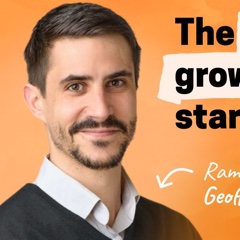 Guest
Geoff Charles
VP of Product at Ramp
 Ramp1 source · 18 tips
Austin Hay
Head of Marketing Technology at Ramp, former VP of Business Operations at Runway and VP of Growth at mParticle, Reforge instructor
Ramp1 source · 19 tipsEric Glyman
Co-founder and co-CEO of Ramp
Ramp 1 source · 19 tips