Austin Hay
Head of Marketing Technology at Ramp, former VP of Business Operations at Runway and VP of Growth at mParticle, Reforge instructor
Where to hear and read about Austin Hay1 episode or test

Austin Hay is Head of Marketing Technology at Ramp, with earlier roles as VP of Business Operations at Runway and VP of Growth at mParticle, and he teaches Martech at Reforge. The thing most worth learning from him is to collect attribution data from day one and to start every tooling decision from the problem and the people, not the tool.
you buy the tool to get 90% of the way there and then you build the cool thing on top with the other 10%
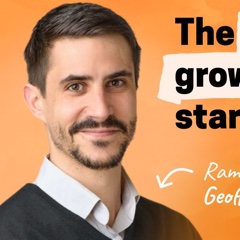
The ultimate guide to Martech | Austin Hay (Reforge, Ramp, Runway)
Austin Hay: the story and the lessons
1Austin Hay's background and what Martech is
Hay has built Martech at startups, a CDP vendor and big brands. He was the fourth employee at the unicorn Branch Metrics, then VP of Growth at mParticle, VP of Business Operations at Runway, and is now Head of Marketing Technology at Ramp.
He has advised Notion, Airbnb, Walmart, Postmates and Robinhood. He is a former civil engineer who taught himself to program.
Hay treats Martech as product management for the systems behind growth. The job has two halves: people and process, and the system or platform, covering both third party and homegrown tools. A growth role uses tools to win users, while Martech owns the systems those tools run on.
He separates it from marketing operations, which sets up campaigns and email blasts and is not always technical. Martech is an engineering role that supports the people running campaigns.
Hay says Martech becomes its own job at 100 to 150 people. Under about 30 to 40 people, the growth hire who sends CDP data to the ad network is the Martech person. Past 100 to 150, someone must own the data flow, the schema, contracts and permissions.
"A hundred to 150 people is the critical mass." Letting everyone manage tools at that size is as risky as a village approach to SSO.
Hay says pain, not a wish for efficiency, triggers the hire. A typical case is the engineer who stood up every tool two years ago and is now overwhelmed. Teams also stall plans because nobody knows how Braze or other email and data tools were set up.
Hay hears this story from businesses every year. Email often brings recurring customers back, so a wrong change is costly.
Hay says half the job is admin work that should be automated. PII requests, contracts and tool access eat time at large companies. He sets access by role, tenure and department by rule, not one approval click at a time.
Loose permissions do real damage: "you give edit access to somebody who wants HubSpot and they send a fake email test to a million people."
2How Austin Hay sets up tracking and attribution
Hay captures first and last touch UTMs and click IDs from day one. On every visit he stores the URL, the referrer, all UTMs and each ad network's click parameters (Google, Facebook, TikTok, Microsoft). First values are kept and last values are overwritten on each new visit.
Attribution data cannot be rebuilt later. Teams that skip it find they have nothing when they want multi-touch results. "Let's just get the infrastructure right from the beginning."
Hay writes attribution data to both the user profile and every event. First and last values go on the profile, and page view events carry the last-touch values at that moment. The warehouse team can then coalesce the last UTMs across a user's events to rebuild first, middle and last touches.
Most third party CDPs give only a user object and an event object, so tracking must be designed around that. Snowplow is the only CDP he knows that lets you control the schema.
Hay sends downstream opportunity data back to ad networks. At Ramp, the team tied top of funnel data to bottom of funnel opportunity data and sent it to Facebook and others as a synthetic event. Campaigns then optimized on real opportunity value, not button clicks.
He frames it as a Martech project done with the user acquisition team to improve CAC.
Hay expects paid web traffic to be misread as organic. Browsers strip URL parameters on redirect and cookie blockers stop third party tools from tracking anonymous visitors. A growing share of paid signups therefore looks organic.
He says to account for this when judging channel performance.
Hay says marketers must learn to decide from probabilistic data. Deterministic matching of an ad to an install through the IDFA worked from 2010 to 2020 and is now mostly gone. Much of his current work is modeling about 30% of the population and extrapolating to 100%.
App attribution on iOS 14 is a different and harder problem than web attribution.
Hay tells most businesses they are not ready for MMM. He asks whether the team has enough data to run the model and how its output would change ad decisions. Most companies are better served by multi-touch attribution plus probabilistic modeling.
He says he is not an MMM expert and drew on a conversation with Michael of Recast. Geo-based billboard tests can isolate a channel, but coordinating them across cities is hard.
3How Austin Hay chooses tools and makes decisions
Hay starts every request with the problem, then people, then system. Most people jump straight to the system and ask for admin access to a tool. Hay works backward: state the problem, list who is involved, then design the system.
In his example a sales manager wants easier onboarding of new hires, and the CRO permission and seller training questions come before any automation. He repeats this to every hire at Ramp.
Hay replaces build versus buy with build and buy. Buy a third party tool to get most of the way, then build on top for the rest. A financial model for one company wanting its own A/B testing tool showed buying at the lowest price and building around it saved money and moved faster.
A vendor whose large customer has invested engineering around its product is more willing to accept SDK changes or feature requests. "Build versus buy is a very narrowly constricting decision tree."
Hay picks a CDP or warehouse plus reverse ETL by engineering capacity. Teams with few engineers should buy a CDP and integrate one SDK. Teams with a Snowflake and dbt culture fit reverse ETL better, and Ramp uses Hightouch.
Either way, set a rule for when data moves from the ingestion point and when from the warehouse. Trouble starts when data moves haphazardly.
Hay negotiates tool contracts for the scale a company will reach. A rate that works at 500 monthly tracked users can hurt at a million. He aims for total tooling cost per person to fall as users and staff grow.
At mParticle, vendor strategy meant designing cost structures so the company earned more as customers scaled. Large companies often run two CDPs or attribution tools, and merging them can save about a million dollars.
Hay asks what breaks in a year if nothing changes. SSO costs about $2,000 and two days to set up, and skipping it eventually means hiring an IT person to do it tool by tool. He weighs small cheap investments against catastrophic future risk without overbuilding and missing product market fit.
"What's going to happen a year from now if I don't change anything." The company will outlast any one growth manager.
Hay says to settle the B2B2C data path early. B2B2C needs the user and event model of B2C tools plus company-level CRM objects. HubSpot plus Salesforce, which he saw at Notion and Ramp, has no clean answer for mapping users to companies.
Decide early how top of funnel users merge into the Salesforce side, and weigh the added complexity against who can manage it.
Hay delays decisions as long as he can, which he calls thinking gray. He takes the idea from Steven B. Sample's The Contrarian's Guide to Leadership. A boss, an OKR or a complaint often pushes a decision nobody needs yet.
He applies the same patience to judging people. "Not decide for as long as you possibly can before you have to decide."
4How Austin Hay places and hires Martech people
Hay puts Martech under growth in B2C and avoids decentralized ops. In B2C the Martech lead sits beside or under the head of growth and must be a strong technical architect. Embedding an ops person in each org spreads resources thin.
"As you add more operational people, it just creates more systems." In B2B there is no single right answer: Ramp started Martech in rev ops, moved it to the CMO org, and is now moving it back.
Hay wants a hands-on expert who persuades across teams. The best hire stays an individual contributor as the most senior technical expert on all systems. Skill at managing up, sideways and down counts more than how many people they have managed.
He calls the role a game of persuasion and salesmanship, like a quarterback calling plays across departments.
Hay hires for curiosity and scrappy engineering skill. No one can master the huge number of tools, so candidates must enjoy learning fast. They also need enough JavaScript or Python to read API docs and make a request.
He puts the investment at no more than six months of coding study for a marketing ops or paid performance person.
Hay screens for tool bias with a Friday audit question. He asks: you start tomorrow and must report by Friday on what to change; what do you do? Weak candidates propose tools they used before, and strong ones ask what problems the company is trying to solve.
"I really like to hire people who are not tool specific, who are more tool agnostic."
Hay asks candidates how they prepared for the interview. The answer shows how a person plans and thinks in systems. A candidate who must be prompted for each step is not a systems thinker.
"The more interesting complex the answer, the more interesting complex the candidate." He also asks about the hardest thing they overcame this year, which makes interviews more honest and calms candidates.
Hay asks for financials before joining a company. A refusal to share them means the company is hiding something or does not trust its senior leaders. He treats that as a real red flag.
He calls resume gaps and school names false flags. One candidate with a two-year gap spent it on a degree and taught himself to program.

The ultimate guide to Martech | Austin Hay (Reforge, Ramp, Runway)
Explains what marketing technology is, when a company needs a dedicated Martech person, and how to set up tracking, tooling and attribution so growth keeps scaling. The practical value is a concrete attribution data setup, a build-and-buy approach to tools, and hiring and decision frameworks drawn from Airbnb, Notion, Postmates, Walmart and Ramp.
Hay has built Martech at startups, a CDP vendor and big brands. He was the fourth employee at the unicorn Branch Metrics, then VP of Growth at mParticle, VP of Business Operations at Runway, and is now Head of Marketing Technology at Ramp.
He has advised Notion, Airbnb, Walmart, Postmates and Robinhood. He is a former civil engineer who taught himself to program.
Hay treats Martech as product management for the systems behind growth. The job has two halves: people and process, and the system or platform, covering both third party and homegrown tools. A growth role uses tools to win users, while Martech owns the systems those tools run on.
He separates it from marketing operations, which sets up campaigns and email blasts and is not always technical. Martech is an engineering role that supports the people running campaigns.
Hay says Martech becomes its own job at 100 to 150 people. Under about 30 to 40 people, the growth hire who sends CDP data to the ad network is the Martech person. Past 100 to 150, someone must own the data flow, the schema, contracts and permissions.
"A hundred to 150 people is the critical mass." Letting everyone manage tools at that size is as risky as a village approach to SSO.
Hay says pain, not a wish for efficiency, triggers the hire. A typical case is the engineer who stood up every tool two years ago and is now overwhelmed. Teams also stall plans because nobody knows how Braze or other email and data tools were set up.
Hay hears this story from businesses every year. Email often brings recurring customers back, so a wrong change is costly.
Hay says half the job is admin work that should be automated. PII requests, contracts and tool access eat time at large companies. He sets access by role, tenure and department by rule, not one approval click at a time.
Loose permissions do real damage: "you give edit access to somebody who wants HubSpot and they send a fake email test to a million people."
Hay captures first and last touch UTMs and click IDs from day one. On every visit he stores the URL, the referrer, all UTMs and each ad network's click parameters (Google, Facebook, TikTok, Microsoft). First values are kept and last values are overwritten on each new visit.
Attribution data cannot be rebuilt later. Teams that skip it find they have nothing when they want multi-touch results. "Let's just get the infrastructure right from the beginning."
Hay writes attribution data to both the user profile and every event. First and last values go on the profile, and page view events carry the last-touch values at that moment. The warehouse team can then coalesce the last UTMs across a user's events to rebuild first, middle and last touches.
Most third party CDPs give only a user object and an event object, so tracking must be designed around that. Snowplow is the only CDP he knows that lets you control the schema.
Hay sends downstream opportunity data back to ad networks. At Ramp, the team tied top of funnel data to bottom of funnel opportunity data and sent it to Facebook and others as a synthetic event. Campaigns then optimized on real opportunity value, not button clicks.
He frames it as a Martech project done with the user acquisition team to improve CAC.
Hay expects paid web traffic to be misread as organic. Browsers strip URL parameters on redirect and cookie blockers stop third party tools from tracking anonymous visitors. A growing share of paid signups therefore looks organic.
He says to account for this when judging channel performance.
Hay says marketers must learn to decide from probabilistic data. Deterministic matching of an ad to an install through the IDFA worked from 2010 to 2020 and is now mostly gone. Much of his current work is modeling about 30% of the population and extrapolating to 100%.
App attribution on iOS 14 is a different and harder problem than web attribution.
Hay tells most businesses they are not ready for MMM. He asks whether the team has enough data to run the model and how its output would change ad decisions. Most companies are better served by multi-touch attribution plus probabilistic modeling.
He says he is not an MMM expert and drew on a conversation with Michael of Recast. Geo-based billboard tests can isolate a channel, but coordinating them across cities is hard.
Hay starts every request with the problem, then people, then system. Most people jump straight to the system and ask for admin access to a tool. Hay works backward: state the problem, list who is involved, then design the system.
In his example a sales manager wants easier onboarding of new hires, and the CRO permission and seller training questions come before any automation. He repeats this to every hire at Ramp.
Hay replaces build versus buy with build and buy. Buy a third party tool to get most of the way, then build on top for the rest. A financial model for one company wanting its own A/B testing tool showed buying at the lowest price and building around it saved money and moved faster.
A vendor whose large customer has invested engineering around its product is more willing to accept SDK changes or feature requests. "Build versus buy is a very narrowly constricting decision tree."
Hay picks a CDP or warehouse plus reverse ETL by engineering capacity. Teams with few engineers should buy a CDP and integrate one SDK. Teams with a Snowflake and dbt culture fit reverse ETL better, and Ramp uses Hightouch.
Either way, set a rule for when data moves from the ingestion point and when from the warehouse. Trouble starts when data moves haphazardly.
Hay negotiates tool contracts for the scale a company will reach. A rate that works at 500 monthly tracked users can hurt at a million. He aims for total tooling cost per person to fall as users and staff grow.
At mParticle, vendor strategy meant designing cost structures so the company earned more as customers scaled. Large companies often run two CDPs or attribution tools, and merging them can save about a million dollars.
Hay asks what breaks in a year if nothing changes. SSO costs about $2,000 and two days to set up, and skipping it eventually means hiring an IT person to do it tool by tool. He weighs small cheap investments against catastrophic future risk without overbuilding and missing product market fit.
"What's going to happen a year from now if I don't change anything." The company will outlast any one growth manager.
Hay says to settle the B2B2C data path early. B2B2C needs the user and event model of B2C tools plus company-level CRM objects. HubSpot plus Salesforce, which he saw at Notion and Ramp, has no clean answer for mapping users to companies.
Decide early how top of funnel users merge into the Salesforce side, and weigh the added complexity against who can manage it.
Hay delays decisions as long as he can, which he calls thinking gray. He takes the idea from Steven B. Sample's The Contrarian's Guide to Leadership. A boss, an OKR or a complaint often pushes a decision nobody needs yet.
He applies the same patience to judging people. "Not decide for as long as you possibly can before you have to decide."
Hay puts Martech under growth in B2C and avoids decentralized ops. In B2C the Martech lead sits beside or under the head of growth and must be a strong technical architect. Embedding an ops person in each org spreads resources thin.
"As you add more operational people, it just creates more systems." In B2B there is no single right answer: Ramp started Martech in rev ops, moved it to the CMO org, and is now moving it back.
Hay wants a hands-on expert who persuades across teams. The best hire stays an individual contributor as the most senior technical expert on all systems. Skill at managing up, sideways and down counts more than how many people they have managed.
He calls the role a game of persuasion and salesmanship, like a quarterback calling plays across departments.
Hay hires for curiosity and scrappy engineering skill. No one can master the huge number of tools, so candidates must enjoy learning fast. They also need enough JavaScript or Python to read API docs and make a request.
He puts the investment at no more than six months of coding study for a marketing ops or paid performance person.
Hay screens for tool bias with a Friday audit question. He asks: you start tomorrow and must report by Friday on what to change; what do you do? Weak candidates propose tools they used before, and strong ones ask what problems the company is trying to solve.
"I really like to hire people who are not tool specific, who are more tool agnostic."
Hay asks candidates how they prepared for the interview. The answer shows how a person plans and thinks in systems. A candidate who must be prompted for each step is not a systems thinker.
"The more interesting complex the answer, the more interesting complex the candidate." He also asks about the hardest thing they overcame this year, which makes interviews more honest and calms candidates.
Hay asks for financials before joining a company. A refusal to share them means the company is hiding something or does not trust its senior leaders. He treats that as a real red flag.
He calls resume gaps and school names false flags. One candidate with a two-year gap spent it on a degree and taught himself to program.
 Ramp
