Nick Lawton
Co-founder, SideShift (UGC creator campaign platform)
Where to hear and read about Nick Lawton1 episode or test
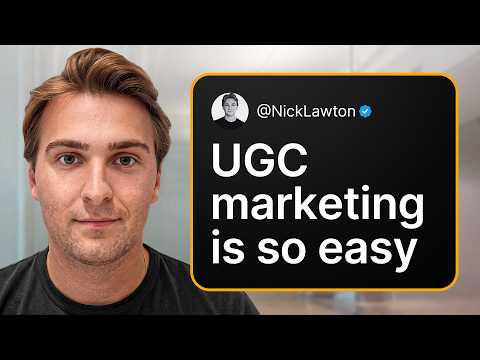
Nick Lawton is co-founder of SideShift, a platform where consumer apps and larger brands run UGC creator campaigns. The thing most worth learning from him is to spend a small creator budget to find content that converts, then put most creators and paid spend behind proven human-made winners.
AI UGC great for vanity views, terrible for conversions at the end of the day. I've not seen it convert.
#1 UGC EXPERT Reveals How To Market Consumer Apps
Nick Lawton: the story and the lessons
1What Nick Lawton sees across SideShift campaigns
Lawton co-founded SideShift, where brands run UGC creator campaigns at every budget size. SideShift hosts Cursor and founders starting with a couple thousand dollars. Its top spenders put in from a quarter million to north of $700,000 per month profitably.
His view on what converts comes from hundreds of campaigns, not one account.
UGC has spread from small consumer apps to large enterprises and entertainment. Lawton says the Cursor team is crushing it on the platform, and movies and songs are picking up, mostly as clipping so far. Peptide and GLP-1 trackers are growing fastest right now.
The typical pattern for a new app in a hot niche is a small start, good results, then aggressive month-to-month scaling.
Lawton says no other channel is working as well right now. Large budgets pay off once content market fit and a creator engine are in place, and CPMs run low once the flywheel turns.
The work is doubling down on the creators and formats that work, which he calls "easier said than done." Founders without budget should make the videos themselves.
2How Lawton runs the first month of a UGC campaign
Lawton spends the first month solving one problem: content market fit. The starting budget is $2,000 to $4,000, which pays about $600 to $800 for 30 to 60 videos plus a $1 to $2 CPM view bonus.
He says many people quit UGC early because they skip this validation phase.
He researches competitor formats and remixes them by 10 to 20%. Before launch he searches TikTok and Instagram for competitors and picks a few formats to remix, then plugs the product in.
Competitor accounts are already warmed up, so an exact copy from a day-zero account often does not take off. A remix also gives the account credibility with the algorithm.
Lawton pays creators a guaranteed base plus a per-view bonus. His default is a $600 base with a $1 to $2 CPM, either uncapped or capped.
Uncapped rewards going viral. Capping the upside a little is an option to keep the campaign profitable.
He defines content market fit as five or six videos above 10,000 views. Out of the whole campaign, about five or six videos clearing 10k views is the signal, after which he studies watch time and retention.
He counts a video as viral only after 100k views, so fit means a repeating pillar format starting to climb, not a single hit.
Lawton runs every creator in one group chat and shares what he learns. He breaks videos down in the chat and asks whether the word, the audio or something else drove the result, then tests that on more videos.
One-on-one management is very hard, and creators who see the learnings are more bought in. His phrase: "a big family."
3How Lawton scales a winning format
After the first winner, Lawton puts about 90% of creators on it. The other 10%, one or two creators, keep testing new formats so a replacement is ready when the winner saturates.
Some operators run one format into the ground. He worries about saturating audiences and keeps "a slightly smaller basket to the side just in case." He says everyone splits it a little differently.
He recruits more creators with a 5 to 10 minute call. New creators come from the marketplace and from applicants he passed over earlier, and he adds them to the group chat.
A shared leaderboard dashboard shows creators the campaign is working. A visible winner makes peers push harder to copy the format, and the first videos of a breakout format often go most viral.
New accounts get no-pitch warm-up videos before any call to action. Warm-up videos chase views to signal to the algorithm that the account is a real person. Controversial formats work best because they spark virality.
His zoo job rejection format converts poorly and is still used a year later because it warms accounts and engages the niche. One video reached 700,000 likes.
Lawton calls a natural call to action UGC's biggest hurdle. The viewer should think the video is interesting and act on their own. SideShift turned organic job market complaint videos into formats by adding a call to action.
His test is whether the video can show your app solving that problem, and he cautions to check how it converts before trusting it.
4Why Lawton says AI UGC does not convert
Lawton judges a video by comments asking about the app, not by views. A peptide slideshow got 17.9 thousand views, but its comments asked what the AI was. Another got only 10,000 views, and its comments asked about the app.
He calls questions about the app "a true testament of strong content." He says ten million organic views at 0.0001% conversion is burning money.
A real creator doing a simple before and after beats AI formats. His example, "my face before peptides," is not AI or a slideshow. The creator passes the uncanny test, and a call to action at the end turns the joke into a sale.
His AI claim rests on his own experience, not shown data. No conversion data is shown, and Lawton sells the platform he recommends.
The 5% engagement bar, the 90/10 split and the 80% performance share also come from his practice, not tested evidence.
Lawton wants AI to run campaign judgment, not make the videos. SideShift's new agent takes a budget, a website and a creator count, then runs the campaign. It aims to cut weak creators and put spend behind winners.
He says generative AI marketing output is mostly slop. SideShift is training its own model on its most and least successful campaigns to replace guesswork on briefs. He expects human labor to stay, with the agent removing busywork.
5How Lawton puts paid spend behind organic winners
Lawton treats organic as the testing ground and paid as the scale. He says to start with organic and understand how that game works, then move budget into paid once content market fit exists.
He sees the biggest gap between organic-only teams and teams running both.
Big brands split budgets about 20% creative and organic, 80% performance. Enterprise teams test dozens of creatives daily. Brands spending six figures a month on SideShift may spend seven to eight figures on performance.
He puts paid spend behind videos with about 5% engagement. SideShift's bar is around 5%, and paid adds attribution through UTM links, trial starts and conversion, which organic correlation spikes cannot show.
SideShift connects revenue tools such as RevenueCat, Superwall and Stripe to show what converts.
Lawton starts winner ad spend at $100 a day, shared across videos. For a team past about $10,000 a month in marketing, he tests for 14 days depending on trial length, then moves to $300 and then $1,000 a day if ROAS is positive.
Spending $200 to get $400 back means keep going. Getting 75 cents back per dollar means the video never had organic content market fit.
He uses Meta for conversions and TikTok Spark ads for reach. Spark ads have no button, so only CPM can be measured. Meta has a button and tracks conversions, and real scale comes from there.
A Spark push suits a video with a strong call to action that is already converting.
Lawton sees creators paid a retainer plus a share of ad sales. When ads run through a tracked platform, creators could earn a percentage of the ad sales they drive instead of a CPM.
He thinks this could draw in TikTok Shop creators who know the model.

#1 UGC EXPERT Reveals How To Market Consumer Apps
Nick Lawton walks through how consumer apps run UGC creator campaigns end to end, from a $2,000 to $4,000 starting budget to putting paid spend behind organic winners. The result that makes it worth hearing: SideShift brands spend from $250,000 to over $700,000 per month profitably, and he says AI UGC gets views but has not converted.
Lawton co-founded SideShift, where brands run UGC creator campaigns at every budget size. SideShift hosts Cursor and founders starting with a couple thousand dollars. Its top spenders put in from a quarter million to north of $700,000 per month profitably.
His view on what converts comes from hundreds of campaigns, not one account.
UGC has spread from small consumer apps to large enterprises and entertainment. Lawton says the Cursor team is crushing it on the platform, and movies and songs are picking up, mostly as clipping so far. Peptide and GLP-1 trackers are growing fastest right now.
The typical pattern for a new app in a hot niche is a small start, good results, then aggressive month-to-month scaling.
Lawton says no other channel is working as well right now. Large budgets pay off once content market fit and a creator engine are in place, and CPMs run low once the flywheel turns.
The work is doubling down on the creators and formats that work, which he calls "easier said than done." Founders without budget should make the videos themselves.
Lawton spends the first month solving one problem: content market fit. The starting budget is $2,000 to $4,000, which pays about $600 to $800 for 30 to 60 videos plus a $1 to $2 CPM view bonus.
He says many people quit UGC early because they skip this validation phase.
He researches competitor formats and remixes them by 10 to 20%. Before launch he searches TikTok and Instagram for competitors and picks a few formats to remix, then plugs the product in.
Competitor accounts are already warmed up, so an exact copy from a day-zero account often does not take off. A remix also gives the account credibility with the algorithm.
Lawton pays creators a guaranteed base plus a per-view bonus. His default is a $600 base with a $1 to $2 CPM, either uncapped or capped.
Uncapped rewards going viral. Capping the upside a little is an option to keep the campaign profitable.
He defines content market fit as five or six videos above 10,000 views. Out of the whole campaign, about five or six videos clearing 10k views is the signal, after which he studies watch time and retention.
He counts a video as viral only after 100k views, so fit means a repeating pillar format starting to climb, not a single hit.
Lawton runs every creator in one group chat and shares what he learns. He breaks videos down in the chat and asks whether the word, the audio or something else drove the result, then tests that on more videos.
One-on-one management is very hard, and creators who see the learnings are more bought in. His phrase: "a big family."
After the first winner, Lawton puts about 90% of creators on it. The other 10%, one or two creators, keep testing new formats so a replacement is ready when the winner saturates.
Some operators run one format into the ground. He worries about saturating audiences and keeps "a slightly smaller basket to the side just in case." He says everyone splits it a little differently.
He recruits more creators with a 5 to 10 minute call. New creators come from the marketplace and from applicants he passed over earlier, and he adds them to the group chat.
A shared leaderboard dashboard shows creators the campaign is working. A visible winner makes peers push harder to copy the format, and the first videos of a breakout format often go most viral.
New accounts get no-pitch warm-up videos before any call to action. Warm-up videos chase views to signal to the algorithm that the account is a real person. Controversial formats work best because they spark virality.
His zoo job rejection format converts poorly and is still used a year later because it warms accounts and engages the niche. One video reached 700,000 likes.
Lawton calls a natural call to action UGC's biggest hurdle. The viewer should think the video is interesting and act on their own. SideShift turned organic job market complaint videos into formats by adding a call to action.
His test is whether the video can show your app solving that problem, and he cautions to check how it converts before trusting it.
Lawton judges a video by comments asking about the app, not by views. A peptide slideshow got 17.9 thousand views, but its comments asked what the AI was. Another got only 10,000 views, and its comments asked about the app.
He calls questions about the app "a true testament of strong content." He says ten million organic views at 0.0001% conversion is burning money.
A real creator doing a simple before and after beats AI formats. His example, "my face before peptides," is not AI or a slideshow. The creator passes the uncanny test, and a call to action at the end turns the joke into a sale.
His AI claim rests on his own experience, not shown data. No conversion data is shown, and Lawton sells the platform he recommends.
The 5% engagement bar, the 90/10 split and the 80% performance share also come from his practice, not tested evidence.
Lawton wants AI to run campaign judgment, not make the videos. SideShift's new agent takes a budget, a website and a creator count, then runs the campaign. It aims to cut weak creators and put spend behind winners.
He says generative AI marketing output is mostly slop. SideShift is training its own model on its most and least successful campaigns to replace guesswork on briefs. He expects human labor to stay, with the agent removing busywork.
Lawton treats organic as the testing ground and paid as the scale. He says to start with organic and understand how that game works, then move budget into paid once content market fit exists.
He sees the biggest gap between organic-only teams and teams running both.
Big brands split budgets about 20% creative and organic, 80% performance. Enterprise teams test dozens of creatives daily. Brands spending six figures a month on SideShift may spend seven to eight figures on performance.
He puts paid spend behind videos with about 5% engagement. SideShift's bar is around 5%, and paid adds attribution through UTM links, trial starts and conversion, which organic correlation spikes cannot show.
SideShift connects revenue tools such as RevenueCat, Superwall and Stripe to show what converts.
Lawton starts winner ad spend at $100 a day, shared across videos. For a team past about $10,000 a month in marketing, he tests for 14 days depending on trial length, then moves to $300 and then $1,000 a day if ROAS is positive.
Spending $200 to get $400 back means keep going. Getting 75 cents back per dollar means the video never had organic content market fit.
He uses Meta for conversions and TikTok Spark ads for reach. Spark ads have no button, so only CPM can be measured. Meta has a button and tracks conversions, and real scale comes from there.
A Spark push suits a video with a strong call to action that is already converting.
Lawton sees creators paid a retainer plus a share of ad sales. When ads run through a tracked platform, creators could earn a percentage of the ad sales they drive instead of a CPM.
He thinks this could draw in TikTok Shop creators who know the model.
 SideShift