
Naomi Gleit
Head of Product at Meta, employee #29 and longest-serving executive besides Mark Zuckerberg
Where to hear and read about Naomi Gleit1 episode or test

Naomi Gleit is Meta's Head of Product, employee #29 and its longest-serving executive besides Mark Zuckerberg, known for simplifying gnarly cross-team projects and delivering them. The most useful thing to learn from her is extreme clarity: one shared set of facts, kept in canonical docs and tightly run meetings, so teams move fast.
Extreme clarity means everyone's on the same page. It definitely doesn't mean that they all agree with each other, but they just have the same understanding of the facts.
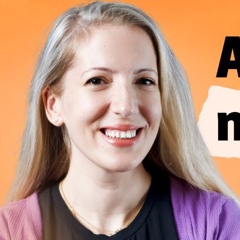
Meta’s head of product on working with Mark Zuckerberg, early growth tactics, and more | Naomi Gleit
Naomi Gleit: the story and the lessons
1How Naomi Gleit got into Facebook and became a PM
Gleit kept turning up at Facebook's office until a job opened. She wrote her Stanford senior thesis on why Facebook would win, then walked into the Palo Alto office hoping for work, and did it five to ten more times.
No one was hiring non-technical people and she had a Bachelor of Arts. The office was at 443 Emerson, above the Jing Jing Chinese restaurant. She interviewed to be Sean Parker's personal assistant and did not get it; a marketing role came months later.
She chose Facebook because she saw product market fit. Stanford students were obsessed with it, many colleges were on a waiting list to join, and younger siblings were interested too. She also held a competing offer from LinkedIn.
She cites Sheryl Sandberg's advice for a rocket ship: don't ask what seat.
Gleit did the PM job unofficially before she asked for the title. She wanted to build products with engineers without being one. After work she went to the engineers' second floor, asked for projects, and picked up program management and product feedback for a few months before applying.
She boxed up her desk on the business floor and carried it downstairs, and the second floor stood and clapped. Her lesson: she created luck by cold volunteering until it worked.
As Head of Product she treats PMs as a lever for the company. Meta has a few thousand PMs and a few hundred report to her. She owns the shared pieces: PM performance, culture, onboarding and training.
She calls it her dream job. After 19 years she is still focused on her to-do list more than on looking back.
2How Gleit helped build Facebook's growth team
Gleit's team treated growth as a product and engineering problem. Growth had been a marketing job. Gleit, Alex Schultz and Javier Olivan pushed a data-driven approach, and Mark came to see its value. The team optimized the registration flow, invite flow and new-user onboarding.
The same approach later went to social impact, a product that raises money from the community and has raised billions for charity, and to translation, crowdsourced inline with ranking and now over 100 languages. Gleit is not sure the idea started with Mark.
Growth accounting showed retention mattered more than new signups. Daily net growth is new users, minus stale users (no login for 30 days), plus resurrected users. Churn and resurrection lines were much larger than the new-user line.
That moved the team's focus to engagement and retention. Danny Ferrante created the method.
She rallied the team around one activation goal. Friending correlated most with retention, so the goal was seven friends in 10 days, reached quickly after signup so people don't churn.
Former colleagues later recalled it as 10 friends in 14 days. She says the number mattered less than having everyone optimize the same goal.
Open registration forced the first real onboarding flow. After 2006, anyone with any email could join, including Gleit's dad and grandma. Step one became uploading a profile picture, step two finding friends.
The find-friends step, with contact import and people you may know, became a top driver of activation. Her dad beta tested everything and became Facebook's biggest power user.
The team instrumented everything before building anything. In January 2009 the growth team built only data instrumentation. It showed problems such as a 20% drop-off at email confirmation.
The method was understand, identify, execute, summed up by a shirt reading "why guess when you can know".
Facebook fixed the email confirmation drop-off with a small change. About 20% of people never confirmed their email. An SMS test did not help, so unconfirmed accounts kept getting notifications and a click on any notification counted as confirmation.
A click proved ownership of the email, so the barrier of hunting for the confirmation email disappeared.
Growth came mostly from removing macro and micro barriers. Macro barriers were who could join, what phone they had and whether they could afford data: college students, then high schoolers, then any email, plus feature phones and internet.org. Micro barriers were friction inside flows.
The team kept one graph for all ages instead of building a separate "Facebook High".
Gleit doubts the growth team deserves much of the credit. She is not sure how much growth the team added beyond the demand that strong product market fit already created. Waiting lists of colleges were her evidence of that fit in 2005.
Her advice is to validate product market fit first, then use growth work to remove friction. Instrument your data first so you know what to fix.
3Naomi Gleit's system for extreme clarity
Gleit defines clarity as shared facts, not agreement. Many conflicts she watched were really misunderstandings, and arguing over them wasted time. Clarity means everyone has the same understanding of the facts, even if they disagree.
Every project gets one canonical doc. The doc lists workstreams, a single-threaded owner for each (and for sub-workstreams), the process, the canonical meetings, email list and chat, plus the deck, nomenclature and visuals.
The habit came from joining projects mid-flight and getting five answers from five people, which she called unacceptable. Colleagues such as Instagram's Charles Porch call her legendary for canonical documents.
She writes out definitions so teams stop talking past each other. In a review-operations discussion, people used consistency (reviewers agree) and accuracy (the decision is correct) interchangeably.
"You could be consistently wrong," so the team should optimize for accuracy.
Gleit simplifies hard projects by starting at kindergarten. When everyone else is at PhD level, she finds the basic building blocks, then adds elementary, high school and college layers. This is simplifying, not oversimplifying.
Building the doc often reveals the most important issues and where the confusion is.
She estimates 80% of troubled projects have people or process problems. She aims for perfect execution first, because only then can you tell whether a failure came from the strategy.
A wrong strategy executed perfectly is the next best outcome, because you learn and try again.
She wants process to buy speed, not add meetings. Nobody wants more process, so she aims for simpler process and fewer meetings.
She feels the need to defend that process is "not for process sake".
4How Gleit runs decision meetings
Gleit sends a pre-read 24 hours ahead and brings three options. The agenda and pre-read go on the calendar invite at least a day early. A decision meeting needs three options and a recommendation, which focuses the discussion on a choice.
Some people she knows cancel any meeting whose pre-read is not attached 24 hours ahead.
She edits the projected slide live to record decisions. When the group decides, she marks the chosen option and lists next steps, so people say "that's not what I heard" while everyone is still in the room.
She uses numbered lists, never bullets, so anyone can say "feedback on number two". She is a visual person and cannot follow a talk by listening alone.
She scores options in a red, yellow and green table. Options are rows and criteria are columns, such as legal, policy and product, or user experience, feasibility and complexity. Each cell holds a color and its rationale, and the option with the most red can be ruled out at a glance.
She learned it from Guy Rosen. Each function owns its own cell, so people plug their view into the framework.
She closes the loop within 24 hours of the meeting. She replies all to the calendar invite with notes, decisions and next steps, so absent people are covered.
The invite is the canonical unit because no existing email or chat thread matches a meeting's audience.
5How Gleit applied clarity to Teen Accounts
Teen Accounts put every teen into the safest settings by default. The launch involved Instagram, the central youth team, legal, policy, comms, marketing and product. It simplified existing tools and added parental controls. She calls it one of the most complicated projects she has worked on.
She is now looking at extending it to Facebook, WhatsApp and Threads.
Under-16s need a parent's permission to change the defaults. This gives teens a reason to bring parents in to set up supervision. Tens of millions of teens with public accounts move to private unless a parent approves.
The belief that parents know their own kid best served as the North Star.
Gleit argues age should be verified once, at the device. Teens use about 40 apps, so each app checking age does not scale. Apple and Google already collect age and could share it through a permission prompt, like camera or location.
She sees it as simpler, privacy preserving and easiest for parents. Meanwhile Meta builds classifiers that predict age from who someone talks to, what they view and who they connect with.
6How Gleit leads PMs and works with Zuckerberg
Gleit sees the PM as a conductor, not the star. Legal, policy, comms, data, engineering and design are the instruments, and the PM keeps each in harmony and at the right tempo. Adam Mosseri calls her the conductor, firm yet kind with a very high bar.
Her feedback to herself is to step to the front more often, since a quiet conductor sometimes needs to be vocal.
She refuses to outsource her own point of view. As a consensus-driven person she gathers everyone's views, then synthesizes her own. Her scheduler now optimizes for thinking time, with two-to-three-hour blocks.
She also uses one or two trusted people, like her chief of staff and head of data, as a sounding board instead of 40-person meetings.
Meta's leadership group is built from disagreeable givers. Drawing on Adam Grant, she says the most dangerous person is an agreeable taker and the most precious a disagreeable giver. The small group is long-tenured, mission-driven leaders who tell Mark the truth.
Fame and wealth tend to break the feedback loop. Two weekly meetings split an open-ended strategy session from a highly structured operations review.
She describes Zuckerberg as a learn-it-all, not a know-it-all. He has improved at public speaking and negotiation, and reached about eighth-grade Chinese fluency in one yearly challenge.
In 2014, when she was having a hard time, he invited her to teach a business class to East Palo Alto middle schoolers. His four life lessons: love yourself, focus on what you can control, never give up, and only then serve others.

Meta’s head of product on working with Mark Zuckerberg, early growth tactics, and more | Naomi Gleit
Naomi Gleit explains how Facebook's early growth team used growth accounting, a single activation goal and onboarding to drive retention, and how she gets complex cross-functional projects done through extreme clarity, canonical docs and tightly run meetings. Her methods helped launch Teen Accounts and grow a data-driven, product-led growth function that Facebook later applied to areas like social impact and translation.
Gleit kept turning up at Facebook's office until a job opened. She wrote her Stanford senior thesis on why Facebook would win, then walked into the Palo Alto office hoping for work, and did it five to ten more times.
No one was hiring non-technical people and she had a Bachelor of Arts. The office was at 443 Emerson, above the Jing Jing Chinese restaurant. She interviewed to be Sean Parker's personal assistant and did not get it; a marketing role came months later.
She chose Facebook because she saw product market fit. Stanford students were obsessed with it, many colleges were on a waiting list to join, and younger siblings were interested too. She also held a competing offer from LinkedIn.
She cites Sheryl Sandberg's advice for a rocket ship: don't ask what seat.
Gleit did the PM job unofficially before she asked for the title. She wanted to build products with engineers without being one. After work she went to the engineers' second floor, asked for projects, and picked up program management and product feedback for a few months before applying.
She boxed up her desk on the business floor and carried it downstairs, and the second floor stood and clapped. Her lesson: she created luck by cold volunteering until it worked.
As Head of Product she treats PMs as a lever for the company. Meta has a few thousand PMs and a few hundred report to her. She owns the shared pieces: PM performance, culture, onboarding and training.
She calls it her dream job. After 19 years she is still focused on her to-do list more than on looking back.
Gleit's team treated growth as a product and engineering problem. Growth had been a marketing job. Gleit, Alex Schultz and Javier Olivan pushed a data-driven approach, and Mark came to see its value. The team optimized the registration flow, invite flow and new-user onboarding.
The same approach later went to social impact, a product that raises money from the community and has raised billions for charity, and to translation, crowdsourced inline with ranking and now over 100 languages. Gleit is not sure the idea started with Mark.
Growth accounting showed retention mattered more than new signups. Daily net growth is new users, minus stale users (no login for 30 days), plus resurrected users. Churn and resurrection lines were much larger than the new-user line.
That moved the team's focus to engagement and retention. Danny Ferrante created the method.
She rallied the team around one activation goal. Friending correlated most with retention, so the goal was seven friends in 10 days, reached quickly after signup so people don't churn.
Former colleagues later recalled it as 10 friends in 14 days. She says the number mattered less than having everyone optimize the same goal.
Open registration forced the first real onboarding flow. After 2006, anyone with any email could join, including Gleit's dad and grandma. Step one became uploading a profile picture, step two finding friends.
The find-friends step, with contact import and people you may know, became a top driver of activation. Her dad beta tested everything and became Facebook's biggest power user.
The team instrumented everything before building anything. In January 2009 the growth team built only data instrumentation. It showed problems such as a 20% drop-off at email confirmation.
The method was understand, identify, execute, summed up by a shirt reading "why guess when you can know".
Facebook fixed the email confirmation drop-off with a small change. About 20% of people never confirmed their email. An SMS test did not help, so unconfirmed accounts kept getting notifications and a click on any notification counted as confirmation.
A click proved ownership of the email, so the barrier of hunting for the confirmation email disappeared.
Growth came mostly from removing macro and micro barriers. Macro barriers were who could join, what phone they had and whether they could afford data: college students, then high schoolers, then any email, plus feature phones and internet.org. Micro barriers were friction inside flows.
The team kept one graph for all ages instead of building a separate "Facebook High".
Gleit doubts the growth team deserves much of the credit. She is not sure how much growth the team added beyond the demand that strong product market fit already created. Waiting lists of colleges were her evidence of that fit in 2005.
Her advice is to validate product market fit first, then use growth work to remove friction. Instrument your data first so you know what to fix.
Gleit defines clarity as shared facts, not agreement. Many conflicts she watched were really misunderstandings, and arguing over them wasted time. Clarity means everyone has the same understanding of the facts, even if they disagree.
Every project gets one canonical doc. The doc lists workstreams, a single-threaded owner for each (and for sub-workstreams), the process, the canonical meetings, email list and chat, plus the deck, nomenclature and visuals.
The habit came from joining projects mid-flight and getting five answers from five people, which she called unacceptable. Colleagues such as Instagram's Charles Porch call her legendary for canonical documents.
She writes out definitions so teams stop talking past each other. In a review-operations discussion, people used consistency (reviewers agree) and accuracy (the decision is correct) interchangeably.
"You could be consistently wrong," so the team should optimize for accuracy.
Gleit simplifies hard projects by starting at kindergarten. When everyone else is at PhD level, she finds the basic building blocks, then adds elementary, high school and college layers. This is simplifying, not oversimplifying.
Building the doc often reveals the most important issues and where the confusion is.
She estimates 80% of troubled projects have people or process problems. She aims for perfect execution first, because only then can you tell whether a failure came from the strategy.
A wrong strategy executed perfectly is the next best outcome, because you learn and try again.
She wants process to buy speed, not add meetings. Nobody wants more process, so she aims for simpler process and fewer meetings.
She feels the need to defend that process is "not for process sake".
Gleit sends a pre-read 24 hours ahead and brings three options. The agenda and pre-read go on the calendar invite at least a day early. A decision meeting needs three options and a recommendation, which focuses the discussion on a choice.
Some people she knows cancel any meeting whose pre-read is not attached 24 hours ahead.
She edits the projected slide live to record decisions. When the group decides, she marks the chosen option and lists next steps, so people say "that's not what I heard" while everyone is still in the room.
She uses numbered lists, never bullets, so anyone can say "feedback on number two". She is a visual person and cannot follow a talk by listening alone.
She scores options in a red, yellow and green table. Options are rows and criteria are columns, such as legal, policy and product, or user experience, feasibility and complexity. Each cell holds a color and its rationale, and the option with the most red can be ruled out at a glance.
She learned it from Guy Rosen. Each function owns its own cell, so people plug their view into the framework.
She closes the loop within 24 hours of the meeting. She replies all to the calendar invite with notes, decisions and next steps, so absent people are covered.
The invite is the canonical unit because no existing email or chat thread matches a meeting's audience.
Teen Accounts put every teen into the safest settings by default. The launch involved Instagram, the central youth team, legal, policy, comms, marketing and product. It simplified existing tools and added parental controls. She calls it one of the most complicated projects she has worked on.
She is now looking at extending it to Facebook, WhatsApp and Threads.
Under-16s need a parent's permission to change the defaults. This gives teens a reason to bring parents in to set up supervision. Tens of millions of teens with public accounts move to private unless a parent approves.
The belief that parents know their own kid best served as the North Star.
Gleit argues age should be verified once, at the device. Teens use about 40 apps, so each app checking age does not scale. Apple and Google already collect age and could share it through a permission prompt, like camera or location.
She sees it as simpler, privacy preserving and easiest for parents. Meanwhile Meta builds classifiers that predict age from who someone talks to, what they view and who they connect with.
Gleit sees the PM as a conductor, not the star. Legal, policy, comms, data, engineering and design are the instruments, and the PM keeps each in harmony and at the right tempo. Adam Mosseri calls her the conductor, firm yet kind with a very high bar.
Her feedback to herself is to step to the front more often, since a quiet conductor sometimes needs to be vocal.
She refuses to outsource her own point of view. As a consensus-driven person she gathers everyone's views, then synthesizes her own. Her scheduler now optimizes for thinking time, with two-to-three-hour blocks.
She also uses one or two trusted people, like her chief of staff and head of data, as a sounding board instead of 40-person meetings.
Meta's leadership group is built from disagreeable givers. Drawing on Adam Grant, she says the most dangerous person is an agreeable taker and the most precious a disagreeable giver. The small group is long-tenured, mission-driven leaders who tell Mark the truth.
Fame and wealth tend to break the feedback loop. Two weekly meetings split an open-ended strategy session from a highly structured operations review.
She describes Zuckerberg as a learn-it-all, not a know-it-all. He has improved at public speaking and negotiation, and reached about eighth-grade Chinese fluency in one yearly challenge.
In 2014, when she was having a hard time, he invited her to teach a business class to East Palo Alto middle schoolers. His four life lessons: love yourself, focus on what you can control, never give up, and only then serve others.
 Meta