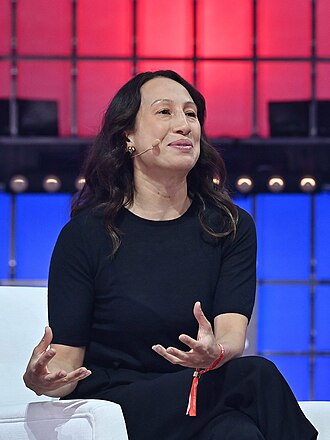
Marily Nika
AI product lead at Meta Reality Labs, former Google PM, teaches AI Product Management on Maven and at Harvard
Where to hear and read about Marily Nika1 episode or test

Marily Nika is an AI product lead at Meta Reality Labs and a former Google PM who teaches AI product management on Maven and at Harvard. The thing most worth learning from her is to start from a real user problem and let data and research scientists serve it, never the reverse.
Don't do AI for the sake of doing AI. Make sure there is a problem there
AI and product management | Marily Nika (Meta, Google)
Marily Nika: the story and the lessons
1Marily Nika's path and her case that every PM becomes an AI PM
Nika has built AI products on both the research and product sides. She spent over eight years at Google on Google Glass, computer vision and speech recognition, completed a PhD in machine learning in 2014, and now leads work on metaverse avatars and identity at Meta.
She is also an Executive Fellow at Harvard Business School, where she teaches AI product management, and runs what she describes as the most popular Maven course on AI and product management.
She expects every product manager to become an AI product manager. Every cross-functional team will need to work with a research scientist, meaning a PhD-level researcher who can produce a machine learning model.
She does not think AI replaces PMs. She runs many projects whose documents share common sections, and a system that drafted them would free her for strategy.
An AI PM helps solve the right problem, not just ship the right product. She says a regular PM helps ship the right product, while an AI PM helps the team find a problem worth a smart solution.
Sometimes that means the PM manages the problem as well as the product, which she calls a more complicated process than regular product management.
2How Nika starts an AI product
Nika begins with the user pain point, never with the technology. She calls the opposite the shiny object trap. Identify the pain point and a very high level solution first, then bring in data scientists to work out how to build it.
"Don't do AI for the sake of doing AI."
She fakes the AI in an MVP with a Figma prototype. Instead of burning weeks of data scientist time training models, she builds a prototype that mimics what the AI would do and shows it to users to get buy in.
She sees early-stage founders who want to train a model just to prove a market exists, and says that makes no sense for an MVP.
She uses AI only where data already exists. Good starting points are your own data or data from an adjacent product. A costly model bet on a market with no data behind it is the wrong use of AI.
Past teams built really cool models that often ended in very low return on investment, and those projects ran six months to a year before anyone knew what was happening.
She tells PMs to look at the data already sitting around. Any product with behavior data can gain personalization, fraud detection, better recommendations, security or accuracy. A data science intern can show what is possible.
Some PMs say they collect no data and have no dashboard. She says fixing that is itself a big first step toward AI.
She collects her own diverse data instead of buying shared datasets. Agencies sell ready-made data packages, but if every company trains on the same set, every company gets the same quality.
Collection can take creative methods, even asking people on the street to contribute. Data needs vary: a cat versus dog classifier may work with 15 to 20 labeled photos, while voice recognition needs thousands.
3Nika on working with research scientists and owning the launch call
Nika pairs every product team with a research scientist. A good AI product sits where three needs overlap: users want it, the business can sustain it, and research can deliver it.
Research does not follow a ship-by-date. PMs must accept plans like shutting everything down if it does not work out in a year.
The AI PM alone decides when model quality is good enough. She asks whether a cat versus dog detector at 70% accuracy is enough or whether it needs 80%. Nobody has faced these questions before, so it falls on the PM.
She says this is why the AI PM role is so cool. The bar is a product judgment about what users will accept.
She asks how progress is judged before taking a research role. PMs usually advance by launching, but research PMs launch less often, so she advises agreeing early with managers on what progress means.
She describes the PM as the captain of the ship, keeping the team going through uncertain results, and calls research work the zero-to-one muscle.
She wins leadership buy-in with adjacent examples and a rollback plan. Point to an earlier AI-first or seemingly crazy product that succeeded at your company, say your proposal is similar, then state the rollback plan and the maximum negative impact.
Trust grows with each small bet, and the longer she works at one company, the more trust she gets. It works best where failure is welcome.
She shadows research scientists for an hour a week. Talking to researchers and watching their work gives context on how AI development differs from regular product work and shows what potential you can spot.
It only works at a company that already has AI researchers.
4How Nika uses AI tools, learns the craft and teaches it
She uses ChatGPT as a second opinion on her own draft. She writes her own mission statement first, then asks ChatGPT to rewrite it in plainer language that leadership, junior staff and even a kid could understand.
She also describes a fitness band with no screen and asks who would want one. It returns segments with motivations and pain points, such as busy young professionals or people who do not want to charge daily.
She argues PMs should learn to code even when tools can do it. Without coding fundamentals, you trust your tools blindly. She suggests an online course such as Stanford's Introduction to AI on Coursera, or a school like CareerFoundry, General Assembly or Coding Dojo, ideally paired with someone.
Her piano teacher insisted on classical music first, because fundamentals help you create your own music later.
She points non-coders to AutoML to train real models. Google Cloud AutoML trains custom image models without code, but you must supply many correctly labeled images. A wind turbine company used drone photos with it and cut inspection from about three weeks to a few hours.
In her course, a team with no coding background trained an X-ray classifier this way.
She stays current through newsletters and arXiv, not just ChatGPT news. She reads The Download from MIT Technology Review and TLDR, neither AI-focused, because AI keeps appearing in all tech coverage. She also watches arXiv for new papers.
She says ChatGPT is only one small part of what AI can do, and cites research showing AI can now detect lies.
Nika built her course like a product, testing the audience first. She formed hypotheses, asked people what they wanted to learn, and shifted from software engineers moving into PM to PMs who want to become AI PMs. One week was too short and two rushed, so she settled on three.
She read every application and messaged every applicant so they could trust a stranger. Homework is an AI product built end to end, and two paired students raised funding.

AI and product management | Marily Nika (Meta, Google)
Explains how product managers can start using and building AI: start from a real problem, fake the AI in an MVP, work closely with research scientists, and learn enough coding or no-code tooling to understand the tools. Her three-week course turned PMs with no coding background into builders, including a team that trained an X-ray classifier and another pair that raised funding.
Nika has built AI products on both the research and product sides. She spent over eight years at Google on Google Glass, computer vision and speech recognition, completed a PhD in machine learning in 2014, and now leads work on metaverse avatars and identity at Meta.
She is also an Executive Fellow at Harvard Business School, where she teaches AI product management, and runs what she describes as the most popular Maven course on AI and product management.
She expects every product manager to become an AI product manager. Every cross-functional team will need to work with a research scientist, meaning a PhD-level researcher who can produce a machine learning model.
She does not think AI replaces PMs. She runs many projects whose documents share common sections, and a system that drafted them would free her for strategy.
An AI PM helps solve the right problem, not just ship the right product. She says a regular PM helps ship the right product, while an AI PM helps the team find a problem worth a smart solution.
Sometimes that means the PM manages the problem as well as the product, which she calls a more complicated process than regular product management.
Nika begins with the user pain point, never with the technology. She calls the opposite the shiny object trap. Identify the pain point and a very high level solution first, then bring in data scientists to work out how to build it.
"Don't do AI for the sake of doing AI."
She fakes the AI in an MVP with a Figma prototype. Instead of burning weeks of data scientist time training models, she builds a prototype that mimics what the AI would do and shows it to users to get buy in.
She sees early-stage founders who want to train a model just to prove a market exists, and says that makes no sense for an MVP.
She uses AI only where data already exists. Good starting points are your own data or data from an adjacent product. A costly model bet on a market with no data behind it is the wrong use of AI.
Past teams built really cool models that often ended in very low return on investment, and those projects ran six months to a year before anyone knew what was happening.
She tells PMs to look at the data already sitting around. Any product with behavior data can gain personalization, fraud detection, better recommendations, security or accuracy. A data science intern can show what is possible.
Some PMs say they collect no data and have no dashboard. She says fixing that is itself a big first step toward AI.
She collects her own diverse data instead of buying shared datasets. Agencies sell ready-made data packages, but if every company trains on the same set, every company gets the same quality.
Collection can take creative methods, even asking people on the street to contribute. Data needs vary: a cat versus dog classifier may work with 15 to 20 labeled photos, while voice recognition needs thousands.
Nika pairs every product team with a research scientist. A good AI product sits where three needs overlap: users want it, the business can sustain it, and research can deliver it.
Research does not follow a ship-by-date. PMs must accept plans like shutting everything down if it does not work out in a year.
The AI PM alone decides when model quality is good enough. She asks whether a cat versus dog detector at 70% accuracy is enough or whether it needs 80%. Nobody has faced these questions before, so it falls on the PM.
She says this is why the AI PM role is so cool. The bar is a product judgment about what users will accept.
She asks how progress is judged before taking a research role. PMs usually advance by launching, but research PMs launch less often, so she advises agreeing early with managers on what progress means.
She describes the PM as the captain of the ship, keeping the team going through uncertain results, and calls research work the zero-to-one muscle.
She wins leadership buy-in with adjacent examples and a rollback plan. Point to an earlier AI-first or seemingly crazy product that succeeded at your company, say your proposal is similar, then state the rollback plan and the maximum negative impact.
Trust grows with each small bet, and the longer she works at one company, the more trust she gets. It works best where failure is welcome.
She shadows research scientists for an hour a week. Talking to researchers and watching their work gives context on how AI development differs from regular product work and shows what potential you can spot.
It only works at a company that already has AI researchers.
She uses ChatGPT as a second opinion on her own draft. She writes her own mission statement first, then asks ChatGPT to rewrite it in plainer language that leadership, junior staff and even a kid could understand.
She also describes a fitness band with no screen and asks who would want one. It returns segments with motivations and pain points, such as busy young professionals or people who do not want to charge daily.
She argues PMs should learn to code even when tools can do it. Without coding fundamentals, you trust your tools blindly. She suggests an online course such as Stanford's Introduction to AI on Coursera, or a school like CareerFoundry, General Assembly or Coding Dojo, ideally paired with someone.
Her piano teacher insisted on classical music first, because fundamentals help you create your own music later.
She points non-coders to AutoML to train real models. Google Cloud AutoML trains custom image models without code, but you must supply many correctly labeled images. A wind turbine company used drone photos with it and cut inspection from about three weeks to a few hours.
In her course, a team with no coding background trained an X-ray classifier this way.
She stays current through newsletters and arXiv, not just ChatGPT news. She reads The Download from MIT Technology Review and TLDR, neither AI-focused, because AI keeps appearing in all tech coverage. She also watches arXiv for new papers.
She says ChatGPT is only one small part of what AI can do, and cites research showing AI can now detect lies.
Nika built her course like a product, testing the audience first. She formed hypotheses, asked people what they wanted to learn, and shifted from software engineers moving into PM to PMs who want to become AI PMs. One week was too short and two rushed, so she settled on three.
She read every application and messaged every applicant so they could trust a stranger. Homework is an AI product built end to end, and two paired students raised funding.

 Meta