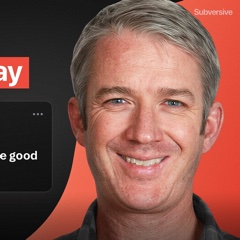
Mike Maser
CEO of Zero, the fasting app; founder of FitStar (sold to Fitbit)
Where to hear and read about Mike Maser1 episode or test

Mike Maser is CEO of Zero, the fasting app, and the founder of FitStar, which he sold to Fitbit. The thing most worth learning from him is that a simple, well-timed product won Zero its category, but copycats showed that distribution and a growth engine have to be built alongside it.
it's not just about product. So much of it is about the growth stack.
How Elon's Tweet Made Fasting App Zero $1M in a Day
Mike Maser: the story and the lessons
1How Mike Maser became a founder at 41
Maser left a corporate career for startups at 41. He worked in finance and tech, including Intel, Digg and AOL, and a corporate career left him unfulfilled. He quit AOL after one year, in 2010.
His first startup idea failed in about three months. He wasn't connected to the idea, so he offered to return the money to his investors, Mike Maples and Roger McNamee.
They refused. They told him they never invested in this idea and that he should find something important and fulfilling.
A trip to New Zealand gave him the idea for FitStar. McNamee suggested the trip. Maser went with a backpack and a rented van, no itinerary. On a long hike, tracking heart rate and mileage, he realized he loved endorphins, health and sharing them with a community. He started FitStar in 2011.
He was avoiding TechCrunch stories of 22-year-olds raising $10M seed rounds. The lesson he draws is to build only what he personally wants.
FitStar was an adaptive video workout app for the iPad. The video workouts adapted to the user's level. Apple noticed, and the app often ranked at the top of the health and fitness charts.
2Selling FitStar to Fitbit while fighting cancer
Fitbit's offer arrived in November 2014. Fitbit's head of product, Tim Roberts, told Maser they wanted to buy the company.
Maser calls it a founder's dream, since the best companies are bought, not sold.
A stage four cancer diagnosis came a week later. Maser had felt ill for weeks, with night sweats and deep tiredness he put down to founder exhaustion. The diagnosis was mantle cell lymphoma, a rare cancer that usually hits much older people.
Two things carried him: responsibility to his team, and being the best patient he could.
He fasted around chemotherapy, following early mouse research. His first chemo was on Christmas Eve 2014. For six rounds he did a 5-day water fast: 2 days before, the day of, and 2 days after each round. He relied on Walter Longo's work, then only in mice.
The logic is that fasting puts healthy cells into autophagy and slows their division, so chemo hits fast-dividing cancer cells harder.
His scan showed no detectable cancer after two of six rounds. His doctor called the result notable. Maser does not credit fasting alone and points to a combination of things and luck.
He doesn't recommend such an aggressive fast. He wasn't emaciated and could handle it. The experience gave him a sense of agency and opened up the wider benefits of fasting.
3How Maser took Zero from a weekend project to a category
Maser asked Kevin Rose for the Zero app and got it. Rose visited him in the hospital and saw fasting as a product that could bring people in. After Fitbit, Maser could start something new or ask for the app, and Rose said sure, take it.
True Ventures, where Maser then worked, seed funded it with Tony Conrad. Maser calls his career a stack of Jenga pieces, each setting up the next.
Zero launched as a one-screen timer with no sign-up. Rose built the first version over a weekend, with no monetization. A basic subscription turned on around 2016-17 reached about $5M of ARR within half a year.
Rose's bet was that people would do one action a few times a week if it was rewarding "just to see time move."
Maser admits his own instinct is to overcomplicate. He says he tends to treat complexity as more valuable or defensible, and that it may be an ego stroke. Rose's superpower is cutting a product to the one thing that matters.
Today's app is more textured and complete, but the first thing a user sees is still a timer, running or waiting to start.
Zero arrived early but not too early in fasting's boom. The first users were coastal men around 30 from the biohacking crowd. Huberman and Attia talked fasting up, Condé Nast publications covered it, and Zero was nearly alone in the app store.
Maser won't claim Zero engineered the trend. He credits timing.
Zero earned trust by acting like a science-backed health product. It invested in content and hired a couple of chief medical officers with decades of metabolic health experience. It avoided the swimsuit-model, overpromising ads common in weight-loss fasting apps.
Weight loss was pitched as one part of metabolic health. The internal mantra is come for the weight loss, stay for the longevity. Users told friends these guys are legit.
An Elon Musk tweet brought about $1M in a day. Musk said the app was "quite good," with no outreach behind it, and revenue spiked.
Maser says it was nothing you can engineer. Zero had a few similar moments, around its 2022-23 peak with COVID helping.
4Why product alone stopped being enough at Zero
Copycats cloned Zero pixel for pixel, some using its name. Because the app was dead simple, it was easy to duplicate. Maser calls simplicity without distribution or community behind it a compromised moat.
He notes this matters even more now that AI makes UIs easy to clone.
Lucky spikes hid that Zero's growth engine was weak. Zero has always been a product team, weaker on monetization and growth tactics. Since 2023, rivals with sophisticated growth skills have left it playing catch-up.
Maser admits Zero was a little arrogant, assuming a better product would keep growth coming. He calls it a very humbling experience and says his plan of building well and growing by word of mouth felt outmoded.
Maser now says to start from distribution and work backwards. With AI making software cheap to build, he argues the bottleneck for many consumer apps is distribution, so founders should settle the growth plan first and engineer the product to fit.
Zero overspent on operating costs despite strong revenue. In the late 2010s and early 2020s Zero hugely overinvested in operating expenses, and Maser says it got out of control. He wants those years back to spend more responsibly.
AI now helps him rein in costs.
At FitStar he used meetings as a substitute for a plan. Maser pulled co-founders and the tech team into many meetings because he lacked a clear plan, hoping talk would produce answers. He would now get clear and act.
He apologizes to co-founder Dave for the wasted time.
Zero never did PR, and Maser regrets staying product-focused. The team stayed internally focused on product and did not tell its story to the media.
The plan now is to put its chief medical officer and its legacy in front of press.
5How Maser is steering Zero through the GLP-1 shift
He tracked the shift in users and followed it. At the start of 2025 about 5% of users were on a GLP-1 and about 10% more were interested. By May 2026 about a third were on one and another third were interested or seeking one.
Maser says the May figures are probably already outdated and that the change happened almost overnight for an 8-year-old company. The figures are Zero's own user data.
Zero built protein and hydration tools that fit both audiences. A photo of a meal returns its protein and how to hit the daily goal, and a hydration tracker covers low water intake. Fasters and GLP-1 users both need them.
Muscle loss (sarcopenia) is the most common long-term side effect. Maser knows people admitted to the ER in renal failure after not drinking enough on the drug. Zero spent 2025 building and testing before pushing the drug.
Zero plans to be the off-ramp after the drug. Rivals earn from customers paying $100 to $500 a month, so they have no reason to offer a way off. Zero plans to prescribe, guide users through the drug, then offer a home for maintenance.
The biggest problem after stopping is that all the weight comes back on top of lost muscle. Maser says: "we want you in our house because it's a healthy house." The product had no launch date yet.
The new offer goes first to Zero's 10 million registered users. That includes churned users who left after starting a GLP-1 and felt Zero was no longer for them. Their feedback will shape the product before it ships.
Maser calls them "a nice asset to build on" and says eight years of brand trust is something a new entrant lacks.
Maser plans to lead with brand, story and a medical voice. He expects Zero to be weak at paid user acquisition and to lean on its brand, its existing audience and its story instead. Chief medical officer Naomi Pila is meant to explain the next chapter.
He bets that authenticity beats algorithm tricks.
6Maser on fasting and building what he wants
His longest fast was six days, and he suggests a 36-hour monk fast. Hunger peaks around 24 hours and eases by 36. He suggests lots of water, 2 to 4 g of sodium a day, plus potassium and magnesium, and breaking the fast with only a couple hundred calories.
By days two to three in ketosis he feels calm and focused. By day five he is fatigued and sleeps badly. He advises starting rested and favoring fat and protein over a carb load.
Maser builds only products he personally wants. He says he must feel the problem himself to get through the ups and downs. Kettlebells tempt him next, since he keeps saving short Instagram workouts and never returning to them.
He sees cheaper software making small, passionate communities viable markets.

How Elon's Tweet Made Fasting App Zero $1M in a Day
Zero's CEO explains how a one-screen timer app created the fasting category and reached $5M+ ARR and 10 million registered users, and why product alone stopped being enough once copycats arrived with stronger growth skills. He also covers how Zero is adapting to GLP-1 drugs with protein and hydration tracking and a prescription offering.
Maser left a corporate career for startups at 41. He worked in finance and tech, including Intel, Digg and AOL, and a corporate career left him unfulfilled. He quit AOL after one year, in 2010.
His first startup idea failed in about three months. He wasn't connected to the idea, so he offered to return the money to his investors, Mike Maples and Roger McNamee.
They refused. They told him they never invested in this idea and that he should find something important and fulfilling.
A trip to New Zealand gave him the idea for FitStar. McNamee suggested the trip. Maser went with a backpack and a rented van, no itinerary. On a long hike, tracking heart rate and mileage, he realized he loved endorphins, health and sharing them with a community. He started FitStar in 2011.
He was avoiding TechCrunch stories of 22-year-olds raising $10M seed rounds. The lesson he draws is to build only what he personally wants.
FitStar was an adaptive video workout app for the iPad. The video workouts adapted to the user's level. Apple noticed, and the app often ranked at the top of the health and fitness charts.
Fitbit's offer arrived in November 2014. Fitbit's head of product, Tim Roberts, told Maser they wanted to buy the company.
Maser calls it a founder's dream, since the best companies are bought, not sold.
A stage four cancer diagnosis came a week later. Maser had felt ill for weeks, with night sweats and deep tiredness he put down to founder exhaustion. The diagnosis was mantle cell lymphoma, a rare cancer that usually hits much older people.
Two things carried him: responsibility to his team, and being the best patient he could.
He fasted around chemotherapy, following early mouse research. His first chemo was on Christmas Eve 2014. For six rounds he did a 5-day water fast: 2 days before, the day of, and 2 days after each round. He relied on Walter Longo's work, then only in mice.
The logic is that fasting puts healthy cells into autophagy and slows their division, so chemo hits fast-dividing cancer cells harder.
His scan showed no detectable cancer after two of six rounds. His doctor called the result notable. Maser does not credit fasting alone and points to a combination of things and luck.
He doesn't recommend such an aggressive fast. He wasn't emaciated and could handle it. The experience gave him a sense of agency and opened up the wider benefits of fasting.
Maser asked Kevin Rose for the Zero app and got it. Rose visited him in the hospital and saw fasting as a product that could bring people in. After Fitbit, Maser could start something new or ask for the app, and Rose said sure, take it.
True Ventures, where Maser then worked, seed funded it with Tony Conrad. Maser calls his career a stack of Jenga pieces, each setting up the next.
Zero launched as a one-screen timer with no sign-up. Rose built the first version over a weekend, with no monetization. A basic subscription turned on around 2016-17 reached about $5M of ARR within half a year.
Rose's bet was that people would do one action a few times a week if it was rewarding "just to see time move."
Maser admits his own instinct is to overcomplicate. He says he tends to treat complexity as more valuable or defensible, and that it may be an ego stroke. Rose's superpower is cutting a product to the one thing that matters.
Today's app is more textured and complete, but the first thing a user sees is still a timer, running or waiting to start.
Zero arrived early but not too early in fasting's boom. The first users were coastal men around 30 from the biohacking crowd. Huberman and Attia talked fasting up, Condé Nast publications covered it, and Zero was nearly alone in the app store.
Maser won't claim Zero engineered the trend. He credits timing.
Zero earned trust by acting like a science-backed health product. It invested in content and hired a couple of chief medical officers with decades of metabolic health experience. It avoided the swimsuit-model, overpromising ads common in weight-loss fasting apps.
Weight loss was pitched as one part of metabolic health. The internal mantra is come for the weight loss, stay for the longevity. Users told friends these guys are legit.
An Elon Musk tweet brought about $1M in a day. Musk said the app was "quite good," with no outreach behind it, and revenue spiked.
Maser says it was nothing you can engineer. Zero had a few similar moments, around its 2022-23 peak with COVID helping.
Copycats cloned Zero pixel for pixel, some using its name. Because the app was dead simple, it was easy to duplicate. Maser calls simplicity without distribution or community behind it a compromised moat.
He notes this matters even more now that AI makes UIs easy to clone.
Lucky spikes hid that Zero's growth engine was weak. Zero has always been a product team, weaker on monetization and growth tactics. Since 2023, rivals with sophisticated growth skills have left it playing catch-up.
Maser admits Zero was a little arrogant, assuming a better product would keep growth coming. He calls it a very humbling experience and says his plan of building well and growing by word of mouth felt outmoded.
Maser now says to start from distribution and work backwards. With AI making software cheap to build, he argues the bottleneck for many consumer apps is distribution, so founders should settle the growth plan first and engineer the product to fit.
Zero overspent on operating costs despite strong revenue. In the late 2010s and early 2020s Zero hugely overinvested in operating expenses, and Maser says it got out of control. He wants those years back to spend more responsibly.
AI now helps him rein in costs.
At FitStar he used meetings as a substitute for a plan. Maser pulled co-founders and the tech team into many meetings because he lacked a clear plan, hoping talk would produce answers. He would now get clear and act.
He apologizes to co-founder Dave for the wasted time.
Zero never did PR, and Maser regrets staying product-focused. The team stayed internally focused on product and did not tell its story to the media.
The plan now is to put its chief medical officer and its legacy in front of press.
He tracked the shift in users and followed it. At the start of 2025 about 5% of users were on a GLP-1 and about 10% more were interested. By May 2026 about a third were on one and another third were interested or seeking one.
Maser says the May figures are probably already outdated and that the change happened almost overnight for an 8-year-old company. The figures are Zero's own user data.
Zero built protein and hydration tools that fit both audiences. A photo of a meal returns its protein and how to hit the daily goal, and a hydration tracker covers low water intake. Fasters and GLP-1 users both need them.
Muscle loss (sarcopenia) is the most common long-term side effect. Maser knows people admitted to the ER in renal failure after not drinking enough on the drug. Zero spent 2025 building and testing before pushing the drug.
Zero plans to be the off-ramp after the drug. Rivals earn from customers paying $100 to $500 a month, so they have no reason to offer a way off. Zero plans to prescribe, guide users through the drug, then offer a home for maintenance.
The biggest problem after stopping is that all the weight comes back on top of lost muscle. Maser says: "we want you in our house because it's a healthy house." The product had no launch date yet.
The new offer goes first to Zero's 10 million registered users. That includes churned users who left after starting a GLP-1 and felt Zero was no longer for them. Their feedback will shape the product before it ships.
Maser calls them "a nice asset to build on" and says eight years of brand trust is something a new entrant lacks.
Maser plans to lead with brand, story and a medical voice. He expects Zero to be weak at paid user acquisition and to lean on its brand, its existing audience and its story instead. Chief medical officer Naomi Pila is meant to explain the next chapter.
He bets that authenticity beats algorithm tricks.
His longest fast was six days, and he suggests a 36-hour monk fast. Hunger peaks around 24 hours and eases by 36. He suggests lots of water, 2 to 4 g of sodium a day, plus potassium and magnesium, and breaking the fast with only a couple hundred calories.
By days two to three in ketosis he feels calm and focused. By day five he is fatigued and sleeps badly. He advises starting rested and favoring fat and protein over a carb load.
Maser builds only products he personally wants. He says he must feel the problem himself to get through the ups and downs. Kettlebells tempt him next, since he keeps saving short Instagram workouts and never returning to them.
He sees cheaper software making small, passionate communities viable markets.
 Zero
