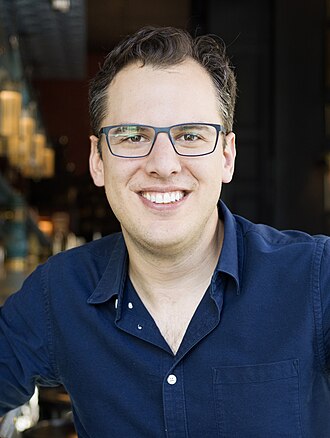
Mike Krieger
Anthropic (IC builder, previously Instagram co-founder and Labs lead)
Where to hear and read about Mike Krieger3 episodes and tests

 Lenny's PodcastWhy Claude can’t be your PM (yet) | Anthropic CPO Panel
 Lenny's PodcastAnthropic's CPO on what comes next | Mike Krieger (co-founder of Instagram)
 Lenny's PodcastA conversation with OpenAI's CPO Kevin Weil, Anthropic's CPO Mike Krieger, and Sarah Guo
Mike Krieger co-founded Instagram, then co-founded the AI news app Artifact, and in 2024 joined Anthropic to lead product as chief product officer, later working on exploratory bets in Anthropic Labs. The most useful thing to learn from him is how to build on models whose abilities change every few months: build at the edge of what they can do, retest with every new model, and put product people inside the model work rather than after it.
Look yourself in the mirror and embrace who you are and what you could be rather than who others are.
Anthropic's CPO on what comes next | Mike Krieger (co-founder of Instagram)
Mike Krieger: the story and the lessons
1Mike Krieger's path from Instagram to Anthropic
Krieger started building iPhone apps at Stanford and studied human-computer interaction. In 2007 he built iPhone apps at Stanford with Joel Lewenstein, the friend who later recruited him to Anthropic. He was a human-computer interaction major.
He says making AI products comprehensible rests on the same empathy and psychology that field taught him.
He co-founded Instagram, then Artifact, an AI-powered news app. After Instagram and Meta he co-founded Artifact. Instagram began with two people and Artifact had about six.
He says the hardest Instagram nights were burritos with Kevin at 11 PM, something Zoom could not replicate for the fully remote Artifact team.
At 18 he vowed never to live the same year twice. That vow made another social product feel like too much of the same. His semi-retirement after Artifact lasted about six weeks.
Friends reacted three ways when he took the Anthropic job: "that makes sense", "why, you don't have to work", and "you hired the founder of Instagram".
He joined Anthropic to help AI go well for his kids' generation. In early 2024 he saw the models improving, knew his kids would grow up with AI, and asked where his time could best nudge things the right way. Claude 3 had just come out and the product was early.
He first met co-founder Daniela Amodei and noticed little grandiosity. He says Dario Amodei admits he knows little about product but offers intuitions that are usually good.
Krieger had not joined a company since a college internship. Onboarding was new to him, and he says he made some changes, such as reorganizing product, too slowly.
After about a year he had passed the vesting "cliff" and said Claude had been his strategy partner the whole time.
2Why Mike Krieger shut down Artifact
Artifact took ten units of input for one unit of output. Launches the team was proud of barely moved the metrics. He never expected Instagram-scale growth but wanted something that could compound on its own.
Raising again only to find the same result would have cost a year or two, so after a couple of months of conversation the founders called it.
News had no natural sharing loop. Instagram spread because people posted photos elsewhere and friends asked how. Artifact users loved it but told only one person.
Forcing spread by wrapping links in an artifact.news redirect felt contrived. "News was very personal."
He refused fixes that crossed lines he would not cross. Publisher mobile sites got worse with newsletter popups and full-screen video ads. Blocking ads would have fixed it but felt unfair to publishers.
Other news players crossed lines the founders would not, and he says, "I don't think we were the founders to have built it."
Calling it early earned respect and freed other founders. The reaction was mostly kudos with little "I told you so". Some founders said they would have kept going six more months but made their own call after seeing Artifact.
He admits an ego bruise and says he is mostly competitive with himself. AI was changing everything, so a news app no longer felt like the biggest way to have impact.
3How Krieger runs product when AI writes the code
At Anthropic, Claude Code writes most of its own code. He says Claude Code is probably over 95% written by Claude Code, and an engineer with no TypeScript went from complaint to pull request in an hour.
Faster coding moved the bottlenecks upstream and downstream. Anthropic had to completely re-architect its merge queue because pull request volume exploded. Upstream, decision making and alignment now limit speed.
He compares it to critical path theory in The Goal, wants a "minimum viable strategy" that lets people explore at the edge of the models, and likens landing changes to air traffic control.
A second Claude reviews code and humans test the result. The Claude Code team has a separate Claude review pull requests and does acceptance testing by hand instead of line by line review.
He flags the long-run risk of a codebase humans cannot maintain and even Claude cannot understand.
Product people work inside model post-training, not after it. The improved Artifacts in Claude 4 came from pairing a post-training skills researcher with product people. Anything built on the off-the-shelf model could be built by anyone.
"The functional unit of work at Anthropic is no longer take the model and then go work with design and product to go ship a product."
He bets on founder-type tech leads over headcount. Claude Code began as an internal project started from scratch by Boris Cherny, a former Instagram engineer. Krieger is now "10 times more a believer" in pairing such engineers with design and product.
PMs now prototype with Claude before designers open Figma. His best PMs prompt Claude to build A/B comparisons of two UI directions during a design debate, so far more variety gets tested faster.
He says knowing what to ask and how to structure a change across backend and frontend still takes an engineer.
Writing evals has merged the PM and research PM jobs. On the code analysis launch, one PM got the feature 80% there, then handed it to another who wrote evals and tuned prompts. Feature quality is now gated on evals and prompts.
Defining what success looks like and iterating can move a task from 60% to 85%. Anthropic tests eval writing in interviews.
4Mike Krieger on building at the edge of model capability
The best customers break today's model and get surprised by the next. Cursor, Lovable and Bolt hit a wall before Claude 3.5 Sonnet made their products work. Anthropic ran a broad early access program with what he calls "Cursor bench" or "Harvey bench".
Pair this with a repeatable way to judge each new model: A/B tests, internal evals, captured traces rerun, and some vibes.
Parked projects get rerun on every new model. Anthropic's 2024 computer use product took about 20 minutes per task and was poor. Run in an eval harness on each model, Claude 3.7 suddenly succeeded more often than not.
"We see it as a win in labs if all your project did is show that the models aren't ready for it yet."
Krieger trusts sampled outputs over eval scores. A drop from 80% to 78% may only mean a worse grader, and some golden answers in model-card evals are doubtful.
He cites Andrej Karpathy: "nothing beats looking at data." For agentic tasks he imagines evals graded like performance reviews.
A model right 60% of the time can ship with a human in the loop. GitHub Copilot launched on a much weaker model and still saved typing. A model that flags where it is unsure lifts the combined result well above 60%.
Pilots vary wildly: on the same day one company said the model solved a three-month problem and another said it was worse than the older one.
Teams must get "Zen" about not controlling the output. Non-deterministic products need fast feedback loops, guardrails and judgment across many outputs rather than single bug reports.
In Instagram user research users surprised him. Now half the surprise is what the model did.
Computer use fits repetitive drudgery first. He points it at UI testing, which Instagram barely had because tests were brittle, and at support and finance work moving data between silos.
During the beta it ordered a Domino's pizza to the office, more than intended. His aim is to "automate the drudgery so you can focus on the creative stuff".
5Krieger's case for agent-native software and MCP
Everything a human can do in a product, an agent should do too. Route every action through shared plumbing used by both agents and the API. When products get this right, agents piece together steps never connected before.
He sees three stages: a disconnected sidebar, AI-powered features, then agent native. He turned an agent-native architecture write-up into a skill for Claude.
MCP exists because every integration was being rebuilt from scratch. Engineers Justin and David proposed a protocol so each integration is built once and works with Claude, ChatGPT and Gemini. Shopify's CEO and Microsoft's Kevin Scott became champions.
It follows Joel Spolsky's "commoditize your complements". "We're building great models, but we're not an integrations company."
Useful AI needs intelligence, context and memory, and the right interface. MCP targets context. Krieger wants projects, Artifacts, styles and conversations exposed so Claude can write back to them.
His wife asked Claude to add output to project knowledge and it could not. With MCP, "everything is scriptable and everything is composable."
Claude now builds and maintains much of Anthropic's internal software. For one project with at least four workstreams, Claude built the status UI and the team reshapes it with Claude when it falls short.
He still wants design systems and predictability so results are not "absolutely insane", and raises who may update the data and how to track its provenance.
Established products can move toward malleable software step by step. Start with a side panel, then a more malleable personal landing page built on the same primitives.
He has empathy for teams with a 20-year-old app, where bolting this on is hard.
6How Mike Krieger leads bets and teams
A PM caught what Krieger thought Claude could cover. On a nearly shipped project he assumed Claude could handle the PM work. Once a PM joined, she caught customer success enablement and safeguards that would have been dropped, and he told her she was 100% right.
"I don't think Claude is a convenor yet." He thinks Claude could schedule a meeting unprompted, but nobody has turned that on.
Every bet gets one lead who holds the pen. Anthropic Labs names bet leads who decide whether to double down or wind down and which teams gain or lose people.
"We're all lost together, but somebody's got the pen" on the next most important step.
He never assigns a team a bet it isn't excited about. He has never succeeded tasking a team with an area it lacked conviction for, so he lets excited teams explore even when bets overlap.
Otherwise, he says, "the product is going to suck at the end of that process."
Shared foundations keep overlapping experiments from starting behind. Chat and Cowork once had separate memory, MCP and file storage, so a foundations team now shares them across products.
Protect the main experience and earn every extra tab. At Instagram the main feed drew about 80% of use, and a better Explore might move from 10% to 15%.
Half the job is saying no to another sidebar item while not killing proven ideas too early.
7Krieger's strategy for challengers and AI startups
Anthropic leans into builders instead of chasing ChatGPT's consumer reach. He calls consumer adoption "lightning in a bottle" and spent time with financial services, insurance and API startups rather than going hard on consumer.
Builders are not only engineers: a lawyer at Anthropic built bespoke software for his family. He sees room for several generationally important AI companies.
Startups are safest in deep industry knowledge for one to three years. Harvey showed him a legal workflow nobody would invent from scratch. Biotech, legal and healthcare have compliance needs that are hard for model makers to copy.
He stresses this holds for one to three years, not five to ten, and wants a company that makes lab equipment drivable by Claude through MCP.
Know the person you sell to, not just the company. The buyer could be the CIO, CFO or general counsel, and that empathy is hard to build in a three-month accelerator.
New form factors that incumbents cannot adopt, and a startup's sense that winning is existential, are further edges.
Product teams close the overhang between capability and use. He names three jobs: make AI comprehensible, choose a clear strategy, and show people what is possible.
A financial services audience lit up when shown the analysis tool with MCP. He says the overhang has grown harder to close each year.
8What Mike Krieger thinks good AI products should be
Engagement metrics are the wrong measure for Claude. A good conversation can be two messages or 200, and optimizing likability risks sycophancy. He wants to measure whether Claude helped people get work done.
Instagram used time spent, later refined to healthy time spent. He says heavy metrics obsession often means convincing yourself a product works when it does not.
Claude should be a thought partner, not a crutch. Neither running off with minimal input nor endless follow-up questions maximizes user agency.
Internally the line is that "Claude has no chill": in Slack it chimes in too much or too little.
Shipping a new model changes a relationship, not just a score. Users describe new models as smarter but more distant, so personality is part of the product.
"You're not just shipping a product, you're shipping intelligence."
He asks Claude to roast his strategy, not improve it. Claude is polite by default, so he says "be brutal" and starts Claude Code work with "think hard". He also uses the prompt improver, since Claude writes better prompts for Claude.
Opus 4 with advanced research gave him a fresh angle on his second-half strategy that he adopted immediately, after earlier feedback he found anodyne.
He teaches his kids to ask how to find out before asking Claude. At breakfast, a solar system question gets "how would we find out?" first, even for his six-year-old.
His daughter told him he could ask Claude but she knew she was right about coral, which he loves. "The answer can't just be we'll ask Claude."
Why Claude can’t be your PM (yet) | Anthropic CPO Panel
Anthropic's product leaders explain why the PM role still matters when models change every two months: judgment, relentlessness, convening people and staying close to human problems. They also cover agent-native and malleable software, running parallel bets, and parking projects until a new model makes them work.
Parked projects get rerun on every new model. Anthropic's 2024 computer use product took about 20 minutes per task and was poor. Run in an eval harness on each model, Claude 3.7 suddenly succeeded more often than not.
"We see it as a win in labs if all your project did is show that the models aren't ready for it yet."
Everything a human can do in a product, an agent should do too. Route every action through shared plumbing used by both agents and the API. When products get this right, agents piece together steps never connected before.
He sees three stages: a disconnected sidebar, AI-powered features, then agent native. He turned an agent-native architecture write-up into a skill for Claude.
Claude now builds and maintains much of Anthropic's internal software. For one project with at least four workstreams, Claude built the status UI and the team reshapes it with Claude when it falls short.
He still wants design systems and predictability so results are not "absolutely insane", and raises who may update the data and how to track its provenance.
Established products can move toward malleable software step by step. Start with a side panel, then a more malleable personal landing page built on the same primitives.
He has empathy for teams with a 20-year-old app, where bolting this on is hard.
A PM caught what Krieger thought Claude could cover. On a nearly shipped project he assumed Claude could handle the PM work. Once a PM joined, she caught customer success enablement and safeguards that would have been dropped, and he told her she was 100% right.
"I don't think Claude is a convenor yet." He thinks Claude could schedule a meeting unprompted, but nobody has turned that on.
Every bet gets one lead who holds the pen. Anthropic Labs names bet leads who decide whether to double down or wind down and which teams gain or lose people.
"We're all lost together, but somebody's got the pen" on the next most important step.
He never assigns a team a bet it isn't excited about. He has never succeeded tasking a team with an area it lacked conviction for, so he lets excited teams explore even when bets overlap.
Otherwise, he says, "the product is going to suck at the end of that process."
Shared foundations keep overlapping experiments from starting behind. Chat and Cowork once had separate memory, MCP and file storage, so a foundations team now shares them across products.
Protect the main experience and earn every extra tab. At Instagram the main feed drew about 80% of use, and a better Explore might move from 10% to 15%.
Half the job is saying no to another sidebar item while not killing proven ideas too early.
Product teams close the overhang between capability and use. He names three jobs: make AI comprehensible, choose a clear strategy, and show people what is possible.
A financial services audience lit up when shown the analysis tool with MCP. He says the overhang has grown harder to close each year.
Anthropic's CPO on what comes next | Mike Krieger (co-founder of Instagram)
Anthropic's CPO explains how product work shifts when AI writes 90 to 95% of code, where new bottlenecks appear, and how to position an AI company against a bigger rival. He also covers why he shut down Artifact and why MCP could make all software scriptable by models.
Krieger started building iPhone apps at Stanford and studied human-computer interaction. In 2007 he built iPhone apps at Stanford with Joel Lewenstein, the friend who later recruited him to Anthropic. He was a human-computer interaction major.
He says making AI products comprehensible rests on the same empathy and psychology that field taught him.
He co-founded Instagram, then Artifact, an AI-powered news app. After Instagram and Meta he co-founded Artifact. Instagram began with two people and Artifact had about six.
He says the hardest Instagram nights were burritos with Kevin at 11 PM, something Zoom could not replicate for the fully remote Artifact team.
He joined Anthropic to help AI go well for his kids' generation. In early 2024 he saw the models improving, knew his kids would grow up with AI, and asked where his time could best nudge things the right way. Claude 3 had just come out and the product was early.
He first met co-founder Daniela Amodei and noticed little grandiosity. He says Dario Amodei admits he knows little about product but offers intuitions that are usually good.
Krieger had not joined a company since a college internship. Onboarding was new to him, and he says he made some changes, such as reorganizing product, too slowly.
After about a year he had passed the vesting "cliff" and said Claude had been his strategy partner the whole time.
Artifact took ten units of input for one unit of output. Launches the team was proud of barely moved the metrics. He never expected Instagram-scale growth but wanted something that could compound on its own.
Raising again only to find the same result would have cost a year or two, so after a couple of months of conversation the founders called it.
News had no natural sharing loop. Instagram spread because people posted photos elsewhere and friends asked how. Artifact users loved it but told only one person.
Forcing spread by wrapping links in an artifact.news redirect felt contrived. "News was very personal."
He refused fixes that crossed lines he would not cross. Publisher mobile sites got worse with newsletter popups and full-screen video ads. Blocking ads would have fixed it but felt unfair to publishers.
Other news players crossed lines the founders would not, and he says, "I don't think we were the founders to have built it."
Calling it early earned respect and freed other founders. The reaction was mostly kudos with little "I told you so". Some founders said they would have kept going six more months but made their own call after seeing Artifact.
He admits an ego bruise and says he is mostly competitive with himself. AI was changing everything, so a news app no longer felt like the biggest way to have impact.
At Anthropic, Claude Code writes most of its own code. He says Claude Code is probably over 95% written by Claude Code, and an engineer with no TypeScript went from complaint to pull request in an hour.
Faster coding moved the bottlenecks upstream and downstream. Anthropic had to completely re-architect its merge queue because pull request volume exploded. Upstream, decision making and alignment now limit speed.
He compares it to critical path theory in The Goal, wants a "minimum viable strategy" that lets people explore at the edge of the models, and likens landing changes to air traffic control.
A second Claude reviews code and humans test the result. The Claude Code team has a separate Claude review pull requests and does acceptance testing by hand instead of line by line review.
He flags the long-run risk of a codebase humans cannot maintain and even Claude cannot understand.
Product people work inside model post-training, not after it. The improved Artifacts in Claude 4 came from pairing a post-training skills researcher with product people. Anything built on the off-the-shelf model could be built by anyone.
"The functional unit of work at Anthropic is no longer take the model and then go work with design and product to go ship a product."
He bets on founder-type tech leads over headcount. Claude Code began as an internal project started from scratch by Boris Cherny, a former Instagram engineer. Krieger is now "10 times more a believer" in pairing such engineers with design and product.
PMs now prototype with Claude before designers open Figma. His best PMs prompt Claude to build A/B comparisons of two UI directions during a design debate, so far more variety gets tested faster.
He says knowing what to ask and how to structure a change across backend and frontend still takes an engineer.
The best customers break today's model and get surprised by the next. Cursor, Lovable and Bolt hit a wall before Claude 3.5 Sonnet made their products work. Anthropic ran a broad early access program with what he calls "Cursor bench" or "Harvey bench".
Pair this with a repeatable way to judge each new model: A/B tests, internal evals, captured traces rerun, and some vibes.
MCP exists because every integration was being rebuilt from scratch. Engineers Justin and David proposed a protocol so each integration is built once and works with Claude, ChatGPT and Gemini. Shopify's CEO and Microsoft's Kevin Scott became champions.
It follows Joel Spolsky's "commoditize your complements". "We're building great models, but we're not an integrations company."
Useful AI needs intelligence, context and memory, and the right interface. MCP targets context. Krieger wants projects, Artifacts, styles and conversations exposed so Claude can write back to them.
His wife asked Claude to add output to project knowledge and it could not. With MCP, "everything is scriptable and everything is composable."
Anthropic leans into builders instead of chasing ChatGPT's consumer reach. He calls consumer adoption "lightning in a bottle" and spent time with financial services, insurance and API startups rather than going hard on consumer.
Builders are not only engineers: a lawyer at Anthropic built bespoke software for his family. He sees room for several generationally important AI companies.
Startups are safest in deep industry knowledge for one to three years. Harvey showed him a legal workflow nobody would invent from scratch. Biotech, legal and healthcare have compliance needs that are hard for model makers to copy.
He stresses this holds for one to three years, not five to ten, and wants a company that makes lab equipment drivable by Claude through MCP.
Know the person you sell to, not just the company. The buyer could be the CIO, CFO or general counsel, and that empathy is hard to build in a three-month accelerator.
New form factors that incumbents cannot adopt, and a startup's sense that winning is existential, are further edges.
Product teams close the overhang between capability and use. He names three jobs: make AI comprehensible, choose a clear strategy, and show people what is possible.
A financial services audience lit up when shown the analysis tool with MCP. He says the overhang has grown harder to close each year.
Engagement metrics are the wrong measure for Claude. A good conversation can be two messages or 200, and optimizing likability risks sycophancy. He wants to measure whether Claude helped people get work done.
Instagram used time spent, later refined to healthy time spent. He says heavy metrics obsession often means convincing yourself a product works when it does not.
Claude should be a thought partner, not a crutch. Neither running off with minimal input nor endless follow-up questions maximizes user agency.
Internally the line is that "Claude has no chill": in Slack it chimes in too much or too little.
He asks Claude to roast his strategy, not improve it. Claude is polite by default, so he says "be brutal" and starts Claude Code work with "think hard". He also uses the prompt improver, since Claude writes better prompts for Claude.
Opus 4 with advanced research gave him a fresh angle on his second-half strategy that he adopted immediately, after earlier feedback he found anodyne.
He teaches his kids to ask how to find out before asking Claude. At breakfast, a solar system question gets "how would we find out?" first, even for his six-year-old.
His daughter told him he could ask Claude but she knew she was right about coral, which he loves. "The answer can't just be we'll ask Claude."
A conversation with OpenAI's CPO Kevin Weil, Anthropic's CPO Mike Krieger, and Sarah Guo
Two AI lab product chiefs explain how to build products on models whose capabilities are uncertain, why writing evals is becoming a core PM skill, and how to design for imperfect, non-deterministic output. They also share early uses of computer use and o1, and where they think products go next: proactive, asynchronous and multimodal.
At 18 he vowed never to live the same year twice. That vow made another social product feel like too much of the same. His semi-retirement after Artifact lasted about six weeks.
Friends reacted three ways when he took the Anthropic job: "that makes sense", "why, you don't have to work", and "you hired the founder of Instagram".
Product people work inside model post-training, not after it. The improved Artifacts in Claude 4 came from pairing a post-training skills researcher with product people. Anything built on the off-the-shelf model could be built by anyone.
"The functional unit of work at Anthropic is no longer take the model and then go work with design and product to go ship a product."
PMs now prototype with Claude before designers open Figma. His best PMs prompt Claude to build A/B comparisons of two UI directions during a design debate, so far more variety gets tested faster.
He says knowing what to ask and how to structure a change across backend and frontend still takes an engineer.
Writing evals has merged the PM and research PM jobs. On the code analysis launch, one PM got the feature 80% there, then handed it to another who wrote evals and tuned prompts. Feature quality is now gated on evals and prompts.
Defining what success looks like and iterating can move a task from 60% to 85%. Anthropic tests eval writing in interviews.
Krieger trusts sampled outputs over eval scores. A drop from 80% to 78% may only mean a worse grader, and some golden answers in model-card evals are doubtful.
He cites Andrej Karpathy: "nothing beats looking at data." For agentic tasks he imagines evals graded like performance reviews.
A model right 60% of the time can ship with a human in the loop. GitHub Copilot launched on a much weaker model and still saved typing. A model that flags where it is unsure lifts the combined result well above 60%.
Pilots vary wildly: on the same day one company said the model solved a three-month problem and another said it was worse than the older one.
Teams must get "Zen" about not controlling the output. Non-deterministic products need fast feedback loops, guardrails and judgment across many outputs rather than single bug reports.
In Instagram user research users surprised him. Now half the surprise is what the model did.
Computer use fits repetitive drudgery first. He points it at UI testing, which Instagram barely had because tests were brittle, and at support and finance work moving data between silos.
During the beta it ordered a Domino's pizza to the office, more than intended. His aim is to "automate the drudgery so you can focus on the creative stuff".
Shipping a new model changes a relationship, not just a score. Users describe new models as smarter but more distant, so personality is part of the product.
"You're not just shipping a product, you're shipping intelligence."
More from Anthropic
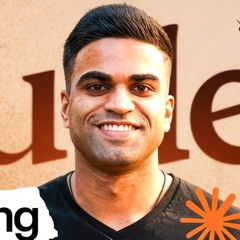 Guest
Amol Avasare
Head of Growth at Anthropic, previously growth at Mercury and MasterClass
 Anthropic1 source · 20 tips
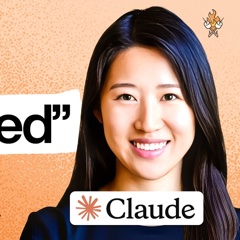 Guest
Cat Wu
Head of Product for Claude Code and Cowork, Anthropic
Anthropic1 source · 16 tips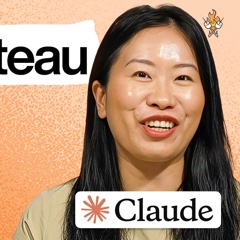 Guest
Dianne Penn
Head of Product for AI Research and Labs, Anthropic
Anthropic1 source · 17 tips Guest
Fiona Fung
Leads the Claude Code and Cowork teams at Anthropic; former Meta (Facebook Marketplace, Instagram) and Microsoft (Visual Studio, TypeScript) engineering leader
Anthropic1 source · 17 tips