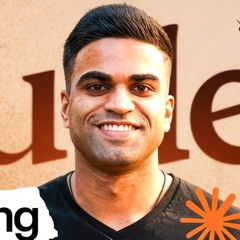
Amol Avasare
Head of Growth at Anthropic, previously growth at Mercury and MasterClass
Where to hear and read about Amol Avasare1 episode or test

Amol Avasare is Head of Growth at Anthropic, previously growth at Mercury and MasterClass, and a former startup founder. The thing most worth learning from him is to bet on large swings when your product's value compounds, while handing routine growth loops to Claude and keeping alignment and judgment with humans.
you usually need to be okay leaving money on the table
Head of Growth (Anthropic): Anthropic is automating its own growth
Amol Avasare: the story and the lessons
1Amol Avasare's path from failed founder to Anthropic
Avasare spent three years on a mental health startup that shut down. He raised a couple of million dollars and had 7 to 10 employees at peak. The product tried to quantify mental health to give early predictors of anxiety and major depression.
He calls it the biggest failure of his career. Telling investors the vision would not happen was very hard, and it took him years to get over it. He says they were in their early 20s with little idea what they were doing.
The failure gave him the skills his later career rests on. Before the startup he had never been a PM, never worked on products and did not know how to cold email.
He now says he is grateful it failed, because it would not have led to his current job. His view is that careers are a long game and the line only connects looking back.
He kept sending monthly investor updates while the startup failed. Updates are easy to write when things go well and hard when they don't. He sent them anyway, which kept investors in the loop and avoided surprises.
He got the Anthropic job by cold emailing the chief product officer. A heavy Claude user, he saw there was no growth team and said so to Mike Krieger. No growth roles were listed, but Anthropic was just starting to think about hiring one. Krieger told him he is the only PM he has hired from a cold email.
He treated the email like a funnel: tested subject lines for open rate and used a personal email, since LinkedIn and work inboxes are crowded. The body was short (who I am, why I fit, let's chat), and he followed up until told to stop.
A brain injury in 2022 left him unable to work for nine months. A routine sparring session in early 2022 was the cause. For two to three months he could not look at screens, and it took about half a year before he could walk comfortably.
A second injury came a month after he joined Mercury, when a bag hit his head as he got off a plane, and it put him out for about 3 months. He is still not 100% healed and sometimes has dizziness and headaches.
2Running growth at the fastest-growing company ever
Avasare credits research, not growth, for Anthropic's revenue surge. Revenue went from $1 billion to over $19 billion ARR in 14 months. He says Anthropic is a model company first, and Claude Code and marketing teams also deserve more credit than growth.
The $19B figure was from end of February. The revenue figures and growth claims in the sources come from Avasare alone, with no data shown.
About 70% of his time goes to fixing success disasters. Rapid scale breaks things, as it did early at Facebook, Uber and DoorDash. The firefighting spans acquisition, activation and monetization.
Every chart is green and up and to the right, yet it is still emotionally tough. The other 30% is proactive work: which products get investment, long-term pricing, and when to optimize Cowork's adoption funnel.
His growth team of about 40 is split by horizontals and audience pods. Growth platform and monetization work across all products. Pods cover B2B, Claude Code, knowledge workers and API, each with engineers, designers, PMs and data.
Pods follow audiences because one activation team could not serve Claude Code and Cowork. He says the structure is not perfect and is right only for a point in time.
His team built the Chrome extension because no one else would. A growth engineer was bullish on it and no one else was doing it. It now underpins use cases in Cowork and Claude Code.
Avasare says he would not have made that bet at another company.
3Why Avasare bets big instead of micro-optimizing
He flips the usual growth mix toward large swings. A traditional growth team spends 60 to 70% of its time on small to medium bets. Anthropic runs roughly 70/30 or 50/50 toward big swings.
Small optimizations still run, since no one else is going to do some of these things. His warning: "We need to take larger bets and then we need to not sort of miss the the forest for the trees".
He argues exponential product value makes small wins capture too little. A grocery app's value might rise 30 to 50% in two years, while he expects Anthropic's to rise 100 to 1,000 times.
The 1,000x claim is his alone. He says the approach fits AI-first products like Lovable and Cursor, not products with side AI features, and the sources show no evidence of what it costs in missed small gains.
Anthropic's narrow focus on coding and B2B came from being the underdog. As the smallest, least-funded lab, with no Meta or Google cash flow and no OpenAI head start, it had one path. Coding also speeds up research, and the focus goes back to a 2021 founder doc.
Avasare calls this "freedom through constraints". Anthropic had a chatbot before ChatGPT but held it back for safety reasons, and he thinks a first launch might have pulled it toward consumer.
4Avasare on activation and the right kind of friction
He calls activation the hardest problem in AI products. Models improve faster than users learn what they can do. A user asking for the weather in SF gets little from a model that can do far more.
Importing memory from ChatGPT was one fix for the cold start problem.
He avoids building onramps around one model's capabilities. By the time a team tests a new model and ships an onramp, the next model may make those learnings irrelevant. Opus 4 and Opus 4.5 each unlocked different things.
He focuses on the durable part: matching the right feature to the right user.
He keeps friction that teaches and cuts friction that adds nothing. Asking users who they are lets the product recommend the right feature. MasterClass's purchase quiz drove significant revenue, Calm's quiz was tested thoroughly, and Anthropic's long onboarding flow performs well in its data.
He says simply minimizing time to value usually fails once flows are tested, so high-volume teams should test on their own business.
He reuses onboarding answers for lifecycle messaging and lookalike targeting. In sophisticated setups, knowing who the user is lets you re-reach users who dropped off at the ad layer.
"it's a juice that just keeps on giving if you if you then use it right further down funnel".
At Mercury he spent a whole quarter on onboarding quality, not metrics. The team polished a complex banking onboarding flow: address types, field-to-field navigation and beneficial ownership details. Completion rose significantly, and it was his most impactful quarter until Anthropic.
The team had invested in quality across the product except this first experience. His summary: "quality drives growth".
Splitting long forms into two screens cut cognitive load at Mercury. A screen with five or six inputs became two screens and performed well. Added steps also performed well, as long as each reduced load or helped the user.
5How Avasare is automating growth with Claude
CASH splits growth shipping into four stages Claude can run. The stages are finding opportunities, building, testing against quality and brand bars, and analyzing results. Each is scored and improved weekly, and Claude's win rate is about that of a PM two to three years in.
It showed no results before Opus 4.5 and looked promising with Opus 4.6. He says it "ultimately prints money" on copy changes and minor UI tweaks. The win rate is his own report, with no data shown.
Humans still approve each change, and alignment stays human. Approval mainly protects the brand, and a skill holding brand guidelines could replace much of that review. Larger projects still need stakeholder management.
He expects that to change only once other stakeholders are their own agents.
A scheduled Cowork task reviews 20 to 25 charts every morning. It opens Hex links through the Chrome extension and MCP, then reports what is concerning and what is interesting. He still looks at a few charts himself.
Tracking false positives and false negatives over time builds confidence in what it flags.
He runs a weekly Claude scan of Slack for misalignment. Through the Slack MCP he asks Claude to scan his top projects for potential misalignment, and it can flag who to talk to before shipping. Scott, who leads the enterprise team, used it to catch major misalignment that would have caused wheel-spinning or overlapping work.
Larger organizations may need an admin to enable the Slack connection.
He asks Claude to play his manager and give feedback. Claude reads what a person said in Slack and meeting notes, then says what priorities or feedback that manager would have. He does the same for direct reports.
He compares it to a coach who is sometimes "drunk": some advice is clearly wrong and some is a real find.
He retests old tasks at every model release. Something that failed before may work after one release. He makes time to ask what is newly possible, or capabilities go unnoticed for months.
Even Anthropic staff must carve out time to update their priors on each model.
6How Avasare reshapes PM, engineering and design roles
Engineers act as the PM on projects of two engineering weeks or less. They handle security, legal and other stakeholders themselves while the PM advises. Above two weeks, or on a controversial project, the PM stays accountable.
His reasoning is that a team of five engineers, one designer and one PM now behaves like 15 to 20 engineers, which squeezes PMs and designers. The two-week line is a rule of thumb.
Growth hires product-minded engineers on purpose. These engineers generate ideas and can step in as mini PMs. Avasare says they become more valuable by "an order of magnitude", and growth is also hiring growth PMs.
At scale he wants PMs to sharpen the why and what, not ship. With 20 engineers, a PM adds more by guiding what gets built than by shipping the 21st feature. A strong PM who improves the why and what by 5% is a high-leverage hire.
At small or tight-budget companies the PM should still ship. He prefers to prototype an idea and show it rather than write about it.
Most work ships without a PRD, and big projects get a 30-minute kickoff. Roughly 60 to 80% of what Anthropic ships has no PRD. Large projects get a cross-functional kickoff where legal, safeguards and others each say what they care about.
When he does write a PRD, he uses a Claude skill and a project holding past PRDs. The 20 to 30% of work that matters most gets carefully written documentation.
He tells people to double down on the one skill where they spike. Combining disciplines, such as an engineer with product instincts or a PM who can design, makes someone a "unicorn". His own mix is founder, investment banker and near-miss sales exec, plus growth.
He also expects new hires to throw out 50 to 70% of how they worked before.
7Why Avasare is comfortable leaving money on the table
His growth team gives up metric gains to protect safety and brand. The team forgoes impact to protect safety, brand, a high quality bar and user experience. He argues this drives more growth over the long term.
He compares squeezing every last dollar to a founder haggling over the last dollar of a round, since you want people to come back.
He sorts risky tests into never-run and run-if-the-return-is-high. Tests that break brand, customer or values lines, including AI safety, are never run. Uncomfortable but not red-line tests can run with a strong hypothesis, and a "yikes" test must show a high return.
The strict tier stays narrow, so teams still try bold ideas. Anthropic is a public benefit corporation, which can legally put public benefit ahead of maximizing shareholder value.
His own post on this model behavior for new growth engineers. Everyone at Anthropic has an internal Slack feed like a personal Twitter. His post on leaving money on the table showed new growth engineers how things are done and limits drift.
8How Avasare stays level under pressure
The injury left him with daily habits that hold up on launch days. He avoids alcohol and caffeine and takes a short break before and after lunch, even on model launch days. He does a meditation retreat at least once a year.
Meditation gives him space between awareness and reality, and he says it helped him avoid unhealthy coping mechanisms.
He took every action he could and refused to let the outcome define him. During recovery he did diet and exercise but chose not to tie his happiness to the result. He quotes a meditation teacher that true freedom is learning to be content when you don't get what you want.
He runs on two mottos and puts percentages on uncertainty. "She'll be right" is an Aussie saying that downplays a tough situation. "Just go for it" came from Eros Resmini, former CMO of Discord and an advisor in his founder years.
From Annie Duke's Thinking in Bets he takes the habit of putting a percentage on "I don't know if it'll get done in time."

Head of Growth (Anthropic): Anthropic is automating its own growth
Anthropic's head of growth explains how a growth team operates at a company going from $1 billion to over $19 billion ARR in 14 months, covering activation in AI products, the right kind of friction, big bets over micro-optimizations, and automating growth experiments with Claude. He also covers how PM, engineering and design roles are shifting, and how he uses Claude for data review, alignment checks and coaching.
Avasare spent three years on a mental health startup that shut down. He raised a couple of million dollars and had 7 to 10 employees at peak. The product tried to quantify mental health to give early predictors of anxiety and major depression.
He calls it the biggest failure of his career. Telling investors the vision would not happen was very hard, and it took him years to get over it. He says they were in their early 20s with little idea what they were doing.
The failure gave him the skills his later career rests on. Before the startup he had never been a PM, never worked on products and did not know how to cold email.
He now says he is grateful it failed, because it would not have led to his current job. His view is that careers are a long game and the line only connects looking back.
He kept sending monthly investor updates while the startup failed. Updates are easy to write when things go well and hard when they don't. He sent them anyway, which kept investors in the loop and avoided surprises.
He got the Anthropic job by cold emailing the chief product officer. A heavy Claude user, he saw there was no growth team and said so to Mike Krieger. No growth roles were listed, but Anthropic was just starting to think about hiring one. Krieger told him he is the only PM he has hired from a cold email.
He treated the email like a funnel: tested subject lines for open rate and used a personal email, since LinkedIn and work inboxes are crowded. The body was short (who I am, why I fit, let's chat), and he followed up until told to stop.
A brain injury in 2022 left him unable to work for nine months. A routine sparring session in early 2022 was the cause. For two to three months he could not look at screens, and it took about half a year before he could walk comfortably.
A second injury came a month after he joined Mercury, when a bag hit his head as he got off a plane, and it put him out for about 3 months. He is still not 100% healed and sometimes has dizziness and headaches.
Avasare credits research, not growth, for Anthropic's revenue surge. Revenue went from $1 billion to over $19 billion ARR in 14 months. He says Anthropic is a model company first, and Claude Code and marketing teams also deserve more credit than growth.
The $19B figure was from end of February. The revenue figures and growth claims in the sources come from Avasare alone, with no data shown.
About 70% of his time goes to fixing success disasters. Rapid scale breaks things, as it did early at Facebook, Uber and DoorDash. The firefighting spans acquisition, activation and monetization.
Every chart is green and up and to the right, yet it is still emotionally tough. The other 30% is proactive work: which products get investment, long-term pricing, and when to optimize Cowork's adoption funnel.
His growth team of about 40 is split by horizontals and audience pods. Growth platform and monetization work across all products. Pods cover B2B, Claude Code, knowledge workers and API, each with engineers, designers, PMs and data.
Pods follow audiences because one activation team could not serve Claude Code and Cowork. He says the structure is not perfect and is right only for a point in time.
His team built the Chrome extension because no one else would. A growth engineer was bullish on it and no one else was doing it. It now underpins use cases in Cowork and Claude Code.
Avasare says he would not have made that bet at another company.
He flips the usual growth mix toward large swings. A traditional growth team spends 60 to 70% of its time on small to medium bets. Anthropic runs roughly 70/30 or 50/50 toward big swings.
Small optimizations still run, since no one else is going to do some of these things. His warning: "We need to take larger bets and then we need to not sort of miss the the forest for the trees".
He argues exponential product value makes small wins capture too little. A grocery app's value might rise 30 to 50% in two years, while he expects Anthropic's to rise 100 to 1,000 times.
The 1,000x claim is his alone. He says the approach fits AI-first products like Lovable and Cursor, not products with side AI features, and the sources show no evidence of what it costs in missed small gains.
Anthropic's narrow focus on coding and B2B came from being the underdog. As the smallest, least-funded lab, with no Meta or Google cash flow and no OpenAI head start, it had one path. Coding also speeds up research, and the focus goes back to a 2021 founder doc.
Avasare calls this "freedom through constraints". Anthropic had a chatbot before ChatGPT but held it back for safety reasons, and he thinks a first launch might have pulled it toward consumer.
He calls activation the hardest problem in AI products. Models improve faster than users learn what they can do. A user asking for the weather in SF gets little from a model that can do far more.
Importing memory from ChatGPT was one fix for the cold start problem.
He avoids building onramps around one model's capabilities. By the time a team tests a new model and ships an onramp, the next model may make those learnings irrelevant. Opus 4 and Opus 4.5 each unlocked different things.
He focuses on the durable part: matching the right feature to the right user.
He keeps friction that teaches and cuts friction that adds nothing. Asking users who they are lets the product recommend the right feature. MasterClass's purchase quiz drove significant revenue, Calm's quiz was tested thoroughly, and Anthropic's long onboarding flow performs well in its data.
He says simply minimizing time to value usually fails once flows are tested, so high-volume teams should test on their own business.
He reuses onboarding answers for lifecycle messaging and lookalike targeting. In sophisticated setups, knowing who the user is lets you re-reach users who dropped off at the ad layer.
"it's a juice that just keeps on giving if you if you then use it right further down funnel".
At Mercury he spent a whole quarter on onboarding quality, not metrics. The team polished a complex banking onboarding flow: address types, field-to-field navigation and beneficial ownership details. Completion rose significantly, and it was his most impactful quarter until Anthropic.
The team had invested in quality across the product except this first experience. His summary: "quality drives growth".
Splitting long forms into two screens cut cognitive load at Mercury. A screen with five or six inputs became two screens and performed well. Added steps also performed well, as long as each reduced load or helped the user.
CASH splits growth shipping into four stages Claude can run. The stages are finding opportunities, building, testing against quality and brand bars, and analyzing results. Each is scored and improved weekly, and Claude's win rate is about that of a PM two to three years in.
It showed no results before Opus 4.5 and looked promising with Opus 4.6. He says it "ultimately prints money" on copy changes and minor UI tweaks. The win rate is his own report, with no data shown.
Humans still approve each change, and alignment stays human. Approval mainly protects the brand, and a skill holding brand guidelines could replace much of that review. Larger projects still need stakeholder management.
He expects that to change only once other stakeholders are their own agents.
A scheduled Cowork task reviews 20 to 25 charts every morning. It opens Hex links through the Chrome extension and MCP, then reports what is concerning and what is interesting. He still looks at a few charts himself.
Tracking false positives and false negatives over time builds confidence in what it flags.
He runs a weekly Claude scan of Slack for misalignment. Through the Slack MCP he asks Claude to scan his top projects for potential misalignment, and it can flag who to talk to before shipping. Scott, who leads the enterprise team, used it to catch major misalignment that would have caused wheel-spinning or overlapping work.
Larger organizations may need an admin to enable the Slack connection.
He asks Claude to play his manager and give feedback. Claude reads what a person said in Slack and meeting notes, then says what priorities or feedback that manager would have. He does the same for direct reports.
He compares it to a coach who is sometimes "drunk": some advice is clearly wrong and some is a real find.
He retests old tasks at every model release. Something that failed before may work after one release. He makes time to ask what is newly possible, or capabilities go unnoticed for months.
Even Anthropic staff must carve out time to update their priors on each model.
Engineers act as the PM on projects of two engineering weeks or less. They handle security, legal and other stakeholders themselves while the PM advises. Above two weeks, or on a controversial project, the PM stays accountable.
His reasoning is that a team of five engineers, one designer and one PM now behaves like 15 to 20 engineers, which squeezes PMs and designers. The two-week line is a rule of thumb.
Growth hires product-minded engineers on purpose. These engineers generate ideas and can step in as mini PMs. Avasare says they become more valuable by "an order of magnitude", and growth is also hiring growth PMs.
At scale he wants PMs to sharpen the why and what, not ship. With 20 engineers, a PM adds more by guiding what gets built than by shipping the 21st feature. A strong PM who improves the why and what by 5% is a high-leverage hire.
At small or tight-budget companies the PM should still ship. He prefers to prototype an idea and show it rather than write about it.
Most work ships without a PRD, and big projects get a 30-minute kickoff. Roughly 60 to 80% of what Anthropic ships has no PRD. Large projects get a cross-functional kickoff where legal, safeguards and others each say what they care about.
When he does write a PRD, he uses a Claude skill and a project holding past PRDs. The 20 to 30% of work that matters most gets carefully written documentation.
He tells people to double down on the one skill where they spike. Combining disciplines, such as an engineer with product instincts or a PM who can design, makes someone a "unicorn". His own mix is founder, investment banker and near-miss sales exec, plus growth.
He also expects new hires to throw out 50 to 70% of how they worked before.
His growth team gives up metric gains to protect safety and brand. The team forgoes impact to protect safety, brand, a high quality bar and user experience. He argues this drives more growth over the long term.
He compares squeezing every last dollar to a founder haggling over the last dollar of a round, since you want people to come back.
He sorts risky tests into never-run and run-if-the-return-is-high. Tests that break brand, customer or values lines, including AI safety, are never run. Uncomfortable but not red-line tests can run with a strong hypothesis, and a "yikes" test must show a high return.
The strict tier stays narrow, so teams still try bold ideas. Anthropic is a public benefit corporation, which can legally put public benefit ahead of maximizing shareholder value.
His own post on this model behavior for new growth engineers. Everyone at Anthropic has an internal Slack feed like a personal Twitter. His post on leaving money on the table showed new growth engineers how things are done and limits drift.
The injury left him with daily habits that hold up on launch days. He avoids alcohol and caffeine and takes a short break before and after lunch, even on model launch days. He does a meditation retreat at least once a year.
Meditation gives him space between awareness and reality, and he says it helped him avoid unhealthy coping mechanisms.
He took every action he could and refused to let the outcome define him. During recovery he did diet and exercise but chose not to tie his happiness to the result. He quotes a meditation teacher that true freedom is learning to be content when you don't get what you want.
He runs on two mottos and puts percentages on uncertainty. "She'll be right" is an Aussie saying that downplays a tough situation. "Just go for it" came from Eros Resmini, former CMO of Discord and an advisor in his founder years.
From Annie Duke's Thinking in Bets he takes the habit of putting a percentage on "I don't know if it'll get done in time."
More from Anthropic
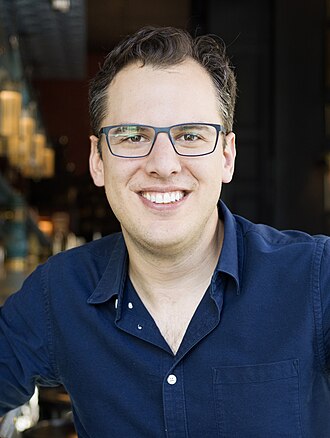 Guest
Mike Krieger
Anthropic (IC builder, previously Instagram co-founder and Labs lead)
 Anthropic3 sources · 48 tips
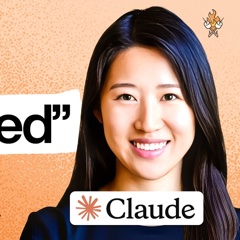 Guest
Cat Wu
Head of Product for Claude Code and Cowork, Anthropic
Anthropic1 source · 16 tips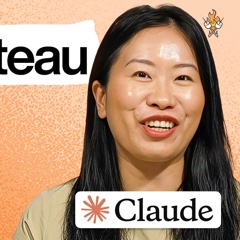 Guest
Dianne Penn
Head of Product for AI Research and Labs, Anthropic
Anthropic1 source · 17 tips Guest
Fiona Fung
Leads the Claude Code and Cowork teams at Anthropic; former Meta (Facebook Marketplace, Instagram) and Microsoft (Visual Studio, TypeScript) engineering leader
Anthropic1 source · 17 tips