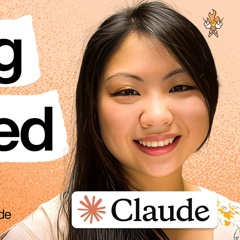
Fiona Fung
Leads the Claude Code and Cowork teams at Anthropic; former Meta (Facebook Marketplace, Instagram) and Microsoft (Visual Studio, TypeScript) engineering leader
Where to hear and read about Fiona Fung1 episode or test

Fiona Fung leads the Claude Code and Cowork teams at Anthropic, after engineering leadership at Microsoft (Visual Studio, TypeScript) and Meta (Facebook Marketplace, Instagram). The lesson most worth taking from her: when AI writes the code, the work shifts to deciding what to build and verifying it, so pair high agency with accountability and measure outcomes.
Don't forsake motion for progress.
What happens after coding is solved? | Fiona Fung (Claude Code & Cowork)
Fiona Fung: the story and the lessons
1Fiona Fung's path from bank teller to Claude Code
Fung paid her way into engineering by working as a bank teller. Afraid she could not afford engineering school, she became a bank teller at National Bank of Canada. She worked weekends through school and kept the job two years after the dot-com crash cut internships.
She uses it as her example of fear turning into one action within her control.
Her first tools were bare, and Visual Studio changed how she saw tooling. At IBM she worked on DB2 operating system services using Vim and terminal debugging. She joined Microsoft in the early 2000s, after the dot-com crash froze much hiring, having never used an IDE.
She first guessed Visual Studio was a better paint program. Breakpoints and multi-threaded debugging were a stepwise change for her.
Dogfooding became a habit on the Visual Studio editor team. She used the VS editor to build the VS editor, so teammates gave each other fast feedback. At Microsoft she later ran the teams that built TypeScript and Visual Studio.
Before social media, most engineers heard from customers only through user research sessions and visits.
At Meta she took Marketplace from idea to launch and led across Instagram. Facebook Marketplace now generates over $100 billion in GMV a year. She oversaw Meta's first smart glasses product, helped build Orion AR glasses, and led Instagram infrastructure, growth, integrity and safety teams.
Across Instagram and Meta she oversaw an org of over 500 people. She learned the growth mindset in her first year at Meta, after moving from Microsoft.
Today she leads Claude Code and Cowork and oversees Boris Cherny and Cat Wu. Anthropic engineers now ship about 8x as much code per quarter as in 2025, and designers and PMs check in code too.
The 8x figure counts volume. Nothing in the material shows quality or customer impact rose as much, and the evidence comes from Anthropic's own team using its own product.
2How Fung runs a team when coding is no longer the bottleneck
Fung keeps a Claude session on every repo to review team output. Her Claude Code remote session is enlisted in all repos, with access to Slack channels and the team's metrics. Each month she shares her screen and the team reviews what shipped, how it did in market, and which bugs or incidents followed.
She uses it for conversations, not just fixes: "I actually have these sessions to enable me to have conversations with folks that I support."
She replaced her morning feedback reading with a routine that drafts PRs. She used to read feedback channels over coffee and pick a gap to fix in her maker time. Now a routine summarizes feedback themes, kicks off agents on polish fixes, and leaves PRs ready to review when she wakes up.
Routines moved her from one prompt at a time, to several in parallel, to a routine that writes the prompts. As verification improves, she gives routines more freedom to act.
Fung commits her standard for good to the repo so Claude can check it. Specs, a content design scale and other frameworks are checked in and kept current with the code. Claude Code Review confirms new changes still match them.
Humans still review areas needing deep subject matter expertise, on a trust but verify basis. Claude Code Review did not exist the year before, and human review had been a major bottleneck.
She asks Claude to find patterns across incidents and flag quality hot spots. Themes from incidents that were once reviewed by hand now come out of Claude, along with places where a gap may sit.
Her saying is "Make new mistakes." Aiming for zero mistakes probably means moving too slowly or being too cautious.
Fung finds test-driven development easier now that Claude writes the tests. She had seen TDD as eating the broccoli first, since she gets her thrill from shipping. Her first Claude Code bug fix had Claude write a failing test, then the fix, then pass the test.
She thinks old principles like TDD may be more efficient now that models do more of the work.
3Fung on agency, metrics and quality
Fung pairs high agency with high accountability. Everyone on the Claude Code and Cowork teams is expected to bring ideas and has freedom to build. Accountability goes back to the hypothesis each person is trying to prove.
She calls them two sides of the same coin: "we say with high agency is also high accountability." Agency alone produces activity with no clear result.
She measures outcomes, because every output metric has been gamed. Lines of code broke when ported libraries inflated it and framework updates shrank it. Time to land a PR was the next candidate, and she calls token maxing the new lines of code.
Her answer is to ask what problem the team is solving and measure that. She also runs a listening tour with senior engineers, who multiply what they learn across the team.
Fung revisits metrics after an early Marketplace seller-count gate misled the team. Early Marketplace region launches were gated partly on number of sellers. The first region had few sellers but power sellers, and buyers were finding what they needed, so the team updated the metric.
Her warning is against "blindly following a metric that used to make sense."
She sorts quality problems into bad and sad for each product surface. Bad is unrecoverable, such as a crash that loses work. Sad is recoverable pain, such as flicker, and stacked sads can turn into a bad.
Each team defines bad and sad for its own surface and sets its own goal. On the CLI, crash rate is a bad metric and flickering is a sad one. The team fixes bads first while watching sads.
Monitoring, tests and evals keep quality up when review cannot keep pace. The aim is proactive quality: earlier detection and watching key experiences for trends over time. Evals are hard because they must capture how frustrating or delightful an experience is.
After frustrations last September, an engineer proposed tracking swear words in user prompts, and it became a dashboard.
4Who Fung hires and how she builds the team
Fung hires creative product builders and deep systems experts. The builders have an idea, build it, iterate on feedback and own it end to end. She calls them the dreamers. Early Claude Code had strong product generalists but lacked distributed systems expertise.
Mobile expertise is still needed but in smaller numbers, because people now flex across platforms. Where models still need verification, she keeps investing in deep expertise.
Every manager on her teams starts as an individual contributor. New managers spend their first period shipping and learning the code and team before taking on people. Fung spent her first quarter at Meta as an IC, after 11 years at Microsoft.
The idea came from a listening tour where people liked the agency but wanted clearer prioritization and fewer review layers. Her own PRs matter less for what they fix than for keeping her in the product daily.
Claude let Fung ship code again after years away from production. She had not shipped production code since 2017, partly from fear of causing a bug or wasting someone's time. Claude acted as her onboarding buddy, answering codebase questions, helping with automated tests and suggesting a manual test plan.
Other long-time managers have told her they are shipping code again thanks to Claude.
She runs pairwise programming lunches because agent work got lonely. People felt isolated working with their agents, so the team pairs up on purpose, and holds hackathons. Everyone uses Claude Code and Cowork in a different flow, so each session teaches something.
She also asks new joiners to understand the architecture behind every change. Her rule of thumb is to learn your dependencies, so you notice when they change.
Culture is the problem that keeps Fung up at night. She calls culture a living thing that shows in how people treat each other. Her one team mentality means looking behind you near the finish line to help teammates finish together.
Her nightmare is a manager saying everything is fine while things burn, so she raises it with managers when they first join. Other problems have dashboards and hypotheses, and culture does not.
5Fung on dogfooding and latent demand
Fung dogfoods daily and meets customers when she cannot use the product. A trip to Chile with three people and Android phones showed the Marketplace feed barely loaded on slower LTE. Marketplace had been underperforming there, and no metric had explained why.
Her warning: "don't get too lost in metrics and dashboards only or presentations." She also sold her old MacBook Air on Marketplace and drew a scam attempt within minutes, a vector the team had not detected.
She treats dogfooding as how a leader holds the quality bar. On the VR operating system she never checked in code for fear of breaking it, and spent her dogfooding time vetting how polish fixes looked. Her own VR setup kept surfacing odd floor height issues.
On every past team, VR, smart glasses and Instagram, people said they liked that she used what they built.
Cowork and Claude for small business both came from latent demand. Cowork came from noticing many non-coders already using Claude Code. Small business owners kept asking if a plugin existed, which led to a toggle inside Cowork that bundles them.
She defines latent demand as people jumping through hoops to do something, which marks where to build a smoother experience.
Fung tests Cowork with friends and found bugs and uses she had not imagined. A restaurant owner pointed Cowork at her cluttered folder and it found her menus. It then compared prices with similar nearby cuisine and returned a market analysis.
Watching friends go through onboarding exposed real bugs. She says showing a newcomer one concrete use is the best way to keep the AI divide from widening.
6How Fung plans and kills process
Fung dropped the six-month roadmap for monthly just-in-time planning. She introduced a lightweight six-month roadmap doc, and three months in asked whether anyone still referenced it. The team now aligns on a small spreadsheet of priorities with a quick weekly check, and sets themes when everyone meets every six months.
She wants to automate the spreadsheet so updating it never feels like a tax. "I call it JIT planning now, like just-in-time planning."
She gave her team explicit permission to kill processes that no longer serve. She suggests picking one process that is dreaded, noisy, expensive or very manual, and asking whether it still has a purpose.
The roadmap exercise did kickstart conversations and alignment. It went stale because so much had changed.
Fung gives each person room to choose how to hit shared priorities. The team shares the few highest priorities, then everyone brings their own item for how they would address them.
This keeps agency with focus alive in planning. Themes guide the work and shift quickly when the landscape changes.
She retries what failed whenever a new model ships. She saw engineers resist AI tools after early mistakes with Sonnet 3.5 or 3.6, underestimating the rate of improvement.
Her advice: "it might be worth a time to revisit cuz you know, that now might be a new capability."
7What Fung has not solved and how she handles fear
Fung answers AI fear by finding one action within her control. She sees fear behind much of the frustration with AI. She reframes events as happening for her rather than to her, then asks what one thing she can change.
She also says growth needs doing something scary now and then, since at peak efficiency you stop growing.
She now blocks focus time to catch up on async agent work. She used to block time to code, and now blocks it to catch up on what she kicked off. Agents can remind her where she left off, but switching is more frequent.
She has not cracked a fix yet. It affects both team members and users.
Fung admits judging a good experience and training juniors are open problems. Checking that an experience is good is harder than checking accuracy, and how far to push automated review depends on where expert judgment still matters.
She wonders whether fellowships or apprenticeships should replace three-month internships, and says what matters will shift, so the task is building proficiency in whatever matters.

What happens after coding is solved? | Fiona Fung (Claude Code & Cowork)
Fiona Fung explains how the Claude Code and Cowork teams work when coding is no longer the bottleneck: using Claude to review team output, automating verification, giving high agency with high accountability, and planning just in time. Anthropic engineers now ship 8x as much code per quarter as in 2025, and her team is rethinking roles, quality, hiring and planning to keep up.
Fung paid her way into engineering by working as a bank teller. Afraid she could not afford engineering school, she became a bank teller at National Bank of Canada. She worked weekends through school and kept the job two years after the dot-com crash cut internships.
She uses it as her example of fear turning into one action within her control.
Her first tools were bare, and Visual Studio changed how she saw tooling. At IBM she worked on DB2 operating system services using Vim and terminal debugging. She joined Microsoft in the early 2000s, after the dot-com crash froze much hiring, having never used an IDE.
She first guessed Visual Studio was a better paint program. Breakpoints and multi-threaded debugging were a stepwise change for her.
Dogfooding became a habit on the Visual Studio editor team. She used the VS editor to build the VS editor, so teammates gave each other fast feedback. At Microsoft she later ran the teams that built TypeScript and Visual Studio.
Before social media, most engineers heard from customers only through user research sessions and visits.
At Meta she took Marketplace from idea to launch and led across Instagram. Facebook Marketplace now generates over $100 billion in GMV a year. She oversaw Meta's first smart glasses product, helped build Orion AR glasses, and led Instagram infrastructure, growth, integrity and safety teams.
Across Instagram and Meta she oversaw an org of over 500 people. She learned the growth mindset in her first year at Meta, after moving from Microsoft.
Today she leads Claude Code and Cowork and oversees Boris Cherny and Cat Wu. Anthropic engineers now ship about 8x as much code per quarter as in 2025, and designers and PMs check in code too.
The 8x figure counts volume. Nothing in the material shows quality or customer impact rose as much, and the evidence comes from Anthropic's own team using its own product.
Fung keeps a Claude session on every repo to review team output. Her Claude Code remote session is enlisted in all repos, with access to Slack channels and the team's metrics. Each month she shares her screen and the team reviews what shipped, how it did in market, and which bugs or incidents followed.
She uses it for conversations, not just fixes: "I actually have these sessions to enable me to have conversations with folks that I support."
She replaced her morning feedback reading with a routine that drafts PRs. She used to read feedback channels over coffee and pick a gap to fix in her maker time. Now a routine summarizes feedback themes, kicks off agents on polish fixes, and leaves PRs ready to review when she wakes up.
Routines moved her from one prompt at a time, to several in parallel, to a routine that writes the prompts. As verification improves, she gives routines more freedom to act.
Fung commits her standard for good to the repo so Claude can check it. Specs, a content design scale and other frameworks are checked in and kept current with the code. Claude Code Review confirms new changes still match them.
Humans still review areas needing deep subject matter expertise, on a trust but verify basis. Claude Code Review did not exist the year before, and human review had been a major bottleneck.
She asks Claude to find patterns across incidents and flag quality hot spots. Themes from incidents that were once reviewed by hand now come out of Claude, along with places where a gap may sit.
Her saying is "Make new mistakes." Aiming for zero mistakes probably means moving too slowly or being too cautious.
Fung finds test-driven development easier now that Claude writes the tests. She had seen TDD as eating the broccoli first, since she gets her thrill from shipping. Her first Claude Code bug fix had Claude write a failing test, then the fix, then pass the test.
She thinks old principles like TDD may be more efficient now that models do more of the work.
Fung pairs high agency with high accountability. Everyone on the Claude Code and Cowork teams is expected to bring ideas and has freedom to build. Accountability goes back to the hypothesis each person is trying to prove.
She calls them two sides of the same coin: "we say with high agency is also high accountability." Agency alone produces activity with no clear result.
She measures outcomes, because every output metric has been gamed. Lines of code broke when ported libraries inflated it and framework updates shrank it. Time to land a PR was the next candidate, and she calls token maxing the new lines of code.
Her answer is to ask what problem the team is solving and measure that. She also runs a listening tour with senior engineers, who multiply what they learn across the team.
Fung revisits metrics after an early Marketplace seller-count gate misled the team. Early Marketplace region launches were gated partly on number of sellers. The first region had few sellers but power sellers, and buyers were finding what they needed, so the team updated the metric.
Her warning is against "blindly following a metric that used to make sense."
She sorts quality problems into bad and sad for each product surface. Bad is unrecoverable, such as a crash that loses work. Sad is recoverable pain, such as flicker, and stacked sads can turn into a bad.
Each team defines bad and sad for its own surface and sets its own goal. On the CLI, crash rate is a bad metric and flickering is a sad one. The team fixes bads first while watching sads.
Monitoring, tests and evals keep quality up when review cannot keep pace. The aim is proactive quality: earlier detection and watching key experiences for trends over time. Evals are hard because they must capture how frustrating or delightful an experience is.
After frustrations last September, an engineer proposed tracking swear words in user prompts, and it became a dashboard.
Fung hires creative product builders and deep systems experts. The builders have an idea, build it, iterate on feedback and own it end to end. She calls them the dreamers. Early Claude Code had strong product generalists but lacked distributed systems expertise.
Mobile expertise is still needed but in smaller numbers, because people now flex across platforms. Where models still need verification, she keeps investing in deep expertise.
Every manager on her teams starts as an individual contributor. New managers spend their first period shipping and learning the code and team before taking on people. Fung spent her first quarter at Meta as an IC, after 11 years at Microsoft.
The idea came from a listening tour where people liked the agency but wanted clearer prioritization and fewer review layers. Her own PRs matter less for what they fix than for keeping her in the product daily.
Claude let Fung ship code again after years away from production. She had not shipped production code since 2017, partly from fear of causing a bug or wasting someone's time. Claude acted as her onboarding buddy, answering codebase questions, helping with automated tests and suggesting a manual test plan.
Other long-time managers have told her they are shipping code again thanks to Claude.
She runs pairwise programming lunches because agent work got lonely. People felt isolated working with their agents, so the team pairs up on purpose, and holds hackathons. Everyone uses Claude Code and Cowork in a different flow, so each session teaches something.
She also asks new joiners to understand the architecture behind every change. Her rule of thumb is to learn your dependencies, so you notice when they change.
Culture is the problem that keeps Fung up at night. She calls culture a living thing that shows in how people treat each other. Her one team mentality means looking behind you near the finish line to help teammates finish together.
Her nightmare is a manager saying everything is fine while things burn, so she raises it with managers when they first join. Other problems have dashboards and hypotheses, and culture does not.
Fung dogfoods daily and meets customers when she cannot use the product. A trip to Chile with three people and Android phones showed the Marketplace feed barely loaded on slower LTE. Marketplace had been underperforming there, and no metric had explained why.
Her warning: "don't get too lost in metrics and dashboards only or presentations." She also sold her old MacBook Air on Marketplace and drew a scam attempt within minutes, a vector the team had not detected.
She treats dogfooding as how a leader holds the quality bar. On the VR operating system she never checked in code for fear of breaking it, and spent her dogfooding time vetting how polish fixes looked. Her own VR setup kept surfacing odd floor height issues.
On every past team, VR, smart glasses and Instagram, people said they liked that she used what they built.
Cowork and Claude for small business both came from latent demand. Cowork came from noticing many non-coders already using Claude Code. Small business owners kept asking if a plugin existed, which led to a toggle inside Cowork that bundles them.
She defines latent demand as people jumping through hoops to do something, which marks where to build a smoother experience.
Fung tests Cowork with friends and found bugs and uses she had not imagined. A restaurant owner pointed Cowork at her cluttered folder and it found her menus. It then compared prices with similar nearby cuisine and returned a market analysis.
Watching friends go through onboarding exposed real bugs. She says showing a newcomer one concrete use is the best way to keep the AI divide from widening.
Fung dropped the six-month roadmap for monthly just-in-time planning. She introduced a lightweight six-month roadmap doc, and three months in asked whether anyone still referenced it. The team now aligns on a small spreadsheet of priorities with a quick weekly check, and sets themes when everyone meets every six months.
She wants to automate the spreadsheet so updating it never feels like a tax. "I call it JIT planning now, like just-in-time planning."
She gave her team explicit permission to kill processes that no longer serve. She suggests picking one process that is dreaded, noisy, expensive or very manual, and asking whether it still has a purpose.
The roadmap exercise did kickstart conversations and alignment. It went stale because so much had changed.
Fung gives each person room to choose how to hit shared priorities. The team shares the few highest priorities, then everyone brings their own item for how they would address them.
This keeps agency with focus alive in planning. Themes guide the work and shift quickly when the landscape changes.
She retries what failed whenever a new model ships. She saw engineers resist AI tools after early mistakes with Sonnet 3.5 or 3.6, underestimating the rate of improvement.
Her advice: "it might be worth a time to revisit cuz you know, that now might be a new capability."
Fung answers AI fear by finding one action within her control. She sees fear behind much of the frustration with AI. She reframes events as happening for her rather than to her, then asks what one thing she can change.
She also says growth needs doing something scary now and then, since at peak efficiency you stop growing.
She now blocks focus time to catch up on async agent work. She used to block time to code, and now blocks it to catch up on what she kicked off. Agents can remind her where she left off, but switching is more frequent.
She has not cracked a fix yet. It affects both team members and users.
Fung admits judging a good experience and training juniors are open problems. Checking that an experience is good is harder than checking accuracy, and how far to push automated review depends on where expert judgment still matters.
She wonders whether fellowships or apprenticeships should replace three-month internships, and says what matters will shift, so the task is building proficiency in whatever matters.
More from Anthropic
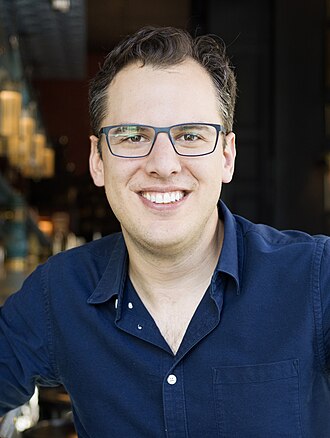 Guest
Mike Krieger
Anthropic (IC builder, previously Instagram co-founder and Labs lead)
 Anthropic3 sources · 48 tips
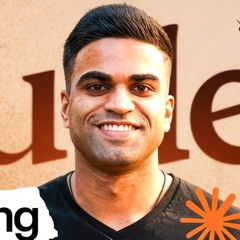 Guest
Amol Avasare
Head of Growth at Anthropic, previously growth at Mercury and MasterClass
Anthropic1 source · 20 tips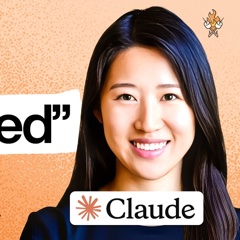 Guest
Cat Wu
Head of Product for Claude Code and Cowork, Anthropic
Anthropic1 source · 16 tips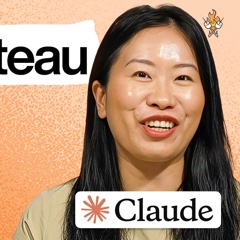 Guest
Dianne Penn
Head of Product for AI Research and Labs, Anthropic
Anthropic1 source · 17 tips