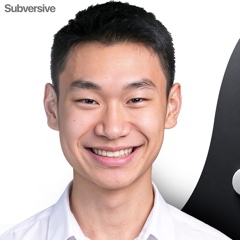
Edward Tian
Co-founder and CEO of GPTZero, now part of Superhuman
Where to hear and read about Edward Tian1 episode or test
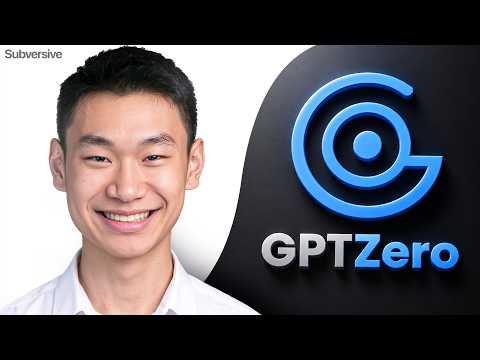
Edward Tian is co-founder and CEO of GPTZero, an AI detection company he started from thesis research and sold to Superhuman after reaching $30M+ ARR. The most useful lesson is to start with the users who feel the most pain, keep the first magic moment free, and then run each growth channel as a repeatable program.
the people that felt the most painpoint is always the best place to start.
Edward Tian on Building GPTZero, Scaling to $30M+ ARR, and the Superhuman Acquisition
Edward Tian: the story and the lessons
1How Edward Tian built GPTZero from a weekend project
Tian turned finished thesis research into a product within days of ChatGPT's launch. He had worked on AI detection models the semester before. After ChatGPT came out in November, he put them into a web app, built at a cafe in Toronto around New Year's, in his senior year at Princeton.
The first version took a three-day winter-break build. It went viral overnight and crashed under 30,000 users in its first week. He then recruited engineer friends and built in public to keep the momentum.
His journalism work at the BBC shaped what GPTZero became. At the BBC he investigated AI-made disinformation. His team wrote code to track AI-generated images on Twitter and Facebook during election-cycle information campaigns, and could detect output from StyleGAN2.
He calls that search for truth part of the company's DNA. He also took journalism classes in critical writing and creative non-fiction, and calls himself a writer first and a founder second. He had planned to be an investigative journalist at the New York Times.
GPTZero reached profitability in its first 18 months and then scaled fast. Tian and his co-founder were profitable within the first 18 months. The business went from three days of work to 19 million users and $30M ARR, and grew from $9M to $30M+ ARR in 18 months.
The founders were young, but the early hires were experienced, with an average age in their 30s. Tian calls that the right call.
2Why Tian started with teachers and kept the scan free
Tian began with teachers because they felt the most pain. ChatGPT disrupted teachers' jobs and livelihoods before they were ready. GPTZero built a suite of solutions for them, and they shared the product with students.
Some teachers went from using it as a checker to putting it on their syllabi and telling students to use it.
He served the smaller side first, as eBay did with sellers. Tian read early on about eBay deciding between sellers and buyers. Students are the larger share of GPTZero users, but teachers are the side that pulls them in.
He saw the same pattern at Quizlet, where teachers were not most subscribers but drove viral student acquisition.
The homepage has always been a free text box and a scan button. The first landing page was only a text box and a scan button, and that entry point has stayed free since 2023 while the business grew profitably.
He wants the magic moment as early as possible, and free use also means longer time on page, which helps SEO and GEO. Freemium is still being tuned, since free use drives engagement but can deter conversion.
Tian plans the year around two demand peaks and works the off-season on retention. Demand peaks at back to school and exam season, when daily actives swing from about 150,000 to a million or more. Off-peak, the team cuts summer churn with pause plans, surveys and reactivation moments.
He once wished GPTZero were an evergreen AI app, but now finds the push-and-pause cadence fulfilling. Quiet periods go to infrastructure, bug fixes and planning the next wave.
3How GPTZero grew from $9M to $30M ARR through repeatable programs
Tian made press repeatable by hiring a full-time investigative engineer. After early media wins, GPTZero hired an engineer to generate investigations, such as AI-written outputs at consulting firms like Ernst & Young and Deloitte. The Financial Times and Bloomberg picked them up.
Early on, Anderson Cooper's desk said it was full, so Tian emailed back that Fox had booked them in the same slot. The producer then confirmed an interview.
Tian turned a viral investigation into a new product and new customers. GPTZero found that 100 NeurIPS papers had hallucinated citations. The story topped Hacker News and led to hallucination detection, with conferences such as ICLR becoming clients.
He calls the pattern a concentric circle: text box, Chrome extension, industries, then the wider internet.
He built a TikTok program of about 30 microinfluencers with one full-time manager. It started with a girl from his high school creating content from scratch, then grew to 10, 20 and 30 creators. It passed 500 million views in a year.
He learned UGC from edtech friends who made content with students. In the last six months he built the first teacher-side UGC program, with trained teachers making organic classroom content.
A flopped World Cup campaign taught him how long a content format should run. Creators posted a ranking of the most and least AI World Cup teams. It did not get the virality or consistent posting hoped for because the event window was too short.
He thinks a good format lasts longer than 3 months and less than a year, since you must refresh what works.
He moved SEO in-house and won places on 'best AI detector' lists. GPTZero used six or seven agencies over the years before building a full-time in-house SEO and backlink team that works with media and growth. It ranks consistently high for 'best AI detector' in ChatGPT.
The team found that GEO engines lean on 'top 10' listicle articles, so it built more of them and got included on more. He credits part of the result to luck and a good product.
A six-part course and teacher ambassadors beat one-off webinars. Single webinars looked like sales pitches. A six-part series on being a responsible AI educator, with experts and journalists, felt like a certification and drew far better attendance.
Teachers then asked for an ambassador program, which grew into a 10,000-teacher community in two WhatsApp channels, higher ed and K12. Ambassadors have run over 900 sessions. One skeptical teacher came to see detection as one signal in a toolkit, not a binary verdict.
4Why Tian sold GPTZero to Superhuman and how the teams merged
GPTZero did not have to sell, but the fit was strong. It was profitable and growing fast, with a Series A from Footwork and plenty of cash left. The first people Tian met were Grammarly's Ukrainian-Canadian founders.
Grammarly cofounder Alex Shevchenko shares a name with Tian's cofounder Alex. Both sides studied at the University of Toronto and are Canadian PLG founders, and both valued the Toronto AI talent pool.
Superhuman's platform vision and Chrome extension gave GPTZero wider reach. Superhuman's CEO sees the Chrome extension and desktop app as scaffolding for more products. The extension has 40M+ users and works in Slack, Google Docs and Word, which Tian calls a trampoline.
Superhuman also brings 14 years of growth and seasonality experience against GPTZero's three and a half. GPTZero adds its UGC playbook and detection research, and UGC can be rerun as paid ads.
Tian gave the merged team one identity on day one. Superhuman's CEO said he wanted everyone in the same sweater. Within a week the team picked the name SAGE (Student Authenticity, GPTZero and Education) by vote, made sweatshirts and held a retreat.
Tian now runs a larger education team inside Superhuman, which its CEO calls a reverse acquisition. He says culture lasts through "constantly breathing that rhythm and still being in the room", not through documents.
GPTZero runs culture on small rituals and open channels. Every new member does a team trust fall at a retreat, and Superhuman's CEO did one too. A tacos channel collects shout-outs and a 'penny chart' Slack channel collects mistakes.
A channel called 'private DMs' is actually public, for messages everyone needs to see. As teams combine, the aim is fewer meetings and more shared communication.
5Tian's regrets and his view of AI writing
Tian regrets not buying the .com domain in January 2023. The .com was available then and was not bought, and GPTZero launched on a different domain. Notion took years to migrate to its .com.
He says "if you want to be venture scale you have to buy the .com even if you don't use it". VCs told him to pass this advice on to future founders.
He built the AI filter for browsing only when demand showed up. The seed-round pitch was an AI filter for browsing, but GPTZero built it two or three years later. The extension now tags AI content on LinkedIn, Twitter and Gmail.
He sees a tipping point where people want to filter AI content from what they consume.
Tian argues critical thinking lives in editing, not in the first draft. Writing and checking AI are two sides of one job. GPTZero is building writing replay, authorship history and chat-history grading so teachers and writers can see how AI was used.
He says the first draft doesn't matter whether it comes from yourself, ChatGPT or Grammarly. He expects AI to become a writing partner within five years, with many people working as editors.

Edward Tian on Building GPTZero, Scaling to $30M+ ARR, and the Superhuman Acquisition
Edward Tian explains how GPTZero turned a viral tweet into a profitable subscription business, using teachers, SEO and GEO, TikTok microinfluencers and repeatable media moments. It grew from $9M to $30M+ ARR in 18 months with a free tier kept open throughout, and was then acquired by Superhuman.
Tian turned finished thesis research into a product within days of ChatGPT's launch. He had worked on AI detection models the semester before. After ChatGPT came out in November, he put them into a web app, built at a cafe in Toronto around New Year's, in his senior year at Princeton.
The first version took a three-day winter-break build. It went viral overnight and crashed under 30,000 users in its first week. He then recruited engineer friends and built in public to keep the momentum.
His journalism work at the BBC shaped what GPTZero became. At the BBC he investigated AI-made disinformation. His team wrote code to track AI-generated images on Twitter and Facebook during election-cycle information campaigns, and could detect output from StyleGAN2.
He calls that search for truth part of the company's DNA. He also took journalism classes in critical writing and creative non-fiction, and calls himself a writer first and a founder second. He had planned to be an investigative journalist at the New York Times.
GPTZero reached profitability in its first 18 months and then scaled fast. Tian and his co-founder were profitable within the first 18 months. The business went from three days of work to 19 million users and $30M ARR, and grew from $9M to $30M+ ARR in 18 months.
The founders were young, but the early hires were experienced, with an average age in their 30s. Tian calls that the right call.
Tian began with teachers because they felt the most pain. ChatGPT disrupted teachers' jobs and livelihoods before they were ready. GPTZero built a suite of solutions for them, and they shared the product with students.
Some teachers went from using it as a checker to putting it on their syllabi and telling students to use it.
He served the smaller side first, as eBay did with sellers. Tian read early on about eBay deciding between sellers and buyers. Students are the larger share of GPTZero users, but teachers are the side that pulls them in.
He saw the same pattern at Quizlet, where teachers were not most subscribers but drove viral student acquisition.
The homepage has always been a free text box and a scan button. The first landing page was only a text box and a scan button, and that entry point has stayed free since 2023 while the business grew profitably.
He wants the magic moment as early as possible, and free use also means longer time on page, which helps SEO and GEO. Freemium is still being tuned, since free use drives engagement but can deter conversion.
Tian plans the year around two demand peaks and works the off-season on retention. Demand peaks at back to school and exam season, when daily actives swing from about 150,000 to a million or more. Off-peak, the team cuts summer churn with pause plans, surveys and reactivation moments.
He once wished GPTZero were an evergreen AI app, but now finds the push-and-pause cadence fulfilling. Quiet periods go to infrastructure, bug fixes and planning the next wave.
Tian made press repeatable by hiring a full-time investigative engineer. After early media wins, GPTZero hired an engineer to generate investigations, such as AI-written outputs at consulting firms like Ernst & Young and Deloitte. The Financial Times and Bloomberg picked them up.
Early on, Anderson Cooper's desk said it was full, so Tian emailed back that Fox had booked them in the same slot. The producer then confirmed an interview.
Tian turned a viral investigation into a new product and new customers. GPTZero found that 100 NeurIPS papers had hallucinated citations. The story topped Hacker News and led to hallucination detection, with conferences such as ICLR becoming clients.
He calls the pattern a concentric circle: text box, Chrome extension, industries, then the wider internet.
He built a TikTok program of about 30 microinfluencers with one full-time manager. It started with a girl from his high school creating content from scratch, then grew to 10, 20 and 30 creators. It passed 500 million views in a year.
He learned UGC from edtech friends who made content with students. In the last six months he built the first teacher-side UGC program, with trained teachers making organic classroom content.
A flopped World Cup campaign taught him how long a content format should run. Creators posted a ranking of the most and least AI World Cup teams. It did not get the virality or consistent posting hoped for because the event window was too short.
He thinks a good format lasts longer than 3 months and less than a year, since you must refresh what works.
He moved SEO in-house and won places on 'best AI detector' lists. GPTZero used six or seven agencies over the years before building a full-time in-house SEO and backlink team that works with media and growth. It ranks consistently high for 'best AI detector' in ChatGPT.
The team found that GEO engines lean on 'top 10' listicle articles, so it built more of them and got included on more. He credits part of the result to luck and a good product.
A six-part course and teacher ambassadors beat one-off webinars. Single webinars looked like sales pitches. A six-part series on being a responsible AI educator, with experts and journalists, felt like a certification and drew far better attendance.
Teachers then asked for an ambassador program, which grew into a 10,000-teacher community in two WhatsApp channels, higher ed and K12. Ambassadors have run over 900 sessions. One skeptical teacher came to see detection as one signal in a toolkit, not a binary verdict.
GPTZero did not have to sell, but the fit was strong. It was profitable and growing fast, with a Series A from Footwork and plenty of cash left. The first people Tian met were Grammarly's Ukrainian-Canadian founders.
Grammarly cofounder Alex Shevchenko shares a name with Tian's cofounder Alex. Both sides studied at the University of Toronto and are Canadian PLG founders, and both valued the Toronto AI talent pool.
Superhuman's platform vision and Chrome extension gave GPTZero wider reach. Superhuman's CEO sees the Chrome extension and desktop app as scaffolding for more products. The extension has 40M+ users and works in Slack, Google Docs and Word, which Tian calls a trampoline.
Superhuman also brings 14 years of growth and seasonality experience against GPTZero's three and a half. GPTZero adds its UGC playbook and detection research, and UGC can be rerun as paid ads.
Tian gave the merged team one identity on day one. Superhuman's CEO said he wanted everyone in the same sweater. Within a week the team picked the name SAGE (Student Authenticity, GPTZero and Education) by vote, made sweatshirts and held a retreat.
Tian now runs a larger education team inside Superhuman, which its CEO calls a reverse acquisition. He says culture lasts through "constantly breathing that rhythm and still being in the room", not through documents.
GPTZero runs culture on small rituals and open channels. Every new member does a team trust fall at a retreat, and Superhuman's CEO did one too. A tacos channel collects shout-outs and a 'penny chart' Slack channel collects mistakes.
A channel called 'private DMs' is actually public, for messages everyone needs to see. As teams combine, the aim is fewer meetings and more shared communication.
Tian regrets not buying the .com domain in January 2023. The .com was available then and was not bought, and GPTZero launched on a different domain. Notion took years to migrate to its .com.
He says "if you want to be venture scale you have to buy the .com even if you don't use it". VCs told him to pass this advice on to future founders.
He built the AI filter for browsing only when demand showed up. The seed-round pitch was an AI filter for browsing, but GPTZero built it two or three years later. The extension now tags AI content on LinkedIn, Twitter and Gmail.
He sees a tipping point where people want to filter AI content from what they consume.
Tian argues critical thinking lives in editing, not in the first draft. Writing and checking AI are two sides of one job. GPTZero is building writing replay, authorship history and chat-history grading so teachers and writers can see how AI was used.
He says the first draft doesn't matter whether it comes from yourself, ChatGPT or Grammarly. He expects AI to become a writing partner within five years, with many people working as editors.