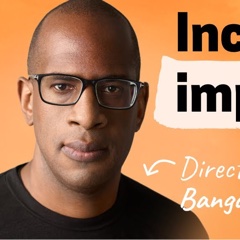
Bangaly Kaba
Director of Product at YouTube; former Head of Growth at Instagram and VP of Product at Instacart
Where to hear and read about Bangaly Kaba1 episode or test

Bangaly Kaba is Director of Product at YouTube and a former Head of Growth at Instagram and VP of Product at Instacart, with earlier growth work at Facebook. The one thing most worth learning from him is to schedule 'understand work' as a named track beside shipping, so you build ideas you have already de-risked.
If you're bringing a lot of people but they're not staying around, then you just have a leaky bucket.
Unorthodox frameworks for growing your product, career, and impact | Bangaly Kaba (YT, IG, FB)
Bangaly Kaba: the story and the lessons
1Bangaly Kaba's path from classroom to YouTube
Kaba taught school before he worked in tech. He taught in inner-city DC and was a dean at a Swiss boarding school before Wall Street and a failed startup.
With 24 seven-year-olds his tools were clear communication, a clear vision and influence. He says winning over the kids was harder than explaining Instagram's next 100 million users to Kevin Systrom and Mike Krieger.
He has worked on growth inside four major products. At Facebook he was an early growth PM responsible for how people make friends. At Instagram he was head of growth as it scaled past 1 billion users, then VP of Product at Instacart, adviser to startups including Twitter, and now leads product at YouTube.
He carried the same 'understand work' habit from Facebook to Instagram, Instacart, Twitter and YouTube. He says he did not invent it.
Boarding school taught him to know people by name and story. His students came from Azerbaijan, Kosovo and US embassy families. Learning each one's story led to shared interests, and he still talks to students 20 years later.
He argues hypergrowth products need people who can live in tension with many different voices.
2Kaba's 'understand work' method
Kaba learns first and justifies later, never the reverse. The Facebook order is understand, identify, execute. The common order is identify, justify, execute: someone proposes an idea, the team pulls data to support it, then sinks huge time into it.
That team never learns the real pain points, the alternatives and their value, or how the product and its flywheel must work. It launches, celebrates, and finds flat metrics the next day.
Kaba puts understand work on the roadmap with an owner. It only happens when it is a named item in each sprint or roadmap. If nobody owns it, everyone sprints on execution and the learning never gets done.
It also becomes a forcing function: a team can answer a new idea with 'we don't actually understand these three things before it starts.'
He runs understand work in parallel with shipping. Each sprint ends with learnings from both streams, so every next sprint de-risks more ideas. At Instagram, 15 teams each ran 12 to 20 experiments a quarter, and 60 to 70% were positive and shippable.
His phrase for the trade is 'slow down and speed up': ship fewer things now so win rate and velocity are higher a year later. He still tells teams plainly, 'you have to ship.'
He shifts the mix toward execution as the team learns. At YouTube the team started at 60% execution and 40% understand work, and moved to roughly 80 to 85% execution.
Execution always stays a portfolio of low-effort high-impact and medium-effort high-impact work. Some cheap tests double as understand work.
Kaba fills the biggest knowledge gap first. He starts with an honest split between what the data proves and what the team can't yet answer. On YouTube's paid virtual goods in live, the team lacked a map of the live funnel: how many watch, click through, see the experience and buy.
Engineering, data science and the PM, who dug through the experience to find what was broken, all carried it on their roadmaps. He suggests picking the top three or four understand projects early.
He instrumented Instagram's sign-up funnel before optimizing it. When he joined in January 2016, the eight-step sign-up flow logged only starts and finishes. The first weeks went to logging while tests ran on obviously broken steps.
Growth marketing set the schemas, engineering built the logging and data science built dashboards. The team reviewed the full funnel mid-quarter.
Every function owns understand work, and ideas come from the team. Engineers check whether code needs a refactor or data is instrumented. Data science works on activation and proxy metrics, and PMs may settle partnership strategy before launch.
In planning, the team asks for each theme what else it needs to understand. Go to market and marketing join the session, or the team misses the real issues.
3How Kaba found growth at Instagram
Kaba treats falling cohorts as a sign a new kind of user is arriving. Instagram grew 47% in 2016, and registration conversion fell 15% as it reached India and the Philippines. New signups skewed less tech savvy, closer to the late majority than to early adopters.
The product had not changed, so the fix was to find the adjacent user, use the product as they do, talk to them and visit them. Early in 2016 US women in their 30s said they had no need for Instagram because they had Facebook. A year later it was their everything.
He connected new users to friends before celebrities. Retention flattened, then dipped again around months 7 to 9, because users followed celebrities and then posted to an echo chamber with no friends watching. The 2017 connections pivot put human connections first at sign-up.
Rob Andrews spotted the pattern, and Kaba had to sell the pivot to Kevin and Mikey with data. Retention doubled over a year and a half.
Kaba fixed login recovery instead of removing logout. Account access churn cost 10 to 12 million people a year. The team kept logout, added one box for email, phone or handle, and sent a text to trusted devices after failed tries. It added 15 to 20 million monthly actives a year.
Logout matters to people on prepaid data or sharing a phone, so removing it was off the table. Airbnb extended the session instead, while Instagram made login easier.
Solving one problem revealed the next one. Content creation jumped from second and third accounts, such as finstas, which nobody expected. That led to the multiple accounts team, which Kaba later owned.
His view is that many huge wins are simple ideas that follow the user's real job.
He stacked growth loops that fed each other. Instagram combined invitations, a partnerships team that taught celebrities to tell their own story, news links, embeds and SEO. Launching web lifted growth 10% at once.
The web idea was George Wang's, and Kevin and Mikey first doubted it. Kaba says most growth opportunity sits between onboarding and habit-building, and many teams can't name their first aha moment.
4What Facebook India taught Kaba about users
Kaba took engineers to India when tests failed to fix recommendations. He joined Facebook in 2014 and owned people recommendations worldwide, focused on South and Southeast Asia. New friends shared about 7 friends in common in India against roughly 22 in the US, by his own rough figures.
A batch of tests gave no breakthrough, so he proposed understand work. Engineers went to Delhi and Mumbai every three months and sat in people's homes.
Users ignored profiles because Western fields meant nothing to them. Fields like school, job title and affiliations were Western ideas. One user said her friends sell jeans at a market, and school names were sometimes just a number.
With 10 friends named Amit Kumar, a name tells you nothing, so people checked photos instead.
He used data at headquarters to confirm what he saw in homes. Back in Menlo Park, the data showed the top 10 most common names on Facebook were Indian names. Amit Kumar had 250,000 people a month, about 5,000 possible matches for one Amit Kumar in Bangalore.
The team then had to find creative ways around a search that could not tell friends apart.
5Kaba on using your product like a new user
Kaba tests his products from a fresh account. Power users carry years of history that shapes a good experience and hides what newcomers face. YouTube search leans on watch history, so a new Gmail account gets a much worse experience.
Teams often build the pieces of a flow but never the real output the user needs.
He frames Instacart around the real job, like Taco Tuesday. The real job was Taco Tuesday, not sorting for tortillas, tomatoes and avocado. Reordering took seven or eight clicks and could not pick pieces of a past order, though 90% of an order repeats after five orders.
Making the next order easy is the core retention lever in repeat-purchase products.
He maps value at every step of the flywheel. At YouTube, creators and viewers each need a reason to take part. A clear flywheel tells teams what to work on and what to skip.
It also shows what the team does and doesn't know, which sets up the understand work.
Kaba applies the adjacent-user idea beyond hypergrowth. Instacart moved from office admins to parents of three or four, then to single people in New York. Goals and needed features differ at each stage.
For a cosmetics company at its ceiling, he would study people who browse and don't buy. The missing piece might be skin tone shades or certain tools.
6How Kaba leads, coaches and hires
Kaba treats managing PMs as teaching. Product management is the same skill as teaching, because nobody owes you anything. Engineers, designers and researchers owe a PM nothing either.
He meets people at the level of understanding they have reached.
He uses Bloom's taxonomy to find where a PM is stuck. The levels run from knowledge to comprehension, application, analysis, synthesis and evaluation. He finds the level that broke, then attaches the skill that fills it.
A PM may know machine learning but have seen only one way to apply it. Managers of managers must live at the top of the pyramid, synthesizing across their teams.
Kaba sees a product leader as a coach, not a CEO. Teams need strong role players who feel valued, not only stars like LeBron James or Kobe Bryant. The coach grooms each person and gives them the right seat at the table.
A college basketball coach friend taught him to judge legacy by which assistants became head coaches. People from his teams now run growth at Stripe and stories at Instagram, and another is a CPO.
He diagnoses stuck change with five ingredients. Change sticks only with vision, skills, incentives, resources and an action plan. Missing vision gives confusion, missing incentives resistance, a missing action plan false starts, and missing skills anxiety.
Action plans such as PRD formats and meeting structures are easiest to fix, while vision and skills take time. He says he got the framework in business school. 'You need all of those to have change.'
Kaba builds a shared language with a deck of frameworks. Instagram had a strong culture of product craft, but his YouTube teams had no mental model for it. He felt he was talking into an echo chamber until he built a deck on how he thinks about craft.
The deck gives teams a shared language and a repository of skills to build.
He interviews senior candidates with a stack-rank of five skills. He picks the four or five skills the job needs, has the candidate rank them, then asks about the second, fourth and fifth and why.
It beats strengths and weaknesses because it is tied to the role. It shows self-awareness and whether a ranking reflects ability or just past context.
He spends his first 90 days listening. He learns each person by name and story, sits in team meetings and listens before sharing views.
Teams then invest more in his thoughts because they believe he is invested in them.
Kaba says teams fall to the level of their systems. He repeats the saying that people and teams fall to the level of their systems. He is rigorous with systems at work but admits he is not with balance, rest and exercise.
7How Kaba decides where to work and how to grow
Kaba optimizes for impact, shaped by environment and skills. Pay and scope follow impact: the more impact you drive, the more independence people give you. For a PM, creating clarity about problems, opportunities and focus is itself impact.
The framework came from a struggle at Facebook, where he was working harder but seeing no incremental benefit and had no objective way to think about it.
He scores his environment once a year on six variables. The variables are manager, resources, scope, team, compensation and company culture, each scored 0 to 2 in quarter points. A 1 is neutral, 2 means he greatly benefits, and near 0 is a bad place.
For each he asks whether it can and will change. Honesty is what makes it work.
Scope and shifting managers made a great Facebook team a poor fit. He led people recommendations with 30 engineers, 15 machine learning and 15 front end and back end. Two or three manager changes landed at once, so he had no manager to lean on.
Nothing was wrong with the team. The mix of scope and manager was the misfit.
Kaba works on the manager relationship first. Only your manager can raise your scope, fill team gaps or tune culture issues. State the challenges dispassionately, tie them to your impact, and ask for a plan.
The goal isn't to like your manager but to have mutual respect and something to learn from them. He also says ICs often optimize a local maximum, and taking adjacent work can create synergy with what the manager is driving.
He ranks communication as the skill that matters most. Skills fall into communication, influencing leadership, strategic thinking and execution. He says poor executors who are great communicators keep rising because they tell a great story, though there is no substance under the covers.
He reads thinkers like Ben Thompson and Elena Verna. Georgia Lee, who set up Instagram's growth team, listened, recast what was said and named each person's contribution, so he left every meeting with buy-in and clarity.
Kaba keeps three or four mentors on a rotating schedule. He meets each mentor monthly on a different Friday, so a cancellation never leaves him without someone to talk to.
He finds mentors by telling trusted people the specific challenge he faces and asking who could help. He says that beats asking a stranger to be your mentor.
8Kaba's Instacart misfit and what he changed
Kaba's strategic vision did not match what Instacart needed. He arrived with a big product vision and wanted to build systems, people and processes to institutionalize the work. Instacart's strength was operations and it needed a hands-on person deep in funnel data.
They ended up at loggerheads, each feeling the other was not getting what they wanted. He calls it his worst job fit.
He now talks to people who left a company before joining. People inside a company tell you the best version of it, while those who left give a rawer and different view.
His rule is to triangulate between both sides, and you need both.

Unorthodox frameworks for growing your product, career, and impact | Bangaly Kaba (YT, IG, FB)
Bangaly Kaba explains how to pair planned 'understand work' with execution, how to find growth through adjacent users, and how to choose where to work. Applying these at Instagram let 15 teams run 12 to 20 experiments a quarter each with roughly 60 to 70% shippable wins.
Kaba taught school before he worked in tech. He taught in inner-city DC and was a dean at a Swiss boarding school before Wall Street and a failed startup.
With 24 seven-year-olds his tools were clear communication, a clear vision and influence. He says winning over the kids was harder than explaining Instagram's next 100 million users to Kevin Systrom and Mike Krieger.
He has worked on growth inside four major products. At Facebook he was an early growth PM responsible for how people make friends. At Instagram he was head of growth as it scaled past 1 billion users, then VP of Product at Instacart, adviser to startups including Twitter, and now leads product at YouTube.
He carried the same 'understand work' habit from Facebook to Instagram, Instacart, Twitter and YouTube. He says he did not invent it.
Boarding school taught him to know people by name and story. His students came from Azerbaijan, Kosovo and US embassy families. Learning each one's story led to shared interests, and he still talks to students 20 years later.
He argues hypergrowth products need people who can live in tension with many different voices.
Kaba learns first and justifies later, never the reverse. The Facebook order is understand, identify, execute. The common order is identify, justify, execute: someone proposes an idea, the team pulls data to support it, then sinks huge time into it.
That team never learns the real pain points, the alternatives and their value, or how the product and its flywheel must work. It launches, celebrates, and finds flat metrics the next day.
Kaba puts understand work on the roadmap with an owner. It only happens when it is a named item in each sprint or roadmap. If nobody owns it, everyone sprints on execution and the learning never gets done.
It also becomes a forcing function: a team can answer a new idea with 'we don't actually understand these three things before it starts.'
He runs understand work in parallel with shipping. Each sprint ends with learnings from both streams, so every next sprint de-risks more ideas. At Instagram, 15 teams each ran 12 to 20 experiments a quarter, and 60 to 70% were positive and shippable.
His phrase for the trade is 'slow down and speed up': ship fewer things now so win rate and velocity are higher a year later. He still tells teams plainly, 'you have to ship.'
He shifts the mix toward execution as the team learns. At YouTube the team started at 60% execution and 40% understand work, and moved to roughly 80 to 85% execution.
Execution always stays a portfolio of low-effort high-impact and medium-effort high-impact work. Some cheap tests double as understand work.
Kaba fills the biggest knowledge gap first. He starts with an honest split between what the data proves and what the team can't yet answer. On YouTube's paid virtual goods in live, the team lacked a map of the live funnel: how many watch, click through, see the experience and buy.
Engineering, data science and the PM, who dug through the experience to find what was broken, all carried it on their roadmaps. He suggests picking the top three or four understand projects early.
He instrumented Instagram's sign-up funnel before optimizing it. When he joined in January 2016, the eight-step sign-up flow logged only starts and finishes. The first weeks went to logging while tests ran on obviously broken steps.
Growth marketing set the schemas, engineering built the logging and data science built dashboards. The team reviewed the full funnel mid-quarter.
Every function owns understand work, and ideas come from the team. Engineers check whether code needs a refactor or data is instrumented. Data science works on activation and proxy metrics, and PMs may settle partnership strategy before launch.
In planning, the team asks for each theme what else it needs to understand. Go to market and marketing join the session, or the team misses the real issues.
Kaba treats falling cohorts as a sign a new kind of user is arriving. Instagram grew 47% in 2016, and registration conversion fell 15% as it reached India and the Philippines. New signups skewed less tech savvy, closer to the late majority than to early adopters.
The product had not changed, so the fix was to find the adjacent user, use the product as they do, talk to them and visit them. Early in 2016 US women in their 30s said they had no need for Instagram because they had Facebook. A year later it was their everything.
He connected new users to friends before celebrities. Retention flattened, then dipped again around months 7 to 9, because users followed celebrities and then posted to an echo chamber with no friends watching. The 2017 connections pivot put human connections first at sign-up.
Rob Andrews spotted the pattern, and Kaba had to sell the pivot to Kevin and Mikey with data. Retention doubled over a year and a half.
Kaba fixed login recovery instead of removing logout. Account access churn cost 10 to 12 million people a year. The team kept logout, added one box for email, phone or handle, and sent a text to trusted devices after failed tries. It added 15 to 20 million monthly actives a year.
Logout matters to people on prepaid data or sharing a phone, so removing it was off the table. Airbnb extended the session instead, while Instagram made login easier.
Solving one problem revealed the next one. Content creation jumped from second and third accounts, such as finstas, which nobody expected. That led to the multiple accounts team, which Kaba later owned.
His view is that many huge wins are simple ideas that follow the user's real job.
He stacked growth loops that fed each other. Instagram combined invitations, a partnerships team that taught celebrities to tell their own story, news links, embeds and SEO. Launching web lifted growth 10% at once.
The web idea was George Wang's, and Kevin and Mikey first doubted it. Kaba says most growth opportunity sits between onboarding and habit-building, and many teams can't name their first aha moment.
Kaba took engineers to India when tests failed to fix recommendations. He joined Facebook in 2014 and owned people recommendations worldwide, focused on South and Southeast Asia. New friends shared about 7 friends in common in India against roughly 22 in the US, by his own rough figures.
A batch of tests gave no breakthrough, so he proposed understand work. Engineers went to Delhi and Mumbai every three months and sat in people's homes.
Users ignored profiles because Western fields meant nothing to them. Fields like school, job title and affiliations were Western ideas. One user said her friends sell jeans at a market, and school names were sometimes just a number.
With 10 friends named Amit Kumar, a name tells you nothing, so people checked photos instead.
He used data at headquarters to confirm what he saw in homes. Back in Menlo Park, the data showed the top 10 most common names on Facebook were Indian names. Amit Kumar had 250,000 people a month, about 5,000 possible matches for one Amit Kumar in Bangalore.
The team then had to find creative ways around a search that could not tell friends apart.
Kaba tests his products from a fresh account. Power users carry years of history that shapes a good experience and hides what newcomers face. YouTube search leans on watch history, so a new Gmail account gets a much worse experience.
Teams often build the pieces of a flow but never the real output the user needs.
He frames Instacart around the real job, like Taco Tuesday. The real job was Taco Tuesday, not sorting for tortillas, tomatoes and avocado. Reordering took seven or eight clicks and could not pick pieces of a past order, though 90% of an order repeats after five orders.
Making the next order easy is the core retention lever in repeat-purchase products.
He maps value at every step of the flywheel. At YouTube, creators and viewers each need a reason to take part. A clear flywheel tells teams what to work on and what to skip.
It also shows what the team does and doesn't know, which sets up the understand work.
Kaba applies the adjacent-user idea beyond hypergrowth. Instacart moved from office admins to parents of three or four, then to single people in New York. Goals and needed features differ at each stage.
For a cosmetics company at its ceiling, he would study people who browse and don't buy. The missing piece might be skin tone shades or certain tools.
Kaba treats managing PMs as teaching. Product management is the same skill as teaching, because nobody owes you anything. Engineers, designers and researchers owe a PM nothing either.
He meets people at the level of understanding they have reached.
He uses Bloom's taxonomy to find where a PM is stuck. The levels run from knowledge to comprehension, application, analysis, synthesis and evaluation. He finds the level that broke, then attaches the skill that fills it.
A PM may know machine learning but have seen only one way to apply it. Managers of managers must live at the top of the pyramid, synthesizing across their teams.
Kaba sees a product leader as a coach, not a CEO. Teams need strong role players who feel valued, not only stars like LeBron James or Kobe Bryant. The coach grooms each person and gives them the right seat at the table.
A college basketball coach friend taught him to judge legacy by which assistants became head coaches. People from his teams now run growth at Stripe and stories at Instagram, and another is a CPO.
He diagnoses stuck change with five ingredients. Change sticks only with vision, skills, incentives, resources and an action plan. Missing vision gives confusion, missing incentives resistance, a missing action plan false starts, and missing skills anxiety.
Action plans such as PRD formats and meeting structures are easiest to fix, while vision and skills take time. He says he got the framework in business school. 'You need all of those to have change.'
Kaba builds a shared language with a deck of frameworks. Instagram had a strong culture of product craft, but his YouTube teams had no mental model for it. He felt he was talking into an echo chamber until he built a deck on how he thinks about craft.
The deck gives teams a shared language and a repository of skills to build.
He interviews senior candidates with a stack-rank of five skills. He picks the four or five skills the job needs, has the candidate rank them, then asks about the second, fourth and fifth and why.
It beats strengths and weaknesses because it is tied to the role. It shows self-awareness and whether a ranking reflects ability or just past context.
He spends his first 90 days listening. He learns each person by name and story, sits in team meetings and listens before sharing views.
Teams then invest more in his thoughts because they believe he is invested in them.
Kaba says teams fall to the level of their systems. He repeats the saying that people and teams fall to the level of their systems. He is rigorous with systems at work but admits he is not with balance, rest and exercise.
Kaba optimizes for impact, shaped by environment and skills. Pay and scope follow impact: the more impact you drive, the more independence people give you. For a PM, creating clarity about problems, opportunities and focus is itself impact.
The framework came from a struggle at Facebook, where he was working harder but seeing no incremental benefit and had no objective way to think about it.
He scores his environment once a year on six variables. The variables are manager, resources, scope, team, compensation and company culture, each scored 0 to 2 in quarter points. A 1 is neutral, 2 means he greatly benefits, and near 0 is a bad place.
For each he asks whether it can and will change. Honesty is what makes it work.
Scope and shifting managers made a great Facebook team a poor fit. He led people recommendations with 30 engineers, 15 machine learning and 15 front end and back end. Two or three manager changes landed at once, so he had no manager to lean on.
Nothing was wrong with the team. The mix of scope and manager was the misfit.
Kaba works on the manager relationship first. Only your manager can raise your scope, fill team gaps or tune culture issues. State the challenges dispassionately, tie them to your impact, and ask for a plan.
The goal isn't to like your manager but to have mutual respect and something to learn from them. He also says ICs often optimize a local maximum, and taking adjacent work can create synergy with what the manager is driving.
He ranks communication as the skill that matters most. Skills fall into communication, influencing leadership, strategic thinking and execution. He says poor executors who are great communicators keep rising because they tell a great story, though there is no substance under the covers.
He reads thinkers like Ben Thompson and Elena Verna. Georgia Lee, who set up Instagram's growth team, listened, recast what was said and named each person's contribution, so he left every meeting with buy-in and clarity.
Kaba keeps three or four mentors on a rotating schedule. He meets each mentor monthly on a different Friday, so a cancellation never leaves him without someone to talk to.
He finds mentors by telling trusted people the specific challenge he faces and asking who could help. He says that beats asking a stranger to be your mentor.
Kaba's strategic vision did not match what Instacart needed. He arrived with a big product vision and wanted to build systems, people and processes to institutionalize the work. Instacart's strength was operations and it needed a hands-on person deep in funnel data.
They ended up at loggerheads, each feeling the other was not getting what they wanted. He calls it his worst job fit.
He now talks to people who left a company before joining. People inside a company tell you the best version of it, while those who left give a rawer and different view.
His rule is to triangulate between both sides, and you need both.
 Instagram