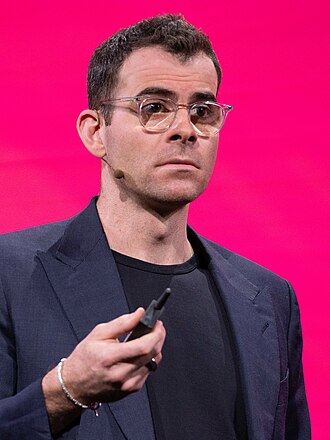
Adam Mosseri
Head of Instagram and Threads, Meta
Where to hear and read about Adam Mosseri1 episode or test

Adam Mosseri runs Instagram and Threads at Meta, after a career spent designing and ranking feeds, and he has led Instagram for eight years. The most useful thing to learn from him is that when building gets cheap, the scarce work is choosing what to build, backed by taste and trust in real people.
If a strategy can't be controversial, a reasonable person should be able to disagree with it, because otherwise you're probably just trying to compete on raw execution.
The rise of taste, human authenticity and judgment in an AI world | Adam Mosseri (Head of IG)
Adam Mosseri: the story and the lessons
1Adam Mosseri's path from News Feed designer to head of Instagram
Mosseri built feeds and ranking long before he ran Instagram. He designed and led the early Facebook News Feed and ran the team behind its ranking algorithm. He took over Instagram eight years ago from founders Kevin Systrom and Mike Krieger.
Instagram now has over three billion monthly users, one in every three people alive. He is also the public face of the controversy that follows changes to the product.
He started as a designer and says range has been his strength. He flags his own bias toward designers because that is where he began. He says he romanticizes the phenomenal ML engineer but that range has always been his own strength.
He can program again for the first time in about 10 years, calling himself a mediocre engineer on a good day who now writes code responsibly with AI.
He applies the same rules at home: boundaries plus AI literacy. His kids are 10, eight and six. Screen time is earned, parents approve apps, and he builds with his eldest.
His 10-year-old made a 19-level platformer with a skin and weapon store using Claude Code in a couple of hours. The goal is that he thinks and makes things, not just plays games.
2Mosseri's two big failures: Facebook Home and the first Reels
Facebook Home taught him the most because he ran it to its end. It was an Android fork plus HTC hardware and his first project as a PM, which he got after the PM quit. He learned about carriers, OEMs and certification, and says that year and a half taught him more than any other.
His takeaway: "sometimes the best thing you can do is execute an idea that doesn't have market fit well just to decide whether or not the idea was a good idea in the first place." He also ended the project when it had dragged on.
He built the first Reels on top of Stories and lost timing. Reels launched in 2019 on Stories, whose low read-through meant most Reels were never seen and then vanished. TikTok exploded in 2020 when pandemic users wanted joy and accepted sound on, and Instagram was out of position.
As a designer he tried to extend existing primitives instead of adding new ones, and he says he was wrong. He calls it a big fork in the road for the business.
3How Mosseri is reshaping Meta's product teams for AI
He replaced teams of about 13 with pods of four to six engineers. The old shape was two or three each of Android, iOS and server engineers, plus a PM, designer, data scientist and sometimes a researcher. Pods now have four to six engineers and a product staff generalist, with a core team of about six or seven.
Specialists join only when the work needs them, such as a senior data scientist for pricing or a senior designer for a novel experience. He says fewer people to coordinate means faster moves and less design by committee, though no results compare pods to old teams are shown.
He created product staff, an evolved PM who covers design, data and research. Product staff use internal AI tools for work that once needed a specialist. A Reels creation drop-off analysis that needed a data scientist a year ago can now be pulled by product staff.
A pod can run with four engineers and one product staff and no dedicated data scientist, designer or researcher. Senior designer Nate just transferred into product staff, since strong designers already hold views on strategy, business and go-to-market.
He hires for grit, fast learning, self-awareness and curiosity. His baseline is fire in the belly, quick learning and enough self-awareness to take feedback. For the AI era he adds curiosity and willingness to look foolish, like learning a language.
He expects curiosity and willingness to try to carry a premium across industries for 10 to 20 years, though he admits the language analogy is a guess with no research behind it.
He keeps hiring juniors so tomorrow's senior specialists exist. He warns that staffing a function only with senior people leaves no one to become the next senior specialist, and companies will regret it in a couple of years.
Specialists who are not on a path to senior can move into generalist roles as a soft landing.
He treats token spend as a budget and calls leaderboards terrible. Meta sets no token limits yet, and curbed costs by shutting down silly projects. He expects caps may come if a strong engineer's burn approaches their salary, proportional to trust in positive return.
His reason against leaderboards: "it's not that hard to build a token incinerator and that doesn't create a lot of value." He sees tokens as one more resource like GPUs, storage and headcount.
4Mosseri on strategy, taste and leading as a curator
Mosseri says that as building gets easier, deciding what to build matters most. He stays long on designers because taste is hard to automate, and AI-built apps have a recognizable vibe that makes taste stand out.
In his words, "in a world where it's easier to build things, it's more important to make sure that your time is spent figuring out what you should be building in the first place."
He defines strategy as an opinionated path a reasonable person could reject. Vision is the state of the product you want to reach, and strategy is the path to it. Without a controversial strategy you only compete on raw execution.
He steers AI with constraints and picks a model that pushes back. A lazy request gets a predictable strategy. He lists inputs like technology, team motivation, competition, regulation, compliance and brand identity, and tells the model to be critical.
He wants the real sort of intelligence, not the pleaser. He also warns of the "reverse centaur", a human doing the AI's bidding, and says some work is not worth handing off.
He sees great product leaders as curators of people and ideas. He doesn't care whether the strategy comes from the lead, only that it is strong and everyone buys in. He says it is hard to curate well without some ideas of your own.
For leadership teams he checks complementary skills and also trust and rapport, which he calls more art than science. When two admired people can't get along, he splits them.
5How Instagram ranks feeds and treats AI content under Mosseri
Mosseri says the algorithm knew less about people than they assumed. Recommendations rested on overlap between people, not understanding of you, using embedding vectors humans cannot read. An LLM can now describe a region of that space in words, such as deep pourover coffee snobbery.
The "your algorithm" feature lets users see and edit their inferred topics. Future controls could be non-topical, like more fun content or no seven photos in a row.
He rejects a chronological default even though users ask for it. Pure recency rewards volume, so the New York Times can post 50 things a day and crowd out a friend who posts weekly. Usage fell and surveys at massive scale showed satisfaction sliding over months.
He compares feed design to designing a city: "when you design these systems it's almost like designing a city." Recency stays as one input to relevance.
He pushes exploration-based ranking to give small creators a chance. Exploitation shows what many people like. Exploration tests content on people who might like it without knowing yet, like showing Afrojack to a Bieber fan.
TikTok is best at breaking small talent, and Instagram has invested in originality, breakout content and recency. He says it is ahead in a couple of areas and has line of sight to best in class for the first time in his tenure.
He bets AI content is a tailwind for creator platforms. He expects people to seek out creativity, point of view and the person behind the content as power shifts from institutions to individuals. He counts creators broadly, from journalists to someone selling scarves they sew.
This rests on belief about what people will want. No usage data is shown, and he admits Instagram is not yet good at ranking AI content.
He would label AI content and accounts, not filter them. He judges content by point of view, not the tool, and would show more about each account, such as profile age. Someone who loves AI content could have an "AI town" feed.
Detection may fail as models improve, so labeling camera-captured content may be more practical long term. He wants a crackdown on fake AI accounts, such as an "AI monk" selling bogus supplements.
6How Mosseri handles backlash and public criticism
Mosseri speaks publicly because the debate happens with or without Instagram. He started when he ran News Feed, joining Twitter where journalists lived. He explains what Instagram does, why, and the trade-offs, mainly for onlookers rather than committed critics.
He says he is "just trying to enumerate all of the different puts and takes for the rest of the people watching the conversation." His Twitter became the darkest place in his life because he followed all the biggest critics.
He frames anger over redesigns as reasonable and steps away to cope. At 25, the first comment on the 2009 News Feed redesign was a vile attack on its designer, and he was devastated. He now compares a redesign to rearranging someone's desk without warning.
Time with his kids and outdoors helps. Some months it barely bothers him and some months it grinds on him.
He says the feed backlash came from four changes blurred into one. A video-viewer feed test went to 4% of iOS users and was never meant to roll out. It was conflated with Reels, recommendations and creator complaints about reach, and snowballed through creators and press.
He says the real mistake was pace: Instagram pushed a little too fast and could have explained more. He would take a backlash every couple of years over stagnation.
He now plans for the leak before testing controversial changes. At three billion users you can't launch untested, and you can't test unnoticed. For any possibly controversial test the team decides what to say, and whether to speak proactively or reactively.
His rule: "not if it leaks, when it leaks, what are we saying?" Pricing tests are especially risky.

The rise of taste, human authenticity and judgment in an AI world | Adam Mosseri (Head of IG)
Instagram's head explains how Meta is shrinking product teams into lean pods with generalist product staff, why taste, strategy and curation stay human, and how Instagram thinks about ranking, AI content and creators. He also shares hard lessons from two big failures, Facebook Home and the first version of Reels, and from public backlash over a feed test.
Mosseri built feeds and ranking long before he ran Instagram. He designed and led the early Facebook News Feed and ran the team behind its ranking algorithm. He took over Instagram eight years ago from founders Kevin Systrom and Mike Krieger.
Instagram now has over three billion monthly users, one in every three people alive. He is also the public face of the controversy that follows changes to the product.
He started as a designer and says range has been his strength. He flags his own bias toward designers because that is where he began. He says he romanticizes the phenomenal ML engineer but that range has always been his own strength.
He can program again for the first time in about 10 years, calling himself a mediocre engineer on a good day who now writes code responsibly with AI.
He applies the same rules at home: boundaries plus AI literacy. His kids are 10, eight and six. Screen time is earned, parents approve apps, and he builds with his eldest.
His 10-year-old made a 19-level platformer with a skin and weapon store using Claude Code in a couple of hours. The goal is that he thinks and makes things, not just plays games.
Facebook Home taught him the most because he ran it to its end. It was an Android fork plus HTC hardware and his first project as a PM, which he got after the PM quit. He learned about carriers, OEMs and certification, and says that year and a half taught him more than any other.
His takeaway: "sometimes the best thing you can do is execute an idea that doesn't have market fit well just to decide whether or not the idea was a good idea in the first place." He also ended the project when it had dragged on.
He built the first Reels on top of Stories and lost timing. Reels launched in 2019 on Stories, whose low read-through meant most Reels were never seen and then vanished. TikTok exploded in 2020 when pandemic users wanted joy and accepted sound on, and Instagram was out of position.
As a designer he tried to extend existing primitives instead of adding new ones, and he says he was wrong. He calls it a big fork in the road for the business.
He replaced teams of about 13 with pods of four to six engineers. The old shape was two or three each of Android, iOS and server engineers, plus a PM, designer, data scientist and sometimes a researcher. Pods now have four to six engineers and a product staff generalist, with a core team of about six or seven.
Specialists join only when the work needs them, such as a senior data scientist for pricing or a senior designer for a novel experience. He says fewer people to coordinate means faster moves and less design by committee, though no results compare pods to old teams are shown.
He created product staff, an evolved PM who covers design, data and research. Product staff use internal AI tools for work that once needed a specialist. A Reels creation drop-off analysis that needed a data scientist a year ago can now be pulled by product staff.
A pod can run with four engineers and one product staff and no dedicated data scientist, designer or researcher. Senior designer Nate just transferred into product staff, since strong designers already hold views on strategy, business and go-to-market.
He hires for grit, fast learning, self-awareness and curiosity. His baseline is fire in the belly, quick learning and enough self-awareness to take feedback. For the AI era he adds curiosity and willingness to look foolish, like learning a language.
He expects curiosity and willingness to try to carry a premium across industries for 10 to 20 years, though he admits the language analogy is a guess with no research behind it.
He keeps hiring juniors so tomorrow's senior specialists exist. He warns that staffing a function only with senior people leaves no one to become the next senior specialist, and companies will regret it in a couple of years.
Specialists who are not on a path to senior can move into generalist roles as a soft landing.
He treats token spend as a budget and calls leaderboards terrible. Meta sets no token limits yet, and curbed costs by shutting down silly projects. He expects caps may come if a strong engineer's burn approaches their salary, proportional to trust in positive return.
His reason against leaderboards: "it's not that hard to build a token incinerator and that doesn't create a lot of value." He sees tokens as one more resource like GPUs, storage and headcount.
Mosseri says that as building gets easier, deciding what to build matters most. He stays long on designers because taste is hard to automate, and AI-built apps have a recognizable vibe that makes taste stand out.
In his words, "in a world where it's easier to build things, it's more important to make sure that your time is spent figuring out what you should be building in the first place."
He defines strategy as an opinionated path a reasonable person could reject. Vision is the state of the product you want to reach, and strategy is the path to it. Without a controversial strategy you only compete on raw execution.
He steers AI with constraints and picks a model that pushes back. A lazy request gets a predictable strategy. He lists inputs like technology, team motivation, competition, regulation, compliance and brand identity, and tells the model to be critical.
He wants the real sort of intelligence, not the pleaser. He also warns of the "reverse centaur", a human doing the AI's bidding, and says some work is not worth handing off.
He sees great product leaders as curators of people and ideas. He doesn't care whether the strategy comes from the lead, only that it is strong and everyone buys in. He says it is hard to curate well without some ideas of your own.
For leadership teams he checks complementary skills and also trust and rapport, which he calls more art than science. When two admired people can't get along, he splits them.
Mosseri says the algorithm knew less about people than they assumed. Recommendations rested on overlap between people, not understanding of you, using embedding vectors humans cannot read. An LLM can now describe a region of that space in words, such as deep pourover coffee snobbery.
The "your algorithm" feature lets users see and edit their inferred topics. Future controls could be non-topical, like more fun content or no seven photos in a row.
He rejects a chronological default even though users ask for it. Pure recency rewards volume, so the New York Times can post 50 things a day and crowd out a friend who posts weekly. Usage fell and surveys at massive scale showed satisfaction sliding over months.
He compares feed design to designing a city: "when you design these systems it's almost like designing a city." Recency stays as one input to relevance.
He pushes exploration-based ranking to give small creators a chance. Exploitation shows what many people like. Exploration tests content on people who might like it without knowing yet, like showing Afrojack to a Bieber fan.
TikTok is best at breaking small talent, and Instagram has invested in originality, breakout content and recency. He says it is ahead in a couple of areas and has line of sight to best in class for the first time in his tenure.
He bets AI content is a tailwind for creator platforms. He expects people to seek out creativity, point of view and the person behind the content as power shifts from institutions to individuals. He counts creators broadly, from journalists to someone selling scarves they sew.
This rests on belief about what people will want. No usage data is shown, and he admits Instagram is not yet good at ranking AI content.
He would label AI content and accounts, not filter them. He judges content by point of view, not the tool, and would show more about each account, such as profile age. Someone who loves AI content could have an "AI town" feed.
Detection may fail as models improve, so labeling camera-captured content may be more practical long term. He wants a crackdown on fake AI accounts, such as an "AI monk" selling bogus supplements.
Mosseri speaks publicly because the debate happens with or without Instagram. He started when he ran News Feed, joining Twitter where journalists lived. He explains what Instagram does, why, and the trade-offs, mainly for onlookers rather than committed critics.
He says he is "just trying to enumerate all of the different puts and takes for the rest of the people watching the conversation." His Twitter became the darkest place in his life because he followed all the biggest critics.
He frames anger over redesigns as reasonable and steps away to cope. At 25, the first comment on the 2009 News Feed redesign was a vile attack on its designer, and he was devastated. He now compares a redesign to rearranging someone's desk without warning.
Time with his kids and outdoors helps. Some months it barely bothers him and some months it grinds on him.
He says the feed backlash came from four changes blurred into one. A video-viewer feed test went to 4% of iOS users and was never meant to roll out. It was conflated with Reels, recommendations and creator complaints about reach, and snowballed through creators and press.
He says the real mistake was pace: Instagram pushed a little too fast and could have explained more. He would take a backlash every couple of years over stagnation.
He now plans for the leak before testing controversial changes. At three billion users you can't launch untested, and you can't test unnoticed. For any possibly controversial test the team decides what to say, and whether to speak proactively or reactively.
His rule: "not if it leaks, when it leaks, what are we saying?" Pricing tests are especially risky.
 Instagram