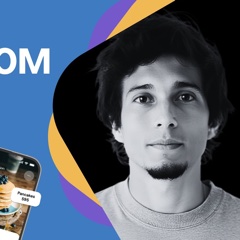
Alfie Dickens
Built the influencer marketing program at Cal AI, joined a month or two after launch
Where to hear and read about Alfie Dickens1 episode or test

Alfie Dickens built Cal AI's influencer program, taking it from 20 to 30 creators to over 200 posting at once, after starting as a part-time stadium ops worker. The lesson most worth learning is to pair a feature that films well with huge outreach volume and low-risk deals so each new creator makes the next one more profitable.
we always try to get the app inside the first 15 seconds. Probably one of the biggest rules for us.
Meet The Marketing Genius Behind Cal AI
Alfie Dickens: the story and the lessons
1How Alfie Dickens got into Cal AI and built its creator program
Dickens got the Cal AI job by asking, not by credentials. He worked part-time as a stadium ops guy at Minnesota United and took commission deals for a few influencers. Founder Jake contacted him about one of them and they bonded over football.
Cal AI was not hiring, so he sent his CV anyway and landed a two-week trial. It was his first full-time job, and he joined a month or two after the app launched.
He grew the program from 20 to 30 creators to over 200. The program ended up with more than 200 creators posting at once, each making four videos a month. The app peaked at $60 million a year.
He credits founders Jake and Zach's game plan, which the team stuck to. The $60 million figure and the claim that deals got more profitable over time rest on his word, with no CPM or revenue data shown.
Dickens treated relationships with creators as the glue. Assistants booked calls and handed creators to him. He followed a script he wrote and got to know each creator first, and bought-in creators would try other formats on request, such as a dedicated video.
He still speaks to creators he signed two years ago every day or every so often. He says the secret sauce was everything together: the seamless integration, the golden moment and the relationships.
2Why Cal AI's creator videos worked
Dickens built the program around one demoable golden moment. Cal AI picked influencers who could naturally film the photo-scan feature, so the app was shown without a hard sell. It was the first app to track calories from a picture, which he calls a viral moment in itself.
The feature was also useful: most people quit calorie tracking because logging by hand is tedious, and a photo is easier. Critics said the AI wasn't accurate, but the app never promised 100%.
He told creators to keep their videos and sneak the app in. Creators dislike word-for-word scripts, so the pitch was to keep doing what they do and fit the app in seamlessly. This framing often lowered rates enough to make deals profitable.
He paired it with a long-term partnership offer. The only common reason deals failed was price.
Dickens required the app on screen within 15 seconds. The best converting videos barely named the app and just showed the creator using it. A cast member of a reality show scanned her breakfast in a vlog without naming the app, and one such video brought a couple of hundred promo code uses, sometimes thousands.
The team asked big creators for four videos a month so followers would see the app four times. He says people follow such creators aspirationally, so trust matters more than a list of benefits.
The goal was to make Cal AI a trend, not a fitness tool. Viewers then waited for a creator to finally use the app, and that was the final push to download. He compares it to Hyrox, where big fitness influencers joining made everyone want to do it.
People need to see a product about seven times before buying, so repeated exposure made later deals convert better.
3How Dickens priced and protected creator deals
He set minimum view clauses below the creator's own boast. When a creator claimed a million views, the clause went at 700,000 to 800,000. They could not back down from their own claim, and the CPM stayed safe.
He would not tell creators their numbers were inflated. He said they would hit a million easily, so the clause was no worry, and he picked a floor they could hit monthly without stress. Cal AI helped make the clause normal, and Zach spread the idea on his podcasts. Quote: "let's maybe just put a minimum view clause on it of 800,000 because you can easily get a million."
Dickens paid more per deal as awareness grew. At the start almost nobody knew the app, so CPMs were held low to reach as many people as possible. Later, viewers recognized it, so the team could pay more and still profit.
More creators in the same space raised returns instead of lowering them, where the audience was big enough. Over two and a half years, creator agents drove prices up a little.
He timed posts to trending moments to keep CPMs low. Posts with the reality show cast member ran just before and after season 3, so her CPM came out really low despite her fame.
She was signed because assistant Jackson built a relationship with her manager. The team tries to get the creator into the group chat, though agents often refuse.
4What Dickens learned about niches and what he got wrong
Fitness converted, split into four subniches. The four were bodybuilders, the gym bro niche, women's fitness and weight loss creators. The signing goal was 50 or more creators a month, and within a few months they reached 100, about three a day.
Taking over fitness was a result of profitable deals, not a plan. Competitors did far less influencer marketing. The founders chose a huge market on purpose, since everybody eats food.
Dickens skipped food and recipe creators after they flopped. Recipe videos, cooking videos and mukbangs converted poorly even though they look like an obvious fit. Healthy meal videos did only okay.
His likely reason is that viewers want to relax on the couch and not think about the calories in mac and cheese. He says the team learned this early "but maybe a bit too late."
He tested each niche with one creator before scaling. One creator cost $20,000 for the month and brought $120,000 in signups, but a second creator in the same niche did poorly. He concluded that more creators in a niche can lower ROI because people have already seen the app.
Mom influencers were hard to sign and expensive, and some were profitable at a $10 CPM while others were not. Broad comedy creators gave cheap views but weak buyers, since viewers weren't thinking about tracking calories.
5Dickens's outreach machine and the move toward UGC
Outreach was a numbers game run by about 25 assistants. Each aimed for 100 emails a day, roughly 2,000 a day, and the team reached about 220,000 influencers. That produced 2,000 to 3,000 signed creators, about 1%.
Email beat DMs because accounts get capped on DMs. The expected funnel was 100 emails, 10 replies, 2 booked calls and 1 signing, though he says the real rate is closer to 1 signing per 1,000 contacts.
He warmed creators up in writing before asking for a call. Most creators first replied asking for a budget, so the team answered with the seamless, long-term pitch and only then asked for a call. He estimates calling makes signing about 10 times more likely.
Asking for a call in the first message gets ignored, since many creators chose the job to escape scheduled calls. Deals mostly fail on price.
Contests and automation kept junior staff productive. Monthly contests paid cash or vouchers for the most outreach and most onboarded creators. Software handled early negotiation, so an assistant's job ended once the first message went out.
Assistants sent a Calendly link to a manager who closed the deal, with referral tags tracking credit. He says unmotivated assistants would shut everything down.
He paid signed creators about $100 to refer friends. Each month the team asked signed creators whether friends wanted brand deals. Small creators were glad to earn $100 to $200, and referrals sometimes bypassed management entirely.
Agents often reject a deal before the creator sees it, because they compare it with richer offers. The team considered starting a talent agency but had no time after two years on Cal AI.
Dickens would now run UGC alongside influencers. Agents now represent even creators with 5,000 to 10,000 views per video, and $1 to $2 CPM deals have become much harder to find. UGC gives cheaper views but likely lower conversion.
Cal AI used UGC early, dropped it when influencer CPMs were good, and has only recently started exploring it again. For a new app he says: "I would just run both at the same time."

Meet The Marketing Genius Behind Cal AI
A former stadium ops worker scaled Cal AI's influencer program from about 20 creators to 200+ posting at once, using brute-force email outreach, minimum view clauses and seamless in-video app demos. The app peaked at $60 million a year, and the episode shows how the machine ran and why creator CPMs improved with saturation.
Dickens got the Cal AI job by asking, not by credentials. He worked part-time as a stadium ops guy at Minnesota United and took commission deals for a few influencers. Founder Jake contacted him about one of them and they bonded over football.
Cal AI was not hiring, so he sent his CV anyway and landed a two-week trial. It was his first full-time job, and he joined a month or two after the app launched.
He grew the program from 20 to 30 creators to over 200. The program ended up with more than 200 creators posting at once, each making four videos a month. The app peaked at $60 million a year.
He credits founders Jake and Zach's game plan, which the team stuck to. The $60 million figure and the claim that deals got more profitable over time rest on his word, with no CPM or revenue data shown.
Dickens treated relationships with creators as the glue. Assistants booked calls and handed creators to him. He followed a script he wrote and got to know each creator first, and bought-in creators would try other formats on request, such as a dedicated video.
He still speaks to creators he signed two years ago every day or every so often. He says the secret sauce was everything together: the seamless integration, the golden moment and the relationships.
Dickens built the program around one demoable golden moment. Cal AI picked influencers who could naturally film the photo-scan feature, so the app was shown without a hard sell. It was the first app to track calories from a picture, which he calls a viral moment in itself.
The feature was also useful: most people quit calorie tracking because logging by hand is tedious, and a photo is easier. Critics said the AI wasn't accurate, but the app never promised 100%.
He told creators to keep their videos and sneak the app in. Creators dislike word-for-word scripts, so the pitch was to keep doing what they do and fit the app in seamlessly. This framing often lowered rates enough to make deals profitable.
He paired it with a long-term partnership offer. The only common reason deals failed was price.
Dickens required the app on screen within 15 seconds. The best converting videos barely named the app and just showed the creator using it. A cast member of a reality show scanned her breakfast in a vlog without naming the app, and one such video brought a couple of hundred promo code uses, sometimes thousands.
The team asked big creators for four videos a month so followers would see the app four times. He says people follow such creators aspirationally, so trust matters more than a list of benefits.
The goal was to make Cal AI a trend, not a fitness tool. Viewers then waited for a creator to finally use the app, and that was the final push to download. He compares it to Hyrox, where big fitness influencers joining made everyone want to do it.
People need to see a product about seven times before buying, so repeated exposure made later deals convert better.
He set minimum view clauses below the creator's own boast. When a creator claimed a million views, the clause went at 700,000 to 800,000. They could not back down from their own claim, and the CPM stayed safe.
He would not tell creators their numbers were inflated. He said they would hit a million easily, so the clause was no worry, and he picked a floor they could hit monthly without stress. Cal AI helped make the clause normal, and Zach spread the idea on his podcasts. Quote: "let's maybe just put a minimum view clause on it of 800,000 because you can easily get a million."
Dickens paid more per deal as awareness grew. At the start almost nobody knew the app, so CPMs were held low to reach as many people as possible. Later, viewers recognized it, so the team could pay more and still profit.
More creators in the same space raised returns instead of lowering them, where the audience was big enough. Over two and a half years, creator agents drove prices up a little.
He timed posts to trending moments to keep CPMs low. Posts with the reality show cast member ran just before and after season 3, so her CPM came out really low despite her fame.
She was signed because assistant Jackson built a relationship with her manager. The team tries to get the creator into the group chat, though agents often refuse.
Fitness converted, split into four subniches. The four were bodybuilders, the gym bro niche, women's fitness and weight loss creators. The signing goal was 50 or more creators a month, and within a few months they reached 100, about three a day.
Taking over fitness was a result of profitable deals, not a plan. Competitors did far less influencer marketing. The founders chose a huge market on purpose, since everybody eats food.
Dickens skipped food and recipe creators after they flopped. Recipe videos, cooking videos and mukbangs converted poorly even though they look like an obvious fit. Healthy meal videos did only okay.
His likely reason is that viewers want to relax on the couch and not think about the calories in mac and cheese. He says the team learned this early "but maybe a bit too late."
He tested each niche with one creator before scaling. One creator cost $20,000 for the month and brought $120,000 in signups, but a second creator in the same niche did poorly. He concluded that more creators in a niche can lower ROI because people have already seen the app.
Mom influencers were hard to sign and expensive, and some were profitable at a $10 CPM while others were not. Broad comedy creators gave cheap views but weak buyers, since viewers weren't thinking about tracking calories.
Outreach was a numbers game run by about 25 assistants. Each aimed for 100 emails a day, roughly 2,000 a day, and the team reached about 220,000 influencers. That produced 2,000 to 3,000 signed creators, about 1%.
Email beat DMs because accounts get capped on DMs. The expected funnel was 100 emails, 10 replies, 2 booked calls and 1 signing, though he says the real rate is closer to 1 signing per 1,000 contacts.
He warmed creators up in writing before asking for a call. Most creators first replied asking for a budget, so the team answered with the seamless, long-term pitch and only then asked for a call. He estimates calling makes signing about 10 times more likely.
Asking for a call in the first message gets ignored, since many creators chose the job to escape scheduled calls. Deals mostly fail on price.
Contests and automation kept junior staff productive. Monthly contests paid cash or vouchers for the most outreach and most onboarded creators. Software handled early negotiation, so an assistant's job ended once the first message went out.
Assistants sent a Calendly link to a manager who closed the deal, with referral tags tracking credit. He says unmotivated assistants would shut everything down.
He paid signed creators about $100 to refer friends. Each month the team asked signed creators whether friends wanted brand deals. Small creators were glad to earn $100 to $200, and referrals sometimes bypassed management entirely.
Agents often reject a deal before the creator sees it, because they compare it with richer offers. The team considered starting a talent agency but had no time after two years on Cal AI.
Dickens would now run UGC alongside influencers. Agents now represent even creators with 5,000 to 10,000 views per video, and $1 to $2 CPM deals have become much harder to find. UGC gives cheaper views but likely lower conversion.
Cal AI used UGC early, dropped it when influencer CPMs were good, and has only recently started exploring it again. For a new app he says: "I would just run both at the same time."
 Cal AI