
The Onion
A satirical news publication that parodies serious newspapers with absurd headlines and straight-faced articles.
Where The Onion comes up2 episodes and tests
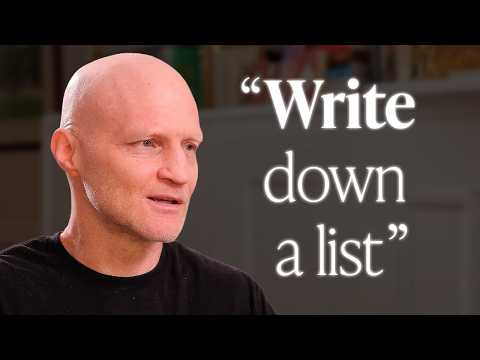
 How I WriteThe 11 Tricks Behind Funny Storytelling (Scott Dikkers Interview)
 How I WriteMaster Comedian Breaks Down 13 Jokes — Robert Mac
The Onion treated humor as a repeatable craft: it pitched hundreds of headlines to publish about a dozen pieces a week, wrote in strict AP style, and skipped funny photos. Heat maps showed 85% of readers never finish an article, so it built a chain of hooks from headline to first paragraph. Lesson: volume, a serious frame, and a deliberate entry path beat polishing one idea.
- 1Write in clown brainMany simple pieces, no judgment
- 2Let it sitJudge days later with fresh eyes
- 3Read pitches aloudIn the most boring voice, on purpose
- 4Vote in the roomNeeds votes from over half the room
- 5Publish about a dozen99% of pitches were passes
From Scott Dikkers, The Onion founder
What was said about The Onion
1The headline pitch process: hundreds of ideas for a dozen stories
The Onion pitched hundreds of headlines to publish about a dozen weekly. Each issue came from hundreds of pitched headlines, and 99% were passes. Onion writers kept this pace of about a dozen pieces a week for 40 years.
Ideas were read aloud in the idea meeting in the most boring voice in the room, on purpose, and needed votes from more than half the room to reach the short list of about a dozen. Dikkers calls it "quantity over quality."
Write many simple pieces fast, then judge them days later. Dikkers says the main beginner mistake is nursing one piece for months. Short comedy takes an afternoon, so volume is how writers learn what has been overdone and what a clean take feels like.
His method is to write in "clown brain" with no judgment, let it sit for days, and edit with fresh eyes. He compares it to screenwriters who write 12 or 13 scripts before one gets a nibble, and says a weekly deadline works like a treadmill until you realize you know how to do it.
2The chain of hooks: headline, photo, caption, pull quote, first paragraph
Heat maps showed 85% of readers never finish an article. So Dikkers made pieces funny from the first line and only funnier after, instead of building toward a punchline at the end.
"I wanted it to be funny from the start and only get funnier." The early beats carry most of the work because most readers leave before a late payoff.
Each entry point gets its own small laugh, planned in sequence. The Onion designed headline, photo, caption, pull quote and first paragraph as a chain of hooks, and checked that the picture and headline still worked shrunk to a thumbnail.
A block of gray copy with no headline is "a brick wall nobody climbs." Early on, as a free street paper next to student, union and gay and lesbian papers, it had to stand out; a banner reading "Run for your lives" over a panicking 1960s B-movie photo made people look twice. Dikkers adds that comedy people stumble on, like a passerby at a newsstand, lands better than comedy they sit down for.
Keep the headline joke broad and bury smart references deeper. The rule from The Onion's first book: the bigger the headline, the more accessible the joke must be, so every reader laughs. By paragraph eight an obscure reference only a few will get is fine.
Dikkers frames it as 90% enjoying the broad joke and 10% enjoying the hidden layer, and points to The Simpsons, with a dumb Homer on top and clever jokes underneath.
3The straight newspaper frame
Absurd premises written in strict AP style hit harder. After its mid-90s retooling, The Onion wrote in strict AP style and never broke character. Dikkers and editor Rob Siegel considered the perfect article one with no jokes: a serious paragraph whose last word is the joke.
Silly acronyms and goofy asides were treated as killers, and the writer should seem unaware the piece is meant to be funny. Dikkers says many lines of copy can go without a joke and still work as an Onion article.
The Onion never ran a funny photo, since it steals the joke's heat. It used a straight photo and found the angle on it, keeping the serious newspaper look as the "straight person" the joke plays against.
Dikkers notes that when a headline is shared on Facebook the newspaper framing disappears, so the headline and picture have to do more work. "Comedy needs a straight person and a joke person."
4Dikkers' 11 funny filters and the one narrow take
Eleven repeatable filters turn a plain opinion into a joke. Founder Scott Dikkers lists irony, character, shock, hyperbole, wordplay, reference, madcap, parody, analogy, misplaced focus and meta humor, arguing humor can be learned to a professional standard.
Raw material can be an unfunny opinion; he suggests writing 10 opinions, since one or two usually hold a funny article, and his favorite move is flipping an opinion into its opposite. Filters should be stacked one at a time; too many at once becomes "a brownish gray splash." Robert Mac teaches the misplaced focus filter with "Other than that, Mrs. Lincoln, how was the play?"
Stay on one narrow take and escalate it to absurdity. At The Onion, a funny idea with the wrong angle was rewritten or dropped, because the wrong take is the wrong joke.
Start from a small observation, such as how old a building is, and push it further than feels safe; a half-committed bit flops or looks foolish. Dikkers cites a study where people recognized a caricature of Prince Charles faster than a realistic drawing.
The 11 Tricks Behind Funny Storytelling (Scott Dikkers Interview)
Never ran a funny photo, wrote in strict AP style, and pitched hundreds of headlines to publish about a dozen a week. Heat maps showed 85% of readers never finish an article, so it designed a chain of hooks: headline, photo, caption, pull quote, first paragraph.
The Onion pitched hundreds of headlines to publish about a dozen weekly. Each issue came from hundreds of pitched headlines, and 99% were passes. Onion writers kept this pace of about a dozen pieces a week for 40 years.
Ideas were read aloud in the idea meeting in the most boring voice in the room, on purpose, and needed votes from more than half the room to reach the short list of about a dozen. Dikkers calls it "quantity over quality."
Write many simple pieces fast, then judge them days later. Dikkers says the main beginner mistake is nursing one piece for months. Short comedy takes an afternoon, so volume is how writers learn what has been overdone and what a clean take feels like.
His method is to write in "clown brain" with no judgment, let it sit for days, and edit with fresh eyes. He compares it to screenwriters who write 12 or 13 scripts before one gets a nibble, and says a weekly deadline works like a treadmill until you realize you know how to do it.
Heat maps showed 85% of readers never finish an article. So Dikkers made pieces funny from the first line and only funnier after, instead of building toward a punchline at the end.
"I wanted it to be funny from the start and only get funnier." The early beats carry most of the work because most readers leave before a late payoff.
Each entry point gets its own small laugh, planned in sequence. The Onion designed headline, photo, caption, pull quote and first paragraph as a chain of hooks, and checked that the picture and headline still worked shrunk to a thumbnail.
A block of gray copy with no headline is "a brick wall nobody climbs." Early on, as a free street paper next to student, union and gay and lesbian papers, it had to stand out; a banner reading "Run for your lives" over a panicking 1960s B-movie photo made people look twice. Dikkers adds that comedy people stumble on, like a passerby at a newsstand, lands better than comedy they sit down for.
Keep the headline joke broad and bury smart references deeper. The rule from The Onion's first book: the bigger the headline, the more accessible the joke must be, so every reader laughs. By paragraph eight an obscure reference only a few will get is fine.
Dikkers frames it as 90% enjoying the broad joke and 10% enjoying the hidden layer, and points to The Simpsons, with a dumb Homer on top and clever jokes underneath.
Absurd premises written in strict AP style hit harder. After its mid-90s retooling, The Onion wrote in strict AP style and never broke character. Dikkers and editor Rob Siegel considered the perfect article one with no jokes: a serious paragraph whose last word is the joke.
Silly acronyms and goofy asides were treated as killers, and the writer should seem unaware the piece is meant to be funny. Dikkers says many lines of copy can go without a joke and still work as an Onion article.
The Onion never ran a funny photo, since it steals the joke's heat. It used a straight photo and found the angle on it, keeping the serious newspaper look as the "straight person" the joke plays against.
Dikkers notes that when a headline is shared on Facebook the newspaper framing disappears, so the headline and picture have to do more work. "Comedy needs a straight person and a joke person."
Eleven repeatable filters turn a plain opinion into a joke. Founder Scott Dikkers lists irony, character, shock, hyperbole, wordplay, reference, madcap, parody, analogy, misplaced focus and meta humor, arguing humor can be learned to a professional standard.
Raw material can be an unfunny opinion; he suggests writing 10 opinions, since one or two usually hold a funny article, and his favorite move is flipping an opinion into its opposite. Filters should be stacked one at a time; too many at once becomes "a brownish gray splash." Robert Mac teaches the misplaced focus filter with "Other than that, Mrs. Lincoln, how was the play?"
Stay on one narrow take and escalate it to absurdity. At The Onion, a funny idea with the wrong angle was rewritten or dropped, because the wrong take is the wrong joke.
Start from a small observation, such as how old a building is, and push it further than feels safe; a half-committed bit flops or looks foolish. Dikkers cites a study where people recognized a caricature of Prince Charles faster than a realistic drawing.
Master Comedian Breaks Down 13 Jokes — Robert Mac
Its founder, Scott Dikkers, names 11 comedy filters, including misplaced focus, which Robert Mac teaches. The 'Other than that, Mrs. Lincoln, how was the play?' joke is one of those filters.
Eleven repeatable filters turn a plain opinion into a joke. Founder Scott Dikkers lists irony, character, shock, hyperbole, wordplay, reference, madcap, parody, analogy, misplaced focus and meta humor, arguing humor can be learned to a professional standard.
Raw material can be an unfunny opinion; he suggests writing 10 opinions, since one or two usually hold a funny article, and his favorite move is flipping an opinion into its opposite. Filters should be stacked one at a time; too many at once becomes "a brownish gray splash." Robert Mac teaches the misplaced focus filter with "Other than that, Mrs. Lincoln, how was the play?"
More in News & Media
 News & Media
Substack
A platform where writers publish newsletters and charge readers for subscriptions.

 22 sources · 36 tips
AppAdvice
An app discovery and news site that features app deals and promotions.
 16 sources · 26 tips
 News & Media
The New York Times
A major newspaper that rebuilt a digital bundle with games, cooking and Wirecutter.
10 sources · 29 tips News & Media
Marginal Revolution
Tyler Cowen's economics blog, written daily for over two decades.
3 sources · 18 tips News & Media
TechCrunch
A technology news publication known for startup and funding coverage.
8 sources · 14 tips News & Media
The New Yorker
A weekly magazine of essays, reporting, fiction and humor.
7 sources · 15 tips News & Media
Zinio
A digital newsstand app offering over 6,000 magazines on web, iOS and Android.
4 sources · 13 tips News & Media
Mark Manson
A self-help author and blogger known for The Subtle Art of Not Giving a F*ck.
2 sources · 19 tips