 Caddie
Chapter 24 of 26 · Teaching players and designing levels
1 The bottom line
Build the puzzle around a catch, two needs that seem to conflict, and lure players into the wrong assumption first. The solution then reveals a fair, non-obvious consequence of your rules, which is where the eureka moment comes from.
2 Key takeaways
- Build every puzzle around a catch. Some version of a conflict sits at the heart of every good puzzle.
- In The Talos Principle, you cannot get red light to panel C without already having blue light in panel A, so removing either tripod shuts the door and breaks your plan
 Mark Brown, Game Maker's Toolkit3:11.
- In The Talos Principle, you cannot get red light to panel C without already having blue light in panel A, so removing either tripod shuts the door and breaks your plan
- Walk the player into a wrong assumption before the real answer. A first failure points attention at the central conflict.
- In Stephen's Sausage Roll, rolling the three sausages to the nearest grills leaves you unable to reach the exit Mark Brown, Game Maker's Toolkit8:56.
- In Lara Croft GO, the first lizard is there to trick you into the wrong assumption about the second Mark Brown, Game Maker's Toolkit8:02.
- In Stephen's Sausage Roll, rolling the three sausages to the nearest grills leaves you unable to reach the exit
- Find the surprising interaction first, then build the level backwards from it. The trick becomes the only solution, so the level exists to force it.
- In Mind Over Magnet, a magnet stuck under the drill bit escapes quickly near the tip but slowly on the far side, so the player must trap it away from the tip Mark Brown, Game Maker's Toolkit4:58.
- Restrict the player so only your intended trick works. Open freedom invites cheap answers.
- Scribblenauts lets you finish half its levels by writing the word jetpack, while Baba Is You limits the words and spaces you have
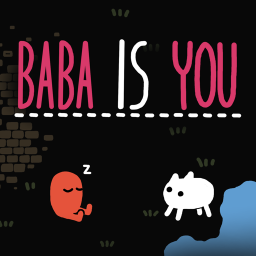 Mark Brown with Arvi Teikari, Game Maker's Toolkit4:57.
- Scribblenauts lets you finish half its levels by writing the word jetpack, while Baba Is You limits the words and spaces you have
- Make the solution a fair revelation about the rules, not a trick. The insight then joins the player's toolbox and returns in later puzzles.
- A Braid puzzle needs an enemy to bounce off your clone's head, but it can happen at only one moment, so many players found it a trick Mark Brown, Game Maker's Toolkit6:36.
- A Braid puzzle needs an enemy to bounce off your clone's head, but it can happen at only one moment, so many players found it a trick
So solving the puzzle is like a revelation. A discovery. An epiphany of some deeper understanding.
Mark Brown, Game Maker's Toolkit
2.1 Start from a surprising consequence of your rules
The best revelation is a real fact about your game that the player has not noticed yet, so find it before you build the level.
- Playtest every new rule and look for side effects. Method from Mark Brown, featuring Jonathan Blow, Game Maker's Toolkit1:47
- Add a rule, play, and treat each surprising consequence as a candidate puzzle.
- Make each puzzle an illustration of one of those phenomena, so the player stumbles on the same fact you found.
- In Braid, a time-immune moving platform lets the hero rewind to a point where the platform is no longer under his feet, so he falls when he stops manipulating time.
- In The Witness, Blow noticed he was partitioning grid cells with his line. A simple loop solves the first puzzle, but in the near-identical second one the exit has moved, so the same loop cuts it off Mark Brown, featuring Jonathan Blow, Game Maker's Toolkit2:52.
- Pick the interaction you want, then build the level backwards from it. Used in Mark Brown, Game Maker's Toolkit4:58
- Experiment with two mechanics until you find a trick the player must discover.
- Make that trick the only solution, and add just enough other mechanics to force it.
- Ask what level makes the player use the interaction, as Arvi Teikari does Mark Brown with Arvi Teikari, Game Maker's Toolkit4:22.
- In Baba Is You, single words suggest setups: Pull drags a key across a lake, Tele moves rules rather than objects, and Has drops a box that becomes Keke again on each death Mark Brown with Arvi Teikari, Game Maker's Toolkit4:22.
- Cut the puzzle down to its one core idea. From Mark Brown, featuring Jonathan Blow, Game Maker's Toolkit6:49
- Keep stages small enough that the player can consider all the moving parts at once.
- A Mind Over Magnet level needed two magnets, two switches, two drill bits, a laser and an orb. The rebuilt version used one magnet and three or four mechanics in a small space Mark Brown, Game Maker's Toolkit8:15.
- At GDC, players got stuck for a minute or two, then had a wide-eyed aha moment with no confusion or frustration Mark Brown, Game Maker's Toolkit8:15.
2.2 Build the catch
A catch is two things that appear to be in direct conflict, and the setup should state it clearly.
- Frame the puzzle as two needs that seem to conflict. Defined in Mark Brown, Game Maker's Toolkit3:11
- The simplest version is a button that opens a door but pops up when you walk away, so you must stand on it and also walk to the door.
- A box on the button resolves the conflict.
- Give one object two conflicting roles. From Mark Brown, Game Maker's Toolkit4:30
- The player must understand the relationship between the objects and consider the whole level.
- In Skyward Sword's Ancient Cistern, lowering the giant statue opens the underworld door but covers the treasure chest there, so it leads you to the chest and also stops you reaching it.
- Let the setup walk the player into the central problem. From Mark Brown with Arvi Teikari, Game Maker's Toolkit8:35
- When the player sees the contradiction, the solution feels earned.
- In Tiny Pond, the water is Shut, Baba is Open, and touching the water destroys Baba. You need to be Open but don't want to disappear when you use yourself.
- Stack small impossible problems that lead toward the answer. From Mark Brown with Arvi Teikari, Game Maker's Toolkit8:16
- Each tiny problem makes the obvious move impossible, so the player must find a more creative option.
- In Tiny Pond, opening the water kills Baba, Key has no Push, and you lack the words to be both Key and Baba. The only way forward is Flag Is Key, which gives you two keys and lets you sacrifice one.
2.3 Lure the player into a wrong assumption
Make the obvious approach look right, so the player fails in a way that teaches them what the puzzle is about.
- Set up the obvious approach so it nearly works. From Mark Brown, Game Maker's Toolkit8:56
- The player gets a starting point and learns how the puzzle is built while failing.
- The first failure feels like being stumped, and attention lands on the central conflict.
- Stephen's Sausage Roll's The Clover looks easy, but rolling the three sausages to the nearest grills leaves you unable to reach the exit.
- Mark Brown reused this idea in several Mind Over Magnet levels Mark Brown, Game Maker's Toolkit6:43.
- Teach a rule in one puzzle, then subvert it in the next. Pattern from several Zelda and puzzle games
- Use a decoy that works once. In Lara Croft GO, you can lead the first lizard over a crumbling tile, but the same plan gets you killed on the second Mark Brown, Game Maker's Toolkit8:02.
- Invert a rule's purpose. In Twilight Princess's Arbiter's Grounds, you first run under a chandelier before it smashes down, then must drop it so you can climb onto it Mark Brown, Game Maker's Toolkit8:17.
- In Skyward Sword's Sandship, you shoot an arrow through a ceiling grate at the timeshift stone. The follow-up has the same setup with no grate, so you must use portholes and a boat Mark Brown, Game Maker's Toolkit8:50.
- Use a decoy that works once. In Lara Croft GO, you can lead the first lizard over a crumbling tile, but the same plan gets you killed on the second
- Use misdirection so trial and error cannot skip the lesson. From Mark Brown, featuring Jonathan Blow, Game Maker's Toolkit3:54
- Make the obvious move fail, so the player sees why it fails, which is often the truth the puzzle illustrates.
- In Braid's Hunt, you must kill all the monsters, but killing them in the most obvious order makes it unsolvable.
- Break the habits you taught. From Mark Brown, featuring Jonathan Blow, Game Maker's Toolkit4:52
- Once players trust their habits, demand that they not use the core ability, and add traps for careless thinkers.
- In Braid's Irreversible, you must realise you cannot use your rewind powers.
- Arvi Teikari plays on expectations for surprise and laughter. A YouTuber laughs on realising there is no Wall Is Stop rule, and in another level players try to unlock the door when they need to unlock the wall Mark Brown with Arvi Teikari, Game Maker's Toolkit12:29.
2.4 Cut off the shortcuts
Once the trick is chosen, remove every easier route so the player has to find it.
- Lock the player in instead of offering freedom. From Mark Brown with Arvi Teikari, Game Maker's Toolkit4:57
- Baba Is You uses words that are or are not on screen, sentences pushed against walls or behind fences, and a tight grid.
- Work backwards from the answer, adding restrictions that rule out simpler routes Mark Brown with Arvi Teikari, Game Maker's Toolkit5:22.
- In Baba Doesn't Respond, the answer of using two belts to redirect a moving Baba is guarded by a locked door, a deadly reed, a hedge that shortens Baba's run-up, and a corner-trapped Move word Mark Brown with Arvi Teikari, Game Maker's Toolkit5:22.
- Build restriction mechanics and keep them as tools. From Mark Brown, Game Maker's Toolkit7:03
- Examples are a beam that stops the player but not the magnet, a beam that stops the magnet but not the player, a hold-down button, and a door that toggles a switch.
- Each one can solve the same problem again later.
- When a puzzle keeps sprouting patches, look for a missing mechanic. Oliver Granlund of Hazelight told Mark the real problem is often a gap in the toolbox Mark Brown, Game Maker's Toolkit10:41.
- Stop players from solving by fiddling. From
 Mark Brown, Game Maker's Toolkit8:39
- Multiply the states. Vah Naboris has three chambers that can each sit in four positions, giving 64 combinations, so the player must reason about what they move and why.
- Make the player choose a setting. The Water Temple's three-way switch forces a conscious choice, unlike a one-way switch Mark Brown, Game Maker's Toolkit8:21.
- Breath of the Wild lets you move the divine beasts from the map screen at any time, so many puzzles can be solved by fiddling. Mark hammered the trigger in Fez until perspective puzzles lined up Mark Brown, Game Maker's Toolkit7:53.
- Balance the number of available actions. From Mark Brown, Game Maker's Toolkit6:28
- Too many actions make a puzzle confusing and overwhelming.
- Too few let the player repeat whatever is in front of them until it solves itself.
2.5 Make the revelation fair
The player should reach the insight by reasoning and experimenting, and the solution should show them something true about your rules.
- Make the solution a logical consequence of the rules, found by experiment. From Mark Brown, Game Maker's Toolkit5:20
- The gold standard asks for lateral thinking and reveals a non-obvious but fully logical consequence of the rules.
- If the solution relies on something players did not know they could do, they feel tricked Mark Brown, Game Maker's Toolkit6:36.
- In The Talos Principle, linking a tripod through a door that is about to open teaches that the connection holds after the second tripod is removed. The trick reappears in later puzzles.
- Seed hints in the layout and tune their strength. From Mark Brown, Game Maker's Toolkit13:16
- Portal 2's cube starts in front of the laser, showing it can block the beam, and the semi-transparent bridge lets you see the button below.
- Presentation changes difficulty. The Turing Test's near-identical puzzle is far easier because the bridge already sits over the button Mark Brown, Game Maker's Toolkit13:02.
- A clue that is too subtle gets missed, and one that is too obvious makes the player feel cheated Mark Brown, Game Maker's Toolkit5:39.
- Check that names and descriptions neither spoil nor mislead. Both failures appear in Mark Brown, Game Maker's Toolkit13:39
- Breath of the Wild's Two Bombs shrine is clever, but its name makes the solution rather obvious.
- In Grim Fandango, Manny says only that the pneumatic tube is locked, which suggests a key or breaking the lock, when the answer is sliding a card into a slot Mark Brown, Game Maker's Toolkit5:52.
- When a wrong combination fails, give a specific reason and a small nudge. In Day of the Tentacle, Laverne explains that the judges will think the mummy is chewing gum Mark Brown, Game Maker's Toolkit6:42.
- Let the puzzle teach a skill the player keeps. From Mark Brown, Game Maker's Toolkit10:16
- Chain assumption, catch and revelation. In Snakebird level 10, you assume you can eat the left fruit, drop down and turn back, but you are then too long to turn.
- The solution forces you to rethink how Snakebirds move, which you reuse later.
- Treat a puzzle as a communication of an idea from designer to player, and the solution as the player saying they understand Mark Brown, featuring Jonathan Blow, Game Maker's Toolkit5:57.
2.6 Tune difficulty to reach the a-ha
A puzzle that is too easy or too hard misses the moment, so test for it and give stuck players somewhere to go.
- Aim every puzzle at the a-ha moment and tune to reach it. From Mark Brown, Game Maker's Toolkit8:15
- Listen for the player finding the lateral-thinking twist at the core.
- Playtester Dotwo said "Ah! Okay..." on solving a Mind Over Magnet puzzle. One easy level was stumbled through, and one hard level made many players quit before they got it.
- Reuse a layout under new rules to show how consequences change. From Mark Brown, featuring Jonathan Blow, Game Maker's Toolkit4:25
- Place a simple puzzle near a fuller variant in the same area.
- Braid's two-doors-one-key level is essentially repeated in Worlds 2 and 4, where the way time works makes each solution different.
- Give several goals at once so stuck players can switch. From Mark Brown, Game Maker's Toolkit1:55
- A player blocked on one puzzle can work on another instead of stalling or turning to a walkthrough.
- Full Throttle has Maureen list the forks, the welding torch and the fuel, and Indiana Jones and the Fate of Atlantis sends you after three stones.
2.7 Where designers disagree
Misdirection, oddity and hints are tools with limits, and the sources draw those limits in different places.
- Red herrings: a useful trap or wasted time?
- Neon White treats the obvious route as a deliberate red herring, and the gold medal hint shows where to break from it Mark Brown, Game Maker's Toolkit5:16.
- Teikari's blockers are never red herrings or busy work, because each one leads the player to the catch Mark Brown with Arvi Teikari, Game Maker's Toolkit15:03.
- Blow's puzzles have few or no red herrings and few arbitrary steps Mark Brown, featuring Jonathan Blow, Game Maker's Toolkit6:49.
- Interesting or fun: how strange can a revelation be?
- Blow keeps consequences that are interesting rather than fun if they are real, surprising facts about the game's universe Mark Brown, featuring Jonathan Blow, Game Maker's Toolkit5:37.
- A super weird Braid puzzle where a key bumbles along on its own stays in for that reason Mark Brown, featuring Jonathan Blow, Game Maker's Toolkit5:37.
- The risk is a revelation that feels like a trick, as with the clone-head bounce in Braid Mark Brown, Game Maker's Toolkit6:36.
- How much help to give: a nudge or silence?
- Day of the Tentacle's approach is to explain why a combination fails and nudge toward the real solution Mark Brown, Game Maker's Toolkit6:42.
- A helper that volunteers advice removes the moment of figuring it out Mark Brown, Game Maker's Toolkit2:04.
- Mark calls Ezlo in The Minish Cap "Captain Obvious" because he offers tips unrequested Mark Brown, Game Maker's Toolkit2:04.
- Delayed confirmation fits deduction games, not every puzzle.
- Return of the Obra Dinn confirms answers only when three are right, which stops guessing one fate at a time Mark Brown, Game Maker's Toolkit5:12.
- The cost is the instant satisfaction of a single confirmation Mark Brown, Game Maker's Toolkit5:12.
Sources
Part of Teaching players and designing levels in the growth library.