 Caddie
Chapter 24 of 26 · Teaching players and designing levels
1 The bottom line
Teach a rule by making the player use it once, safely, somewhere they cannot skip, and let the look of things show how they work. Doing beats reading, because arrows let players advance without learning anything.
2 Key takeaways
- Design from the view of someone who has never seen your game. What feels obvious to you is invisible to them.
- In Mind Over Magnet, magnet riding and remote polarity change were never taught, and GDC players stumbled on them Mark Brown, Game Maker's Toolkit11:01.
- Background screens in the same game looked like platforms Mark Brown, Game Maker's Toolkit4:43.
- Give each new mechanic a safe first use that cannot be skipped. The player learns by doing, and failure costs nothing.
- The first swinging claws in a Super Mario Maker 2 level have safe ground underneath, and a raised wall forces Mario into the claw Mark Brown, Game Maker's Toolkit3:34.
- Almost every power-up room in Super Metroid traps you until you use the new ability Mark Brown, Game Maker's Toolkit10:50.
- Let the look of things say how they work. Players read appearance before they read text.
- Zonai devices resemble a desk fan, a skateboard, a fire hydrant and a light bulb
 Mark Brown, Game Maker's Toolkit4:56.
- Re-releases of Mario Bros swap turtles for Spinies because players keep jumping on the turtles
 Mark Brown, Game Maker's Toolkit6:16.
- Zonai devices resemble a desk fan, a skateboard, a fire hydrant and a light bulb
- Teach one concept per early puzzle, then combine what was taught. A solution feels like deduction only if every element was shown first.
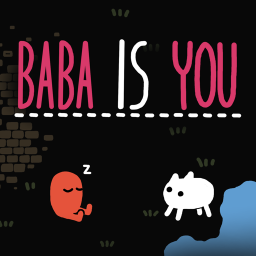
- Baba Is You has no tutorial, and Level 1 forces you to break Wall Is Stop and make Flag Is Win
 Mark Brown, Game Maker's Toolkit10:29.
- The Skull Woods wallmaster puzzle works because the enemy, the button and the walkway were all explained earlier Mark Brown, Game Maker's Toolkit10:23.
- Baba Is You has no tutorial, and Level 1 forces you to break Wall Is Stop and make Flag Is Win
- Back up the lesson without forcing it on players who got it. Some players miss the first demonstration.
- If you do not work out the Gloo staircase, Prey later has a character build one in front of you Mark Brown, Game Maker's Toolkit3:14.
Instead, the game's first crop of puzzles all subtly and silently tell you how the game works through their solutions.
Mark Brown, Game Maker's Toolkit
2.1 See your game as a new player does
You cannot teach what you do not know is missing, so find the gaps before you fill them.
- Teach the mechanics that feel obvious to you. Mark Brown skipped tutorials for basics in Mind Over Magnet because they felt obvious, and new players had no idea Mark Brown, Game Maker's Toolkit11:01.
- If a mechanic is needed, give it a puzzle or tutorial that introduces it.
- Hidden verbs, not hard logic, caused the stuck moments in Phantom Hourglass, where he did not know you could pick up the arrow shooters Mark Brown, Game Maker's Toolkit8:10.
- Ask whether each element reads clearly without knowing the code. Brown had to put himself in the shoes of someone who does not know how the game works under the hood Mark Brown, Game Maker's Toolkit4:43.
- Check whether icons can really explain a complex system like aiming. In Mind Over Magnet they could not.
- Make the goal obvious to someone watching over a shoulder. Iwatani wanted players to get the point immediately Mark Brown, Game Maker's Toolkit14:36.
- Pac-Man's rule of eating dots and avoiding monsters needed no words or cultural references.
- Show clearly what the player cannot do. Patrick Traynor's feedback was to make limits obvious so players can rule out wrong approaches Mark Brown, Game Maker's Toolkit3:24.
- If a gap is too wide to jump, make it very wide. If a door closes too fast to pass, have it snap shut immediately.
2.2 Give every new mechanic a safe, unskippable first use
The first encounter should let the player try the idea cheaply and should leave no way around it.
- Introduce the mechanic where failure costs nothing, then add threat step by step. Mark Brown describes starting by experimenting with the idea in a largely safe environment Mark Brown, Game Maker's Toolkit7:03.
- In Seesaw Bridge the see-saw tip never reaches the water. Chocolate Island 3 starts with no enemies and only one platform between safe zones.
- The first claws in the Mario Maker 2 example let the player fall onto safe ground and retry, even though the rest of the level uses insta-death pits Mark Brown, Game Maker's Toolkit3:34.
- Make the player prove they used and understood the mechanic before moving on. Raising the wall and the claw forces Mario into the claw's grip Mark Brown, Game Maker's Toolkit3:34.
- Lock the player in with the new power-up. After the Ice Beam in Super Metroid you must freeze an enemy to escape Mark Brown, Game Maker's Toolkit10:50.
- Zelda 1's fifth dungeon locks you in a room with bombs, and a map-hinted room on the left means you must blow open the wall Mark Brown, Game Maker's Toolkit4:48.
- Brown calls that room a weak consolation, because later dungeons demand far more than it taught Mark Brown, Game Maker's Toolkit4:48.
- Hand over the tool and add pressure so the first use reveals itself. Prey gives you the Gloo cannon and floods you with Mimics, and you figure out that it freezes enemies Mark Brown, Game Maker's Toolkit1:30.
- Give players enemies that are a pain to kill with current tools, then effortless with the dungeon's new item, as in Twilight Princess Mark Brown, Game Maker's Toolkit7:15.
- In Hitman 3's Berlin, the designers added a free "snack target" to tutorialise finding unmarked targets before the full level opens Mark Brown, Game Maker's Toolkit7:40.
- Use a small first task as a tutorial for the loop you will repeat. The Fitzpatrick sequence in BioShock has you photograph a body, frame it and earn a crossbow, which is exactly what you repeat with the three protégés Mark Brown, Game Maker's Toolkit2:41.
- Metroid's first three rooms send you right into a wall too low to pass, then left to the morph ball, then back to the wall Mark Brown, Game Maker's Toolkit3:28.
- Hollow Knight: Silksong's beefy Marrow guard teaches that some obstacles are for later, and you beat him once you have the dash Mark Brown, Game Maker's Toolkit39:30.
2.3 Let the look of things reveal how they work
When appearance signals behaviour, players predict outcomes without reading a word.
- Make how things look reveal how they work. Boos blush when you look at them, and charging enemies in Super Mario World look like quarterbacks Mark Brown, Game Maker's Toolkit6:16.
- Model new tools on everyday objects. Aonuma reasons that if it looks like an everyday item, players understand how to use it Mark Brown, Game Maker's Toolkit4:56.
- Lean on what players already know. Plants vs Zombies never explains that a metal bucket is tougher than a plastic cone Mark Brown, Game Maker's Toolkit15:03.
- The Zonai stabiliser is modelled on self-righting toys like Daruma dolls and Weebles Mark Brown, Game Maker's Toolkit4:56.
- Model new tools on everyday objects. Aonuma reasons that if it looks like an everyday item, players understand how to use it
- Show connections and cause, so the player can see why something happens. In It Takes Two, if you weigh something down and something goes up, the two must be visibly connected
 Mark Brown and Oliver Granlund, Hazelight5:01.
- Add directional cues. Animator Dan Root suggested big chevron arrows pointing toward the panel to show how Mind Over Magnet's magnetism works Mark Brown, Game Maker's Toolkit8:16.
- Keep the glue visible. Aonuma first thought glue between joined parts looked ugly, then saw it as a cue that two objects are connected Mark Brown, Game Maker's Toolkit5:29.
- Mark added icons showing which object a button links to, and replaced an unclear magnet sensor with a panel on a pulley Mark Brown, Game Maker's Toolkit4:37.
- Use the set dressing and the layout to hint at mechanics. A saw blade stuck in a sliced zombie in Half-Life 2 suggests using saws with the Gravity Gun Mark Brown, Game Maker's Toolkit3:42.
- An enemy fried on a fence warns you not to touch it.
- Odyssey moves many coin blocks from the air to the ground, which signals that the game is about throwing the hat, not jumping Mark Brown, Game Maker's Toolkit7:00.
- Show state through the objects themselves instead of adding a meter. Wreckfest shows how close a car is to being wrecked through visible damage Mark Brown, Game Maker's Toolkit10:50.
- Super Mario Bros. shows health through Mario's sprite size.
- Show the effect with animation. Into the Breach previews weapon effects by animating tiles moving, which Justin Ma said beats typing it out Mark Brown, Game Maker's Toolkit17:45.
2.4 Teach one concept per puzzle, then combine and reuse
Sequence the level so each rule is learned alone before it is tested with others.
- Give each early puzzle one core concept, and make its solution the lesson. Baba Is You has no tutorial, and its first puzzles teach through what you must do to finish them Mark Brown, with Arvi Teikari, Game Maker's Toolkit10:29.
- Level 1 forces you to break Wall Is Stop and make Flag Is Win. Level 2 swaps everything so you play as a wall made of flags, teaching that nothing has value outside a rule.
- A later level teaches that Lava Is Push overrides Lava Is Hot, and that two sentences can share one Is block in a cross.
- Psychonauts' first three minds teach jumping, shooting and levitating while introducing characters and hiding their repressed memories Mark Brown, Game Maker's Toolkit2:16.
- Teach every element of a puzzle earlier, so the answer feels fair. In Skull Woods you trick a wallmaster into slapping a button, and the enemy, the button and the walkway were all explained earlier Mark Brown, Game Maker's Toolkit10:23.
- Show a trick in a safe optional room, then reuse it when it matters. Torch Man's room 5 teaches the fire mushroom trick, and room 14 repeats it for the first hurdle Mark Brown, Game Maker's Toolkit7:34.
- Ramp up the challenge and give players time to read hazards. Dodongo's Cavern moves from baby Dodongos to bigger ones to the boss, so players learn the behaviour at low stakes Mark Brown, Game Maker's Toolkit6:40.
- In his Mario Maker level, Brown put a downward track so you have more time to see how the flame throwers work Mark Brown, Game Maker's Toolkit13:17.
- A harmless blade section in the same level previews the dangerous one Mark Brown, Game Maker's Toolkit13:17.
- Keep rules consistent so the mental model holds. When rules change arbitrarily, players must throw out their model and cannot predict what the world will do Mark Brown, Game Maker's Toolkit4:19.
- One-way platforms in Mind Over Magnet blocked the magnet until later they did not, and green buttons changed function between levels.
- Mark compares it to learning that jumping on a Goomba kills it.
2.5 Nudge instead of telling, and keep a backup
Point players toward the idea, let them make the discovery, and catch those who miss it.
- Place a reachable reward right beside the new ability. When you get the Gloo cannon in Prey, a half-finished staircase leads to a roof with goodies Mark Brown, Game Maker's Toolkit3:03.
- A broken grav shaft elevator nearby hints that a Gloo staircase can reach the next floor.
- In Hitman 2, overheard talk that the podium pyrotechnics could fry everyone on stage works as a little promise
 Mark Brown, with Jakob Mikkelsen and Eskil Mohl, IO Interactive5:59.
- Use subtle UI nudges and optional hints, not forced tasks. Klei's Don't Starve highlights the most important items you can craft, so players learn by themselves and keep their sense of discovery Mark Brown, Game Maker's Toolkit2:32.
- Make hints completely optional, rather than springing them on players before they have had a chance to try Mark Brown, Game Maker's Toolkit7:12.
- Skyward Sword's overzealous hints and aggravating sidekick spoiled most of its conundrums Mark Brown, Game Maker's Toolkit7:12.
- Teach the same thing through more than one channel. In Dishonored 2, careful players hear guards say they are blind but can still hear, while reckless players learn from the soldiers' animations and audio Dana Nightingale and David Di Giacomo, hosted by Mark Brown9:45.
- Both end up with the same knowledge, gained the way they like to play.
- Prey also repeats the staircase lesson later, by letting a character build one in front of you Mark Brown, Game Maker's Toolkit3:14.
- Make players think instead of follow arrows. Following arrows lets the game say you advanced while your brain has learned nothing Mark Brown, Game Maker's Toolkit10:24.
- The Threes tutorial says to use the walls to add 1 and 2 together, not to swipe left twice.
- Planet Zoo walks you through fixing one animal's welfare, then asks you to fix the other habitats with hardly any guidance Mark Brown, Game Maker's Toolkit11:20.
- Give stuck players in-game lookups, such as tooltips and an encyclopedia, so their only solution is not Google Mark Brown, Game Maker's Toolkit18:49.
2.6 Where designers disagree
How much to teach depends on how deep the game is and how much freedom you want players to feel.
- Some games teach almost nothing and let players experiment. Snake Pass's advanced mechanics are never taught explicitly, and players build a repertoire of moves by practice
 Mark Brown, Sumo Digital6:21.
- This sits against the warning that basics must be taught, since players stumbled on untaught ones in Mind Over Magnet Mark Brown, Game Maker's Toolkit11:01.
- A playful tool also invites experimenting. Enjoying something makes it easier to experiment and learn, as with Ultrahand Mark Brown, Game Maker's Toolkit3:41.
- Showing the value of a tool can shrink tactical freedom. DOOM Eternal's weapon-specific weak points, stressed by loading screen tutorials, make it feel like there is a single right move Mark Brown, id Software10:24.
- Twilight Princess does the opposite on purpose, making enemies effortless with the dungeon's new item Mark Brown, Game Maker's Toolkit7:15.
- Previews can teach by showing or by withholding. Into the Breach animates the full effect of a weapon Mark Brown, Game Maker's Toolkit17:45.
- Peggle's shot indicator stops at the first hit, so players must work out the ricochet and internalise the mechanics Mark Brown, Game Maker's Toolkit13:05.
- Complex strategy games need more than level design. Feedback is slow, so you may not notice a badly balanced economy for hours Mark Brown, Game Maker's Toolkit13:07.
- Short repeatable campaigns and advisors help. In Offworld Trading Company the advisor told Mark off for selling aluminium for under $10.
- It is easy to teach how to do things and much harder to explain why to do them Mark Brown, Game Maker's Toolkit14:00.
Sources
Part of Teaching players and designing levels in the growth library.