 Caddie
Chapter 21 of 26 · Why people play games
1 The bottom line
A good idea starts from a genre twist, a limit or a real-world activity, and it passes when you can write a catchy headline for it. A hook is what makes people try a game or talk about it.
2 Key takeaways
- Start from a boundary, not a blank page. A limit gives your mind something to push against.
- Mark Brown, Game Maker's Toolkit16:35: Simogo followed the fast, colourful Sayonara Wild Hearts with a game that would be slow, thoughtful and black and white.
- Twist a genre by removing, flipping or swapping one of its core parts. A familiar genre gives you a base, and the twist gives you the hook.
- Mark Brown, Game Maker's Toolkit6:54: In Super Mario 3D World, Captain Toad cannot jump because of his heavy backpack, so the bouncy platformer becomes slow and methodical.
- Look for the core idea outside games. Real activities hold mechanics that other games have not used.
- Mark Brown, Game Maker's Toolkit8:51: Miyamoto made Pikmin after getting interested in gardening.
- Blend genres only when each one helps the other. Two systems that fight each other cancel the hook.
- Mark Brown, Game Maker's Toolkit10:33: Chasm's procedural generation loses the handcrafted map that Metroidvanias rely on.
- Test the hook before you build: write the headline, imagine the trailer, add an anchor. A new idea that nobody can picture does not get tried.
- Mark Brown, Game Maker's Toolkit23:51: Arco, a Mesoamerican fantasy RPG with bullet-hell-ish real-time turn-based combat, was rated well but sold badly.
If you can't write a catchy headline for your game idea, it probably doesn't have a hook.
Mark Brown, Game Maker's Toolkit
2.1 Start from a seed: a limit, a real-world activity or a control method
Pick one small starting point and let it grow, instead of trying to plan a whole game.
- Impose a limitation or enter a themed jam. Mark Brown, Game Maker's Toolkit16:35
- Ask what the theme normally means, then turn it into a game. For Ludum Dare 54's 'Limited Space', Tim Fitzrandolph asked what normally takes a lot of space and squeezed a racing game into a multistory car park.
- Keep the first prototype rough. Baba Is You began at the 2017 Nordic Game Jam, where the theme 'Not There' made Arvi Teikari think of logic operators
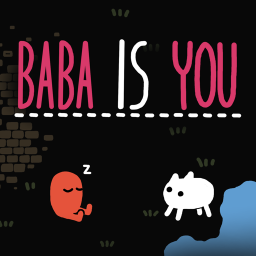 Mark Brown, Game Maker's Toolkit3:15.
- He pictured ice that does not melt in lava because of the statement "Ice Is Not Melt". The rough prototype won the jam, and that reaction led him to build the full game Mark Brown, Game Maker's Toolkit3:15.
- Mine real-world activities and outside interests for mechanics. Mark Brown, Game Maker's Toolkit8:51
- Look at what you do every day. Lucas Pope's frequent passport checks while travelling became Papers, Please, a game about spotting discrepancies between documents.
- Read widely. Will Wright builds SimCity and The Sims from whatever he reads about.
- Snake Pass borrowed from Spyro and Banjo-Kazooie, but its core came from Seb Liese, who had kept pet snakes and been a biology teacher Mark Brown, Game Maker's Toolkit8:16.
- Let the controller or input method suggest the game. Mark Brown, Game Maker's Toolkit9:57
- Notice what the input feels like. A finger swipe on a touchscreen felt like slicing with a sword, which led to Fruit Ninja.
- The squishy analogue shoulder buttons on the GameCube controller reminded Yoshiaki Koizumi of water pistols, which led to Super Mario Sunshine.
- Skip forced brainstorming and keep the first idea small. Mark Brown, Game Maker's Toolkit18:58
- Let your mind wander, because a pad titled game ideas or a whiteboard session is poor for idea generation. Treat the idea as a seed to grow through development.
- Kyle Gabler's World of Goo came from a song, and A Short Hike grew from a cozy scene built in Unity.
2.2 Twist a genre
Define the genre loosely, then take something away, flip it or fix its worst problem.
- Boil the genre down to its core before you change it. Mark Brown, Game Maker's Toolkit7:52
- Treat genres in the loosest possible terms, not as a checklist of features from one game Mark Brown, Game Maker's Toolkit9:59.
- Keep one or two defining elements. Cutting roguelikes down to permadeath and procedural generation gave the genre a new lease on life
 Mark Brown, Game Maker's Toolkit4:18.
- The 2008 Berlin Interpretation listed 14 factors, including turn-based play and ASCII graphics, so games stayed minor tweaks on one template Mark Brown, Game Maker's Toolkit4:18.
- Remove a staple mechanic and see what the design space becomes. Mark Brown, Game Maker's Toolkit2:39
- Ask what the hero cannot do, not what it can do. Sumo's early snake ideas all failed, and then the team cut jumping, which every 3D platformer hero does.
- Pose the genre without its defining verb: a shooter where you can't shoot, a driving game where you can't brake, a platformer where you can't jump Mark Brown, Game Maker's Toolkit2:56.
- Colossal Cave Adventure removed D&D's combat and kept the storytelling. That narrowing shaped the whole adventure genre and helped launch Sierra and Infocom
 Game Maker's Toolkit1:48.
- Flip a convention or swap the metaphor. Mark Brown, Game Maker's Toolkit15:45
- List what is expected, then invert it. Rob Daviau noticed every board game session starts fresh, asked what if one game affected the next, and made Risk Legacy, where you tear up cards and write on the board.
- Keep the mechanic and change the object. A first-person shooter is about lining up a crosshair, so a camera gives Pokemon Snap and a pressure washer gives PowerWash Simulator Mark Brown, Game Maker's Toolkit7:52.
- Shigesato Itoi asked why every popular RPG used swords and magic. He made Mother, a light parody of RPG tropes, which started a whole sub genre in Japan Game Maker's Toolkit11:11.
- Find a problem with a genre and design the fix. Mark Brown, Game Maker's Toolkit5:56
- Ryan Clark thought roguelikes leaned too hard on randomness, so he made a dungeon crawler about player skill, which became Crypt of the NecroDancer.
- Jonas Tyroller's team disliked the ever increasing complexity of city builders and made Islanders as their solution.
- For Breath of the Wild, the team wrote down everything that made Zelda games less enjoyable and swapped each stress point for a new idea. The first ideas were wild, including UFOs and a motorbike, but they settled on five structural changes Mark Brown, Game Maker's Toolkit3:12.
2.3 Blend and borrow
Combine influences so they strengthen each other, and borrow from an era or a structure, not from one game's surface.
- Pick genres whose weaknesses cancel out. Mark Brown, Game Maker's Toolkit11:44
- Derek Yu liked how easy platformers are to pick up but disliked memorised level layouts. He loved roguelike variety but disliked cryptic commands. In Spelunky each genre fixed the other's flaw.
- Choose genres that share structure. Yacht Club Games saw that roguelikes and action puzzlers share grids, simple controls, randomness and thinking several moves ahead, so Shovel Knight: Pocket Dungeon was easy to build Mark Brown, Game Maker's Toolkit12:14.
- Dragon Quest took battles from Wizardry and its overworld from Ultima, so the final game combined the best of both Game Maker's Toolkit9:09.
- Check that your blended systems do not undermine each other. Mark Brown, Game Maker's Toolkit10:33
- Ask whether each system supports the fantasy the other builds.
- Assassin's Creed's RPG levels remove instant stealth kills, and Marvel's Avengers has awkward loot armour for The Hulk.
- Borrow from a whole era, not one game. Mark Brown, Game Maker's Toolkit1:42
- Shovel Knight mixes Mega Man's look and boss structure, Ninja Gaiden's short weapon, DuckTales' downward plunge, Castlevania's throwing anchor, Super Mario Bros 3's level map and Zelda 2's towns.
- Add modern comforts and your own palette. Hyper Light Drifter is oblique like a retro game but has smooth analogue controls and liberal checkpoints Mark Brown, Game Maker's Toolkit7:16.
- Mighty No. 9 copied Mega Man, including the frustrating deaths and limited lives, and reminded players of the worst of it Mark Brown, Game Maker's Toolkit7:37.
- Learn from a game's structure and decide what to leave out. Mark Brown, Game Maker's Toolkit13:55
- Maze clones copied Pac-Man's look and founded no lasting genre. Its deeper ideas reached The Legend of Zelda, Wolfenstein 3D, Doom and Metal Gear.
- Pick pieces that serve your intended experience. Breath of the Wild's Korok puzzles echo the Arkham Riddler trophies, cooking echoes Witcher alchemy, and ore smashing echoes Minecraft Mark Brown, Game Maker's Toolkit9:26.
- Souls clones rename estus flasks, bonfires, souls and the homeward bone, and feel like sequels more than new games Mark Brown, Game Maker's Toolkit0:53. The alternative is to take the deliberate combat from action warm-ups, animation priority and stamina, as Let it Die and Dead Cells do Mark Brown, Game Maker's Toolkit11:04.
- Move an existing game to a new perspective, setting or medium. Mark Brown, Game Maker's Toolkit4:54
- Satisfactory started as Factorio in first person, and Subnautica as Minecraft underwater.
- Rebuild a mechanic in the genre that suits it. The magnetic glove in Zelda: Oracle of Seasons was held back by a top-down view and the Game Boy, so Mark moved it to a fast 2D platformer Mark Brown, Game Maker's Toolkit2:06.
- Mario Galaxy is still about jumping, but in micro gravity. Majora's Mask added a three day timer
 Mark Brown, Game Maker's Toolkit5:07.
2.4 Shape the seed into a game
A mechanic or a story is not yet an idea, so turn it into goals, obstacles and actions.
- Define the goal, obstacle, fail state and actions for one scene. Mark Brown, Game Maker's Toolkit13:28
- Remember that a story isn't a game idea.
- In Crazy Taxi the goal is to earn enough from fares, the obstacle is a ticking timer plus traffic, the fail state is running out of time, and the actions are fast, reckless driving.
- Decide whether you start from the mechanics or from the experience. Mark Brown, Game Maker's Toolkit10:51
- Bottom up starts with rules and verbs, then adds theme. Splatoon began as big tofu-like blocks hiding in ink, and the Inklings and punk look came later.
- Top down starts with the experience. Hideo Kojima's Death Stranding began as a mental image of a beach lined with dead whales.
- Turn flavour into playable content. Mark Brown, Game Maker's Toolkit1:54
- Ask what if the flavour wasn't just flavour text, and follow through into gameplay.
- Watch Dogs phone profiles were only snippets. Legion gave every person work, hobbies and relationships and made them playable recruits.
- Use a non-enemy source of conflict. Mark Brown, Game Maker's Toolkit9:21
- Enemies that can kill you lead to a combat system and make a game like every other one. Gravity or your own body can lead to new ways of thinking.
- In Snake Pass, gravity pulling on Noodle's body is the main opponent.
2.5 Test the hook
Before you build, check that you can say the idea, picture it and show it to a stranger.
- Draft a headline a news site would run. Mark Brown, Game Maker's Toolkit22:17
- A hook is an interesting fact about the game that makes people try it or talk about it. If you can't write a headline that makes people want to know more, the idea probably lacks one.
- 'A new dungeon crawler' is dull. 'A Lovecraftian dungeon crawler about the psychological toll of adventuring', which describes Darkest Dungeon, grabs attention.
- Imagine the trailer, the Steam page, the name and the logo. Mark Brown, Game Maker's Toolkit25:37
- If you can't picture a cool trailer, the idea is probably not worth pursuing. Working out the name and capsule art early shows whether the idea has a marketable proposition.
- Pick a name that is catchy and says what the game is. Mind Over Magnet tells you it is a puzzle game about magnets Mark Brown, Game Maker's Toolkit11:45.
- Make the logo show the mechanic. Mind Over Magnet's logo has a magnetic 'a', and a Discord suggestion was to animate the other letters being attracted toward it Mark Brown, Game Maker's Toolkit12:28.
- Name the kind of appeal your idea has. Mark Brown, Game Maker's Toolkit24:29
- Appeal is everything that draws a player in before they play, from a screenshot, a short clip or a short description.
- Kinds include fantasy appeal (I want to be this), exploration appeal (I want to explore this) and toy appeal (I want to touch this). Challenge, comedy and nostalgia are other candidates.
- Pair the hook with an anchor. Mark Brown, Game Maker's Toolkit23:51
- The anchor is the familiar element, usually familiar mechanics, that explains how the game plays. Too much novelty leaves buyers unsure what the game is, so they move on.
- Zachary Richman's version is a simple game with something unexpected, such as a tower defence game where your own bullets can hurt you.
2.6 Where designers disagree
| Hand-off | Play style | Blend | |
|---|---|---|---|
| Example | Persona 5 | Deus Ex | Portal |
| How genres meet | Take turns in separate modes | Player picks the approach | Fused into one system |
| Main risk | Feels like two games |
Sources split on how far to mix genres and on how much risk a hook should carry.
- Mixing two distinct genres can work or can backfire.
- Mark Brown warns that switching between a harsh platforming level and a slow puzzle level asks players to play two different games, like a Super Meat Boy level that turns into chess Mark Brown, Game Maker's Toolkit12:53.
- Yet Persona 5 works as a life sim and a JRPG Mark Brown, Game Maker's Toolkit12:53, and ODST joins bombastic Halo missions with an isolating open-world detective game that merge through one central mystery Mark Brown, Game Maker's Toolkit11:07.
- Three ways to combine genres exist: hand-off, play style and blend. Persona hands off, Deus Ex offers play styles and Portal blends Mark Brown, Game Maker's Toolkit1:27.
- Safe anchor or creative recklessness.
- Richman's advice is that simple gets people in the door and unexpected gets them hooked Mark Brown, Game Maker's Toolkit23:51.
- Breath of the Wild's art director Satoru Takizawa says you need to be creatively reckless to break conventions Mark Brown, Game Maker's Toolkit8:44.
- Majora's Mask was built in one year on the Ocarina of Time engine, yet it added a three-day time loop and a dark tone. Playing it safe would have been easy, and the result is creepy and unique Mark Brown, Game Maker's Toolkit0:57.
Sources
Part of Why people play games in the growth library.