 Caddie
Chapter 26 of 26 · Prototyping, testing and accessibility
1 The bottom line
Plan the game in layers, cut the least essential content early, then lock content so the last weeks go to polish. A game that ships smaller and polished beats a bigger one that never finishes.
2 Key takeaways
- Build the game one layer at a time, inside a size you fixed up front. Each layer sits on a solid one, and a fixed size shows what is left to do.
- Mark Brown, Word Play (Game Maker's Toolkit)17:53 moved from a spelling game in December to the full loop in March, perks in June, and QA in late June.
- Mark Brown, Mind Over Magnet (Game Maker's Toolkit)4:56 set 50 levels across five worlds of 10.
- Cut the least essential content first. The best cuts save the most work for the least loss.
- Mark Brown, Mind Over Magnet (Game Maker's Toolkit)4:25 dropped the throwable magnet Max, which saved assets and streamlined the story.
- Mark Brown and Jonas Tyroller, Mind Over Magnet (Game Maker's Toolkit)20:36 describe how Firewatch moved its whole story to a walkie-talkie because a small team could not animate other characters.
- When the plan and the date clash, change the plan. Slipping the deadline again costs more than a smaller game.
- Mark Brown, Mind Over Magnet (Game Maker's Toolkit)2:20 cut about 50 puzzles, five worlds and three magnets to about 40 puzzles, four worlds and two magnets.
- Lock content at a set point and spend the rest on polish. New content made the game longer, but polish made it better.
- Mark Brown, Mind Over Magnet (Game Maker's Toolkit)9:25 used the locked period to add a stuck-timer hint pop-up and missing dialogue found in playtests.
- Call the game done yourself. No outside sign says a game is finished.
- Mark Brown, Mind Over Magnet (Game Maker's Toolkit)10:56 set a release date of November 6th, 2024, and gave the last three months to polish, playtesting and marketing.
When I was producing new content, the game was getting longer, but it wasn't really getting much better.
Mark Brown, Game Maker's Toolkit
2.1 Fix the size and plan in layers
Decide how big the game is, then build it one layer at a time.
- Build the bones before the content. Mark Brown, Word Play (Game Maker's Toolkit)17:53.
- Focus on one layer at a time: core verb, game loop, content, then balancing.
- You will still touch earlier layers, but each layer sits on a solid one, which keeps development faster and more agile.
- Word Play went from spelling game in December to loop in March, perk production in June, and QA in late June.
- Fix the number of levels and define what a level is. Mark Brown, Mind Over Magnet (Game Maker's Toolkit)4:56.
- A vague plan to make a bunch of levels does not tell you how big the game is or where mechanics get introduced.
- Mark set 50 levels in five worlds of 10, with a level being a single screen puzzle chamber finished in 2 or 3 minutes.
- Choose a conservative scope, especially if your past output has been slow.
- Without a task list, Mind Over Magnet had only about nine months of real work after 24 months of development Mark Brown, Mind Over Magnet (Game Maker's Toolkit)2:30.
- Give every level slot a clear job. Mark Brown, Mind Over Magnet (Game Maker's Toolkit)6:47.
- A defined purpose per level made the work easier, not more constrained.
- Mark stopped staring at a blank canvas and could make four or five levels in a day.
- He had around 40 final levels within a month, plus about 100 drafts that were thrown away.
- Start with a broad plan and write a sub-plan when you begin each task. Mark Brown, Mind Over Magnet (Game Maker's Toolkit)4:28.
- List everything needed to finish, from naming the game to building levels, writing the story and making a store page.
- Add a detailed sub-plan only for the task you are starting.
- The plan also gave Mark something else to do when he was burnt out on level design. He painted the world one background and made marketing screenshots Mark Brown, Mind Over Magnet (Game Maker's Toolkit)10:22.
2.2 Reach a complete build quickly
Use a short clock and a minimal scope to get the whole game playable before you polish anything.
- Name your blocker, then set a short deadline and a minimum scope. Mark Brown, Mind Over Magnet (Game Maker's Toolkit)19:02.
- Pick an arbitrary time limit such as one month, list only the core things the game needs, and build a handful of levels with them.
- The deadline forces decisions because there is no time to explore every branch.
- Oliver Granlund advised carrying and dropping the magnet plus polarity, and five levels, as the MVP. Mark committed to 30 days.
- Scope creep keeps extending one path. Analysis paralysis takes small steps down many paths and never leaves the start line. A deadline and a minimal scope cure the second Mark Brown, Mind Over Magnet (Game Maker's Toolkit)17:27.
- Budget for tools and the player character early. Mark Brown, Mind Over Magnet (Game Maker's Toolkit)10:30.
- Good tools make building levels so fast that content appears almost unplanned. The extra pain at the start saves time and heartache later.
- In many genres the main character is the backbone of the game and must feel good to move.
- The Mind Over Magnet character controller took almost two months, while a full 10 level MVP took 30 days Mark Brown, Mind Over Magnet (Game Maker's Toolkit)11:08.
- Make the whole game playable from intro to credits, even if it is rough. Mark Brown, Mind Over Magnet (Game Maker's Toolkit)6:31.
- Seeing the full package shows where the game is lacking and where the last weeks should go.
- Mind Over Magnet became playable from the introductory cutscene to the final credits within a couple of months of the new plan.
2.3 Cut to fit your deadline and resources
| Attribute | Original plan | Shipped plan |
|---|---|---|
| Puzzles | 50 | ~40 |
| Worlds | 5 | 4 |
| Magnets | 3 | 2 |
| Story | Twisting | Simpler |
| Deadline | Slip another year | December 2024 kept |
Check every plan against your real time and team, and trim what does not fit.
- Change the plan, not the deadline. Mark Brown, Mind Over Magnet (Game Maker's Toolkit)2:20.
- A plan of 50 puzzles, five worlds, three magnets and a twisting story could not fit before December 2024.
- Mark cut it to about 40 puzzles, four worlds, two magnets and a simpler story rather than slip another year.
- He talked to other developers and found this is normal, so it is not cheating.
- Nintendo scrapped two dungeons from The Wind Waker, and Shadow of the Colossus was meant to have 48 colossi but shipped with 16 Mark Brown, Mind Over Magnet (Game Maker's Toolkit)2:42.
- Cut the least essential content first. Mark Brown, Mind Over Magnet (Game Maker's Toolkit)4:25.
- Mark dropped the throwable magnet Max and started the switcher sister earlier, with her polarity switch unlocked later.
- He also cut the buggy scissor gate and the mighty magnet, which had no levels yet.
- Firewatch planned other characters such as hikers, but modelling, texturing and animating them was beyond Campo Santo. The story moved to a walkie-talkie and the idea survived Mark Brown and Jonas Tyroller, Mind Over Magnet (Game Maker's Toolkit)20:36.
- Take the option that costs the least development time. Mark Brown, Word Play (Game Maker's Toolkit)15:15.
- Judge each decision by time cost, even if the game is arguably worse for it. This kept the project from dragging on.
- Design solutions that fit what you have left.
- Word Play uses a simple set of icons for its 160 perks instead of unique art for each like Balatro's jokers, saving weeks.
- Arkane lacked artists, time and AI programmers late in Prey, so it made the poltergeist, an invisible enemy that throws nearby objects
 Mark Brown, Gears of War (Game Maker's Toolkit)13:55.
- Shrink a feature to the most conservative version that still serves its goal. Dana Nightingale and David Di Giacomo, Dishonored 2 (Game Maker's Toolkit)14:02.
- The assessment chamber started as half the map and was shrunk into a small rat maze that still answers where Jindosh would keep Sokolov.
- The It Takes Two boat section is five minutes. It could have been 30, but depth does not help if players have no time to use it Mark Brown and Oliver Granlund, It Takes Two (Hazelight) (Game Maker's Toolkit)16:07.
2.4 Cut what does not earn its place
| Expensive | Hazy | Unsurprising | |
|---|---|---|---|
| Cut content | Stick rule | Safe rule | Turn-based world rule |
| Game | Baba Is You | Baba Is You | Braid |
| Problem | Nightmare programming bugs | Unclear and uninteresting | Consequences not surprising |
Some content costs more than it gives, even when you like it.
- Drop mechanics that are expensive, hazy or unsurprising.
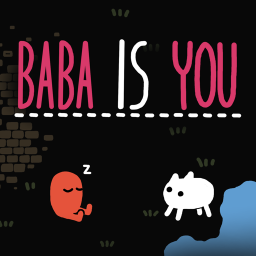 Mark Brown and Arvi Teikari, Baba Is You (Game Maker's Toolkit)13:38.
- Stick was cut for causing nightmare programming problems. Safe was cut because it was hazy and uninteresting.
- Edit out rules and puzzles that are unsurprising, redundant or contrived.
- Jonathan Blow cut Braid's weird turn-based world rule because its consequences were not surprising
 Mark Brown and Jonathan Blow, Braid and The Witness (Game Maker's Toolkit)5:29.
- Design by subtraction, removing the places where a mechanic feels bad. Mark Brown and Oliver Granlund, It Takes Two (Hazelight) (Game Maker's Toolkit)6:07.
- The sap gun can be shot anywhere, so Cody could sap the roof and force May to look straight up, or sap spots May could not reach.
- Much of the work was removing those cases while keeping the puzzle intact.
- The wasp cage puzzle went through several versions, from a giant nest with unreachable outside surfaces to a simpler layout.
- Kill your darlings and uncooperative best ideas. Mark Brown, Mind Over Magnet (Game Maker's Toolkit)13:32.
- Mark loved a fast, fluid platforming level, but it pulled the game away from its puzzle core. Platforming can stay only as a secondary element.
- The bob-omb and claw sequence in a Mario Maker 2 level failed on timing, camera and where the claw dropped things, so it was abandoned Mark Brown, Super Mario Maker 2 (Game Maker's Toolkit)7:01.
- Sakurai passed on Chrom because he duplicated sword fighters like Marth and Ike. He chose Robin, whose tomes and sword break from overuse Mark Brown, Super Smash Bros. (Game Maker's Toolkit)7:42.
- Cut rushed content rather than ship it half-made. Mark Brown, Mind Over Magnet (Game Maker's Toolkit)3:20.
- Dark Souls' Lost Izalith and the Bed of Chaos were cobbled together to meet the deadline. Mark says it might have been better to cut them.
2.5 Lock content and polish
Pick a moment to say no more content, then put the remaining time into making what exists better.
- Freeze levels, mechanics and characters at a set point. Mark Brown, Mind Over Magnet (Game Maker's Toolkit)9:25.
- Put all attention into polishing and playtesting. This stops new content from creating new problems late in the schedule.
- Locking frees you to fix small things, like a missing line of dialogue or a hint system testers never noticed.
- Mark allowed only one last small feature after locking Mind Over Magnet's content Mark Brown, Mind Over Magnet (Game Maker's Toolkit)1:00.
- Small plan changes are fine, but aimless noodling is the real problem. Worlds ballooned past 10 levels and Mark reined it in early Mark Brown, Mind Over Magnet (Game Maker's Toolkit)9:33.
- Alternate new-content days with a bug-fix day. Mark Brown, Mind Over Magnet (Game Maker's Toolkit)11:53.
- Inspired by Valve's approach to Portal, Mark works on new content Tuesday to Thursday, fixes bugs from a to-do list on Friday, then exports a build.
- New content starts rough and is polished through repeated testing. Early levels seen by many testers become seriously polished.
- Spend polish where it multiplies. Mark Brown, Mind Over Magnet (Game Maker's Toolkit)12:53.
- Additive polish, like unique art for one level, improves a single spot. Multiplicative polish, like Magnus's eyes following you, improves every level.
- Budget for it: Hazelight found a one week prototype could take far longer to make fun Mark Brown and Oliver Granlund, It Takes Two (Hazelight) (Game Maker's Toolkit)13:12.
- Polish in shippable chunks and finish the meta layer. Mark Brown, Mind Over Magnet (Game Maker's Toolkit)2:04.
- Equal worlds let Mark take just world one from rough draft to finished in a month. It also gave him a complete demo.
- A complete world is not demo-ready while saving does not work and the options menu is a placeholder.
- Mark spent a week on the options menu and added save and load before showing publishers or console makers Mark Brown, Mind Over Magnet (Game Maker's Toolkit)14:21.
2.6 Call it done and revisit your cuts
Finishing is your own decision, and the finished build shows which cuts you regret.
- Decide yourself that the game is done. Mark Brown, Mind Over Magnet (Game Maker's Toolkit)10:56.
- There is no external sign a game is finished, so you must accept unfinished content and unexplored ideas.
- The decision is scary, but it focuses the last weeks on polish and the game improves quickly.
- Mark set a release date of November 6th, 2024, with the final three months for polish, playtesting and marketing.
- Use the complete build to restore only the cuts you miss. Mark Brown, Mind Over Magnet (Game Maker's Toolkit)7:14.
- Mark missed the scissor gate, fixed its bugs and added a couple of levels using it.
- He also added a few cutscenes and a small twist after he saw the story was dull.
- Protect your development time from other work. Mark Brown, Mind Over Magnet (Game Maker's Toolkit)1:43.
- The longer Mark spent making videos, the harder it was to get back into game dev. He put the channel on the back burner.
- Mind Over Magnet sat untouched for six months after GDC.
2.7 Where designers disagree
Some advice depends on your genre, your team and when you plan.
- When to make the plan. Planning too early risks compromising creativity, but planning after you know what is fun gives every session a purpose Mark Brown, Mind Over Magnet (Game Maker's Toolkit)15:06.
- Mark made his plan too late and got more done in the month with the plan than at any other point.
- How big the world should be. A huge world only suits games where emptiness or scale is part of the design.
- Fallout 3's lonely wasteland works for its tone Mark Brown, Deus Ex: Mankind Divided (Eidos Montreal) (Game Maker's Toolkit)8:51.
- Otherwise go small and dense. Prague in Deus Ex: Mankind Divided is a smallish city with many enterable interiors, so there is always something to find Mark Brown, Deus Ex: Mankind Divided (Eidos Montreal) (Game Maker's Toolkit)2:23.
- No Man's Sky has 18 quintillion planets, but the same structures repeat across miles of sparse terrain Mark Brown, Deus Ex: Mankind Divided (Eidos Montreal) (Game Maker's Toolkit)1:13.
- How much to expand and how many play styles to offer. Both spread a small team thin.
- Banjo-Tooie grew on every axis at once and was less replayable than the original. Mark's lesson is to expand just a few elements Mark Brown, Banjo-Kazooie and Banjo-Tooie (Rare) (Game Maker's Toolkit)30:46.
- Each play style is almost a separate game. Machine Games admitted it spent less time on Wolfenstein's stealth, so guards spot you too easily Mark Brown, Spelunky (Game Maker's Toolkit)7:02.
- Puzzle games cost more per level because puzzles must be handcrafted and cannot repeat Mark Brown, Mind Over Magnet (Game Maker's Toolkit)3:04.
- How much of a big studio's method to copy. The intricately hand-crafted process at studios like Naughty Dog is not financially feasible for most companies Mark Brown and Evan Hill, The Last of Us Part II (Naughty Dog) (Game Maker's Toolkit)17:10.
- Copy the lessons that scale instead: improv as the characters, letting players miss things, guiding the eye with art and geometry, and mirroring the emotional journey.
Sources
Part of Prototyping, testing and accessibility in the growth library.