 Caddie
Chapter 21 of 26 · Why people play games
1 The bottom line
Name who the game is for, then tune every mechanic for them, even if that costs you other players. A game made better for one group can get worse for another, so the audience you pick decides what you build.
2 Key takeaways
- Decide who the game is for before you decide what to add. Making a game better for one group can make it worse for another.
- LocalThunk made Balatro for himself and is not interested in changing it for others, even a million of them
 Mark Brown, Game Maker's Toolkit7:04.
- LocalThunk made Balatro for himself and is not interested in changing it for others, even a million of them
- Aim for a few players who will love the game, not many who will merely like it. A strong, specific identity can matter more than broad appeal.
- For Neon White, Ben Esposito mixed Counter-Strike surf maps, Toonami anime, Dreamcast aesthetics and visual novel dialogue Mark Brown, Game Maker's Toolkit3:02.
- Dead Space 3 chased mass appeal, got the series' worst review scores and sold under a million at launch Mark Brown, Game Maker's Toolkit7:04.
- Set how much work your audience will do for the fantasy. Different players pay different prices to feel powerful.
- Insomniac made swinging easy because most players of Spider-Man want to feel like him the second they press start Mark Brown, Game Maker's Toolkit12:38.
- Make the novice's lazy way of playing fun, and hide depth for the fans. Ignoring novices risks making the game niche.
- Bayonetta lets you mash buttons and still pull off flashy attacks, while a dodge offset system and a huge move list reward combo-obsessed players Mark Brown, Game Maker's Toolkit8:32.
- Let your audience decide whose feedback you weigh. A clear audience tells you which playtesters match.
- Mark Brown ruled out Baba Is You experts as judges of Mind Over Magnet Mark Brown, Game Maker's Toolkit14:53.
you have to decide who this game is for, and tune your mechanics appropriately.
Mark Brown, Game Maker's Toolkit
2.1 Name your audience
Say who the game is for, and just as clearly who it is not.
- Judge the game against its target audience, not against everyone. Mark Brown, Game Maker's Toolkit6:06
- Insomniac's Spider-Man swinging was too simple for a hardcore fan who loves deep movement, but a blockbuster PS4 tie-in aims at more casual players.
- Holding one button, hidden physics assists and no risk of splatting into a skyscraper give those players the sensation of being Spider-Man.
- Describe your players by the games they already love. Mark Brown, Game Maker's Toolkit14:53
- Mind Over Magnet targets fans of gentle puzzle adventures like Toki Tori, Boxboy, Inside, Limbo and Portal.
- Choose playtesters who match that list, because a target audience keeps the design on track.
- Experts who finished Stephen's Sausage Roll and Baba Is You would find the game simple, and they are not the audience.
- Aim for a few players to love the game, not everyone to like it. Mark Brown, Game Maker's Toolkit3:02
- Ben Esposito's previous game, Donut County, was built to appeal to as many people as possible with simple controls.
- Horror and mass appeal are diametrically opposed, said Ben Wanat, and simplifying a series into action only guarantees angering its most hardcore fans, not higher sales Mark Brown, Game Maker's Toolkit12:37.
- Accept that a bold mechanic will divide players. Mark Brown, Game Maker's Toolkit9:40
- Snake Pass has as many people calling it a frustrating mess as calling it a fantastic challenge.
- Mark Brown calls this the price of trying something bold, and thinks it is worth paying because original games keep the medium fresh.
2.2 Tune the mechanics to how much work players will do
Skill demands, rewards and guidance should all fit the people you named.
- Check that your skill floor and skill ceiling match your audience. Mark Brown, Game Maker's Toolkit8:08
- Skill floor is the base skill needed to be effective, and skill ceiling is the most skill you can express.
- Spider-Man has a low floor and a low ceiling, and DOOM Eternal has a high floor and a high ceiling, so each locks out or underserves a group.
- Hugo Martin compares DOOM Eternal's earned fantasy to climbing a mountain rather than taking the elevator, but Troy Skinner says casual players with low tolerance for suffering are about 60% of the console market Mark Brown, Game Maker's Toolkit3:57.
- For casual players, reward timing instead of memorised sequences. Mark Brown, Game Maker's Toolkit7:22
- Assassin's Creed and Ryse: Son of Rome give bonus damage when you press attack just as the previous hit lands.
- This tests your timing and your reading of animations, unlike Bayonetta's memorised combos, which can overwhelm players.
- Choose symmetry when your players differ widely in skill and number.
 Mark Brown, Game Maker's Toolkit3:59
- Overcooked gives all chefs the same abilities and the same information, so it scales from one to four players.
- Roles are divided level by level, so less experienced players needn't handle tricky movement like dodging fireballs or slippery platforms.
- Tune guidance to the kind of player you expect. Mark Brown, Game Maker's Toolkit14:27
- Action fans get a well paced tour with constant progress, while explorers lose the joy of working things out and replayers fight the guidance by breaking sequence.
- Players who love a spaghetti mess of a map stop thinking about navigation when the way forward is always obvious, so Metroid Dread can feel patronising to them Mark Brown, Game Maker's Toolkit15:09.
- One-way doors also discourage those players from leaving the critical path, and Mark Brown ended Dread with a 39% completion rate because points of no return left him feeling trapped Mark Brown, Game Maker's Toolkit15:09.
- Getting the bombs early lets sequence breakers insta-kill Kraid in a secret cutscene.
2.3 Serve other players without watering down the core
Layer the game so newcomers get a good time and fans get depth.
- Put the technical version of a mechanic in optional content. Mark Brown, Game Maker's Toolkit12:01
- Spider-Man keeps its demanding swinging in optional bomb diffuser time challenges and drone chases, where your first go is abysmal but practice earns gold medals.
- In Super Mario Odyssey, simple jumps finish the game, while advanced manoeuvres find secret coin stashes, skip parts of levels and win golden Koopa races.
- Design for learners, players and masters in the same game. Mark Brown, Game Maker's Toolkit0:58
- Novices brute force encounters, intermediate players find combinations, and masters find techniques the tutorial never mentions.
- Vanquish lets you hunker behind walls and take pot shots, and Platinum producer Atsushi Inaba argues that ignoring these players risks becoming niche Mark Brown, Game Maker's Toolkit1:35.
- Hideki Kamiya says the entire first playthrough of The Wonderful 101 is something like a tutorial, and the real game begins the second time through Mark Brown, Game Maker's Toolkit6:23.
- A high skill ceiling also keeps multiplayer games alive, since advanced players can enjoy them for years Mark Brown, Game Maker's Toolkit7:23.
- Make depth easy to find wherever players express themselves. Mark Brown, Game Maker's Toolkit8:21
- Air-combos and dodge offsets in Bayonetta, and rocket slides and reload cancels in Vanquish, mean the more you put in, the more you get out.
- Make one genre primary and keep the others simple and skippable. Mark Brown, Game Maker's Toolkit2:45
- Uncharted puts its depth in combat, and its puzzles are not brain-busting palette cleansers.
- Let players ignore the extras: Shovel Knight: King of Cards has an optional card battler, and Yakuza lets you drop the management side after the tutorial Mark Brown, Game Maker's Toolkit2:54.
- Pair genres that ask for related skills, as XCOM does with tactical battles and a strategic base layer Mark Brown, Game Maker's Toolkit3:32.
- A multi-style game gets judged against games that do one thing brilliantly, so explain the value of choice. Deus Ex's parts pale next to Half-Life, Baldur's Gate and Thief, and Warren Spector said it would be doomed if judged by any single genre Mark Brown, Game Maker's Toolkit6:47.
2.4 Widen the audience with theme, tone and platform
If you want more players, change what the game says and where it lives, not only how it plays.
- Change theme and tone to reach people the genre ignores. Mark Brown, Game Maker's Toolkit0:55
- Iwatani saw arcades full of violent war and space shooters that mostly attracted men.
- He aimed Pac-Man at women and couples with cute graphics, bright colours and a non-violent theme about eating.
- A cited book puts the game's audience at 60 percent female.
- Simplify a complex genre to reach a wider, younger audience.
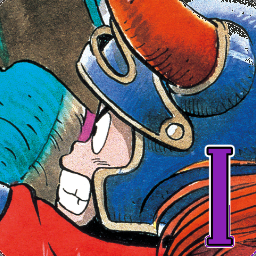 Game Maker's Toolkit8:27
- Dragon Quest lets you choose only your name, with preset stats and a straightforward levelling system.
- This came partly from Famicom hardware limits, but Yuji Horii also saw RPGs as niche and complex and wanted them to engage everyone.
- Bring a niche genre to the most accessible platform. Game Maker's Toolkit6:52
- RPGs found a big audience once computers entered the home with the Apple II, and in Japan once they reached the Famicom.
- Western RPGs stayed on computers and aimed at a more hardcore audience, so the genre split into two traditions Game Maker's Toolkit8:08.
2.5 Protect the core as you grow
Once you know your audience, say no to changes that pull the game away from them.
- Refuse features that undermine the core, even as options. Mark Brown, Game Maker's Toolkit7:24
- A score preview felt to LocalThunk like it encroached on the DNA of Balatro.
- Players would click it and never experience the game he meant to make.
- Do not chase mass appeal by diluting what made a franchise special. Mark Brown, Game Maker's Toolkit7:04
- EA wanted five million sales, so Dead Space moved from horror toward action, adding co-op, microtransactions and competitive multiplayer.
- Ben Wanat of Visceral admitted they pushed too far, after Dead Space 2 had sold roughly two million.
- In a sequel, meet and exceed expectations together. Mark Brown, Game Maker's Toolkit11:48
- Dead Space 2 refined the first game with better puzzles, more varied locations and free-flying zero-g sections.
- It also drifted away from horror, which leaves open how far a franchise can evolve before fans of the original no longer recognise it.
- Use genre labels so each audience can find its game.
 Mark Brown, Game Maker's Toolkit5:49
- Fans of turn-based, grid-based roguelikes feel let down by twitchy arcade games sharing the name, and players use genres to find similar games.
- Mark Brown suggests labels like roguelike platformer for Downwell, putting roguelike on the front of other genres.
2.6 Where designers disagree
Protecting one audience and welcoming many pull in different directions, and the right balance depends on your product.
- Some designers keep one pure style, while others combine two. Mark Brown, Game Maker's Toolkit16:54
- Active and passive design are different experiences, not better and worse, and dropping one wholesale loses what its fans love. Breath of the Wild's active design sits against Ocarina of Time's passive design.
- Resident Evil: Requiem alternates Grace's first-person horror with Leon's campy third-person action, so fans of both are served and the switch lets players blow off steam. Mark suggests Zelda could play its overworld like Breath of the Wild and its dungeons like classic Zelda Mark Brown, Game Maker's Toolkit17:38.
- Some designers refuse to serve other groups, while others fear becoming niche. Mark Brown, Game Maker's Toolkit7:04
- LocalThunk will not change Balatro for others, while Platinum's Atsushi Inaba warns that ignoring novices risks becoming niche Mark Brown, Game Maker's Toolkit1:35.
- The fit depends on the product. Balatro's score preview would change its core, while a layered brawler can serve novices and masters with the same mechanics.
Sources
Part of Why people play games in the growth library.