 Caddie
Chapter 25 of 26 · Progression, systems and story
1 The bottom line
Games tell stories best through what players do, so make rules, controls and level design carry theme, character and emotion. Interaction is the one language unique to games, so a story told through it feels earned, not borrowed from film.
2 Key takeaways
- Put the theme into what the player does, not only what they see. Players believe what they perform more than what they are told.
- Brothers puts one brother on each analogue stick, so the controller itself tells a story about siblings Mark Brown, Game Maker's Toolkit8:00.
- In The Last Guardian, who is weak and who is strong in a fight shows the bond Mark Brown, Game Maker's Toolkit3:42.
- Let the mechanic choose the story, not the other way round. A plot built for the rules stays coherent with them.
- Echoes of Wisdom made Zelda the hero because summoning monsters clashes with swordplay Mark Brown, Game Maker's Toolkit23:02.
- Obra Dinn's story needed people dying constantly, and Lucas Pope said making that work took a long time Mark Brown, Game Maker's Toolkit8:38.
- Make rules and difficulty carry the emotion. The player lives the theme instead of reading it.
- Celeste has Madeline stubbornly persist up a mountain, so the player must persist through hard platforming Mark Brown, Game Maker's Toolkit3:23.
- In Darkest Dungeon the only free resource is human lives, so the efficient strategy creates the guilt
 Mark Brown, Game Maker's Toolkit1:07.
- Shape the space so its layout tells the story. Players read a place as they cross it, with no lore dump.
- Dark Souls drops for history in the Depths and climbs for triumph at Anor Londo Mark Brown, Game Maker's Toolkit8:58.
- Metroid II empties the lower caves of enemies, so players infer the Metroids wiped out everything else Mark Brown, Game Maker's Toolkit11:46.
- Change the mechanics as the character changes. A fixed feeling cannot show growth.
- Rollerdrome shifts from surviving to dominating just as Kara starts to believe in herself Mark Brown, with Paul Rabbitte and Drew (Roll7)5:26.
Things like mechanics, rules, and systems you can poke at are the language of video games
Mark Brown, Game Maker's Toolkit6:55
2.1 Start from the theme and let it pick the mechanic
Choose the idea first, then find the rule that expresses it, and let that rule shape your hero and plot.
- Pair each mechanic with a theme. Hazelight's motto is to marry gameplay and story15:07, per Mark Brown and Oliver Granlund.
- In It Takes Two, magnets are about attraction and clockwork is about time, and the team calls these emotional levels.
- Watch Dogs: Legion says a revolution comes from the collective action of many, and its Play as Anyone feature expresses that directly Mark Brown, Game Maker's Toolkit1:32.
- Legion also extends the hack-anyone's-phone systems of earlier Watch Dogs games, so the idea has prior systems behind it Mark Brown, Game Maker's Toolkit1:32.
- Let the mechanic you want players to use decide the protagonist. Nintendo made Zelda the hero of Echoes of Wisdom instead of explaining why Link lost his sword Mark Brown, Game Maker's Toolkit23:02.
- Spawning monsters to fight for you would make little sense with a sword-and-shield hero.
- Per Satoru Iwata, Zelda stories exist to bring out the fun of the gameplay
 Mark Brown, Game Maker's Toolkit8:07.
- A Link Between Worlds has a mad artist villain because Link turns into a painting, and Ocarina of Time's time travel exists because Miyamoto wanted both child and teen Link Mark Brown, Game Maker's Toolkit8:07.
- Write the story and pick the setting to fit your systems. Obra Dinn's narrative was designed around its mechanic Mark Brown, Game Maker's Toolkit8:38.
- A setting can remove the need for artificial limits. In Obra Dinn and Her Story there is no witness to question, because the testimony was recorded years ago or everyone is dead Mark Brown, Game Maker's Toolkit8:05.
- Accept a contrived premise if it serves the mechanic. Obra Dinn has a magic pocket watch, and Her Story has a deliberately bad search that shows only five results from about 800 unlabelled clips Mark Brown, Game Maker's Toolkit6:50.
- The cost of fitting story to system is real, but it pays off in coherence.
- Give the player a goal that matches the genre your story borrows from. Players are trained to win, and that instinct can fight the drama Mark Brown, Game Maker's Toolkit9:17.
- A horror story needs victims, yet the Until Dawn game wants everyone to survive while the movie wants everyone to die.
- Brown's fix is to make the player the director, told up front who must live and who must die, then pushing characters into horror cliches to make it happen Mark Brown, Game Maker's Toolkit8:04.
2.2 Let controls and verbs carry character and relationship
| Ico | The Last Guardian | |
|---|---|---|
| Frail one | Yorda | The boy (you) |
| Invincible one | Ico (you) | Trico |
| Who saves whom | You save Yorda | Trico saves you |
| Player feels | Protective | Vulnerable, then grateful |
Use the inputs and actions the player already performs to show who the characters are and how they feel.
- Put the theme in the controller. Brothers gives you two characters at once, one on each analogue stick Mark Brown, Game Maker's Toolkit8:00.
- The interface and the emotional point become the same thing, a story about siblings told through the controller.
- The iOS port with virtual joysticks on a touchscreen loses that effect.
- Show a relationship through combat roles. Who is vulnerable and who is strong tells the player what the bond is Mark Brown, Game Maker's Toolkit3:42.
- In Ico, Yorda is frail and the invincible Ico saves her at every turn, so you feel like a protector.
- The Last Guardian flips it. The boy is weak and Trico is invincible, so you feel vulnerable alone and grateful when Trico saves you.
- The Last Guardian tells its story through mechanics, while The Last of Us largely borrows from film Mark Brown, Game Maker's Toolkit6:55.
- Build a bond with a character from verbs the player already knows. In BioShock's Fort Frolic you collaborate with Sander Cohen by killing targets, photographing them and placing the pictures Mark Brown, Game Maker's Toolkit8:35.
- BioShock has no dialogue system, so the relationship is made of shooting and the camera. You feel like a partner in his art project, not a target.
- Cohen hijacks your bathysphere and radio, fills the shops with his sculptures and dancers, sets your goals and authors almost all the audio diaries, so the whole level comes from one mind Mark Brown, Game Maker's Toolkit1:45.
- Let the player's hands act out the character's mind. In What Remains of Edith Finch you chop fish heads on the right while a daydream maze game on the left grows more imaginative Mark Brown, Game Maker's Toolkit13:36.
- Randomize the rote task. The fish have no predictable rhythm, so you cannot switch off your brain and the dual-task feeling stays Mark Brown, Game Maker's Toolkit12:58.
- In Psychonauts, Boyd is paranoid, so gameplay has you obsessing over how others see you, using disguises and a clairvoyance power-up Mark Brown, Game Maker's Toolkit3:15.
- Every Psychonauts level is set in a character's mind, so what it looks like and what you do there reveal personality Mark Brown, Game Maker's Toolkit7:03.
2.3 Make rules and difficulty deliver the theme
Tune challenge, cost and consequence so the player feels the theme in their own play.
- Match the difficulty to the story you are telling. A story about suffering and failure should be played through gameplay that makes the player suffer and fail Mark Brown, Game Maker's Toolkit3:23.
- If the world is a place of misery and death, enemies that die in one hit create dissonance.
- Outer Wilds runs on a clock, so the world moves on regardless of your choices, which suits a theme of cosmic indifference
 Mark Brown, Game Maker's Toolkit2:54.
- Embed morality in the core mechanics, not a karma meter. Darkest Dungeon never announces that you are the villain, and you find out by playing the loop Mark Brown, Game Maker's Toolkit1:35.
- Make the optimal strategy uncomfortable. The efficient play is to hire cheap recruits, snuff the torch for better loot, then dismiss the traumatized survivors Mark Brown, Game Maker's Toolkit1:07.
- Heroes who yelp and plead feel like vulnerable people, so the guilt comes from the player's own strategy Mark Brown, Game Maker's Toolkit1:07.
- Make the optimal strategy uncomfortable. The efficient play is to hire cheap recruits, snuff the torch for better loot, then dismiss the traumatized survivors
- Make players commit the act with their own hands, then show the cost. Carrying out a selfish act by hand is worse than picking it from a menu Mark Brown, Game Maker's Toolkit5:41.
- In This War of Mine you slowly and manually steal from an elderly couple.
- In Spec Ops chapter eight you fire mortars with the usual shooter verbs, then walk among the dead and see what you did Mark Brown, Game Maker's Toolkit1:33.
- Spec Ops was built to look like the shooters of 2012, a "cheeky rug pull" on players who expected more of the same Mark Brown, Game Maker's Toolkit5:17.
- Name the assumption you are attacking, such as that a choice always has a best option. Spec Ops choices usually have no good outcome Mark Brown, Game Maker's Toolkit5:43.
- Turn player death into a story beat. Talion is a gravewalker who can come back, so dying fuels revenge instead of a reload Mark Brown, Game Maker's Toolkit4:53.
- Monolith drew on Burnout, where crashing is not failure and you chase the rival who wrecked you.
- It also drew on the Call of Duty killcam, where you see your killer and hunt them. Much of the design tried to recreate multiplayer rivalry with AI characters.
2.4 Shape the layout and mood of the journey
Let direction, emptiness and tone in your levels say what the characters feel.
- Use direction to shape emotion. Descent suggests history, and ascent suggests triumph Mark Brown, Game Maker's Toolkit8:58.
- Dark Souls' Depths, Blighttown, Demon Ruins and Lost Izaleth keep dropping, giving a sense of stuff built on top of other stuff.
- Sen's Fortress and Anor Londo climb, giving rising action. Miyazaki wanted players to feel "Yes! I've made it."
- Silksong's pilgrimage from the depths of Pharloom to the heights of the Citadel is drawn on the map itself Mark Brown, Game Maker's Toolkit1:04:14.
- Small details support it, such as pay-per-use benches in the Underworks and enemies carrying fewer rosaries there Mark Brown, Game Maker's Toolkit1:04:14.
- Make the level's feel mirror the characters' arc. The Last of Us Part II museum moves from a perfect version of Joel and Ellie's bond to its dark side
 Mark Brown and Evan Hill, Naughty Dog12:52.
- The mood tracks the relationship, so the player feels the arc instead of watching it.
- Combat-style pick-ups in a space with no enemies are enough to make players tense up Mark Brown and Evan Hill, Naughty Dog13:26.
- Tell a story through what is missing or broken. In Metroid II, normal enemies thin out as you descend and there are none before the Queen Metroid Mark Brown, Game Maker's Toolkit11:46.
- The player infers they have gone deeper than anything else, or that the Metroids wiped out every other animal.
- Every other Chozo statue is preserved behind blast doors, but the one in the Metroid lair is smashed Mark Brown, Game Maker's Toolkit12:29.
- Samus Returns fills the path with dozens of standard enemies and loses the point.
- Use architecture, layout and scale to show who uses a space. The shape of a room or district tells you about the people who live there Mark Brown, Game Maker's Toolkit4:52.
- Arkane's Dishonored 2 Dust District uses verticality to put the working class beneath the powerful.
- In Dishonored 2's Clockwork Mansion, the divide between the space for normal people and the guts of the building matches the game's threshold for a supernatural assassin Dana Nightingale and David Di Giacomo, hosted by Mark Brown3:27.
- Aim for credible, not perfectly logical. The level only has to meet the player's basic expectations of how a space works Mark Brown, Game Maker's Toolkit5:50.
2.5 Make the world believable and readable
Link your places, characters and interface so the player believes the world and can piece it together.
- Link levels and characters so the world feels like one place. Banjo-Tooie's Grunty Industries dumps sewage into Jolly Roger's Lagoon, which supplies water to Glitter Gulch Mine Mark Brown, Game Maker's Toolkit24:34.
- Hollow Knight's Blue Lake above the City of Tears explains why it rains Mark Brown, Game Maker's Toolkit26:34.
- In Hollow Knight, Cloth, Quirrel and Tiso keep turning up around Hallownest, so the world does not revolve around the player.
- In The Forgotten City, about twenty citizens constantly gossip about one another, which makes a narrow but deep world Mark Brown, with quotes from Nick Pearce11:06.
- Stage clues so players deduce the story themselves. Posed props, notes and details make the player an active investigator, and players who only want shooting can ignore them Mark Brown, Game Maker's Toolkit2:26.
- BioShock uses signs, corpses and scribbles. The Fallout games pose skeletons to suggest how people died.
- Mankind Divided hints at a story with a telescope trained on Adam Jensen's door and a trashed painter's apartment Mark Brown, Game Maker's Toolkit3:18.
- Some threads are explicit and some subtle. In Gone Home, Sam's story is explicit and Uncle Oscar's is missed by many players Mark Brown, Game Maker's Toolkit4:01.
- Small spaces help the details sink in. In Mankind Divided's Prague you walk the same streets dozens of times Mark Brown, Game Maker's Toolkit3:08.
- Put maps, crafting and objectives in the world, not in menus. Metro Exodus tapes the map to a leather binder and makes the quest marker a compass on your wrist Mark Brown, Game Maker's Toolkit3:19.
- Crafting happens in real time, so a player who needs a medkit mid-battle must find a safe spot and hastily get their bag out Mark Brown, Game Maker's Toolkit3:40.
- Light chores, like changing gas mask filters and hand-cranking the headlamp, keep you thinking about your character, and punishment is only a momentary setback Mark Brown, Game Maker's Toolkit5:42.
- Nintendo turns mechanics into characters, such as Navi for z-targeting, Lakitu for the camera and the Luma for Mario's spin recharge Mark Brown, Game Maker's Toolkit7:21.
2.6 Change the mechanics over time and pace the story
Let the feel of play move with the character, and control when story beats arrive.
- Change the mechanics when the intended feeling changes. If a character grows from weak and naive to powerful, ask how to reflect that growth in the mechanics
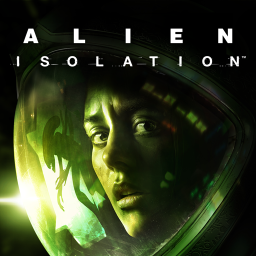 Mark Brown, Game Maker's Toolkit10:07.
- Rollerdrome starts as a game about surviving and, as players learn skills and unlock weapons, becomes one about dominating Mark Brown, with Paul Rabbitte and Drew (Roll7)5:26.
- Narratively that is when protagonist Kara starts to believe in herself, so mechanics and story move together Mark Brown, with Paul Rabbitte and Drew (Roll7)5:26.
- Deliver the main story outside a non-linear loop. Non-linear games struggle to give narrative in a satisfying order Mark Brown, Game Maker's Toolkit22:28.
- Mooncrash boots you back to your spaceship after a number of Kasma orders for the next chunk of story.
- Deathloop gives Juliana and Colt a short phone call every time you enter a level, so the snippets are ordered and frequent.
- Another route is to set the story in the past. The events cannot change, so it does not matter in what order the player finds them, as with Breath of the Wild's memories Mark Brown, Game Maker's Toolkit6:02.
- Break up intense play with a quiet story beat. Ori's Windtorn Ruins became a linear story sequence after the dungeon was cut, and the pacing worked because the player had just done intense burrow platforming Chris McEntee, interviewed by Mark Brown14:54.
- Pac-Man's cutscenes, which Iwatani called coffee breaks, let players rest their hands and added character, though colleagues called them a waste of resources Mark Brown, Game Maker's Toolkit9:22.
- Metroid II ends with a calm, enemy-free moment with a baby Metroid, giving the player time to reflect. Samus Returns adds a boss and a high tempo remix that drown it Mark Brown, Game Maker's Toolkit13:47.
- Check the whole story's pacing early. Levels grow as prototypes pile up, and the story can get diluted
 Mark Brown and Oliver Granlund, Hazelight13:54.
- It Takes Two's Tree was storyboarded as an hour but grew to nearly two, so a robot squirrel cutscene was added late to fill gaps.
- Variety helps in a cooperative game. Competitive minigames like the tug of war and a literal chessboard change the pace and suit the bickering couple Mark Brown and Oliver Granlund, Hazelight11:14.
2.7 Where designers disagree
Some choices depend on the promise your game makes to the player.
- Free order against story structure. Breath of the Wild's jumbled memories have no emotional escalation, dramatic timing, pace or arcs, so free ordering means the designer must find another way to build escalation Mark Brown, Game Maker's Toolkit15:56.
- Others value the freedom. Most open worlds force a linear main quest, giving a frantic search for a kidnapped son while you explore all of Boston Mark Brown, Game Maker's Toolkit1:04.
- Breath of the Wild requires only a tutorial and the Ganon fight, so the player's path becomes their own story Mark Brown, Game Maker's Toolkit1:04.
- A defined hero or a blank one. Dragon Quest used a predefined character, while Western RPGs let you role-play one you design
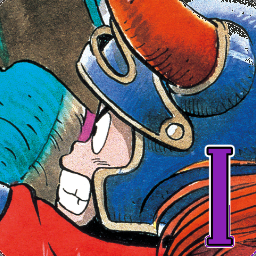 Game Maker's Toolkit12:31.
- Fallout 4's voiced hero and kidnapped-son backstory limited conversation and felt like unnecessary impositions on an open-ended RPG Mark Brown, Game Maker's Toolkit50:23.
- The Witcher 3 shows a very defined hero can work, because Geralt's fixed personality fits the structure of the game Mark Brown, Game Maker's Toolkit50:23.
- Should the protagonist speak? Dead Space 1 kept Isaac mute so players could step into his shoes Mark Brown, Game Maker's Toolkit7:47.
- Dead Space 2 makes Isaac talk for a fuller narrative, at the cost of mood, and his quips read like a second-rate Nathan Drake.
- Restraint applies to lore too. Dead Space 1 teased tiny details, while Dead Space 2 overexplains, even with a museum about it Mark Brown, Game Maker's Toolkit8:14.
Sources
Part of Progression, systems and story in the growth library.