 Caddie
Chapter 24 of 26 · Teaching players and designing levels
1 The bottom line
Introduce one mechanic at a time, and teach each one before anything depends on it. Players then never meet a challenge that needs a tool they have not learned, so even deep games stay easy to learn.
2 Key takeaways
- Open with very few decisions and let the game widen. Players learn more willingly once they are invested.
- Bruce Shelley described an inverted pyramid: one decision on turn one, then two, then dozens by the end Mark Brown, Game Maker's Toolkit3:38.
- Plants vs Zombies designer George Fan argued that willingness to learn grows with investment Mark Brown, Game Maker's Toolkit1:45.
- Teach every mechanic before a puzzle needs it. Puzzles built on unseen tricks fail, and order is the fix.
- Shuffle Portal's levels and the game becomes practically impossible for a new player to get into
 Mark Brown, Game Maker's Toolkit14:57.
- Shuffle Portal's levels and the game becomes practically impossible for a new player to get into
- Give each mechanic a teach, test, twist sequence. Each step builds on the one before it, so the player is always ready.
- Mind Over Magnet gives each mechanic a tutorial level, a puzzle, then a harder, subverted or paired level. Counted out for each mechanic, this filled nearly the whole game on paper Mark Brown, Game Maker's Toolkit6:17.
- Combine mechanics only after each has been taught alone. Known pieces turn combinations into decisions instead of confusion.
- Dead Space introduces slashers, lurkers, infectors and exploders early, then mixes them in later fights Mark Brown, Game Maker's Toolkit3:41.
- Plan the order on paper to spot jumps in difficulty. Gaps are easy to see in a plan and costly to find in a finished game.
- In Mind Over Magnet, levels one to three add a few things each, but level four adds orange buttons, green buttons, lasers and moving platforms at once Mark Brown, Game Maker's Toolkit9:02.
Now it's obvious that players need to be taught a mechanic before giving them a puzzle on that mechanic.
Mark Brown, Game Maker's Toolkit4:51
2.1 Start with the smallest version of your game
Open with few decisions and few tools, then let the game grow around the player.
- Start with one decision and add more as the player gets invested Mark Brown, Game Maker's Toolkit1:06:25.
- Civilization's first choice is where to found your first city. Next come two choices, what to build and where to send a unit.
- Because complexity grows from a single settler, the game can teach its systems bit by bit as you discover them Mark Brown, Game Maker's Toolkit3:38.
- Civilization also uses familiar themes like Egyptians and warplanes, which are easier to grasp than Protoss and Vespene gas.
- Hand over abilities one by one, and start with a simpler version of the hard one Mark Brown, Game Maker's Toolkit4:37.
- Giving pick up, throw, polarity and recall at the start makes Mind Over Magnet hard to learn. The plan is pick up first, then polarity, then recall, as Portal does.
- The first world gets Magnus, a big heavy magnet who cannot be thrown and climbs fields slowly. Throwing waits for the throwable magnet Max in world three Mark Brown, Game Maker's Toolkit8:11.
- Ori starts with only movement and jumping. Upgrades like extra jumps and new attacks then arrive across the whole campaign Mark Brown, Game Maker's Toolkit9:13.
- Do not hold back the thing the game is about Mark Brown, Game Maker's Toolkit7:34.
- Planning showed that world one had many levels with no magnet at all, so the magnet moved partway into world one.
- Mark compares it to playing Portal with 10 levels before you get the portal gun.
- The demo had only one red magnet, so some players found it too simple to be a core mechanic. Mark now thinks blue polarity, giant magnets and the recall magnet should arrive sooner Mark Brown, Game Maker's Toolkit15:45.
2.2 Map every mechanic to a level before you build
A simple plan shows the order of mechanics and the places where the curve jumps.
- Make one slide per puzzle and list the mechanics it uses Mark Brown, Game Maker's Toolkit8:46.
- Then you can reorder levels so mechanics are introduced slowly.
- After playtesting, track difficulty the same way.
- Mark keeps this puzzle bible in Apple's Keynote.
- Turn each jump in the bible into a brief for a new teaching level Mark Brown, Game Maker's Toolkit9:02.
- The new level introduces the mechanics needed next.
- Filling gaps adds levels and smooths the learning curve.
- Give every element a reason to exist at the player's current unlock point Mark Brown, Game Maker's Toolkit11:51.
- In the tractor beam tutorial, locked abilities meant the magnet could not return. Mark rejected a second button doing the same thing and explored a moving cover and a ladder.
- He rejected the ladder with the question "if you can just take the ladder up, why would you need the tractor beam?"
- Let each puzzle lean on tutorials and earlier revelations Mark Brown, Game Maker's Toolkit14:57.
- No puzzle stands alone, and each should ramp up in difficulty.
2.3 Give each mechanic a teach, test, twist sequence
Show the mechanic plainly, test it, then bend it, and only then move on.
- Give every mechanic three levels Mark Brown, Game Maker's Toolkit6:17.
- A tutorial level shows how it works, then an actual puzzle follows.
- The third level is harder, subverts the mechanic, or pairs it with another mechanic from the game.
- Make the intro puzzle's trick the element's basic function. Arvi Teikari finds these by exhaustively going through the meaningful interactions between elements
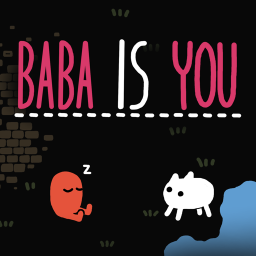 Mark Brown, Game Maker's Toolkit11:48.
- Baba Is You gives And, Open and Shut each a dedicated introductory puzzle. These levels go at the start of a world and act as the tutorial.
- Drill the current moves, then give the new one, then run a final exam Mark Brown, Game Maker's Toolkit0:57.
- The first half of Ori's Ginso Tree has platforming, a projectile puzzle, a combat arena and a key-collecting section. They use only double jump, wall jump and spirit flame, so the player is fluent before Bash arrives.
- After Bash, the same ideas return with it, and the escape tests mastery under pressure Mark Brown, Game Maker's Toolkit7:57.
- The pre-Bash half also sets a baseline, so the new move has a clear before and after.
- Teach a motif at once, then remix it Mark Brown, Game Maker's Toolkit1:49.
- The Minish Cap's Deepwood Shrine teaches pulling back a mushroom to spring across gaps. Then you pull it back only a certain amount, and finally the Gust Jar grabs mushrooms from afar.
- In the Forbidden Woods you throw a nut at a door, use bombs on another, carry a nut on a platform, then waft away a thorn-covered nut with a leaf. The player knows what to do and only works out how Mark Brown, Game Maker's Toolkit8:02.
- Wind Waker runs other motifs the same way: lit sticks in Dragon Roost, statues in Tower of the Gods, bouncing light in Earth Temple and springy platforms in Wind Temple.
- Escalate a new mechanic from simple tasks to a boss Mark Brown, Game Maker's Toolkit3:19.
- In Steam Gardens the Uproots first serve simple platforming tasks, then harder challenges, then a boss.
- In Tostarena you first mess with Bullet Bills in the ruins, guide them through harder sections, then use them against the boss in spirit.
2.4 Teach when it is safe and relevant
Put each lesson where the player needs it and can afford to make mistakes.
- Delay each lesson until the mechanic is relevant Mark Brown, Game Maker's Toolkit1:45.
- Teach the crafting menu when the player finds a crafting table. They can then play the real game almost immediately.
- Frostpunk starts you gathering resources by hand with a short tutorial. Turning on the generator brings the next tutorial, and so on through the campaign Mark Brown, Game Maker's Toolkit4:35.
- Mini Metro starts with almost no interface and adds the line menu, clock and passenger counter later. In Animal Crossing: New Horizons you buy the tool wheel from the shop Mark Brown, Game Maker's Toolkit4:55.
- Teach a hidden trick in an earlier level before a puzzle needs it Mark Brown, Game Maker's Toolkit4:51.
- A Mind Over Magnet level needed the player to turn the field off, leave the magnet on the far side, turn the field on and ride it.
- Every playtester failed it, even two professional puzzle designers who skipped it.
- After a reorder, a later level taught 'stash the magnet elsewhere' first, and players then solved it.
- Show how a mechanism changes the world before the hardest dungeon Mark Brown, Game Maker's Toolkit10:08.
- In Skyward Sword, two earlier areas explain the timeshift stones before the Sandship.
- By the ship, you know what happens in the past and present timelines.
- Never introduce a strange element at the very end of a level Mark Brown, Game Maker's Toolkit10:36.
- In Mega Man 6's Top Man stage, the tops appear only at the end. You learn their odd movement while jumping over bottomless pits.
- Introduce it earlier, where mistakes are safe.
2.5 Combine only what has been taught
Hard mixes feel fair when every ingredient has already been met alone.
- Mix mechanics in a hard section only after each was taught earlier Mark Brown, Game Maker's Toolkit7:31.
- Scorch 'n' Torch's first statue squishes an enemy, showing what would happen to Donkey Kong underneath.
- Each mechanic evolves through the level, from a tree losing its leaves to a row of trees burning down.
- Only then does it mix them, such as burning statues falling onto hot coals before a burning rope.
- Introduce enemies one at a time early, then combine them in the second half Mark Brown, Game Maker's Toolkit3:41.
- Dead Space gives each enemy type an organic tutorial in the first half.
- The second half mixes monsters in endless combinations to create dynamic encounters.
- Let harder puzzles test consequences, not new tools Mark Brown, Game Maker's Toolkit6:35.
- Braid and The Witness introduce their elements upfront with quick introductory puzzles.
- Later puzzles ask how known mechanics play out in different setups, combinations and layouts.
- Let solutions carry forward so knowledge builds Mark Brown, Game Maker's Toolkit9:58.
- Tiny Pond builds on Jelly Throne, where you control two characters at once.
- Its sacrifice solution returns in Unreachable Shores, where one Keke is sacrificed so the survivor can move on.
- The same ramp works for deduction. Riley & Rochelle starts with a few notes and simple logic puzzles, then later asks for many clues and multi-step deductions Mark Brown, Game Maker's Toolkit19:46.
2.6 Know when to stop adding
Too much on top of old mechanics, or too much to track at once, undoes the careful order.
- Stop before every button has a job and the player must memorise them Mark Brown, Game Maker's Toolkit7:43.
- By the end of Ori the player has charge jump, triple jump, wall jump, wall climbing, stomp, bash, charge burst, feather float and more.
- The moveset loses the elegance it had in the Ginso Tree, and half the challenge is remembering which button does what.
- The Definitive Edition adds a dash and a ball of light.
- Count how many things the player must track at once Mark Brown, Game Maker's Toolkit9:52.
- Star Fox Zero asks the player to track the ship and the reticule with gyro aiming, plus two screens with different information and sometimes different camera angles.
- Developers assumed players would get the hang of it, then added a training mode. A control scheme that needs training modes and an hour of play is a warning sign.
- Use a skill tree to trickle out moves and show growing power Mark Brown, Game Maker's Toolkit1:18.
- Unlocking moves over time stops players being overwhelmed by a full move set.
- Spending currency on a move makes them likely to use it, and the tree previews later abilities.
- God of War would overwhelm players if Kratos had all his powers at the start.
2.7 Where designers disagree
Some of these tactics fit only certain products, and some pull against each other.
- Teach everything upfront, or stretch lessons over the whole game?
- Braid and The Witness teach every element quickly at the start Mark Brown, Game Maker's Toolkit6:35.
- Ori stretches the learning curve across pretty much the entire game Mark Brown, Game Maker's Toolkit9:13.
- Simple start, or show the mechanic's depth early?
- Mark gave Mind Over Magnet a heavy, unthrowable first magnet to ease players in Mark Brown, Game Maker's Toolkit8:11.
- Yet demo players found a single red magnet too simple, so he thinks the variations should come sooner Mark Brown, Game Maker's Toolkit15:45.
- Do training levels solve complexity, or hide it?
- Star Fox Zero added training levels so players are not "completely confused" by the Gyrowing, Gravmaster or chicken walker. The chicken walker uses tank controls, which makes a safe introduction more necessary.
- Mark argues that needing this much training points to controls that are too complicated Mark Brown, Game Maker's Toolkit10:18.
- Can complexity be staged across playthroughs?
- Mark found Civilization V easy to learn because it had fewer systems. Its expansions then added religion and espionage on top of what he knew.
- He suggests an easy mode could be a stripped back version with fewer systems, but the game would have to be designed this way from the start Mark Brown, Game Maker's Toolkit8:46.
- Mortal Kombat 11 splits its tutorial into basics, advanced and strategy brackets. Each one kicks you out of the menu so you go and use what you learned Mark Brown, Game Maker's Toolkit6:35.
Sources
Part of Teaching players and designing levels in the growth library.