Zoelle Egner
Head of Marketing and Growth at Block Party; Airtable employee #11 who built its early marketing and customer success teams
Where to hear and read about Zoelle Egner1 episode or test
Zoelle Egner is Head of Marketing and Growth at Block Party and was Airtable's employee #11, where she built the early marketing and customer success teams. The thing most worth learning from her is how a tiny company earns trust at every touchpoint and over-invests in customers who become champions.
There's not a better evangelist than a person whose career you have materially helped to improve.
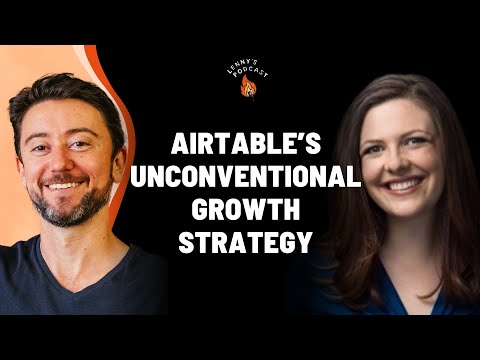
Lessons from Airtable’s unconventional growth strategy | Zoelle Egner
Zoelle Egner: the story and the lessons
1How Zoelle Egner got into tech and found Airtable
Egner mapped who held influence in tech before trying to enter it. She graduated into the recession and worked in nonprofit healthcare and big box retail. Being from the Bay Area, she power-mapped the industry's flocking patterns, meaning who held money and influence.
She drew diagrams from people's blog posts. In 2010 and 2011 she saw no obvious route in without coding. Retail taught her what dysfunction at great scale looks like.
She cold emailed a Y Combinator startup CEO and got hired on a second try. She chose a smaller, less glamorous company tied to the YC network, because a YC-backed startup on her résumé would make people take her seriously. She emailed the CEO while still in college.
She ignored his reply for two years. Then she wrote an apology email asking for a second chance, and he hired her.
Writing carried her from developer success to Box to Airtable. Box acquired the startup. Box had never had paying developers, so she built its developer success programs on seven-figure contracts. An unannounced, slightly spicy blog post about early non-technical work led to her running Box's social media.
She expected to be fired when PR called a meeting, and was offered the role instead. She stayed through the IPO, then found Airtable's beta on Hacker News, evangelized it and joined as employee 11.
2What Egner learned running VaccinateCA
Egner quit Airtable to help a volunteer group fill the vaccine information gap. A Patrick McKenzie tweet started it: call a pharmacist, put the answer on a map, and nobody has to repeat the call. Hundreds of volunteers in Discord, Zoom and Airtable built a database more complete than the federal one in most states, and it fed Google Maps.
She was brought in for PR, then left Airtable to work on it full time. It ran six months and was shut down once the official system caught up.
She launched a laughably small first version and pruned the rest. It began as a spreadsheet and phone calls. Within about four months it had an API and custom software covering the whole United States.
Her assumptions about oversight and tooling for data quality were wrong. A lighter setup was enough and let the team move faster as rules kept changing.
Egner repeated the same three talking points about 5,000 times. With a coalition of hundreds of volunteers, she and every board member repeated the same few points about why the work mattered.
"people will fill in the blanks with totally wild things if you don't continuously have that discipline of repeating yourself." She says a founder's real title is repeater in chief.
A simple cause brought people on board fast. The message was to pick up the phone and help save lives. People saw why it was useful and how they could help, and volunteers gained a sense of agency.
The tech was only phones, Discord and Airtable used like a spreadsheet. An authentic mission also makes hiring easier.
3How Egner made a tiny Airtable look established
She treats every customer touchpoint as adding or removing trust. A Slack contact assumed Airtable was about Slack's size, when it was an order of magnitude smaller. Six-figure customers were invited to lunch because the 15-person office would not have reassured them.
Early interview calls were taken in a hallway and on an internal patio reached through a window that kept breaking.
Egner polishes cheap things: emails, photos and sample content. Someone rereads every email, and she uses decent photos or illustrations. Sample content uses industry jokes, such as a Steve Jobs joke for designers, instead of 'Jane Doe' twelve times.
These touches show the product was built with the customer in mind and make people root for a small company. She still values moving fast in the early days.
She makes one person the avatar of quality with a light checklist. The owner can be the founder, a marketer, a product person or customer success. She wants people who spend an extra 15 minutes, not an extra week of QA.
Every blog post gets three fixed steps, every email is seen by one other person, and one person checks every link before send.
Egner bought remnant billboards to signal legitimacy to big buyers. Airtable placed them near fashion and media offices in New York. A buyer who passed one on the way to work was more likely to approve a six-figure budget.
Remnant inventory is unsold at the end of a buying cycle, and some spots cost in the low thousands of dollars. Twitter mocked them for naming no specific problem. She calls them useful but not the highest return.
She places a small company inside a bigger movement. In launches and press, she names the broader circle or trend the company belongs to, instead of talking only about its tiny corner.
This makes the company feel inevitable and reads as more sophisticated.
4How Airtable built champions before buyers
Egner went after champions first and buyers months later. The person building a base on a Friday was not the one with budget. After six months of use by 500 people, the pitch to IT became that it was time to pay now.
Airtable often grew from 10 to 1,000 people inside one company in a year. "we weren't initially looking for buyers we were looking for champions."
She found champions by emailing promising signups through a Slack feed. Each signup landed in Slack with title and company and a button to email them at once. Outreach took about two seconds.
Patterns across champions, such as five people with a content calendar use case, gave targets for ads, templates and hooks. The team never saw customer data, to protect trust. The emails and meetings did not scale forever.
Egner targeted the tinkerer persona through interests, not job titles. Airtable could be used for anything, and 'build your own software' put most people off. She targeted clusters of interests such as podcasts and personal development, then built lookalikes from what worked.
She says this Facebook approach worked well then but the platforms no longer allow it for B2B.
Hands-on help was needed because users designed their own workflows. Users had to learn how to assemble the blocks and also how to design software. A pretty base fails when it spreads to more people if it does not fit the wider organization.
The payoff was incredible retention and word of mouth. Airtable was never purely product-led, and customer success set up that motion.
She spent on high-quality swag for champions, such as AirPods. Airtable gave branded AirPods, not pens or stickers. Recipients showed them off and colleagues asked about them.
It cost a couple hundred dollars per champion who was already likely to pitch well. It is hard to measure but effective, and it worked better with more people in the office.
Egner kept an unofficial count of customers promoted for using Airtable. Customer success managers tracked it through their relationships. Promotions at major accounts signaled that large deals would close.
She admits it was a little embarrassing, but it worked really well.
Airtable had customer success before sales, and Egner says to act on it. Over-investing in helping one person per account made them an internal evangelist who helped everyone else.
She says to hire the function only if you will listen to it. "strongly consider investing in customer success if you are a B2B company early."
5Egner on marketing and customer success as one team
She sees marketing and customer success as the same job with different tactics. Both find customer needs, remove friction, show the product as the solution, encourage sharing and turn insight into resources. Marketing is scalable, while customer success works in the weeds with individuals.
A marketer unsure that the right people get genuine value should borrow more customer success methods.
Customer builds became templates and posts, a conveyor belt of proven content. Customer success helped customers build bases, then the team abstracted the core workflow into a template, not a copy of the customer's IP, plus blog posts.
Smaller companies could be sent the template instead of a custom build. The content already had proven demand.
6What Egner says to skip or rethink in marketing
She calls flashy sponsorships almost always wasted budget. Branded sessions draw few people. Her advice is to attend the event and skip the sponsorship, unless everyone in your industry gathers at that trade show.
She notes channel fit is real, so this may differ for some companies.
Egner elevates a profession instead of creating a software category. Getting a Gartner category is a huge lift with little return. Gainsight did it for customer success and many companies did it for DevOps.
"a job is an identity and people will fight for an identity." A category is just a budget line. She also cites Kathy Sierra's idea of making customers the superheroes.
She aims PR at hiring and cold outbound, not acquisition. A TechCrunch story may link to you once, in the 12th paragraph, and few readers click or remember to search later. Coverage helps in hiring and cold emails, where she controls distribution and can measure the effect.
PR with no goal mostly lifts internal morale.
Egner prefers a series of launches to one big launch. Audiences respond to novelty. She keeps the big annual launch, then follows with another one or two months later.
Each launch is a chance to show up in new communities that fit.
She admits Airtable's templates were not an acquisition engine. They helped users see how a horizontal product solves their problem and drove expansion inside companies. They were not optimized for search, unlike Zapier's programmatic SEO templates.
In hindsight, Airtable should have hired more people and done more. It had barely 50 people from 2015 until 2017 or 2018, and good opportunities were left on the table.
7How Egner picks companies, hires and talks to customers
She only works on great products whose value is not yet clear. She says she cannot do her job unless she can honestly tell a customer the product will solve their problem. After VaccinateCA she found no idea of her own she would bet everything on, so she went in-house at Block Party, which she had advised.
Block Party is an online safety company whose first product is anti-harassment and anti-spam tools for Twitter.
Egner tests customer-facing hires with a live Zapier build. She plays the customer, lays out a problem and has the candidate build it live. It shows how they handle an unfamiliar problem and how they learn.
Candidates may look things up online, and many dislike the exercise.
She says founders should phone customers on a regular schedule. Write a template email thanking users and asking for 10 minutes by phone. Query your database for people matching a hypothesis and send about three at a time.
"you get way more Instinct from unstructured conversation than you're gonna get from like sending them three things in a Google survey." Most of the process can be automated.

Lessons from Airtable’s unconventional growth strategy | Zoelle Egner
Zoelle Egner explains how Airtable, with about 15 to 50 people, punched above its weight through polish, trust signals, hands-on customer success and champion building. Airtable grew inside companies from 10 to 1,000 people in a year and sold six-figure deals, and she also covers what to skip, such as sponsorships, category creation and PR for its own sake.
Egner mapped who held influence in tech before trying to enter it. She graduated into the recession and worked in nonprofit healthcare and big box retail. Being from the Bay Area, she power-mapped the industry's flocking patterns, meaning who held money and influence.
She drew diagrams from people's blog posts. In 2010 and 2011 she saw no obvious route in without coding. Retail taught her what dysfunction at great scale looks like.
She cold emailed a Y Combinator startup CEO and got hired on a second try. She chose a smaller, less glamorous company tied to the YC network, because a YC-backed startup on her résumé would make people take her seriously. She emailed the CEO while still in college.
She ignored his reply for two years. Then she wrote an apology email asking for a second chance, and he hired her.
Writing carried her from developer success to Box to Airtable. Box acquired the startup. Box had never had paying developers, so she built its developer success programs on seven-figure contracts. An unannounced, slightly spicy blog post about early non-technical work led to her running Box's social media.
She expected to be fired when PR called a meeting, and was offered the role instead. She stayed through the IPO, then found Airtable's beta on Hacker News, evangelized it and joined as employee 11.
Egner quit Airtable to help a volunteer group fill the vaccine information gap. A Patrick McKenzie tweet started it: call a pharmacist, put the answer on a map, and nobody has to repeat the call. Hundreds of volunteers in Discord, Zoom and Airtable built a database more complete than the federal one in most states, and it fed Google Maps.
She was brought in for PR, then left Airtable to work on it full time. It ran six months and was shut down once the official system caught up.
She launched a laughably small first version and pruned the rest. It began as a spreadsheet and phone calls. Within about four months it had an API and custom software covering the whole United States.
Her assumptions about oversight and tooling for data quality were wrong. A lighter setup was enough and let the team move faster as rules kept changing.
Egner repeated the same three talking points about 5,000 times. With a coalition of hundreds of volunteers, she and every board member repeated the same few points about why the work mattered.
"people will fill in the blanks with totally wild things if you don't continuously have that discipline of repeating yourself." She says a founder's real title is repeater in chief.
A simple cause brought people on board fast. The message was to pick up the phone and help save lives. People saw why it was useful and how they could help, and volunteers gained a sense of agency.
The tech was only phones, Discord and Airtable used like a spreadsheet. An authentic mission also makes hiring easier.
She treats every customer touchpoint as adding or removing trust. A Slack contact assumed Airtable was about Slack's size, when it was an order of magnitude smaller. Six-figure customers were invited to lunch because the 15-person office would not have reassured them.
Early interview calls were taken in a hallway and on an internal patio reached through a window that kept breaking.
Egner polishes cheap things: emails, photos and sample content. Someone rereads every email, and she uses decent photos or illustrations. Sample content uses industry jokes, such as a Steve Jobs joke for designers, instead of 'Jane Doe' twelve times.
These touches show the product was built with the customer in mind and make people root for a small company. She still values moving fast in the early days.
She makes one person the avatar of quality with a light checklist. The owner can be the founder, a marketer, a product person or customer success. She wants people who spend an extra 15 minutes, not an extra week of QA.
Every blog post gets three fixed steps, every email is seen by one other person, and one person checks every link before send.
Egner bought remnant billboards to signal legitimacy to big buyers. Airtable placed them near fashion and media offices in New York. A buyer who passed one on the way to work was more likely to approve a six-figure budget.
Remnant inventory is unsold at the end of a buying cycle, and some spots cost in the low thousands of dollars. Twitter mocked them for naming no specific problem. She calls them useful but not the highest return.
She places a small company inside a bigger movement. In launches and press, she names the broader circle or trend the company belongs to, instead of talking only about its tiny corner.
This makes the company feel inevitable and reads as more sophisticated.
Egner went after champions first and buyers months later. The person building a base on a Friday was not the one with budget. After six months of use by 500 people, the pitch to IT became that it was time to pay now.
Airtable often grew from 10 to 1,000 people inside one company in a year. "we weren't initially looking for buyers we were looking for champions."
She found champions by emailing promising signups through a Slack feed. Each signup landed in Slack with title and company and a button to email them at once. Outreach took about two seconds.
Patterns across champions, such as five people with a content calendar use case, gave targets for ads, templates and hooks. The team never saw customer data, to protect trust. The emails and meetings did not scale forever.
Egner targeted the tinkerer persona through interests, not job titles. Airtable could be used for anything, and 'build your own software' put most people off. She targeted clusters of interests such as podcasts and personal development, then built lookalikes from what worked.
She says this Facebook approach worked well then but the platforms no longer allow it for B2B.
Hands-on help was needed because users designed their own workflows. Users had to learn how to assemble the blocks and also how to design software. A pretty base fails when it spreads to more people if it does not fit the wider organization.
The payoff was incredible retention and word of mouth. Airtable was never purely product-led, and customer success set up that motion.
She spent on high-quality swag for champions, such as AirPods. Airtable gave branded AirPods, not pens or stickers. Recipients showed them off and colleagues asked about them.
It cost a couple hundred dollars per champion who was already likely to pitch well. It is hard to measure but effective, and it worked better with more people in the office.
Egner kept an unofficial count of customers promoted for using Airtable. Customer success managers tracked it through their relationships. Promotions at major accounts signaled that large deals would close.
She admits it was a little embarrassing, but it worked really well.
Airtable had customer success before sales, and Egner says to act on it. Over-investing in helping one person per account made them an internal evangelist who helped everyone else.
She says to hire the function only if you will listen to it. "strongly consider investing in customer success if you are a B2B company early."
She sees marketing and customer success as the same job with different tactics. Both find customer needs, remove friction, show the product as the solution, encourage sharing and turn insight into resources. Marketing is scalable, while customer success works in the weeds with individuals.
A marketer unsure that the right people get genuine value should borrow more customer success methods.
Customer builds became templates and posts, a conveyor belt of proven content. Customer success helped customers build bases, then the team abstracted the core workflow into a template, not a copy of the customer's IP, plus blog posts.
Smaller companies could be sent the template instead of a custom build. The content already had proven demand.
She calls flashy sponsorships almost always wasted budget. Branded sessions draw few people. Her advice is to attend the event and skip the sponsorship, unless everyone in your industry gathers at that trade show.
She notes channel fit is real, so this may differ for some companies.
Egner elevates a profession instead of creating a software category. Getting a Gartner category is a huge lift with little return. Gainsight did it for customer success and many companies did it for DevOps.
"a job is an identity and people will fight for an identity." A category is just a budget line. She also cites Kathy Sierra's idea of making customers the superheroes.
She aims PR at hiring and cold outbound, not acquisition. A TechCrunch story may link to you once, in the 12th paragraph, and few readers click or remember to search later. Coverage helps in hiring and cold emails, where she controls distribution and can measure the effect.
PR with no goal mostly lifts internal morale.
Egner prefers a series of launches to one big launch. Audiences respond to novelty. She keeps the big annual launch, then follows with another one or two months later.
Each launch is a chance to show up in new communities that fit.
She admits Airtable's templates were not an acquisition engine. They helped users see how a horizontal product solves their problem and drove expansion inside companies. They were not optimized for search, unlike Zapier's programmatic SEO templates.
In hindsight, Airtable should have hired more people and done more. It had barely 50 people from 2015 until 2017 or 2018, and good opportunities were left on the table.
She only works on great products whose value is not yet clear. She says she cannot do her job unless she can honestly tell a customer the product will solve their problem. After VaccinateCA she found no idea of her own she would bet everything on, so she went in-house at Block Party, which she had advised.
Block Party is an online safety company whose first product is anti-harassment and anti-spam tools for Twitter.
Egner tests customer-facing hires with a live Zapier build. She plays the customer, lays out a problem and has the candidate build it live. It shows how they handle an unfamiliar problem and how they learn.
Candidates may look things up online, and many dislike the exercise.
She says founders should phone customers on a regular schedule. Write a template email thanking users and asking for 10 minutes by phone. Query your database for people matching a hypothesis and send about three at a time.
"you get way more Instinct from unstructured conversation than you're gonna get from like sending them three things in a Google survey." Most of the process can be automated.

 Airtable