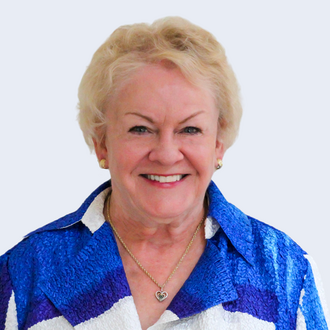
Tish Rabe
Children's author of more than 200 books, including Dr. Seuss Cat in the Hat Learning Library titles
Where to hear and read about Tish Rabe1 episode or test

Tish Rabe is a children's author of more than 200 books, who went from singing on Sesame Street to writing Dr. Seuss Cat in the Hat Learning Library titles. The habit most worth copying is writing the last page first, then building the story backward and testing it on a fresh reader.
the final page is before you shut the book. It's before they go to sleep.
How to Write For Kids (Tish Rabe Interview)
Tish Rabe: the story and the lessons
1How Tish Rabe went from Sesame Street singer to Dr. Seuss author
Rabe's first book grew out of a singing job on Sesame Street. She arrived in New York with a vocal performance degree, expecting stardom within a year. Her first job was hiring jingle singers for the Muppets, then a composer asked her to sing, and her first big song was I Love Trash with Oscar.
Sesame Street had no books then, so she pitched one built on the day she broke her grandmother's big teapot. It became Bert in the Broken Teapot in 1986.
One book led to work for Big Bird, Clifford, Curious George and more. After the teapot book she wrote for Big Bird, Clifford, Curious George and Bear in the Big Blue House, and also for Disney.
Her first book was prose. Since she began writing Seuss, everything she writes rhymes.
She started writing new Dr. Seuss books the year after he died. Seuss died in 1991 and Rabe began on his books in 1992. She has written 53 Cat in the Hat books, including about 20 Learning Library titles for Random House, starting with Is a Camel a Mammal? and Fine Feathered Friends.
Audrey Geisel, Seuss's widow, phoned her to write Oh, Baby, the Places You'll Go. She read all 42 of his books and put a snippet from each into hers.
Being read to as a child trained her ear. Her mother, a newspaper editor, read to her daily, including Beatrix Potter and the original Oz books, which had few pictures. Her mother's voice supplied the images.
Her brothers are convinced her career comes from that nightly reading. She still remembered The Cat in the Hat because her mother read it to her.
Rabe started her own company in 2020 and now handles words and pictures. Running her own press taught her that the choice of illustrator, format and distribution matters as much as the words.
Before that, authors and illustrators rarely met. She has never spoken to her Seuss illustrator.
2Tish Rabe's method of building a story backward from the ending
Rabe writes the ending first and builds the story backward. She learned this from Sesame Street writers' meetings, where comic skits were built in reverse, punch line first. For Kindness Is Caring, Friendship Is Sharing she wrote the closing lines before page one.
Once the ending is fixed, the middle only has to supply the problem that earns it. In that book the problem is a hungry lion.
Rabe treats the last page as what a child keeps. A children's book is finished right before bed, play or school, so the final page leaves the lasting impression. She wrote the last page of Sometimes Apart, Always in My Heart for military families who are apart.
It ends with Daddy Bear saying goodbye is hard, but the next hug will mean he knows he is home.
Every Rabe story runs in three beats. The beats are a lovely beginning, a "lion, oh no" middle and a peaceful end. A calm start and a happy finish need a threat in between.
Rabe makes readers care about the character before trouble arrives. Kids meet Ammani, learn she lives in Africa and watch her give flowers to a giraffe and a baby elephant before the lion shows up. Without that investment the danger means nothing.
In the military book the bear opens in his own voice, saying he has a story to share about his family.
Rabe chooses names early and searches them to avoid clashes. Ammani means peace in Swahili. For Mystic by the Sea every S name for the seagulls was taken, even Sandy Seagull, so a meeting suggestion of M for Mystic gave Mason, Marina, Marco and Misty.
Kids knew Ammani's name before the book was opened, which is why she thinks a name kids like is worth the effort.
Rabe writes the hero older than the reader and fits words to age. She writes for two bands, 0 to 4 and 4 to 7, because kids look up to older kids. Ammani is a seven-year-old.
Toddler books get very few words a page, such as her bedtime book Sweet Dreams Ahead, Time for Bed. Older readers can take about four lines a page, or eight on a spread.
Rabe uses each page turn as a beat of suspense. A page weighs far more in a 24-page picture book than in a novel. The lion page makes readers wonder whether the characters will make it.
The art can hint at what comes next. In the military book the dog and girl hear something outside, and she calls that image the most powerful in the book.
Rabe does not write sad books and always resolves them. She says the world is tough, so she keeps her stories inspiring, with an ending where everyone is safe. Soldiers were reading her Seuss books to their kids, which led her to write about military families.
She chose animal heroes so no child is left out, since 24 pages of real kids could not cover every child.
3Tish Rabe's rules for rhyme, rhythm and songs
Rabe matched Dr. Seuss's rhythm exactly when writing as him. The last two lines of the opening of There Is No Place Like Space come straight from the original Cat in the Hat. The rhythm is the one in On the fifteenth of May in the jungle of Nool.
Rabe accepts a slant rhyme when the story needs a specific word. Seuss used pure rhymes like cool and pool, but she lets go and home stand together. The last page of her military book had to end on home, and nothing rhymes with home.
Seuss would not have allowed barn and farm, she notes.
Rabe invents a word or place when she is cornered. Seuss made up the Van Vlex to rhyme with necks and next. Her 42-page pets book is set in the invented town of Gerpletes, so pets always has a rhyme.
The mayor of Gerpletes knows a lot about caring for pets.
Rabe's fast rhyming comes from forty years of practice. She once typed words into a program called A Million Gajillion Rhymes. Now words chain in her head: might, sight, fight, slight, kite.
Rabe sets new words to tunes everyone already knows. Public-domain tunes need no printed notes or lyrics. Three teachers in Uganda all knew Twinkle, Twinkle, Little Star, so she writes many songs to it and has written about 15 to that tune.
She used public-domain melodies for two Teenage Mutant Ninja Turtle music videos in 1993, including I've Been Working on the Railroad.
Rabe writes lyrics first and trades melodies with a composer. She and one composer friend have written about 65 songs together. The composer sends a melody, she sings it back, and they trade versions.
As a trained singer she puts a song in every book, including a lullaby that starts Night is here, today is done.
Rhyme does not travel, so Rabe writes plain translations. She does not rhyme her books in other languages because it is a lot of work. A translated opening would just say it was a beautiful day and Ammani and her mother were outside.
A friend noted that the migration rhyme loses meaning, since Birds of a feather flock together reads differently in translation.
4How Tish Rabe drafts, edits and gets unstuck
Rabe rewrites by hand many times before anyone sees a draft. She works in spiral notebooks and keeps paper in her pocketbook, her car and by her bed. She cites a Chinese proverb that lines on paper are worth a million dreams, because you forget by morning.
She once lost an idea to rename a seagull.
Rabe insists every writer hire a professional editor. Her editor comes from Sesame Street and reads everything she writes, even after more than 200 books. She says it is impossible to write a book like this without input from somebody else.
Rabe has a fresh reader read the draft aloud to her. A writer who is too close to the text misses stumbles. Her kids tripped on words in a Dr. Seuss draft, so she changed them: family can be read two ways, and meteor is hard for kids.
She says the test works for essays and articles too.
Rabe writes words first and leaves art notes under each page. She types a note describing what she sees, and the illustrator often has a different idea. She suggested Daddy Bear eating breakfast, and the artist had him pack a backpack for work instead.
She plans which scenes get a single page and which get a spread. The Mystic aquarium and seaport got spreads, while the village shops got one page.
Rabe fixes problems in black and white sketches, where changes are cheap. The illustrator sketches every page before spending time on color. Pieces get moved, and a compass rose was added to a map at this stage.
She says writers must learn to read the sketches and imagine the final color.
Rabe turns cover characters to face into the book. Characters on a cover face toward the page turn, because flipped around they would pull the reader out the wrong side. Advertisers do the same with eyes that point at the call to action.
In the Alaska book, Alaska looks straight at the reader to say hello while the family looks at each other.
Rabe starts science books from the simplest children's books on the topic. She borrowed every children's book on a topic from the library, put the simplified science in notebooks, then wrote verse. Experts approved each Seuss science book.
When Pluto lost planet status, the pizza mnemonic became nickels, and the artist only swapped the boxes rather than redrawing the picture.
Rabe sets a private deadline a month early. She gets writer's block "100%" of the time. A HarperCollins book due in June is due in May in her head, which gives her a buffer for when she cannot think of anything.
Rabe stops forcing it when stuck and steps away. She works on something else or takes two days off, and the idea comes back and makes sense. She uses Perell's rule of three B's: bed, bath and bus, and likes the bus most.
Rabe trusts an idea will come and watches what is around her. The Mystic Chamber of Commerce asked for a 100th anniversary book with six months to do it. Four seagulls flew over the membership chair's head in a coffee shop, and the idea came at once.
She cut it to 16 pages instead of 24 and finished in seven months. She says she would never do it again.
5Tish Rabe on the business of children's books and self-publishing
Rabe writes many titles because each book earns little. Her books cost $9.99 to $12.99, while some adult books cost $28.50. She writes as many books as she can so no single one carries the business.
Goodnight Moon dates from the 1940s and The Cat in the Hat from the 1950s, so the books last.
Rabe's pay comes as a flat fee or twice-yearly royalties. A flat fee means the publisher takes the book and sends five copies. Seuss royalties arrive in February and August in an amount she cannot predict.
Her husband says August dinner is either hot dogs or steakhouse.
Old work can pay again years later. Paramount recently paid her well to use one of her 1993 Ninja Turtles songs in a movie trailer, and gave her an on-screen credit she did not expect.
She tells her family these rights stick around forever.
Rabe fits the illustrator's style to the story. Jill Guile's soft, sweet style suits a bedtime book but would not suit a Teenage Mutant Ninja Turtles book. For the Rotary book set in Africa she asked two New York agencies for an African artist and got Mocha.
Mocha's first sketches matched the little girl zebra she had pictured.
Rabe warns against illustrating your own book if you want a publisher. Editors frown on submissions that pair words with pictures. They may love the words and hate the pictures, or the other way around.
Submitting is hard enough, and a bound pair adds one more risk.
Rabe chooses a format for what the book needs to show. Square 8 by 8 inch books feel cute to little kids and more grown up than 7.5 by 9. The square also allows an 18 inch spread, which let the artist show the other zebras coming to help the frightened heroine.
Her soft cover books are printed in New Haven, Connecticut, near her home.
Rabe says not to translate before checking the market. Many people ask for a Spanish edition, but distribution is hard enough in English. She says to make sure there is interest and distribution channels first.
She calls translation the biggest business landmine. Some songs are sung in Spanish by friends on her website to reach other cultures.
Rabe gets place books' content from the people who know the place. For the Central Park book, a trained park greeter kept hearing what do I do in 843 acres? The Conservancy helped pick 24 things to see.
A tip asks families to leave balloons home because birds get tangled in the strings, which she did not know herself.

How to Write For Kids (Tish Rabe Interview)
Tish Rabe explains how four decades of writing for Sesame Street, Disney and Dr. Seuss taught her to build a story backward from its final page and to treat every page turn as a beat. The habit worth hearing is writing the ending first, then testing the draft by having a fresh reader read it aloud to you.
Rabe's first book grew out of a singing job on Sesame Street. She arrived in New York with a vocal performance degree, expecting stardom within a year. Her first job was hiring jingle singers for the Muppets, then a composer asked her to sing, and her first big song was I Love Trash with Oscar.
Sesame Street had no books then, so she pitched one built on the day she broke her grandmother's big teapot. It became Bert in the Broken Teapot in 1986.
One book led to work for Big Bird, Clifford, Curious George and more. After the teapot book she wrote for Big Bird, Clifford, Curious George and Bear in the Big Blue House, and also for Disney.
Her first book was prose. Since she began writing Seuss, everything she writes rhymes.
She started writing new Dr. Seuss books the year after he died. Seuss died in 1991 and Rabe began on his books in 1992. She has written 53 Cat in the Hat books, including about 20 Learning Library titles for Random House, starting with Is a Camel a Mammal? and Fine Feathered Friends.
Audrey Geisel, Seuss's widow, phoned her to write Oh, Baby, the Places You'll Go. She read all 42 of his books and put a snippet from each into hers.
Being read to as a child trained her ear. Her mother, a newspaper editor, read to her daily, including Beatrix Potter and the original Oz books, which had few pictures. Her mother's voice supplied the images.
Her brothers are convinced her career comes from that nightly reading. She still remembered The Cat in the Hat because her mother read it to her.
Rabe started her own company in 2020 and now handles words and pictures. Running her own press taught her that the choice of illustrator, format and distribution matters as much as the words.
Before that, authors and illustrators rarely met. She has never spoken to her Seuss illustrator.
Rabe writes the ending first and builds the story backward. She learned this from Sesame Street writers' meetings, where comic skits were built in reverse, punch line first. For Kindness Is Caring, Friendship Is Sharing she wrote the closing lines before page one.
Once the ending is fixed, the middle only has to supply the problem that earns it. In that book the problem is a hungry lion.
Rabe treats the last page as what a child keeps. A children's book is finished right before bed, play or school, so the final page leaves the lasting impression. She wrote the last page of Sometimes Apart, Always in My Heart for military families who are apart.
It ends with Daddy Bear saying goodbye is hard, but the next hug will mean he knows he is home.
Every Rabe story runs in three beats. The beats are a lovely beginning, a "lion, oh no" middle and a peaceful end. A calm start and a happy finish need a threat in between.
Rabe makes readers care about the character before trouble arrives. Kids meet Ammani, learn she lives in Africa and watch her give flowers to a giraffe and a baby elephant before the lion shows up. Without that investment the danger means nothing.
In the military book the bear opens in his own voice, saying he has a story to share about his family.
Rabe chooses names early and searches them to avoid clashes. Ammani means peace in Swahili. For Mystic by the Sea every S name for the seagulls was taken, even Sandy Seagull, so a meeting suggestion of M for Mystic gave Mason, Marina, Marco and Misty.
Kids knew Ammani's name before the book was opened, which is why she thinks a name kids like is worth the effort.
Rabe writes the hero older than the reader and fits words to age. She writes for two bands, 0 to 4 and 4 to 7, because kids look up to older kids. Ammani is a seven-year-old.
Toddler books get very few words a page, such as her bedtime book Sweet Dreams Ahead, Time for Bed. Older readers can take about four lines a page, or eight on a spread.
Rabe uses each page turn as a beat of suspense. A page weighs far more in a 24-page picture book than in a novel. The lion page makes readers wonder whether the characters will make it.
The art can hint at what comes next. In the military book the dog and girl hear something outside, and she calls that image the most powerful in the book.
Rabe does not write sad books and always resolves them. She says the world is tough, so she keeps her stories inspiring, with an ending where everyone is safe. Soldiers were reading her Seuss books to their kids, which led her to write about military families.
She chose animal heroes so no child is left out, since 24 pages of real kids could not cover every child.
Rabe matched Dr. Seuss's rhythm exactly when writing as him. The last two lines of the opening of There Is No Place Like Space come straight from the original Cat in the Hat. The rhythm is the one in On the fifteenth of May in the jungle of Nool.
Rabe accepts a slant rhyme when the story needs a specific word. Seuss used pure rhymes like cool and pool, but she lets go and home stand together. The last page of her military book had to end on home, and nothing rhymes with home.
Seuss would not have allowed barn and farm, she notes.
Rabe invents a word or place when she is cornered. Seuss made up the Van Vlex to rhyme with necks and next. Her 42-page pets book is set in the invented town of Gerpletes, so pets always has a rhyme.
The mayor of Gerpletes knows a lot about caring for pets.
Rabe's fast rhyming comes from forty years of practice. She once typed words into a program called A Million Gajillion Rhymes. Now words chain in her head: might, sight, fight, slight, kite.
Rabe sets new words to tunes everyone already knows. Public-domain tunes need no printed notes or lyrics. Three teachers in Uganda all knew Twinkle, Twinkle, Little Star, so she writes many songs to it and has written about 15 to that tune.
She used public-domain melodies for two Teenage Mutant Ninja Turtle music videos in 1993, including I've Been Working on the Railroad.
Rabe writes lyrics first and trades melodies with a composer. She and one composer friend have written about 65 songs together. The composer sends a melody, she sings it back, and they trade versions.
As a trained singer she puts a song in every book, including a lullaby that starts Night is here, today is done.
Rhyme does not travel, so Rabe writes plain translations. She does not rhyme her books in other languages because it is a lot of work. A translated opening would just say it was a beautiful day and Ammani and her mother were outside.
A friend noted that the migration rhyme loses meaning, since Birds of a feather flock together reads differently in translation.
Rabe rewrites by hand many times before anyone sees a draft. She works in spiral notebooks and keeps paper in her pocketbook, her car and by her bed. She cites a Chinese proverb that lines on paper are worth a million dreams, because you forget by morning.
She once lost an idea to rename a seagull.
Rabe insists every writer hire a professional editor. Her editor comes from Sesame Street and reads everything she writes, even after more than 200 books. She says it is impossible to write a book like this without input from somebody else.
Rabe has a fresh reader read the draft aloud to her. A writer who is too close to the text misses stumbles. Her kids tripped on words in a Dr. Seuss draft, so she changed them: family can be read two ways, and meteor is hard for kids.
She says the test works for essays and articles too.
Rabe writes words first and leaves art notes under each page. She types a note describing what she sees, and the illustrator often has a different idea. She suggested Daddy Bear eating breakfast, and the artist had him pack a backpack for work instead.
She plans which scenes get a single page and which get a spread. The Mystic aquarium and seaport got spreads, while the village shops got one page.
Rabe fixes problems in black and white sketches, where changes are cheap. The illustrator sketches every page before spending time on color. Pieces get moved, and a compass rose was added to a map at this stage.
She says writers must learn to read the sketches and imagine the final color.
Rabe turns cover characters to face into the book. Characters on a cover face toward the page turn, because flipped around they would pull the reader out the wrong side. Advertisers do the same with eyes that point at the call to action.
In the Alaska book, Alaska looks straight at the reader to say hello while the family looks at each other.
Rabe starts science books from the simplest children's books on the topic. She borrowed every children's book on a topic from the library, put the simplified science in notebooks, then wrote verse. Experts approved each Seuss science book.
When Pluto lost planet status, the pizza mnemonic became nickels, and the artist only swapped the boxes rather than redrawing the picture.
Rabe sets a private deadline a month early. She gets writer's block "100%" of the time. A HarperCollins book due in June is due in May in her head, which gives her a buffer for when she cannot think of anything.
Rabe stops forcing it when stuck and steps away. She works on something else or takes two days off, and the idea comes back and makes sense. She uses Perell's rule of three B's: bed, bath and bus, and likes the bus most.
Rabe trusts an idea will come and watches what is around her. The Mystic Chamber of Commerce asked for a 100th anniversary book with six months to do it. Four seagulls flew over the membership chair's head in a coffee shop, and the idea came at once.
She cut it to 16 pages instead of 24 and finished in seven months. She says she would never do it again.
Rabe writes many titles because each book earns little. Her books cost $9.99 to $12.99, while some adult books cost $28.50. She writes as many books as she can so no single one carries the business.
Goodnight Moon dates from the 1940s and The Cat in the Hat from the 1950s, so the books last.
Rabe's pay comes as a flat fee or twice-yearly royalties. A flat fee means the publisher takes the book and sends five copies. Seuss royalties arrive in February and August in an amount she cannot predict.
Her husband says August dinner is either hot dogs or steakhouse.
Old work can pay again years later. Paramount recently paid her well to use one of her 1993 Ninja Turtles songs in a movie trailer, and gave her an on-screen credit she did not expect.
She tells her family these rights stick around forever.
Rabe fits the illustrator's style to the story. Jill Guile's soft, sweet style suits a bedtime book but would not suit a Teenage Mutant Ninja Turtles book. For the Rotary book set in Africa she asked two New York agencies for an African artist and got Mocha.
Mocha's first sketches matched the little girl zebra she had pictured.
Rabe warns against illustrating your own book if you want a publisher. Editors frown on submissions that pair words with pictures. They may love the words and hate the pictures, or the other way around.
Submitting is hard enough, and a bound pair adds one more risk.
Rabe chooses a format for what the book needs to show. Square 8 by 8 inch books feel cute to little kids and more grown up than 7.5 by 9. The square also allows an 18 inch spread, which let the artist show the other zebras coming to help the frightened heroine.
Her soft cover books are printed in New Haven, Connecticut, near her home.
Rabe says not to translate before checking the market. Many people ask for a Spanish edition, but distribution is hard enough in English. She says to make sure there is interest and distribution channels first.
She calls translation the biggest business landmine. Some songs are sung in Spanish by friends on her website to reach other cultures.
Rabe gets place books' content from the people who know the place. For the Central Park book, a trained park greeter kept hearing what do I do in 843 acres? The Conservancy helped pick 24 things to see.
A tip asks families to leave balloons home because birds get tangled in the strings, which she did not know herself.