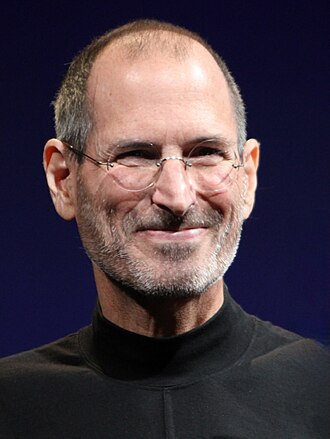
Steve Jobs
Co-founder of Apple and founder of NeXT
Where to hear and read about Steve Jobs1 book · 2 episodes and tests
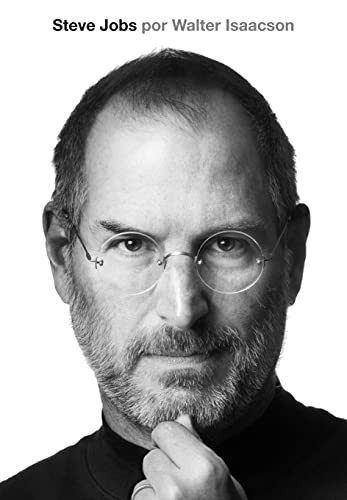 Book · notes comingSteve Jobs

 FoundersSteve Jobs in Exile
 FoundersThe Biography of Steve Jobs (The Evolution of a Reckless Upstart into a Visionary Leader)
Steve Jobs co-founded Apple, was pushed out at 30, spent twelve years building NeXT and backing Pixar, then returned to rebuild Apple. The most useful lesson from his life is that his failures were a skill gap he closed: years of costly mistakes at NeXT and patient teaching at Pixar turned a reckless founder into a leader who listened, kept deals simple and kept his best people for life.
If you don't treat talented workers right, they can go get another job in 10 minutes.
Steve Jobs in Exile
Steve Jobs: the story and the lessons
1How Steve Jobs started Apple with nothing but nerve
His father gave him a standard of care before any skill. Paul Jobs, a mechanic who built furniture and rebuilt cars, taught Steve to take his time, watch the details and hunt for good-value parts. At 5 or 6, Steve got his own section of the garage workbench.
Growing up among Silicon Valley's engineers in the late 1960s carried an implicit promise: anything could be figured out, so anything could be built.
Jobs skipped HP and bet on himself with no resources. Wozniak suggested pitching his computer to HP, but Jobs, with no education, experience, contacts or money, chose to start their own company. He sold his Volkswagen minibus and HP-65 calculator to raise cash.
They spent $1,000 on the board design and a few boards, then sold them at $50 each, $30 of it profit. The biographers call it "a calculation based on arrogance."
He saw a mass market where hobbyists saw a hobby. The Homebrew Computer Club gave the finished Apple I a tepid reception because members liked building their own machines. Jobs judged that for every hobbyist there were a thousand customers who wanted to buy a computer like an appliance.
Jobs said yes to the first big order before he could build it. The day after the Homebrew demo he walked barefoot into the Byte Shop and agreed to deliver 50 computers at $500 each, a $25,000 order. He had no money for parts, no factory and no labor force.
He cold-called the best builders and asked for help. At about 12 he phoned Bill Hewlett for frequency counter parts and got the parts plus a summer job. At 21 he called Andy Grove, and he sought out Jerry Sanders, Charlie Sporck, David Packard and Bob Noyce.
He said he had never found anyone who refused to help when asked. Edwin Land was the hero he modeled his career on, admiring Land's obsession with products of style and his reliance on gut over consumer research.
At 22 he could already make a strange machine feel ordinary. In a 1977 New Yorker piece he used 224 words to compare the Apple II to a camera and a typewriter, calling it "domesticated" and "the rollsroyce of personal computers."
He also called Apple the largest personal computer company in the world, an unprovable claim that put a tiny firm in IBM's league.
2How success blinded Jobs and cost him Apple
Jobs dismissed the IBM PC while Bill Gates saw what it meant. In 1981 Gates kept asking around Apple whether the IBM PC was a big deal, and nobody was worried. Jobs believed no discerning buyer would pick an IBM over an Apple.
Three flops followed: the Apple III, the Lisa and the Macintosh, while the Apple II still brought in about 70 to 80% of revenue.
He treated people as replaceable and made no allies. Lee Clow said Jobs had enormous bandwidth but devoted almost all of it to work, so anyone not useful to the work was replaceable. With no allies inside the company, he was pushed out at 30.
He spotted Pixar's value but had lost the standing to act. He told Apple's board that George Lucas's graphics group was "way way way ahead of anybody," and they passed.
One of his greatest successes was sitting inside his worst run of failures.
Getting fired sent him into depression before he got back up. He spent summer 1985 in Paris, considered living off his fortune or becoming an artist in Europe, and apologized to Packard and Noyce for dropping the baton.
He kept going because he still loved the work: "I had been rejected, but I was still in love."
3Why Jobs nearly destroyed NeXT
Jobs started NeXT partly to get revenge on Apple. Before NeXT had a product or revenue, he ran Wall Street Journal ads attacking Apple and poached co-founders, which led Apple to sue him.
At Apple the goal had been insanely great products; at NeXT it was sticking it to Apple. Later he said, "The older I get, the more I'm convinced that motives make so much difference."
Too much money made him stop counting costs. Ross Perot paid $20 million for 16% in 1986, and Canon and IBM followed. Jobs paid Paul Rand $100,000 for a logo and bought $2,000 chairs, $10,000 sofas and $450 phones before shipping anything.
Staff joked about the "milli-logo" ($100) as a unit of spending. NeXT burned $39 million in a year it planned to lose $3 million, and Perot concluded: "I gave Steve too much dang money."
He polished an image before having any product. He wanted a New York ad agency, a top PR firm and a receptionist with a prestigious degree, and his mood swings put the team on a "hero roller coaster."
Rand told him, "Between now and when you have a product, you are the product, my friend."
Perfectionism froze decisions, and Jobs blamed others for delays. He kept revising the chip design, and no one could decide without him. He fired manufacturing VP Linda Wilin when the factory slipped, though she had prepared for both circuit board options.
Engineers who knew the honest answer was a year kept saying "one more month." The chip delivered failed 90 days later and cost another year.
He ignored the $3,000 price universities demanded. His academic advisers said the machine had to cost under $3,000; he showed them an 18-page brochure about the logo instead of a prototype. The cube launched at $10,500, and only 205 shipped by year end against a need for 16,000.
He overruled engineers on the magnesium matte black cube. Engineers warned that magnesium's air bubbles would show through the paint, and he brushed it aside. The Fremont factory he built for control could not make 12 machines a day.
He imagined customers flying in to collect computers like Ferrari buyers in Italy, while cash dwindled.
Nobody at NeXT told him the truth. Executives who complained to the HR chief for an hour went silent when Jobs walked in. Co-founder Daniel Lewin wrote that the product was over a year late and twice as expensive, and Jobs stripped him of marketing.
Sales were inflated by channel stuffing until NeXT was owed over $10 million. Jobs accepted the warnings only after using the machine himself and finding it took five-plus minutes to boot and crashed every hour or two.
4Deals Jobs killed at NeXT and the pivot to software
Jobs wrecked the IBM deal by overplaying his hand. IBM agreed to license NeXTSTEP for $30 million on signing and more on shipping. Jobs wanted to be the hero, held a new IBM executive up for more money, and walked out of the airport over missing slides before an 800-engineer pitch.
IBM read the no-show as a lack of commitment and the deal died. Jobs later told Ed Catmull: "Never overplay your hand."
He chose purity over survival with Perot Systems. A contract that could unlock hundreds of millions in government sales was ready, and Perot Systems' CEO flew in to sign. Jobs stayed in his office, saying he did not want to do business with the government.
Perot stopped believing in the company.
Andy Grove exposed that NeXT's leaders lacked a shared answer. At a 1991 off-site, Grove asked each leader what business they were in. After six years, they could not agree.
Near bankruptcy, Jobs finally let hardware go. By December 1992 Canon had put in $140 million, and Jobs demanded $20 million more by Monday or he would shut the doors. In 1992 Canon bought the hardware division for $20 million, and NeXT kept its software.
Corporate customers built custom apps five to ten times faster on NeXTSTEP. His lesson: "When the world changes, you have to change with it."
Larry Ellison's services advice brought the first profit. Ellison said 70% of IT projects fail and urged a professional services group. It revealed what competitors were doing, and NeXT made $1 million on almost $50 million in revenue after nine years of losses.
A famous micromanager, bored by enterprise software, let others run the company.
He burned the boats on WebObjects and the internet. In 1995 every web page was hand-coded, so one price change meant touching 10,000 pages. Jobs called the internet the most important shift of the next 15 or 20 years and sold WebObjects with onsite consultants, Oracle style.
IBM quoted Michael Dell two years for an online configure-and-buy site; NeXT said one week. Within a year Dell's WebObjects sales reached $3 million a day.
5How Pixar and Ed Catmull taught Jobs to lead
Catmull saw Jobs's recklessness as a missing skill, not meanness. Jobs would ask Catmull why people were upset, showing he never intended the damage. Because it was a skill gap, it could be learned, and he learned to give talented people room.
The lesson took almost a decade to sink in. The authors rank Catmull above Morita, Grove, Gates and Kelleher as a manager of creative people.
Jobs kept funding Pixar for years on belief in its people. He paid George Lucas $5 million for the graphics group and over time put about $50 million of his roughly $70 million into Pixar, writing checks monthly while it seemed to go nowhere.
He trusted Catmull's management and John Lasseter's talent. Pixar and NeXT were the only two gambles he kept.
He told Lasseter to make Tin Toy great, not cheaper. Asked to approve a budget, Jobs said "just make it great." Tin Toy won the Oscar, and Lasseter set the statuette in front of him at dinner in 1989.
Catmull taught him that creative work is full of failure: if nothing is going wrong, "you're fooling yourself."
Jobs timed Pixar's IPO to Toy Story to win a 50-50 deal. Disney paid for everything, so Pixar got only 12 to 15% of revenue. Toy Story opened November 22, 1995, Pixar went public November 29, and the cash let it fund half the costs and demand half the profits.
Catmull and Lasseter thought it too early. Toy Story grossed over $370 million and Eisner accepted the split months later.
Iger won Pixar by admitting how badly Disney needed it. Iger called Jobs right after learning he would be CEO and laid his cards on the table, having seen that Disney's only new characters in a decade were Pixar's.
Jobs liked him at once: "that's how I work too." Disney bought Pixar for $7.4 billion, making Jobs its largest individual shareholder.
6How Jobs won back Apple
One product manager's question opened the door. Apple's CEO Gil Amelio knew Apple had to buy an operating system and was weighing tens of millions on BeOS. NeXT's Garrett Rice asked, "why don't we just freaking call Apple?"
Jobs won the pitch with working code and a humbler manner. He let Avie Tevanian run the demo, four QuickTime movies, 3D models and apps at once, and took Apple's engineering concerns seriously. Be's founder came alone with no laptop or presentation.
Amelio saw a pragmatic, precise executive rather than the self-absorbed entrepreneur he remembered. Jobs agreed to $10 a share, down from $12, in a five-minute talk in his kitchen.
A blunt call from Andy Grove settled his doubts. Jobs was torn about whether he wanted the work and whether his reputation could survive it. Grove told him to make up his mind and hung up, and Jobs realized he cared.
He closed the Microsoft deal by asking for just two things. In exchange for dropping patent litigation, Jobs asked Gates for a five-year public commitment to Office for the Mac and a $150 million investment. Amelio had asked for six things.
The deal, critical to Apple's survival, closed very quickly.
7Steve Jobs's rules for building products at Apple
A company exists to make products, not money. Asked a third time if he enjoyed building companies, he said no. He saw the company as a capability, a culture and a way of working that can keep making the next thing.
He called the company "one of the most amazing inventions of humans."
Jobs obsessed over the point where people meet the machine. Rival makers assumed customers cared about the insides; Jobs knew they cared about the screen. The OS X team went over it pixel by pixel, and nothing shipped without his approval.
Every customer interaction adds to or draws down reputation. He called it the Apple experience, covering using a Mac, calling support and buying a song on iTunes and being billed.
He cut out middlemen with a direct online store. Soon after returning, every executive but Eddie Cue feared angering retail partners. Cue noted the channel had lost Apple two million dollars, and Jobs gave him two months to build the store.
Jobs synthesized ideas instead of running a research lab. Apple had no formal R&D unit. Projects reached him only when a key manager flagged them, and he would sit on them or combine them with something else he had seen.
He said you can only connect the dots in hindsight; Apple first treated the iPod as a computer peripheral.
Success meant pride in the work, not share price. Jobs and Jony Ive agreed the measure was whether they were proud of what they had designed and built together, not stock price or computers sold.
The standard traces back to his father's workbench.
He kept a trusted outsider and his family close to think aloud. Mike Slade, with no title, flew in Mondays and Tuesdays to be his sounding board. Most nights Jobs came home for dinner and talked Apple business with Laurene for an hour or two.
8What exile changed in how Steve Jobs led
Jobs came to see the CEO at the bottom of the hierarchy. Because talented people can find another job in 10 minutes, he felt he worked for those doing brilliant work. Ed Catmull says people with him by the end of 1995 stayed for the rest of his life.
At NeXT he had turned over every co-founder and almost every executive, despite wanting a permanent ensemble unlike George Lucas's "blow them out" model.
He hired people who would fight him. Ideas survived only if their owners could convince the smart people around them. He told Catmull he fired two Apple board members because they never disagreed with him.
Jobs responded to facts, not pressure. Catmull never had a yelling argument with him. In a three-month disagreement he presented his case and waited until Jobs said, "Oh, you're right."
He refused to settle on talent, which worked better at Apple. He spent a long time recruiting NeXT's COO, who then tried to sell the company behind his back. At Apple his team stayed for over a decade.
"I've always found it best not to compromise and just keep chipping away."
He did not shed his flaws; he learned to manage them. The biographers argue his immaturity and bad judgment at NeXT were prerequisites to his later clarity and steadiness. His wild swings flattened as hardware collapsed.
No entrepreneur studied was better at 25 than at 45; Jobs at 30 called it "best two out of three."
Steve Jobs in Exile
Steve Jobs spent 12 years in exile building NeXT, where too much money, perfectionism and a team afraid to tell him the truth nearly destroyed the company. The long failure forced him to change how he led, and that change is why Apple bought NeXT and why he could rebuild Apple.
Getting fired sent him into depression before he got back up. He spent summer 1985 in Paris, considered living off his fortune or becoming an artist in Europe, and apologized to Packard and Noyce for dropping the baton.
He kept going because he still loved the work: "I had been rejected, but I was still in love."
Jobs started NeXT partly to get revenge on Apple. Before NeXT had a product or revenue, he ran Wall Street Journal ads attacking Apple and poached co-founders, which led Apple to sue him.
At Apple the goal had been insanely great products; at NeXT it was sticking it to Apple. Later he said, "The older I get, the more I'm convinced that motives make so much difference."
Too much money made him stop counting costs. Ross Perot paid $20 million for 16% in 1986, and Canon and IBM followed. Jobs paid Paul Rand $100,000 for a logo and bought $2,000 chairs, $10,000 sofas and $450 phones before shipping anything.
Staff joked about the "milli-logo" ($100) as a unit of spending. NeXT burned $39 million in a year it planned to lose $3 million, and Perot concluded: "I gave Steve too much dang money."
He polished an image before having any product. He wanted a New York ad agency, a top PR firm and a receptionist with a prestigious degree, and his mood swings put the team on a "hero roller coaster."
Rand told him, "Between now and when you have a product, you are the product, my friend."
Perfectionism froze decisions, and Jobs blamed others for delays. He kept revising the chip design, and no one could decide without him. He fired manufacturing VP Linda Wilin when the factory slipped, though she had prepared for both circuit board options.
Engineers who knew the honest answer was a year kept saying "one more month." The chip delivered failed 90 days later and cost another year.
He ignored the $3,000 price universities demanded. His academic advisers said the machine had to cost under $3,000; he showed them an 18-page brochure about the logo instead of a prototype. The cube launched at $10,500, and only 205 shipped by year end against a need for 16,000.
He overruled engineers on the magnesium matte black cube. Engineers warned that magnesium's air bubbles would show through the paint, and he brushed it aside. The Fremont factory he built for control could not make 12 machines a day.
He imagined customers flying in to collect computers like Ferrari buyers in Italy, while cash dwindled.
Nobody at NeXT told him the truth. Executives who complained to the HR chief for an hour went silent when Jobs walked in. Co-founder Daniel Lewin wrote that the product was over a year late and twice as expensive, and Jobs stripped him of marketing.
Sales were inflated by channel stuffing until NeXT was owed over $10 million. Jobs accepted the warnings only after using the machine himself and finding it took five-plus minutes to boot and crashed every hour or two.
Jobs wrecked the IBM deal by overplaying his hand. IBM agreed to license NeXTSTEP for $30 million on signing and more on shipping. Jobs wanted to be the hero, held a new IBM executive up for more money, and walked out of the airport over missing slides before an 800-engineer pitch.
IBM read the no-show as a lack of commitment and the deal died. Jobs later told Ed Catmull: "Never overplay your hand."
He chose purity over survival with Perot Systems. A contract that could unlock hundreds of millions in government sales was ready, and Perot Systems' CEO flew in to sign. Jobs stayed in his office, saying he did not want to do business with the government.
Perot stopped believing in the company.
Andy Grove exposed that NeXT's leaders lacked a shared answer. At a 1991 off-site, Grove asked each leader what business they were in. After six years, they could not agree.
Near bankruptcy, Jobs finally let hardware go. By December 1992 Canon had put in $140 million, and Jobs demanded $20 million more by Monday or he would shut the doors. In 1992 Canon bought the hardware division for $20 million, and NeXT kept its software.
Corporate customers built custom apps five to ten times faster on NeXTSTEP. His lesson: "When the world changes, you have to change with it."
Larry Ellison's services advice brought the first profit. Ellison said 70% of IT projects fail and urged a professional services group. It revealed what competitors were doing, and NeXT made $1 million on almost $50 million in revenue after nine years of losses.
A famous micromanager, bored by enterprise software, let others run the company.
He burned the boats on WebObjects and the internet. In 1995 every web page was hand-coded, so one price change meant touching 10,000 pages. Jobs called the internet the most important shift of the next 15 or 20 years and sold WebObjects with onsite consultants, Oracle style.
IBM quoted Michael Dell two years for an online configure-and-buy site; NeXT said one week. Within a year Dell's WebObjects sales reached $3 million a day.
One product manager's question opened the door. Apple's CEO Gil Amelio knew Apple had to buy an operating system and was weighing tens of millions on BeOS. NeXT's Garrett Rice asked, "why don't we just freaking call Apple?"
Jobs won the pitch with working code and a humbler manner. He let Avie Tevanian run the demo, four QuickTime movies, 3D models and apps at once, and took Apple's engineering concerns seriously. Be's founder came alone with no laptop or presentation.
Amelio saw a pragmatic, precise executive rather than the self-absorbed entrepreneur he remembered. Jobs agreed to $10 a share, down from $12, in a five-minute talk in his kitchen.
Jobs came to see the CEO at the bottom of the hierarchy. Because talented people can find another job in 10 minutes, he felt he worked for those doing brilliant work. Ed Catmull says people with him by the end of 1995 stayed for the rest of his life.
At NeXT he had turned over every co-founder and almost every executive, despite wanting a permanent ensemble unlike George Lucas's "blow them out" model.
He hired people who would fight him. Ideas survived only if their owners could convince the smart people around them. He told Catmull he fired two Apple board members because they never disagreed with him.
Jobs responded to facts, not pressure. Catmull never had a yelling argument with him. In a three-month disagreement he presented his case and waited until Jobs said, "Oh, you're right."
He refused to settle on talent, which worked better at Apple. He spent a long time recruiting NeXT's COO, who then tried to sell the company behind his back. At Apple his team stayed for over a decade.
"I've always found it best not to compromise and just keep chipping away."
He did not shed his flaws; he learned to manage them. The biographers argue his immaturity and bad judgment at NeXT were prerequisites to his later clarity and steadiness. His wild swings flattened as hardware collapsed.
No entrepreneur studied was better at 25 than at 45; Jobs at 30 called it "best two out of three."
The Biography of Steve Jobs (The Evolution of a Reckless Upstart into a Visionary Leader)
Jobs went from a reckless 20-something founder, exiled from Apple at 30, to the leader who rebuilt it, because he treated his failures as training in a skill he lacked. The 1985 to 1997 wilderness years at NeXT and Pixar taught him how to manage people, negotiate and run a company, and made his second act at Apple possible.
His father gave him a standard of care before any skill. Paul Jobs, a mechanic who built furniture and rebuilt cars, taught Steve to take his time, watch the details and hunt for good-value parts. At 5 or 6, Steve got his own section of the garage workbench.
Growing up among Silicon Valley's engineers in the late 1960s carried an implicit promise: anything could be figured out, so anything could be built.
Jobs skipped HP and bet on himself with no resources. Wozniak suggested pitching his computer to HP, but Jobs, with no education, experience, contacts or money, chose to start their own company. He sold his Volkswagen minibus and HP-65 calculator to raise cash.
They spent $1,000 on the board design and a few boards, then sold them at $50 each, $30 of it profit. The biographers call it "a calculation based on arrogance."
He saw a mass market where hobbyists saw a hobby. The Homebrew Computer Club gave the finished Apple I a tepid reception because members liked building their own machines. Jobs judged that for every hobbyist there were a thousand customers who wanted to buy a computer like an appliance.
Jobs said yes to the first big order before he could build it. The day after the Homebrew demo he walked barefoot into the Byte Shop and agreed to deliver 50 computers at $500 each, a $25,000 order. He had no money for parts, no factory and no labor force.
He cold-called the best builders and asked for help. At about 12 he phoned Bill Hewlett for frequency counter parts and got the parts plus a summer job. At 21 he called Andy Grove, and he sought out Jerry Sanders, Charlie Sporck, David Packard and Bob Noyce.
He said he had never found anyone who refused to help when asked. Edwin Land was the hero he modeled his career on, admiring Land's obsession with products of style and his reliance on gut over consumer research.
At 22 he could already make a strange machine feel ordinary. In a 1977 New Yorker piece he used 224 words to compare the Apple II to a camera and a typewriter, calling it "domesticated" and "the rollsroyce of personal computers."
He also called Apple the largest personal computer company in the world, an unprovable claim that put a tiny firm in IBM's league.
Jobs dismissed the IBM PC while Bill Gates saw what it meant. In 1981 Gates kept asking around Apple whether the IBM PC was a big deal, and nobody was worried. Jobs believed no discerning buyer would pick an IBM over an Apple.
Three flops followed: the Apple III, the Lisa and the Macintosh, while the Apple II still brought in about 70 to 80% of revenue.
He treated people as replaceable and made no allies. Lee Clow said Jobs had enormous bandwidth but devoted almost all of it to work, so anyone not useful to the work was replaceable. With no allies inside the company, he was pushed out at 30.
He spotted Pixar's value but had lost the standing to act. He told Apple's board that George Lucas's graphics group was "way way way ahead of anybody," and they passed.
One of his greatest successes was sitting inside his worst run of failures.
Getting fired sent him into depression before he got back up. He spent summer 1985 in Paris, considered living off his fortune or becoming an artist in Europe, and apologized to Packard and Noyce for dropping the baton.
He kept going because he still loved the work: "I had been rejected, but I was still in love."
Jobs wrecked the IBM deal by overplaying his hand. IBM agreed to license NeXTSTEP for $30 million on signing and more on shipping. Jobs wanted to be the hero, held a new IBM executive up for more money, and walked out of the airport over missing slides before an 800-engineer pitch.
IBM read the no-show as a lack of commitment and the deal died. Jobs later told Ed Catmull: "Never overplay your hand."
Catmull saw Jobs's recklessness as a missing skill, not meanness. Jobs would ask Catmull why people were upset, showing he never intended the damage. Because it was a skill gap, it could be learned, and he learned to give talented people room.
The lesson took almost a decade to sink in. The authors rank Catmull above Morita, Grove, Gates and Kelleher as a manager of creative people.
Jobs kept funding Pixar for years on belief in its people. He paid George Lucas $5 million for the graphics group and over time put about $50 million of his roughly $70 million into Pixar, writing checks monthly while it seemed to go nowhere.
He trusted Catmull's management and John Lasseter's talent. Pixar and NeXT were the only two gambles he kept.
He told Lasseter to make Tin Toy great, not cheaper. Asked to approve a budget, Jobs said "just make it great." Tin Toy won the Oscar, and Lasseter set the statuette in front of him at dinner in 1989.
Catmull taught him that creative work is full of failure: if nothing is going wrong, "you're fooling yourself."
Jobs timed Pixar's IPO to Toy Story to win a 50-50 deal. Disney paid for everything, so Pixar got only 12 to 15% of revenue. Toy Story opened November 22, 1995, Pixar went public November 29, and the cash let it fund half the costs and demand half the profits.
Catmull and Lasseter thought it too early. Toy Story grossed over $370 million and Eisner accepted the split months later.
Iger won Pixar by admitting how badly Disney needed it. Iger called Jobs right after learning he would be CEO and laid his cards on the table, having seen that Disney's only new characters in a decade were Pixar's.
Jobs liked him at once: "that's how I work too." Disney bought Pixar for $7.4 billion, making Jobs its largest individual shareholder.
A blunt call from Andy Grove settled his doubts. Jobs was torn about whether he wanted the work and whether his reputation could survive it. Grove told him to make up his mind and hung up, and Jobs realized he cared.
He closed the Microsoft deal by asking for just two things. In exchange for dropping patent litigation, Jobs asked Gates for a five-year public commitment to Office for the Mac and a $150 million investment. Amelio had asked for six things.
The deal, critical to Apple's survival, closed very quickly.
A company exists to make products, not money. Asked a third time if he enjoyed building companies, he said no. He saw the company as a capability, a culture and a way of working that can keep making the next thing.
He called the company "one of the most amazing inventions of humans."
Jobs obsessed over the point where people meet the machine. Rival makers assumed customers cared about the insides; Jobs knew they cared about the screen. The OS X team went over it pixel by pixel, and nothing shipped without his approval.
Every customer interaction adds to or draws down reputation. He called it the Apple experience, covering using a Mac, calling support and buying a song on iTunes and being billed.
He cut out middlemen with a direct online store. Soon after returning, every executive but Eddie Cue feared angering retail partners. Cue noted the channel had lost Apple two million dollars, and Jobs gave him two months to build the store.
Jobs synthesized ideas instead of running a research lab. Apple had no formal R&D unit. Projects reached him only when a key manager flagged them, and he would sit on them or combine them with something else he had seen.
He said you can only connect the dots in hindsight; Apple first treated the iPod as a computer peripheral.
Success meant pride in the work, not share price. Jobs and Jony Ive agreed the measure was whether they were proud of what they had designed and built together, not stock price or computers sold.
The standard traces back to his father's workbench.
He kept a trusted outsider and his family close to think aloud. Mike Slade, with no title, flew in Mondays and Tuesdays to be his sounding board. Most nights Jobs came home for dinner and talked Apple business with Laurene for an hour or two.
He did not shed his flaws; he learned to manage them. The biographers argue his immaturity and bad judgment at NeXT were prerequisites to his later clarity and steadiness. His wild swings flattened as hardware collapsed.
No entrepreneur studied was better at 25 than at 45; Jobs at 30 called it "best two out of three."