Scott Dikkers
Former editor-in-chief of The Onion and author of How to Write Funny
Where to hear and read about Scott Dikkers1 episode or test
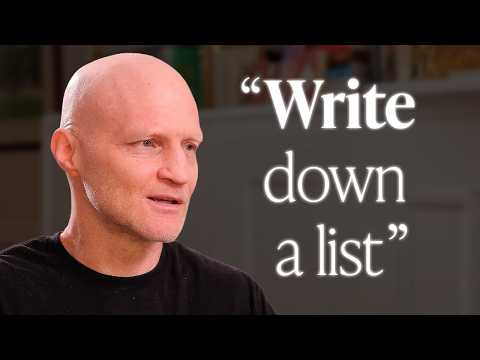
Scott Dikkers is the former editor-in-chief of The Onion and author of How to Write Funny. The thing most worth learning from him is the habit of writing ten opinions, picking one, and escalating it along one narrow track in a straight-faced voice, over a thousand simple pieces.
I wanted it to be funny from the start and only get funnier.
The 11 Tricks Behind Funny Storytelling (Scott Dikkers Interview)
Scott Dikkers: the story and the lessons
1Scott Dikkers and why he treats funny as a craft
Dikkers ran The Onion and wrote books teaching funny writing. He is the former editor-in-chief of The Onion and the author of How to Write Funny and How to Write Funny Characters, which covers 40 character archetypes.
He believes everybody has the potential to be professionally funny, and that the principles work in a group chat as well as on a professional stage.
A weekly deadline taught him the craft by repetition. He says the rules are reflections on work already done, not steps to follow while writing. At the keyboard it is gut instinct, and most of a career is flailing and unfunny mistakes.
The weekly deadline worked like a treadmill, and at some point he realized he knew how to do it. Magicians sell books explaining their tricks while comedians say 'it's just funny', and that gap led to How to Write Funny.
He says funny comes from noticing what is slightly off. Some people see ordinary life as fine, while others see what is not quite right and ask how to point it out to everyone else. The second kind of person is the comic.
Readers laugh because they never thought about the thing before. The 'normie' sees everything as normal and wonderful.
The Onion's process was built on heavy volume and heavy culling. The staff pitched hundreds of headlines to publish about a dozen a week, and 99% were passes.
The idea meeting was read aloud in the most boring voice in the room, on purpose. An idea needed votes from more than half the room to reach the short list of about a dozen.
2How Dikkers finds a premise
Dikkers starts people by having them write ten opinions. Everyone has opinions, and they make a premise easy to find. When he coaches people this way, a list of ten almost always has one or two that are clearly a funny article.
Even a plain value judgment like 'the president likes gold' is enough to drill into. The subtext of a joke is almost never funny itself and need not be clever.
His favorite premise trick is flipping an opinion into its opposite. Irony is the easiest funny filter because it is the opposite of what you have: the small made big or the big made small.
For the complaint that they don't build beautiful buildings anymore, the ironic version is a brand-new building shaped like a box and made of cardboard.
He tells writers to capture everyday oddities the moment they notice them. The best subtext is a small observation others have felt but never named, like Uber drivers always being on the phone. He says to keep noting these in voice memos.
Spotting the observation already earns a reference laugh, which he calls gold and a beautiful premise.
Sentence starters shake loose observations that would not come otherwise. His book lists prompts such as 'I remember when', 'Why is it that', and 'Did you ever notice how'. They trigger the brain to dig up small oddities.
He warns that some arenas, like airplane material, are clichés, so check what has been done before using a prompt.
3How Dikkers builds a joke
He stays on one narrow take and escalates it to absurdity. In short comedy the take is everything, and readers love watching the writer obsess over one thing. Start with a small observation, such as how old a building is, and push it as far as it goes.
At The Onion a funny idea with the wrong angle was rewritten or dropped, because the wrong take is the wrong joke.
He commits further than feels safe. Dikkers relays advice from his friend Jack Raines to go more ridiculous than you think. A half-committed bit either flops or makes the writer look foolish.
Exaggeration reads as more real than realism. In a study, people recognized a caricature of Prince Charles faster than a realistic drawing of him.
The Onion played absurd premises in strict, joke-free news style. After the mid-90s retool, it wrote in strict AP style and never broke character. Dikkers and editor Rob Siegel considered the perfect article one with almost no visible jokes, where the last word of a serious paragraph carries the joke.
Early issues were goofy college humor before the retool. Older relatives who believed Onion stories delighted the writers, since it showed the straight voice worked.
He gives every joke a serious frame to push against. Comedy needs a straight person and a joke person. Funerals and strict classrooms are where people laugh hardest, and the look of a newspaper was The Onion's straight person.
On a Facebook share the framing disappears, so the headline and picture have to do more work.
He stacks funny filters one at a time and keeps each clear. Peter Griffin combines character, irony and madcap: a dumb guy, then a smart guy, then a guy falling down the stairs, in sequence. Beginners who pile them on at once end up with mush.
He names eleven filters: irony, character, shock, hyperbole, wordplay, reference, madcap, parody, analogy, misplaced focus and meta humor. Madcap is his favorite.
He builds analogies by hiding one thing and mapping its tropes onto another. In the Seinfeld barber episode, switching to a younger barber is mapped onto an affair, down to a stray hair on the shoulder and someone sneaking out a window.
The affair is never named. Each association the audience makes on its own is a laugh beat.
He starts from stock characters and adds one filter. The bureaucrat is one of his 40 archetypes. Zootopia's DMV sloth is hyperbole, and De Niro cutting red tape in Brazil is irony.
An archetype needs no extra jokes. A little irony or hyperbole makes it iconic, and hyper-specific detail like the Polar Express know-it-all's train specs adds more.
He treats wordplay as a garnish, never the main joke. A bad pun gets a groan, but a good one on top of character humor or irony pushes the joke over the line.
Silly acronyms that spell out funny words are a killer, because everybody does it and readers reject it.
4How Dikkers leads the reader through a piece
He wanted pieces funny from the start and funnier after. The old way built a story to a punchline at the end. The Onion's heat maps showed 85% of readers never finish an article, so the early beats carry most of the work.
He planned the whole entry path as a chain of hooks. Headline, photo, caption, pull quote and first paragraph each got their own small laugh. The picture and headline had to still work as a thumbnail.
The Onion never ran a funny photo, because it steals the heat. They used a straight photo and found the angle on it. A block of gray copy with no headline is a brick wall nobody climbs.
He made the bigger headlines the more accessible jokes. This rule came from The Onion's first book: everyone should get the headline, and by paragraph eight an obscure reference can reward the few who catch it.
He frames it as 90% enjoying the broad joke and 10% enjoying the hidden smart layer, as in The Simpsons.
He signals early that readers are allowed to laugh. The first thing an audience meets, such as a cover, poster or casting, should say this is funny. Comedy posters use bright colors and a funny face.
He says Sofia Coppola cast Bill Murray in Lost in Translation to signal it was okay to laugh, then added an incongruous scene as another cue.
He ends on a joke that steps slightly off the track. The closer should have a slightly different character from the earlier beats. It can widen the world, underplay, or bring in a filter not yet used, and a topical reference works well.
Even experienced writers struggle with it. An ending has two worlds to play in, the real one and the one the article built, and the invented world was taken seriously all the way through.
He keeps satire to a spoonful of honey with a sliver of message. Satire flops when it gets preachy. He praises Swift's A Modest Proposal and says the end of Gulliver's Travels is terrible because Swift preaches.
A good subtext is small, like people being terrible at governing themselves. In his words: 'As soon as you're tasting the medicine, you've lost.'
5Dikkers' practice habits and the mistakes he warns about
He tells beginners to write a thousand simple pieces, not polish one. He names quantity over quality as the fix for the main beginner mistake. A page and a half of short comedy takes an afternoon, so practice is cheap.
Screenwriters who take it seriously write 12 or 13 scripts before one gets a nibble. Years spent polishing one screenplay rarely amount to anything.
He drafts in clown brain and edits in editor brain days later. Clown brain is childlike with no judgment: write ten ideas, then draft a page and a half without asking if it is funny. Then leave it for days, or up to two weeks.
After two weeks he barely remembers writing the piece, so he can judge it almost as if someone else wrote it. Experienced writers swing between the two modes fast.
He gut-checks every joke by asking if he has heard it before. If yes, twist it or make fun of the cliché itself, as with the cops-and-donuts joke. He says erring toward 'this is a cliché' is almost never wrong.
Writing a thousand articles builds the sense of which jokes are overused.
He names three beginner mistakes: too little, wrong angle, stopping short. Beginners write too little, pick the wrong angle, and stop short of full absurdity.
For longer comedy he says dramatic structure, such as the hero's journey, is the foundation and the jokes sit on top. Short pieces can skip it.

The 11 Tricks Behind Funny Storytelling (Scott Dikkers Interview)
Scott Dikkers argues that funny writing is a learnable craft built on a point of view, a single narrow take and a set of reusable filters rather than natural talent. The habit that makes it worth hearing is writing a list of ten opinions, picking one, and escalating it in a straight-faced voice over a thousand simple pieces.
Dikkers ran The Onion and wrote books teaching funny writing. He is the former editor-in-chief of The Onion and the author of How to Write Funny and How to Write Funny Characters, which covers 40 character archetypes.
He believes everybody has the potential to be professionally funny, and that the principles work in a group chat as well as on a professional stage.
A weekly deadline taught him the craft by repetition. He says the rules are reflections on work already done, not steps to follow while writing. At the keyboard it is gut instinct, and most of a career is flailing and unfunny mistakes.
The weekly deadline worked like a treadmill, and at some point he realized he knew how to do it. Magicians sell books explaining their tricks while comedians say 'it's just funny', and that gap led to How to Write Funny.
He says funny comes from noticing what is slightly off. Some people see ordinary life as fine, while others see what is not quite right and ask how to point it out to everyone else. The second kind of person is the comic.
Readers laugh because they never thought about the thing before. The 'normie' sees everything as normal and wonderful.
The Onion's process was built on heavy volume and heavy culling. The staff pitched hundreds of headlines to publish about a dozen a week, and 99% were passes.
The idea meeting was read aloud in the most boring voice in the room, on purpose. An idea needed votes from more than half the room to reach the short list of about a dozen.
Dikkers starts people by having them write ten opinions. Everyone has opinions, and they make a premise easy to find. When he coaches people this way, a list of ten almost always has one or two that are clearly a funny article.
Even a plain value judgment like 'the president likes gold' is enough to drill into. The subtext of a joke is almost never funny itself and need not be clever.
His favorite premise trick is flipping an opinion into its opposite. Irony is the easiest funny filter because it is the opposite of what you have: the small made big or the big made small.
For the complaint that they don't build beautiful buildings anymore, the ironic version is a brand-new building shaped like a box and made of cardboard.
He tells writers to capture everyday oddities the moment they notice them. The best subtext is a small observation others have felt but never named, like Uber drivers always being on the phone. He says to keep noting these in voice memos.
Spotting the observation already earns a reference laugh, which he calls gold and a beautiful premise.
Sentence starters shake loose observations that would not come otherwise. His book lists prompts such as 'I remember when', 'Why is it that', and 'Did you ever notice how'. They trigger the brain to dig up small oddities.
He warns that some arenas, like airplane material, are clichés, so check what has been done before using a prompt.
He stays on one narrow take and escalates it to absurdity. In short comedy the take is everything, and readers love watching the writer obsess over one thing. Start with a small observation, such as how old a building is, and push it as far as it goes.
At The Onion a funny idea with the wrong angle was rewritten or dropped, because the wrong take is the wrong joke.
He commits further than feels safe. Dikkers relays advice from his friend Jack Raines to go more ridiculous than you think. A half-committed bit either flops or makes the writer look foolish.
Exaggeration reads as more real than realism. In a study, people recognized a caricature of Prince Charles faster than a realistic drawing of him.
The Onion played absurd premises in strict, joke-free news style. After the mid-90s retool, it wrote in strict AP style and never broke character. Dikkers and editor Rob Siegel considered the perfect article one with almost no visible jokes, where the last word of a serious paragraph carries the joke.
Early issues were goofy college humor before the retool. Older relatives who believed Onion stories delighted the writers, since it showed the straight voice worked.
He gives every joke a serious frame to push against. Comedy needs a straight person and a joke person. Funerals and strict classrooms are where people laugh hardest, and the look of a newspaper was The Onion's straight person.
On a Facebook share the framing disappears, so the headline and picture have to do more work.
He stacks funny filters one at a time and keeps each clear. Peter Griffin combines character, irony and madcap: a dumb guy, then a smart guy, then a guy falling down the stairs, in sequence. Beginners who pile them on at once end up with mush.
He names eleven filters: irony, character, shock, hyperbole, wordplay, reference, madcap, parody, analogy, misplaced focus and meta humor. Madcap is his favorite.
He builds analogies by hiding one thing and mapping its tropes onto another. In the Seinfeld barber episode, switching to a younger barber is mapped onto an affair, down to a stray hair on the shoulder and someone sneaking out a window.
The affair is never named. Each association the audience makes on its own is a laugh beat.
He starts from stock characters and adds one filter. The bureaucrat is one of his 40 archetypes. Zootopia's DMV sloth is hyperbole, and De Niro cutting red tape in Brazil is irony.
An archetype needs no extra jokes. A little irony or hyperbole makes it iconic, and hyper-specific detail like the Polar Express know-it-all's train specs adds more.
He treats wordplay as a garnish, never the main joke. A bad pun gets a groan, but a good one on top of character humor or irony pushes the joke over the line.
Silly acronyms that spell out funny words are a killer, because everybody does it and readers reject it.
He wanted pieces funny from the start and funnier after. The old way built a story to a punchline at the end. The Onion's heat maps showed 85% of readers never finish an article, so the early beats carry most of the work.
He planned the whole entry path as a chain of hooks. Headline, photo, caption, pull quote and first paragraph each got their own small laugh. The picture and headline had to still work as a thumbnail.
The Onion never ran a funny photo, because it steals the heat. They used a straight photo and found the angle on it. A block of gray copy with no headline is a brick wall nobody climbs.
He made the bigger headlines the more accessible jokes. This rule came from The Onion's first book: everyone should get the headline, and by paragraph eight an obscure reference can reward the few who catch it.
He frames it as 90% enjoying the broad joke and 10% enjoying the hidden smart layer, as in The Simpsons.
He signals early that readers are allowed to laugh. The first thing an audience meets, such as a cover, poster or casting, should say this is funny. Comedy posters use bright colors and a funny face.
He says Sofia Coppola cast Bill Murray in Lost in Translation to signal it was okay to laugh, then added an incongruous scene as another cue.
He ends on a joke that steps slightly off the track. The closer should have a slightly different character from the earlier beats. It can widen the world, underplay, or bring in a filter not yet used, and a topical reference works well.
Even experienced writers struggle with it. An ending has two worlds to play in, the real one and the one the article built, and the invented world was taken seriously all the way through.
He keeps satire to a spoonful of honey with a sliver of message. Satire flops when it gets preachy. He praises Swift's A Modest Proposal and says the end of Gulliver's Travels is terrible because Swift preaches.
A good subtext is small, like people being terrible at governing themselves. In his words: 'As soon as you're tasting the medicine, you've lost.'
He tells beginners to write a thousand simple pieces, not polish one. He names quantity over quality as the fix for the main beginner mistake. A page and a half of short comedy takes an afternoon, so practice is cheap.
Screenwriters who take it seriously write 12 or 13 scripts before one gets a nibble. Years spent polishing one screenplay rarely amount to anything.
He drafts in clown brain and edits in editor brain days later. Clown brain is childlike with no judgment: write ten ideas, then draft a page and a half without asking if it is funny. Then leave it for days, or up to two weeks.
After two weeks he barely remembers writing the piece, so he can judge it almost as if someone else wrote it. Experienced writers swing between the two modes fast.
He gut-checks every joke by asking if he has heard it before. If yes, twist it or make fun of the cliché itself, as with the cops-and-donuts joke. He says erring toward 'this is a cliché' is almost never wrong.
Writing a thousand articles builds the sense of which jokes are overused.
He names three beginner mistakes: too little, wrong angle, stopping short. Beginners write too little, pick the wrong angle, and stop short of full absurdity.
For longer comedy he says dramatic structure, such as the hero's journey, is the foundation and the jokes sit on top. Short pieces can skip it.