Saul Price
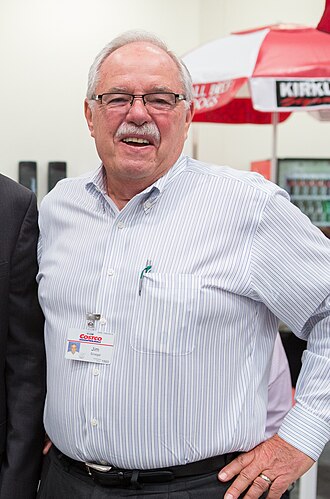
Sinegal co-founded Costco; Price founded FedMart and Price Club
Where to hear and read about Saul Price1 episode or test

Sol (Saul) Price invented the membership discounter at FedMart in 1954 and the warehouse club at Price Club, the model his protégé Jim Sinegal cloned as Costco and that Sam Walton said he stole from more than anyone. The lesson is how a few honest, reinforcing choices (no loss leaders, few items, good wages, suppliers financing inventory) add up to a business rivals can copy on paper but rarely in practice.
we're good at creating businesses, we're not as good at running businesses
Costco
Saul Price: the story and the lessons
1Where Sol Price came from
Price grew up in the immigrant garment world that built American labor. He was born in the Bronx in 1916 to Jewish immigrants from Belarus who arrived with no money and no English and worked in Lower East Side garment factories.
It was the world of the 1911 Triangle Shirtwaist fire. Price recalled that in his community the Socialists were the conservatives and the Communists were the radicals.
A lawyer's practice in wartime San Diego put him beside club retailers. His family moved to San Diego, then about 150,000 people, and he married Helen Moskowitz, whose family ran a scrap metal business. As a lawyer he advised retail startups like the Seven Seas Locker Club and Four Star Jewelers.
The locker club stored sailors' uniforms but really drew foot traffic for laundry, clothing, food and haircuts.
Price's ideas shaped Walmart, Home Depot and Costco. Sam Walton wrote that he stole more ideas from Price than from anyone else. Jim Sinegal said he did not learn a lot from Price: "I learned everything."
2How Sol Price invented the discounter at FedMart
Price copied a postal workers' club after it twice refused him. Four Star sold most of its wholesale jewelry to FedCo, a non-profit club of about 800 Los Angeles postal workers with a $5 lifetime fee. Price offered to partner, then to franchise, and was turned down both times.
He opened FedMart in November 1954 in an empty 21,000 square foot warehouse owned by Helen's family, under a name borrowed from FedCo. He later joked about creating modern retail: "maybe I should have worn a condom."
A closed membership club let Price sell below manufacturers' minimum prices. US law let manufacturers set minimum retail prices for the general public, so a club open only to federal employees could legally undercut them.
The first store sold $3 million in its first year against a hoped for $1 million, and the lifetime fee was cut to about $2 to undercut FedCo. Phoenix opened a year later with lines half a mile long.
Walmart, Kmart and Target followed the model Price created. FedMart was the national discounter that later chains copied, and Walmart and Kmart borrowed the "Mart" from it.
3Sol Price's rules for running a store
Price refused loss leaders because they treat customers as stupid. A loss leader has to be paid for with fat margins elsewhere, so Price would not sell anything he could not make money on, a rule Sinegal kept at Costco.
The one exception today is the $1.50 hot dog and soda, unchanged for 47 years.
He sold gas at cost and opened a pharmacy to drive traffic. FedMart's 1959 IPO raised $2 million, funding more stores, gasoline at cost a few cents under rivals, a pharmacy and the FM house brand.
The pharmacy head got death threats and a rock through his window for undercutting margins. His protégé later started Costco's pharmacy division.
Price accepted the intelligent loss of sales to keep items few. FedMart stocked only the 8 oz can of lubricating oil, losing buyers who wanted 3 oz, because fewer SKUs were worth more than the lost sales.
Costco carries this to the extreme with only the 2.5 pound tub of nuts and about 3,800 SKUs, down from about 4,500 a decade earlier.
FedMart ranked value, good wages, honesty, then investors. Those four priorities became Costco's code of ethics: obey the law, take care of members, take care of employees, respect suppliers, with shareholder rewards as the result.
Costco's average pay of $26 an hour against $19.50 at Walmart, 7% attrition and 0.15% shrinkage trace back to Price's choice to pay well.
4How Sol Price lost FedMart to Hugo Mann
Price was a great merchant but knew he was a weak dealmaker. Kmart, backed by the Kresge chain, had far more capital. By the early 1970s Price was burned out, brought in professional managers and became chairman.
He told his son Robert they were better at creating businesses than running them.
He went looking for a growth partner and got a buyout. Price and Robert sold a majority of FedMart to German operator Hugo Mann, hoping to build hypermarkets like Carrefour's before Walmart did.
Price never asked Mann why he wanted the deal and treated a majority buyer like a minority investor.
Mann fired the Prices at the first board meeting and changed the locks. Mann wanted the real estate, not the retail business. FedMart was dead within five years, though Mann made a fortune on its property.
Sinegal was the executive told to inform the staff. Price, then 60, leased a new office the next day.
5How Sol Price built Price Club around the warehouse
Price saw FedMart's profit came from the warehouse, not the stores. Reviewing the business after the lockout, Price and Robert found Sinegal's centralized warehousing held nearly all the margin while the stores were barely profitable.
Price Club became a warehouse where gas stations, restaurants and variety stores without their own storage could stock up. "Almost all of the margin that we made at the company was at the warehouse level."
About 3,000 items and pallet delivery kept operations simple. Manufacturers delivered straight into the warehouse and customers took whole pallets, so Price Club ran no trucks or distribution centers. Walmart and Kmart carried about 50,000 items.
Because the service was real, the old FedCo membership idea could now carry a real fee. The first warehouse was a former Howard Hughes aircraft hangar.
Suppliers financed the inventory, so each warehouse funded itself. Goods went on sale the minute the invoiced pallet landed and often sold before net 30 payment was due, a negative cash conversion cycle on ordinary terms.
This let Price Club expand without the capital squeeze that sank FedMart. Costco today turns inventory 12.4 times a year against 8 at Walmart.
A credit union deal opened the club to consumers by accident. The first San Diego store struggled to recruit businesses. CFO Giles Bateman, a young Harvard MBA, let San Diego City Credit Union members shop at slightly higher prices.
Consumers told friends and signed up relatives with businesses, the start of a no advertising habit. Hot dog vendors asked to set up at the exit, so Price Club ran the cart itself and the $1.50 combo was born.
Taking only cash and checks paid off decades later. Price Club never took credit cards, so customers never relied on them, which later let Costco auction its card deal without fear of losing sales.
On an 11% gross margin, paying 3 points to card networks would have flipped the business.
6Why Sol Price gave his playbook away
Price explained the model to Sam Walton over dinner. Walton dined with the Prices in 1982 and launched Sam's Club within a year. Bernie Marcus also got the playbook and started Home Depot.
When Walton's tape recorder was confiscated while scouting, Price mailed it back and told him to keep his notes.
Refusing a franchise led to Costco, run by Price's own protégé. Price Club turned down Jeff Brotman, so he cloned it with Sinegal in 1983, hiring about eight FedMart and Price Club veterans. Costco hit $1 billion in under three years.
Price's nephew, the head of merchandising, pointed Brotman to Sinegal.
Price chose Costco over Walmart as Price Club's merger partner. In 1993 Costco and Price Club, about 100 stores each, merged with 52% to Costco holders and 48% to Price Club holders, plus a premium over 30%. No one was laid off.
"Saul Price didn't want it to be Walmart." Price died in 2009 at 93.
7Sol Price's ideas in Costco today
Every Costco CEO since 1976 learned retail at FedMart. Price, Sinegal and Craig Jelinek led in turn. Sinegal and Jelinek started as teenage baggers at FedMart.
Price's hands-on habits carried over: he once threw tires off high shelves so customers could lift them, and Sinegal visited every store every year.
Costco's markup cap extends Price's refusal to squeeze customers. Markup is capped at 14% against about 25% at Walmart, and members get about 89% of any supplier savings.
The model built from Price's ideas reached about $230 billion of revenue, and $10,000 at the 1985 Costco IPO is worth $3.3 million today before dividends.

Costco
Costco shows how trade-offs that look costly, like thin margins, high pay and few products, lock together into a durable business that members and suppliers trust. The decision that makes it worth hearing is capping markup at 14% and sharing scale savings with customers, which produced 230 billion dollars of revenue and a loyal, wealthy customer base.
Price grew up in the immigrant garment world that built American labor. He was born in the Bronx in 1916 to Jewish immigrants from Belarus who arrived with no money and no English and worked in Lower East Side garment factories.
It was the world of the 1911 Triangle Shirtwaist fire. Price recalled that in his community the Socialists were the conservatives and the Communists were the radicals.
A lawyer's practice in wartime San Diego put him beside club retailers. His family moved to San Diego, then about 150,000 people, and he married Helen Moskowitz, whose family ran a scrap metal business. As a lawyer he advised retail startups like the Seven Seas Locker Club and Four Star Jewelers.
The locker club stored sailors' uniforms but really drew foot traffic for laundry, clothing, food and haircuts.
Price's ideas shaped Walmart, Home Depot and Costco. Sam Walton wrote that he stole more ideas from Price than from anyone else. Jim Sinegal said he did not learn a lot from Price: "I learned everything."
Price copied a postal workers' club after it twice refused him. Four Star sold most of its wholesale jewelry to FedCo, a non-profit club of about 800 Los Angeles postal workers with a $5 lifetime fee. Price offered to partner, then to franchise, and was turned down both times.
He opened FedMart in November 1954 in an empty 21,000 square foot warehouse owned by Helen's family, under a name borrowed from FedCo. He later joked about creating modern retail: "maybe I should have worn a condom."
A closed membership club let Price sell below manufacturers' minimum prices. US law let manufacturers set minimum retail prices for the general public, so a club open only to federal employees could legally undercut them.
The first store sold $3 million in its first year against a hoped for $1 million, and the lifetime fee was cut to about $2 to undercut FedCo. Phoenix opened a year later with lines half a mile long.
Walmart, Kmart and Target followed the model Price created. FedMart was the national discounter that later chains copied, and Walmart and Kmart borrowed the "Mart" from it.
Price refused loss leaders because they treat customers as stupid. A loss leader has to be paid for with fat margins elsewhere, so Price would not sell anything he could not make money on, a rule Sinegal kept at Costco.
The one exception today is the $1.50 hot dog and soda, unchanged for 47 years.
He sold gas at cost and opened a pharmacy to drive traffic. FedMart's 1959 IPO raised $2 million, funding more stores, gasoline at cost a few cents under rivals, a pharmacy and the FM house brand.
The pharmacy head got death threats and a rock through his window for undercutting margins. His protégé later started Costco's pharmacy division.
Price accepted the intelligent loss of sales to keep items few. FedMart stocked only the 8 oz can of lubricating oil, losing buyers who wanted 3 oz, because fewer SKUs were worth more than the lost sales.
Costco carries this to the extreme with only the 2.5 pound tub of nuts and about 3,800 SKUs, down from about 4,500 a decade earlier.
FedMart ranked value, good wages, honesty, then investors. Those four priorities became Costco's code of ethics: obey the law, take care of members, take care of employees, respect suppliers, with shareholder rewards as the result.
Costco's average pay of $26 an hour against $19.50 at Walmart, 7% attrition and 0.15% shrinkage trace back to Price's choice to pay well.
Price was a great merchant but knew he was a weak dealmaker. Kmart, backed by the Kresge chain, had far more capital. By the early 1970s Price was burned out, brought in professional managers and became chairman.
He told his son Robert they were better at creating businesses than running them.
He went looking for a growth partner and got a buyout. Price and Robert sold a majority of FedMart to German operator Hugo Mann, hoping to build hypermarkets like Carrefour's before Walmart did.
Price never asked Mann why he wanted the deal and treated a majority buyer like a minority investor.
Mann fired the Prices at the first board meeting and changed the locks. Mann wanted the real estate, not the retail business. FedMart was dead within five years, though Mann made a fortune on its property.
Sinegal was the executive told to inform the staff. Price, then 60, leased a new office the next day.
Price saw FedMart's profit came from the warehouse, not the stores. Reviewing the business after the lockout, Price and Robert found Sinegal's centralized warehousing held nearly all the margin while the stores were barely profitable.
Price Club became a warehouse where gas stations, restaurants and variety stores without their own storage could stock up. "Almost all of the margin that we made at the company was at the warehouse level."
About 3,000 items and pallet delivery kept operations simple. Manufacturers delivered straight into the warehouse and customers took whole pallets, so Price Club ran no trucks or distribution centers. Walmart and Kmart carried about 50,000 items.
Because the service was real, the old FedCo membership idea could now carry a real fee. The first warehouse was a former Howard Hughes aircraft hangar.
Suppliers financed the inventory, so each warehouse funded itself. Goods went on sale the minute the invoiced pallet landed and often sold before net 30 payment was due, a negative cash conversion cycle on ordinary terms.
This let Price Club expand without the capital squeeze that sank FedMart. Costco today turns inventory 12.4 times a year against 8 at Walmart.
A credit union deal opened the club to consumers by accident. The first San Diego store struggled to recruit businesses. CFO Giles Bateman, a young Harvard MBA, let San Diego City Credit Union members shop at slightly higher prices.
Consumers told friends and signed up relatives with businesses, the start of a no advertising habit. Hot dog vendors asked to set up at the exit, so Price Club ran the cart itself and the $1.50 combo was born.
Taking only cash and checks paid off decades later. Price Club never took credit cards, so customers never relied on them, which later let Costco auction its card deal without fear of losing sales.
On an 11% gross margin, paying 3 points to card networks would have flipped the business.
Price explained the model to Sam Walton over dinner. Walton dined with the Prices in 1982 and launched Sam's Club within a year. Bernie Marcus also got the playbook and started Home Depot.
When Walton's tape recorder was confiscated while scouting, Price mailed it back and told him to keep his notes.
Refusing a franchise led to Costco, run by Price's own protégé. Price Club turned down Jeff Brotman, so he cloned it with Sinegal in 1983, hiring about eight FedMart and Price Club veterans. Costco hit $1 billion in under three years.
Price's nephew, the head of merchandising, pointed Brotman to Sinegal.
Price chose Costco over Walmart as Price Club's merger partner. In 1993 Costco and Price Club, about 100 stores each, merged with 52% to Costco holders and 48% to Price Club holders, plus a premium over 30%. No one was laid off.
"Saul Price didn't want it to be Walmart." Price died in 2009 at 93.
Every Costco CEO since 1976 learned retail at FedMart. Price, Sinegal and Craig Jelinek led in turn. Sinegal and Jelinek started as teenage baggers at FedMart.
Price's hands-on habits carried over: he once threw tires off high shelves so customers could lift them, and Sinegal visited every store every year.
Costco's markup cap extends Price's refusal to squeeze customers. Markup is capped at 14% against about 25% at Walmart, and members get about 89% of any supplier savings.
The model built from Price's ideas reached about $230 billion of revenue, and $10,000 at the 1985 Costco IPO is worth $3.3 million today before dividends.
 Costco