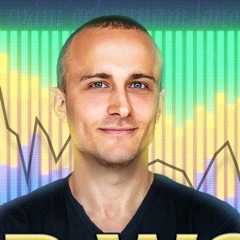
Sam Corcos
Founder and CEO of Levels, a metabolic health company
Where to hear and read about Sam Corcos1 episode or test

Sam Corcos is founder and CEO of Levels, a metabolic health company valued at about $300 million that he runs as an experiment in remote, writing-first work. The most useful thing to learn from him is to write your prediction down before you build, so your memory can't rewrite it and you can judge the result as validated or invalidated.
Our brains are rationalization machines. That's why I write, in order to be able to hold myself accountable to my own thoughts.
How Writing Helped This CEO Build a $300m+ Company | Sam Corcos
Sam Corcos: the story and the lessons
1How Sam Corcos built Levels on writing
Corcos writes because writing shows whether he really has a thought. Teaching and writing both expose gaps in what you think you know. Writing takes under 5% of his calendar but feels like far more because of the thinking effort.
Levels is his experiment in turning deep work 'up to 11', and writing is the pillar everything else orbits.
A written memo gives the whole team one source of truth. A memo on writing a good hypothesis was read, discussed and still forgotten within a project. Pointing to its section corrected the course at once.
Open channels and long memos also let new hires see the full thinking behind the company, which closed email threads never do.
He scales the length of writing to the stakes. A $50 million, decade-long commitment deserves a long memo, while moving one button deserves a quick note. Most work needs only a one-page or two-paragraph memo saying what you will do and what you expect.
Newer staff were scared by 40 and 50 page memos, so he tells them the short form is enough.
Corcos had an employee write a 200-page memo to convince himself first. He asked for a memo to convince him to commit to an eight-figure project. The author said he first needed to convince himself it was a good idea.
It was stressful and cost him sleep, but he came out understanding every trade-off. Many projects still need only a very short memo.
Memo feedback goes in long form at the bottom, not the margin. Inline comments force one sentence at a time and get buried in Google Docs. Corcos may write three or four pages and get five pages of comments, then folds the useful ideas back in.
The comments also show how the memo and people's views evolved.
Long memos get a short video overview on top. Memos run 50 or 100 pages and the longest is 200, which takes days to read. A 20-minute Loom summary can be watched at 2x on a walk.
The video shows what the author feels and thinks is most important.
People who struggle to write talk first and work from an outline. Corcos has weak writers record a stream-of-consciousness Loom. An assistant or sometimes ChatGPT turns it into an outline or first draft.
Starting from an outline lowers the activation energy compared with a blank page. Engineers record a 'teach me something' video on an engineering principle.
2How Corcos runs projects on hypotheses and retros
Corcos writes a hypothesis and expected return before any project starts. His example: eight engineering weeks, a 20% rise in food logging, and a retention value of about $90,000 a month. Putting a dollar value on the work is the point.
Spoken predictions get rewritten afterward as 'we all knew that would happen'. A written one can show you were 'two orders of magnitude off' and prompt the question of where you were wrong. 'Our engineers have extra capacity' is not a reason to build.
Rough numbers are enough because projects differ by orders of magnitude. Comparing written hypotheses showed one project worth $200,000 a month against another worth $90,000. Among eight projects, one offered $50,000 a month for little effort and another an ROI of about $8.
On paper they looked the same, and the team was reluctant to write hypotheses. You see the difference only by asking how many people a project affects and how much it moves conversion or retention.
Corcos judges finished projects as validated or invalidated, never success or failure. Levels dropped subjective words from retros because everyone rationalizes their own project as a win. The question is whether the result matched the predicted hypothesis.
He says clinical wording made spinning the outcome much harder.
A retro gets about 10% of a project's time. A two-week project gets one day of retro writing and a four-week project gets two. One hour is never enough for an eight-week project that used tens or hundreds of thousands of dollars.
Ten percent is a rule of thumb. Even a project that went well deserves a retro, because spending $200,000 should improve the next decision.
Retros double as peer feedback for everyone on the project. Everyone is asked how it went and what the others could do differently. Levels tried several quarterly review processes, and project-specific feedback has more context and arrives at a much higher cadence.
People often said they didn't get enough feedback from peers, and each retro now collects it.
Corcos treats communicating results as the last step of the scientific method. Results go out redundantly: a long memo to the company, a short summary at the Friday forum all-hands, and engineering-specific lessons at the engineering forum.
His test: a cure for cancer that nobody else knows about hasn't really cured cancer. People skip the last two steps, analysis and the retro.
He borrowed the Amazon PR FAQ but applies it loosely. Before building a feature, write the press release and FAQ. If you can't write a compelling one, don't build it.
It is hard to apply in practice, so Levels doesn't follow it religiously. Memos are reserved for one-way door decisions, and small bets need one sentence: 'I think in two hours I can do this', plus the expected outcome.
3How Corcos protects deep work
Corcos wants work fully async or fully synchronous, not half-way. Chat and texts pretend to be async but demand instant attention, and about 97% of texts are read within three seconds. He took the line 'be as async as possible, but not more' from Matt Mullenweg of Automattic.
When two people are out of alignment, he says to get on a call right away, because a programmer who builds three months on bad specs is demoralized when told it's no longer needed. Levels cuts meetings to one day a week.
Async Week retrains new hires away from Slack habits. Instead of a thumbs up, people send a three-second Loom saying 'that looks good'. It is inefficient on purpose, to show where the boundary sits.
The boundary is almost always further down the async path than people expect. Corcos knows no other company that treats a ten-minute Loom as normal.
He thinks alone before collaborating, because he is a slow thinker. In studies, a group that wrote alone for half the time and then collaborated always produced better ideas than one that only talked. Corcos can't produce a strategy on the fly and takes two days to think and write first.
Solo thinkers aren't steamrolled by the loudest voice.
Corcos blocks one offline think week each quarter. He took the idea from Bill Gates, stays mostly off email and chat, and writes in Notion. The first two or three days are tactical, and the bigger questions only show up after detaching.
His memos cluster in the same months, such as June 2020, when he wrote four or five. He works near other heads-down people because it keeps him motivated. At a previous company he coded daily and was too deep in the weeds.
He sets firm limits on his phone and carries a paper notebook. His phone stays on do not disturb or airplane mode, and a paper notebook goes in his back pocket. Pulling out a phone to take a note leads to a text and he forgets the note.
He says 'technological tools are more powerful than my will.'
Corcos swapped news for books and has stayed news sober since 2013. He started a month-long break in 2013 and has kept it for 11 years. He went from about one book a year to eight in the first month and now reads about two books a week.
His filter, credited to Nick Maggiulli, is to consume only content that took the creator 100 times longer to make than it takes to read. That means mostly books, plus a few interviews holding years of thought.
4How Corcos communicates, hires and leads at Levels
He keeps a Hedge snippet because his casual words read as strategy. As CEO, a passing 'maybe that would be better?' lands as the company's new strategy. A text snippet called Hedge expands into a disclaimer that it is a passing thought and not a change in priority.
It still doesn't always work. At larger companies, CEOs end up with a silo of about 30 people who see them, which Levels, at 40 people, wants to avoid.
Corcos gives tough feedback on video or in person, not in text. Criticism in text is easy to misread even when you assume good intent. On video the listener hears the tone, so he records Looms for critical feedback.
He likes Tim Ferriss's method of line edits in text plus overall feedback on video, so the praise isn't lost behind a list of fixes.
Levels bans acronyms and teaches with short stories instead. Acronyms bond insiders by shutting others out and force new hires to memorize a glossary. 'Pork tacos' means ship a scrappy version: the first app went out in days with every food log hard-coded as pork tacos, and it was no disaster.
'People don't like it when you move their cheese' reminds the team to warn users before moving a button, for example two weeks ahead.
Transparency is the default, and open numbers need context. Investor updates and all-hands are public, and internal meetings are shared by default, including one-on-ones and performance reviews. The Monday Metrics Meeting dwells on what is going badly, so staff watching recordings saw falling sub-metrics and concluded the company was dying.
A zoomed-out chart showed revenue had tripled. Corcos says openness adds overhead but is worth it. Brian Armstrong's regret about not being more open at Coinbase gave him the courage to try it.
Corcos hires by matching, and uses the keeper test. Most of the interview process tries to convince people they don't want to work there. He estimates at least 95% would be unhappy in the culture, and public material shows candidates what they are opting into.
The keeper test, from Netflix, asks how you would feel if someone said they were leaving for Google in two weeks. Only 'we have to keep you' is acceptable. Once he felt indifferent, said so, and told the person they might add more value elsewhere.
He promotes and delegates based on written proof of work. People who communicate ideas well get promoted, usually through a written artifact. A long-form memo shows they did the work to understand the field, which is what lets him delegate without checking on them.
Writing isn't strictly required, and some engineers pair with a support person who helps them write it up. A free-form conversation never convinces him the way the artifact does.
Corcos says people notice what you tolerate and who you fire. He took the advice from Marc Randolph. A visible writing culture attracts people who want it, as GitLab's does, and each hire adds to the culture because they chose it.
He sees the people as the culture, so one cannot outlast the other.
5How Levels uses content to educate a new category
Levels writes the definitive piece when nobody else has. Editorial director Mike Haney asks whether anyone has published the most definitive piece on a topic. If not, Levels writes the deeply researched ultimate guide, following the motto 'add value to the internet'.
Many copywriters are lazy, so rigorous content stands out and Google ranks it well. Readers spend three to four minutes per visit. Corcos ties it to Y Combinator's 'make something people want', and the proof is that people pay.
The blog exists to teach a category nobody knew. Nobody knew the term metabolic health at launch, so content had to explain glucose and why it matters. Levels sits nearer the REI magazine end of the spectrum than a direct product pitch.
Casey Means went on 100-plus podcasts to spread the message.
Corcos values a small audience of the right people over big reach. An internal company podcast became one of Levels' best recruiting tools, and applicants cite episodes only about 100 people heard. Staff said it needed a producer and five people, but Ben from growth did it in a day.
His comparison: a meeting with 100 attendees would be the biggest ever, so 100 listeners are the people you want to reach.
6What Corcos got wrong and what he changed
Early hires were dropped in with no context, so he built a month of onboarding. Early hires got a laptop and 'Get to work', with no idea who people were or what the company did. Levels now runs a full month of onboarding with no deliverables.
Leaders also write a strategy memo about their domain.
Corcos admits Levels is weak at product marketing. The marketing and software teams are poorly integrated. He likes the PR FAQ and Brian Chesky's waiter and chef image, where builders talk to customers directly, as ways to fix it.
He says the PR FAQ is hard to apply in practice.
He thinks most CEOs give strategy too little thought, himself included. If his long-form strategy writing is a small share of his time, he reasons the typical CEO spends under 1% on strategy, which he calls 'kind of terrifying'.
He logs his time in Google Calendar, and his EA categorizes it every couple of days. A long walk spent thinking counts as strategy time, and he writes a strategy doc about once a quarter.

How Writing Helped This CEO Build a $300m+ Company | Sam Corcos
Sam Corcos explains how a remote company runs on writing: memos for big decisions, hypotheses written before projects, and retros written after. The technique worth hearing is writing the prediction down first so your memory cannot rewrite it, and judging the result in plain terms like validated or invalidated.
Corcos writes because writing shows whether he really has a thought. Teaching and writing both expose gaps in what you think you know. Writing takes under 5% of his calendar but feels like far more because of the thinking effort.
Levels is his experiment in turning deep work 'up to 11', and writing is the pillar everything else orbits.
A written memo gives the whole team one source of truth. A memo on writing a good hypothesis was read, discussed and still forgotten within a project. Pointing to its section corrected the course at once.
Open channels and long memos also let new hires see the full thinking behind the company, which closed email threads never do.
He scales the length of writing to the stakes. A $50 million, decade-long commitment deserves a long memo, while moving one button deserves a quick note. Most work needs only a one-page or two-paragraph memo saying what you will do and what you expect.
Newer staff were scared by 40 and 50 page memos, so he tells them the short form is enough.
Corcos had an employee write a 200-page memo to convince himself first. He asked for a memo to convince him to commit to an eight-figure project. The author said he first needed to convince himself it was a good idea.
It was stressful and cost him sleep, but he came out understanding every trade-off. Many projects still need only a very short memo.
Memo feedback goes in long form at the bottom, not the margin. Inline comments force one sentence at a time and get buried in Google Docs. Corcos may write three or four pages and get five pages of comments, then folds the useful ideas back in.
The comments also show how the memo and people's views evolved.
Long memos get a short video overview on top. Memos run 50 or 100 pages and the longest is 200, which takes days to read. A 20-minute Loom summary can be watched at 2x on a walk.
The video shows what the author feels and thinks is most important.
People who struggle to write talk first and work from an outline. Corcos has weak writers record a stream-of-consciousness Loom. An assistant or sometimes ChatGPT turns it into an outline or first draft.
Starting from an outline lowers the activation energy compared with a blank page. Engineers record a 'teach me something' video on an engineering principle.
Corcos writes a hypothesis and expected return before any project starts. His example: eight engineering weeks, a 20% rise in food logging, and a retention value of about $90,000 a month. Putting a dollar value on the work is the point.
Spoken predictions get rewritten afterward as 'we all knew that would happen'. A written one can show you were 'two orders of magnitude off' and prompt the question of where you were wrong. 'Our engineers have extra capacity' is not a reason to build.
Rough numbers are enough because projects differ by orders of magnitude. Comparing written hypotheses showed one project worth $200,000 a month against another worth $90,000. Among eight projects, one offered $50,000 a month for little effort and another an ROI of about $8.
On paper they looked the same, and the team was reluctant to write hypotheses. You see the difference only by asking how many people a project affects and how much it moves conversion or retention.
Corcos judges finished projects as validated or invalidated, never success or failure. Levels dropped subjective words from retros because everyone rationalizes their own project as a win. The question is whether the result matched the predicted hypothesis.
He says clinical wording made spinning the outcome much harder.
A retro gets about 10% of a project's time. A two-week project gets one day of retro writing and a four-week project gets two. One hour is never enough for an eight-week project that used tens or hundreds of thousands of dollars.
Ten percent is a rule of thumb. Even a project that went well deserves a retro, because spending $200,000 should improve the next decision.
Retros double as peer feedback for everyone on the project. Everyone is asked how it went and what the others could do differently. Levels tried several quarterly review processes, and project-specific feedback has more context and arrives at a much higher cadence.
People often said they didn't get enough feedback from peers, and each retro now collects it.
Corcos treats communicating results as the last step of the scientific method. Results go out redundantly: a long memo to the company, a short summary at the Friday forum all-hands, and engineering-specific lessons at the engineering forum.
His test: a cure for cancer that nobody else knows about hasn't really cured cancer. People skip the last two steps, analysis and the retro.
He borrowed the Amazon PR FAQ but applies it loosely. Before building a feature, write the press release and FAQ. If you can't write a compelling one, don't build it.
It is hard to apply in practice, so Levels doesn't follow it religiously. Memos are reserved for one-way door decisions, and small bets need one sentence: 'I think in two hours I can do this', plus the expected outcome.
Corcos wants work fully async or fully synchronous, not half-way. Chat and texts pretend to be async but demand instant attention, and about 97% of texts are read within three seconds. He took the line 'be as async as possible, but not more' from Matt Mullenweg of Automattic.
When two people are out of alignment, he says to get on a call right away, because a programmer who builds three months on bad specs is demoralized when told it's no longer needed. Levels cuts meetings to one day a week.
Async Week retrains new hires away from Slack habits. Instead of a thumbs up, people send a three-second Loom saying 'that looks good'. It is inefficient on purpose, to show where the boundary sits.
The boundary is almost always further down the async path than people expect. Corcos knows no other company that treats a ten-minute Loom as normal.
He thinks alone before collaborating, because he is a slow thinker. In studies, a group that wrote alone for half the time and then collaborated always produced better ideas than one that only talked. Corcos can't produce a strategy on the fly and takes two days to think and write first.
Solo thinkers aren't steamrolled by the loudest voice.
Corcos blocks one offline think week each quarter. He took the idea from Bill Gates, stays mostly off email and chat, and writes in Notion. The first two or three days are tactical, and the bigger questions only show up after detaching.
His memos cluster in the same months, such as June 2020, when he wrote four or five. He works near other heads-down people because it keeps him motivated. At a previous company he coded daily and was too deep in the weeds.
He sets firm limits on his phone and carries a paper notebook. His phone stays on do not disturb or airplane mode, and a paper notebook goes in his back pocket. Pulling out a phone to take a note leads to a text and he forgets the note.
He says 'technological tools are more powerful than my will.'
Corcos swapped news for books and has stayed news sober since 2013. He started a month-long break in 2013 and has kept it for 11 years. He went from about one book a year to eight in the first month and now reads about two books a week.
His filter, credited to Nick Maggiulli, is to consume only content that took the creator 100 times longer to make than it takes to read. That means mostly books, plus a few interviews holding years of thought.
He keeps a Hedge snippet because his casual words read as strategy. As CEO, a passing 'maybe that would be better?' lands as the company's new strategy. A text snippet called Hedge expands into a disclaimer that it is a passing thought and not a change in priority.
It still doesn't always work. At larger companies, CEOs end up with a silo of about 30 people who see them, which Levels, at 40 people, wants to avoid.
Corcos gives tough feedback on video or in person, not in text. Criticism in text is easy to misread even when you assume good intent. On video the listener hears the tone, so he records Looms for critical feedback.
He likes Tim Ferriss's method of line edits in text plus overall feedback on video, so the praise isn't lost behind a list of fixes.
Levels bans acronyms and teaches with short stories instead. Acronyms bond insiders by shutting others out and force new hires to memorize a glossary. 'Pork tacos' means ship a scrappy version: the first app went out in days with every food log hard-coded as pork tacos, and it was no disaster.
'People don't like it when you move their cheese' reminds the team to warn users before moving a button, for example two weeks ahead.
Transparency is the default, and open numbers need context. Investor updates and all-hands are public, and internal meetings are shared by default, including one-on-ones and performance reviews. The Monday Metrics Meeting dwells on what is going badly, so staff watching recordings saw falling sub-metrics and concluded the company was dying.
A zoomed-out chart showed revenue had tripled. Corcos says openness adds overhead but is worth it. Brian Armstrong's regret about not being more open at Coinbase gave him the courage to try it.
Corcos hires by matching, and uses the keeper test. Most of the interview process tries to convince people they don't want to work there. He estimates at least 95% would be unhappy in the culture, and public material shows candidates what they are opting into.
The keeper test, from Netflix, asks how you would feel if someone said they were leaving for Google in two weeks. Only 'we have to keep you' is acceptable. Once he felt indifferent, said so, and told the person they might add more value elsewhere.
He promotes and delegates based on written proof of work. People who communicate ideas well get promoted, usually through a written artifact. A long-form memo shows they did the work to understand the field, which is what lets him delegate without checking on them.
Writing isn't strictly required, and some engineers pair with a support person who helps them write it up. A free-form conversation never convinces him the way the artifact does.
Corcos says people notice what you tolerate and who you fire. He took the advice from Marc Randolph. A visible writing culture attracts people who want it, as GitLab's does, and each hire adds to the culture because they chose it.
He sees the people as the culture, so one cannot outlast the other.
Levels writes the definitive piece when nobody else has. Editorial director Mike Haney asks whether anyone has published the most definitive piece on a topic. If not, Levels writes the deeply researched ultimate guide, following the motto 'add value to the internet'.
Many copywriters are lazy, so rigorous content stands out and Google ranks it well. Readers spend three to four minutes per visit. Corcos ties it to Y Combinator's 'make something people want', and the proof is that people pay.
The blog exists to teach a category nobody knew. Nobody knew the term metabolic health at launch, so content had to explain glucose and why it matters. Levels sits nearer the REI magazine end of the spectrum than a direct product pitch.
Casey Means went on 100-plus podcasts to spread the message.
Corcos values a small audience of the right people over big reach. An internal company podcast became one of Levels' best recruiting tools, and applicants cite episodes only about 100 people heard. Staff said it needed a producer and five people, but Ben from growth did it in a day.
His comparison: a meeting with 100 attendees would be the biggest ever, so 100 listeners are the people you want to reach.
Early hires were dropped in with no context, so he built a month of onboarding. Early hires got a laptop and 'Get to work', with no idea who people were or what the company did. Levels now runs a full month of onboarding with no deliverables.
Leaders also write a strategy memo about their domain.
Corcos admits Levels is weak at product marketing. The marketing and software teams are poorly integrated. He likes the PR FAQ and Brian Chesky's waiter and chef image, where builders talk to customers directly, as ways to fix it.
He says the PR FAQ is hard to apply in practice.
He thinks most CEOs give strategy too little thought, himself included. If his long-form strategy writing is a small share of his time, he reasons the typical CEO spends under 1% on strategy, which he calls 'kind of terrifying'.
He logs his time in Google Calendar, and his EA categorizes it every couple of days. A long walk spent thinking counts as strategy time, and he writes a strategy doc about once a quarter.