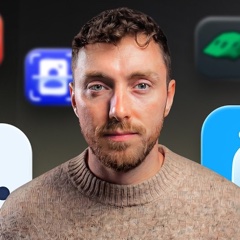
Ryan Thorpe
Founder of Flo, former owner of a 30-app mobile portfolio (Reflectly, Do Habit)
Where to hear and read about Ryan Thorpe1 episode or test
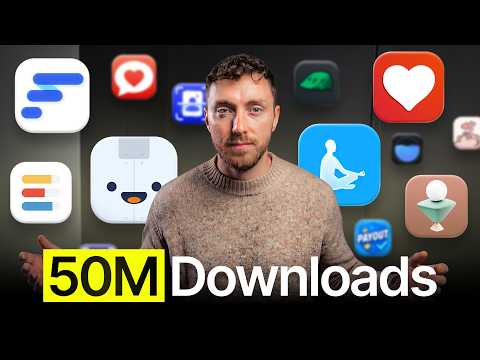
Ryan Thorpe is the founder of Flo and the former owner of a portfolio of about 30 consumer apps, including Reflectly and Do Habit, that passed 50 million downloads. The most useful thing to learn from him is how to turn unpredictable virality into a repeatable system: creators at volume, a tiered test ladder, and ad spend timed to the calendar.
We don't want to work with influencers. We want to work with content creators.
Meet The Guy Dominating The App Store
Ryan Thorpe: the story and the lessons
1How Ryan Thorpe built a 30-app portfolio
Thorpe scaled Reflectly on Facebook with local micro-influencers reading scripts. Reflectly launched in 2017 as an AI journaling app and grew from 2017 to 2020. Creators spoke the local dialect of each country and were paid to read a script, and the video ran as an ad rather than an organic post.
Thorpe calls it finding UGC before it was a hot topic. Darius, then CMO, drove the early playbook.
Odd-looking creator videos beat polished ads because rivals ran graphic creative. The early Reflectly winners were often the strangest ones, with babies crying in the background and bad lighting. They converted well against the polished ads other advertisers were running.
"They were converting like crazy because all the other big companies and advertisers were doing polished graphic ads at the time."
He declined to chase huge scale on Facebook ads. Reflectly peaked at roughly $3 to 4 million ARR, and ad spend had to stay the same just to hold that level. Investors wanted the next Calm or Headspace, but COVID and iOS 14 made Facebook tracking unreliable, and 10 to 50 million ARR did not look realistic to the team.
Thorpe did not think Reflectly would reach $10 million or more.
He bought under-monetized apps because the money came back faster than from ads. The team bought Done, now Do Habit, which came in a bundle with five or six other apps. Better paywalls and in-app subscriptions paid the purchase back within 12 to 18 months. From 2020 to 2025 they rolled up 30 to 35 apps this way.
Owning the users and tech also left an exit open that ad spend never would. His view of Done: "It was quite undermonetized. There was room for growth."
Gaming operators later bought most of the portfolio. Kodon, whose team came from gaming, bought a majority of the apps. They saw the bundle approach and the past results of Reflectly and the others as proof they could run them with more data and less waste.
Thorpe notes consumer apps now pay better than games, because health and productivity apps meet a need people return to and subscriptions give more reliable revenue than ads.
2How Thorpe runs a TikTok creator army
He built the creator pipeline in-house after agencies failed. The team contacted hundreds of creators and automated every step from interview to brief, video, editing, invoicing and payment. With about 20 apps buying ads, thousands of videos could be spread across the portfolio by metrics.
Thorpe hires small content creators, not influencers. The best range was 2,000 to 15,000 or 20,000 followers, enough to show craft and some feel for the algorithm. The work is positioned as paying creators to make an ad, not paying for their audience.
Step two is a paid test task, a basic day-in-the-life video that follows the guidelines. Step three is delivering on time. Passing all three can mean months or years of work.
He expected to find a few viral creators among thousands. About 2,000 creators were on the books, roughly 10% became regulars and 1 to 2% were viral standouts. About 250 regulars came out of the 500 to 700 cycled through, and some were later hired full-time.
Creators are getting savvier, so conversion is likely improving.
Briefs are granular, with sounds, hooks, frame counts and shot rules. Concepts are sorted into lifestyle, trend, educational and testimonial videos. Briefs set the trending sound, hook type, 10 to 15 seconds, 25 to 27 cuts and POV phone shots.
The team counted frames and pooled data across videos to build the brief. Someone was paid each week to scroll TikTok and list the trending songs. Hook types included curiosity, empathetic and reflective.
He pays a flat fee per video and raises it for reliable creators. Pay started at $30 to $40 a video and rose to $80 to $100 for reliable ones. Flat bonuses came at 50K or 100K views, and a video that worked as an ad earned $200 to $1,000 extra.
A video takes one or two hours, so paying for the work rather than the result built loyalty, though many others now pay only on CPM-style performance.
Thorpe pitches creators like a B2B sale and trains them. Outreach was a short DM or email showing videos already made, with a dedicated landing page carrying testimonials from current creators. Creators were taught what makes an ad work and the metrics behind it.
Creators who learn this can charge bigger brands more elsewhere, and they valued a steady partner who spared them from constantly selling for new work.
3Thorpe's ad ladder and January calendar
Thorpe posts organically first, then boosts and Spark Ads winners. Every video goes on the brand accounts. If one gains traction, even around 10K views or 10 to 100 comments, it is boosted with ads and then run as a Spark Ad from the creator's own account.
Videos stuck at 0 to 300 views are in what he calls "jail", and breaking out to 5,000 to 10,000 signals something special. Posting first also saves test budget in quiet months.
He scales in three tiers, each video starting with a $10 to $20 test. Level one gives each video its own ad set, and clear losers are shut off after $5 or $10. Winners move to level two with four or five videos per ad set and $100 to $500 budgets. The top one or two become level three evergreens taking about 90% of spend.
The whole system was run by Thorpe, one media buyer and one head of content. Lower levels stay on while they still work, so one video can run at all three.
He replicates a concept only after it holds metrics at a few hundred dollars a day. Most videos run out of steam after about $100 of spend, because early signals show whether a video will work. A winner is turned into a brief and many creators make variations.
He says reading these signals comes from posting hundreds or thousands of videos.
Thorpe spent about 75% of the yearly ad budget in January. For health and productivity apps, early January downloads cost about half the rest-of-year price, maybe less. The rest of the year goes to learning which creatives to rerun the next January.
He weighed buying apps against ad spend all year, and January was when ad spend won. January spend set the company's MRR and ARR baseline each year.
He times spend to the day: test December 26 to 28, push on Sunday. December 25 is dead. From December 26 to 28 the team tested at $5,000 to $10,000 a day to find the best ten ads, and conversion quality jumped again from December 28 to 30. Saturday night into Sunday morning, spend goes up 10x if early metrics are good.
Done hit number one in the US App Store on January 2 and 3, two years in a row, ahead of TikTok, Google and Chrome. If January 1 falls on a Thursday or Friday, he expects no big jump.
Each ad gets spend sized to its own ceiling. A face-hook reaction ad got about $25,000 in the January period, and a bigger hit could take $100,000.
4What Thorpe learned about virality, limits and what comes next
He accepts that virality cannot be fully explained. One creator hit 66.9 million views, and the team could not replicate her video across 20, 30 or 40 other creators. She still hit again back to back, for more than a year.
His answer is a machine that tests thousands of videos, not a search for one trend. "I don't know why. It's just makes no sense to me."
A familiar voice stopped the scroll but brought legal risk. A creator's video with an Emma Chamberlain voiceover reached 50 to 60 million views. It drew a cease and desist letter, so the team copied the idea with AI voices of Ariana Grande, Beyonce and Adele and never pushed it hard.
Only some copies took off, and the legal risk is mentioned but not weighed against the gains.
He added a B2B line when paid growth hit a ceiling. The mindfulness app, the largest meditation app in the Nordics, is moving into workplace wellness. A contract can be a couple of hundred thousand dollars over three to five years, takes 6 to 12 months to win and 12 to 18 months to wind up.
Buyers want measurable results, such as a 10, 20 or 30% drop in average employee stress tracked over one to two years.
Thorpe built Flo to turn scattered app data into growth actions. Running the portfolio meant pulling App Store Connect, Google Play, RevenueCat and ad managers into spreadsheets. Flo 1.0 puts that data in one place, and 2.0 adds agents for ASO, Apple Search Ads, monitoring and forecasting.
He sees 2015 to 2020 as apps and no-code, 2020 to 2025 as portfolios and TikTok ads, and 2025 to 2030 as AI agents. "So much noise. Where is the signal?"
He expects distribution to decide who wins as AI floods the stores. Keyword competition will grow and top apps will be hard to dislodge. He suggests building an audience first and prototyping an app with ads to test the value proposition.
All results are self-reported, with no total ad spend, cost per install or margins given. Reflectly broke even while spending heavily, so the factory's profitability is unproven.

Meet The Guy Dominating The App Store
Ryan explains how his team built a TikTok creator army, a three-tier ad scaling system and a January-heavy ad calendar to drive 50 million+ downloads across a portfolio of about 30 apps. The system pushed one habit app to number one in the US App Store on January 2 and 3, two years in a row.
Thorpe scaled Reflectly on Facebook with local micro-influencers reading scripts. Reflectly launched in 2017 as an AI journaling app and grew from 2017 to 2020. Creators spoke the local dialect of each country and were paid to read a script, and the video ran as an ad rather than an organic post.
Thorpe calls it finding UGC before it was a hot topic. Darius, then CMO, drove the early playbook.
Odd-looking creator videos beat polished ads because rivals ran graphic creative. The early Reflectly winners were often the strangest ones, with babies crying in the background and bad lighting. They converted well against the polished ads other advertisers were running.
"They were converting like crazy because all the other big companies and advertisers were doing polished graphic ads at the time."
He declined to chase huge scale on Facebook ads. Reflectly peaked at roughly $3 to 4 million ARR, and ad spend had to stay the same just to hold that level. Investors wanted the next Calm or Headspace, but COVID and iOS 14 made Facebook tracking unreliable, and 10 to 50 million ARR did not look realistic to the team.
Thorpe did not think Reflectly would reach $10 million or more.
He bought under-monetized apps because the money came back faster than from ads. The team bought Done, now Do Habit, which came in a bundle with five or six other apps. Better paywalls and in-app subscriptions paid the purchase back within 12 to 18 months. From 2020 to 2025 they rolled up 30 to 35 apps this way.
Owning the users and tech also left an exit open that ad spend never would. His view of Done: "It was quite undermonetized. There was room for growth."
Gaming operators later bought most of the portfolio. Kodon, whose team came from gaming, bought a majority of the apps. They saw the bundle approach and the past results of Reflectly and the others as proof they could run them with more data and less waste.
Thorpe notes consumer apps now pay better than games, because health and productivity apps meet a need people return to and subscriptions give more reliable revenue than ads.
He built the creator pipeline in-house after agencies failed. The team contacted hundreds of creators and automated every step from interview to brief, video, editing, invoicing and payment. With about 20 apps buying ads, thousands of videos could be spread across the portfolio by metrics.
Thorpe hires small content creators, not influencers. The best range was 2,000 to 15,000 or 20,000 followers, enough to show craft and some feel for the algorithm. The work is positioned as paying creators to make an ad, not paying for their audience.
Step two is a paid test task, a basic day-in-the-life video that follows the guidelines. Step three is delivering on time. Passing all three can mean months or years of work.
He expected to find a few viral creators among thousands. About 2,000 creators were on the books, roughly 10% became regulars and 1 to 2% were viral standouts. About 250 regulars came out of the 500 to 700 cycled through, and some were later hired full-time.
Creators are getting savvier, so conversion is likely improving.
Briefs are granular, with sounds, hooks, frame counts and shot rules. Concepts are sorted into lifestyle, trend, educational and testimonial videos. Briefs set the trending sound, hook type, 10 to 15 seconds, 25 to 27 cuts and POV phone shots.
The team counted frames and pooled data across videos to build the brief. Someone was paid each week to scroll TikTok and list the trending songs. Hook types included curiosity, empathetic and reflective.
He pays a flat fee per video and raises it for reliable creators. Pay started at $30 to $40 a video and rose to $80 to $100 for reliable ones. Flat bonuses came at 50K or 100K views, and a video that worked as an ad earned $200 to $1,000 extra.
A video takes one or two hours, so paying for the work rather than the result built loyalty, though many others now pay only on CPM-style performance.
Thorpe pitches creators like a B2B sale and trains them. Outreach was a short DM or email showing videos already made, with a dedicated landing page carrying testimonials from current creators. Creators were taught what makes an ad work and the metrics behind it.
Creators who learn this can charge bigger brands more elsewhere, and they valued a steady partner who spared them from constantly selling for new work.
Thorpe posts organically first, then boosts and Spark Ads winners. Every video goes on the brand accounts. If one gains traction, even around 10K views or 10 to 100 comments, it is boosted with ads and then run as a Spark Ad from the creator's own account.
Videos stuck at 0 to 300 views are in what he calls "jail", and breaking out to 5,000 to 10,000 signals something special. Posting first also saves test budget in quiet months.
He scales in three tiers, each video starting with a $10 to $20 test. Level one gives each video its own ad set, and clear losers are shut off after $5 or $10. Winners move to level two with four or five videos per ad set and $100 to $500 budgets. The top one or two become level three evergreens taking about 90% of spend.
The whole system was run by Thorpe, one media buyer and one head of content. Lower levels stay on while they still work, so one video can run at all three.
He replicates a concept only after it holds metrics at a few hundred dollars a day. Most videos run out of steam after about $100 of spend, because early signals show whether a video will work. A winner is turned into a brief and many creators make variations.
He says reading these signals comes from posting hundreds or thousands of videos.
Thorpe spent about 75% of the yearly ad budget in January. For health and productivity apps, early January downloads cost about half the rest-of-year price, maybe less. The rest of the year goes to learning which creatives to rerun the next January.
He weighed buying apps against ad spend all year, and January was when ad spend won. January spend set the company's MRR and ARR baseline each year.
He times spend to the day: test December 26 to 28, push on Sunday. December 25 is dead. From December 26 to 28 the team tested at $5,000 to $10,000 a day to find the best ten ads, and conversion quality jumped again from December 28 to 30. Saturday night into Sunday morning, spend goes up 10x if early metrics are good.
Done hit number one in the US App Store on January 2 and 3, two years in a row, ahead of TikTok, Google and Chrome. If January 1 falls on a Thursday or Friday, he expects no big jump.
Each ad gets spend sized to its own ceiling. A face-hook reaction ad got about $25,000 in the January period, and a bigger hit could take $100,000.
He accepts that virality cannot be fully explained. One creator hit 66.9 million views, and the team could not replicate her video across 20, 30 or 40 other creators. She still hit again back to back, for more than a year.
His answer is a machine that tests thousands of videos, not a search for one trend. "I don't know why. It's just makes no sense to me."
A familiar voice stopped the scroll but brought legal risk. A creator's video with an Emma Chamberlain voiceover reached 50 to 60 million views. It drew a cease and desist letter, so the team copied the idea with AI voices of Ariana Grande, Beyonce and Adele and never pushed it hard.
Only some copies took off, and the legal risk is mentioned but not weighed against the gains.
He added a B2B line when paid growth hit a ceiling. The mindfulness app, the largest meditation app in the Nordics, is moving into workplace wellness. A contract can be a couple of hundred thousand dollars over three to five years, takes 6 to 12 months to win and 12 to 18 months to wind up.
Buyers want measurable results, such as a 10, 20 or 30% drop in average employee stress tracked over one to two years.
Thorpe built Flo to turn scattered app data into growth actions. Running the portfolio meant pulling App Store Connect, Google Play, RevenueCat and ad managers into spreadsheets. Flo 1.0 puts that data in one place, and 2.0 adds agents for ASO, Apple Search Ads, monitoring and forecasting.
He sees 2015 to 2020 as apps and no-code, 2020 to 2025 as portfolios and TikTok ads, and 2025 to 2030 as AI agents. "So much noise. Where is the signal?"
He expects distribution to decide who wins as AI floods the stores. Keyword competition will grow and top apps will be hard to dislodge. He suggests building an audience first and prototyping an app with ads to test the value proposition.
All results are self-reported, with no total ad spend, cost per install or margins given. Reflectly broke even while spending heavily, so the factory's profitability is unproven.
 Flo
