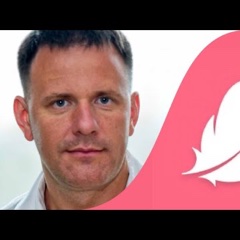
Dmitry Gurski
Cofounder and CEO of Flo, interviewed by Phil Carter
Where to hear and read about Dmitry Gurski1 episode or test

Dmitry Gurski is cofounder and CEO of Flo, a women's health app with 80 million monthly users, almost $300M in annualized revenue and a $1B+ valuation. The lesson most worth taking is to anchor a product on a use case people return to without effort, protect retention in every decision, and let that retention drive organic growth.
There is just a single reliable way nowadays for apps to get organic traffic: to have retention and to grow active audience.
How Best-In-Class Retention Propelled Flo to a $1B Valuation
Dmitry Gurski: the story and the lessons
1Dmitry Gurski's path from potatoes to Flo
Gurski was selling potatoes and mushrooms long before he built companies. He grew potatoes and gathered mushrooms to sell, then wrote articles with his brothers.
He liked mushroom picking because it was risky but full of walking, new places and animals. Berry picking paid predictably but was boring, so he chose to stay hungry. He sees that risk-taking streak in the entrepreneur he became.
Ten years of publishing and 16 years of apps came before Flo. Ten years of book publishing came first, then about 16 years of mobile apps, with five or six exits including Lensa and a nutrition app with 150 million in revenue.
Facebook and Google bought some of their apps. Flo was founded in Belarus and the team now works from London.
Publishing taught him that quality health knowledge is scarce and wanted. The founders saw a market of shallow "pink calendars" and set out to bring book-level quality into an app. The first version shipped on October 3, 2015.
Hundreds of trackers existed then. Now there are thousands, with 10 to 20 new ones each month, and most never aimed to be more than a small utility.
He concludes that long-term projections are usually wrong. In 2015 nobody could have predicted Flo's scale, because people paid a dollar or two for apps and rarely at that. Flo's revenue needed dozens or hundreds of dollars a year per user.
Subscriptions only became easy on Apple by default from 2017. Gurski says landscapes shift too much to forecast.
2How Gurski built Flo as a platform around a free tracker
The tracker was the entrance, with depth built on top. Period tracking was free and drove retention. Articles, insights, a chatbot and then separate modes surrounded it. The result was 80 million monthly users and almost $300M in annualized revenue.
He compares it to Gmail: remove the tracker and the ecosystem crumbles, but the tracker alone would not monetize. A $200 million Series C valued the company at over $1 billion.
He could only test the bet by building it. Nobody could know whether tracker users would move into the deeper features. Gurski calls it a very expensive experiment and a leap of faith.
Users did engage. Sustainable monetization then started a flywheel: revenue funds a better product and marketing, which brings more users and more revenue.
Flo kept every life stage inside one app. Modes for conception, pregnancy, perimenopause and teens sit in the same app, while competitors built a standalone app per use case. Gurski names this the single most impactful retention decision.
Users move from stage to stage without leaving, which matters because long-term retention at Flo means years.
He built the product first and found the business model later. The founders had a vague monetization idea, first leaning toward telehealth consultations, and trusted a good product should come first. Flo started monetizing in 2018.
Charging for content nearly caused a riot in the team in early 2018. Gurski calls subscriptions unlocking "very big luck" and doubts a company this large was possible without them. They also keep incentives honest: an unhappy user pays once and churns.
3Why Gurski treats retention as the only reliable growth engine
Product quality alone won Flo its first users. A rating around 4.9 got Flo promoted by the App Store and Google Play, with the number one or two spot for all significant keywords in about a year.
Basic keyword optimization in descriptions helped a little, but growth was driven by quality of product.
Retention builds an audience, and the audience brings word of mouth. Good retention grows an active audience, and word of mouth follows. It grows faster than linearly because hearing about an app from several friends adds peer pressure.
An app can start on paid acquisition and still build an audience if it retains. Gurski calls word of mouth "almost inevitable" once the product retains and the audience is large.
Flo turned on paid acquisition only after monetization worked. In 2018 and 2019 Flo spent almost nothing on paid acquisition or marketing. This year's marketing budget is about $70M, and paid spend supplies about half of growth.
TikTok counts as semi-paid, a mix of paid and organic.
He picks use cases that need no effort to keep. Period, step and sleep tracking happen whether or not the user chooses it. Users who installed more than a year ago drive over 50% of monthly users and over 50% of subscription revenue.
Apps below 10M monthly users can still see dozens of millions of installs a year bought with heavy spend. Flo has about 80M monthly users, while Strava has around 20M.
Flo builds brand traffic, not generic keyword traffic. In the US, 25% of women under 40 use Flo monthly and unaided brand awareness is about 70%. Brand-driven traffic survived algorithm changes that cut other apps' search traffic in half.
Investors distrust heavy reliance on paid acquisition, and Gurski says Flo's dominance of organic acquisition made its raise possible.
4How Gurski measures retention and subscription revenue
He reads the shape of the retention curve, not the level. Whether 90-day retention is 40%, 30% or 10% is "absolutely meaningless" on its own. He asks whether the curve flattens into a plateau and how many users might try the product.
A mass-market product with a low plateau can still build a huge core base.
He tracks cohort revenue instead of SaaS-style churn. A Flo cohort's revenue runs roughly 100, 70, 70, 70 over successive years, and year four can beat year three. Win-backs make up about 25% of subscriptions.
Consumers leave and come back, and some free users convert years after install. So a rule that annual subscription retention under 40% is bad misjudges consumer businesses.
He values later-year revenue over day-eight payback. Flo invests about a million dollars a year in the product to give users more reasons to convert again.
Small apps often optimize day-eight ROAS to pay back spend within a seven-day trial. RevenueCat data show over 80% of trial starts happen in the first 24 hours.
Every monetization test must respect retention. A monetization gain has to be much bigger than the retention it costs. Flo's five-year retention curves sit in the middle of 50 or 60 other apps, roughly flat despite more sophisticated monetization.
Gurski also wants every free feature to beat other free products, and limits monetization if users could leave for a better rival.
5How Flo runs experiments
Systematic onboarding and paywall tests lifted conversion about eight times. Flo keeps 200 to 300 experiments running at once and has run thousands. Conversion rose from about 2% to 16 to 18%.
Gurski says "we increase conversion eight times. 800 percent because of such experimentation".
No single test moved long-term retention much. Long-term retention is still the hardest metric to move. Gains came from product quality in combination, not from something like a button color.
Active days per user correlate strongly with long-term retention and with monetization.
6How Gurski chooses features and new segments
He let users rank about 20 candidate features. Partner mode topped the list in user research and launched in October 2023, letting partners follow a cycle for things like conception and pregnancy.
Peer apps only shared cycle status and symptoms. Flo built education, insights, content and quizzes that work almost like mini games for the pair.
He judges features on marketability as well as user value. One Latin American TikTok post about partner mode drew 2 million likes and 200,000 shares. Several dozen similar posts followed, with 100 million free views and 350,000 installs in days.
It roughly doubles the addressable market and means two users must churn instead of one. Flo now has more than 2 million partners as active users and expects about 10% of users to connect with partners.
Gurski enters underserved segments where Flo can become the default. The perimenopause mode launched this year and should reach 3 million users and about $25 to 30 million in revenue. It shows the highest propensity to pay of any mode.
It has no big competitor and builds on trust from younger users as they age. Share among women over 35 is much smaller than among 18 to 20, and the new modes aim to close that gap.
7What Gurski would change and where he takes Flo next
He wants Flo braver and faster on intuition. Gurski sees the data-driven culture sliding into analysis paralysis at times. He would put about 20% of resources into fast bets on vision and intuition.
About 20% of Flo's experiments succeed, and he estimates 70 to 75% of development resources went to failed work, worth hundreds of millions. He sees that as the price of learning, and a decision is only bad if nobody reflects on it.
He is rebuilding Flo around AI before newcomers disrupt it. Content moved from articles to stories to short videos, and users now expect an answer without exploration. Flo is building a medically accurate chat assistant.
AI calorie trackers realize an idea he and his brother tried about 10 years ago with cheap human labor. Flo wants to change its own product so newcomers do not disrupt it.
The mission is what he finds best about the job. In the US, 40% of women trying to conceive use Flo and about 30% of pregnancies are supported by it. Flo has gifted 27 million subscriptions in more than 60 countries.
Flo has a medical board and three papers in Nature. Earlier, Gurski ran a charity in Belarus that opened several dozen STEM centers for village children until it was shut down. He found charity harder than business and plans to return to it, and his advice to his younger self is to ignore critics.

How Best-In-Class Retention Propelled Flo to a $1B Valuation
Flo's CEO explains how a free, highly retentive period tracker became the entry point to a multi-mode women's health platform, and why retention drives organic growth, monetization and valuation. The result is 80 million monthly active users, close to $300M in annualized revenue and a $1B+ valuation, with mostly organic acquisition.
Gurski was selling potatoes and mushrooms long before he built companies. He grew potatoes and gathered mushrooms to sell, then wrote articles with his brothers.
He liked mushroom picking because it was risky but full of walking, new places and animals. Berry picking paid predictably but was boring, so he chose to stay hungry. He sees that risk-taking streak in the entrepreneur he became.
Ten years of publishing and 16 years of apps came before Flo. Ten years of book publishing came first, then about 16 years of mobile apps, with five or six exits including Lensa and a nutrition app with 150 million in revenue.
Facebook and Google bought some of their apps. Flo was founded in Belarus and the team now works from London.
Publishing taught him that quality health knowledge is scarce and wanted. The founders saw a market of shallow "pink calendars" and set out to bring book-level quality into an app. The first version shipped on October 3, 2015.
Hundreds of trackers existed then. Now there are thousands, with 10 to 20 new ones each month, and most never aimed to be more than a small utility.
He concludes that long-term projections are usually wrong. In 2015 nobody could have predicted Flo's scale, because people paid a dollar or two for apps and rarely at that. Flo's revenue needed dozens or hundreds of dollars a year per user.
Subscriptions only became easy on Apple by default from 2017. Gurski says landscapes shift too much to forecast.
The tracker was the entrance, with depth built on top. Period tracking was free and drove retention. Articles, insights, a chatbot and then separate modes surrounded it. The result was 80 million monthly users and almost $300M in annualized revenue.
He compares it to Gmail: remove the tracker and the ecosystem crumbles, but the tracker alone would not monetize. A $200 million Series C valued the company at over $1 billion.
He could only test the bet by building it. Nobody could know whether tracker users would move into the deeper features. Gurski calls it a very expensive experiment and a leap of faith.
Users did engage. Sustainable monetization then started a flywheel: revenue funds a better product and marketing, which brings more users and more revenue.
Flo kept every life stage inside one app. Modes for conception, pregnancy, perimenopause and teens sit in the same app, while competitors built a standalone app per use case. Gurski names this the single most impactful retention decision.
Users move from stage to stage without leaving, which matters because long-term retention at Flo means years.
He built the product first and found the business model later. The founders had a vague monetization idea, first leaning toward telehealth consultations, and trusted a good product should come first. Flo started monetizing in 2018.
Charging for content nearly caused a riot in the team in early 2018. Gurski calls subscriptions unlocking "very big luck" and doubts a company this large was possible without them. They also keep incentives honest: an unhappy user pays once and churns.
Product quality alone won Flo its first users. A rating around 4.9 got Flo promoted by the App Store and Google Play, with the number one or two spot for all significant keywords in about a year.
Basic keyword optimization in descriptions helped a little, but growth was driven by quality of product.
Retention builds an audience, and the audience brings word of mouth. Good retention grows an active audience, and word of mouth follows. It grows faster than linearly because hearing about an app from several friends adds peer pressure.
An app can start on paid acquisition and still build an audience if it retains. Gurski calls word of mouth "almost inevitable" once the product retains and the audience is large.
Flo turned on paid acquisition only after monetization worked. In 2018 and 2019 Flo spent almost nothing on paid acquisition or marketing. This year's marketing budget is about $70M, and paid spend supplies about half of growth.
TikTok counts as semi-paid, a mix of paid and organic.
He picks use cases that need no effort to keep. Period, step and sleep tracking happen whether or not the user chooses it. Users who installed more than a year ago drive over 50% of monthly users and over 50% of subscription revenue.
Apps below 10M monthly users can still see dozens of millions of installs a year bought with heavy spend. Flo has about 80M monthly users, while Strava has around 20M.
Flo builds brand traffic, not generic keyword traffic. In the US, 25% of women under 40 use Flo monthly and unaided brand awareness is about 70%. Brand-driven traffic survived algorithm changes that cut other apps' search traffic in half.
Investors distrust heavy reliance on paid acquisition, and Gurski says Flo's dominance of organic acquisition made its raise possible.
He reads the shape of the retention curve, not the level. Whether 90-day retention is 40%, 30% or 10% is "absolutely meaningless" on its own. He asks whether the curve flattens into a plateau and how many users might try the product.
A mass-market product with a low plateau can still build a huge core base.
He tracks cohort revenue instead of SaaS-style churn. A Flo cohort's revenue runs roughly 100, 70, 70, 70 over successive years, and year four can beat year three. Win-backs make up about 25% of subscriptions.
Consumers leave and come back, and some free users convert years after install. So a rule that annual subscription retention under 40% is bad misjudges consumer businesses.
He values later-year revenue over day-eight payback. Flo invests about a million dollars a year in the product to give users more reasons to convert again.
Small apps often optimize day-eight ROAS to pay back spend within a seven-day trial. RevenueCat data show over 80% of trial starts happen in the first 24 hours.
Every monetization test must respect retention. A monetization gain has to be much bigger than the retention it costs. Flo's five-year retention curves sit in the middle of 50 or 60 other apps, roughly flat despite more sophisticated monetization.
Gurski also wants every free feature to beat other free products, and limits monetization if users could leave for a better rival.
Systematic onboarding and paywall tests lifted conversion about eight times. Flo keeps 200 to 300 experiments running at once and has run thousands. Conversion rose from about 2% to 16 to 18%.
Gurski says "we increase conversion eight times. 800 percent because of such experimentation".
No single test moved long-term retention much. Long-term retention is still the hardest metric to move. Gains came from product quality in combination, not from something like a button color.
Active days per user correlate strongly with long-term retention and with monetization.
He let users rank about 20 candidate features. Partner mode topped the list in user research and launched in October 2023, letting partners follow a cycle for things like conception and pregnancy.
Peer apps only shared cycle status and symptoms. Flo built education, insights, content and quizzes that work almost like mini games for the pair.
He judges features on marketability as well as user value. One Latin American TikTok post about partner mode drew 2 million likes and 200,000 shares. Several dozen similar posts followed, with 100 million free views and 350,000 installs in days.
It roughly doubles the addressable market and means two users must churn instead of one. Flo now has more than 2 million partners as active users and expects about 10% of users to connect with partners.
Gurski enters underserved segments where Flo can become the default. The perimenopause mode launched this year and should reach 3 million users and about $25 to 30 million in revenue. It shows the highest propensity to pay of any mode.
It has no big competitor and builds on trust from younger users as they age. Share among women over 35 is much smaller than among 18 to 20, and the new modes aim to close that gap.
He wants Flo braver and faster on intuition. Gurski sees the data-driven culture sliding into analysis paralysis at times. He would put about 20% of resources into fast bets on vision and intuition.
About 20% of Flo's experiments succeed, and he estimates 70 to 75% of development resources went to failed work, worth hundreds of millions. He sees that as the price of learning, and a decision is only bad if nobody reflects on it.
He is rebuilding Flo around AI before newcomers disrupt it. Content moved from articles to stories to short videos, and users now expect an answer without exploration. Flo is building a medically accurate chat assistant.
AI calorie trackers realize an idea he and his brother tried about 10 years ago with cheap human labor. Flo wants to change its own product so newcomers do not disrupt it.
The mission is what he finds best about the job. In the US, 40% of women trying to conceive use Flo and about 30% of pregnancies are supported by it. Flo has gifted 27 million subscriptions in more than 60 countries.
Flo has a medical board and three papers in Nature. Earlier, Gurski ran a charity in Belarus that opened several dozen STEM centers for village children until it was shut down. He found charity harder than business and plans to return to it, and his advice to his younger self is to ignore critics.

 Flo
