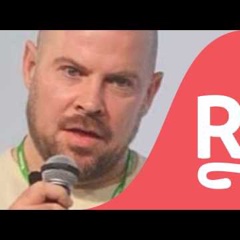
Rik Haandrikman
VP of Growth at RevenueCat
Where to hear and read about Rik Haandrikman1 episode or test

Rik Haandrikman is VP of Growth at RevenueCat, a former free-to-play games growth lead who now reads the data of over 100,000 subscription apps. The one thing most worth learning from him is that the first session decides the business, so treat onboarding and the paywall as a product matched to your economics.
You could probably make something that looks and feels like Duolingo for the first 30 minutes, but then it'll be done.
Insights from RevenueCat’s 2026 State of Subscription Apps Report
Rik Haandrikman: the story and the lessons
1Who Rik Haandrikman is and why RevenueCat publishes its report
Haandrikman spent about a decade in free-to-play growth before RevenueCat. He ran growth for free-to-play games for roughly ten years, which taught him how to make people pay for what you build. Before RevenueCat he worked in developer tooling, and he has been there three and a half years.
Host Carter notes that free-to-play is among the most competitive marketing environments.
He backs an annual benchmark because operators cannot tell if their numbers are good. RevenueCat powers in-app purchases and subscriptions for over 100,000 apps across Apple, Google, web and Amazon. Haandrikman calls its data the biggest cross-platform monetization data set, and the report lets readers compare by category and region.
The 2026 report is the fourth annual edition, runs about 300 pages and takes four months to write. The data covers only apps using RevenueCat's SDK, and the hard paywall figure cannot count users who never reach a paywall.
2How Haandrikman reads the winner-take-most app market
The top apps are pulling away while new supply explodes. The top 10% of apps grew over 300% year over year while the median grew 5%. New subscription apps launched per month rose from about 2,000 in early 2022 to 15,000 in January, a 7x increase.
He names three forces: more apps means more noise and harder discovery, top performers compound their data and team advantages, and users are more sophisticated, so they pay more but leave sooner.
Polish is table stakes, so distribution and community decide winners. In the Shipyard hackathon, 15% as many participants as the summer event delivered twice as many finished products, at a much higher quality bar. He was a little shocked at how high it was.
Product depth and breadth are still hard to vibe code. Apps that make people feel something and bring them together are hard to build from scratch.
He tells founders to niche down to a group they can reach. Shotsy began as a tool its founder built for herself and her GLP-1 Reddit group, then snowballed. Cal AI won users who wanted speed over perfect macros, and MyFitnessPal later acquired it.
Near-free software makes niches viable that never paid off before. Haandrikman sees little change in the tactics from a year or two ago: do the homework and find your users.
Haandrikman says build in public only where your customers already are. Sharing progress inside the Reddit group she served helped the Shotsy founder build something made for those people. Studyfetch uses TikTok because college students go there for study help.
As a pure growth hack for eyeballs, he says it is not a sensible way to spend time. His rule is to know your customer, go where they are, and stay authentic.
He expects low loyalty in AI apps unless the product is a bond. AI apps make 41% more revenue per payer but churn 30% faster, and users return when a better model launches. The pattern resembles Netflix: leave when a show ends, return for the next season.
Tolan builds a bond with an AI alien in the first 60 seconds, which lifts activation, conversion and retention. He expects retention to look wildly different where the bond is the value proposition.
Thin AI wrappers survive only by adding what the big agents lack. Wrapper apps depend on the OpenAI or Gemini API, and every free user costs API fees. The big agents are absorbing simple functions such as identifier apps.
Survivors borrow from gaming, such as a Pokedex-style collection to complete for plants. The winners still think about product, experience and craft.
3Haandrikman on onboarding, paywalls and pricing
He treats the first session as the moment the business is decided. 80 to 90% of trial starts and half of conversions happen on day 0, as do 55% of cancellations on 3-day trials. In business apps over 90% of trial starts happen on day 0.
The biggest apps give onboarding a PM, a pod and as much design and engineering as the rest of the product. They aim for the aha moment before the paywall, ideally before the core product.
He favors asking more onboarding questions and feeding answers to an LLM. Fitness apps pass goals to an LLM that sets up the first workouts or matches a trainer on the spot, collapsing time to value from hours to seconds.
More questions also create sunk cost that makes a trial start more likely, and the answers can go back to ad networks for better targeting. Web onboarding gives deterministic data, unlike mobile with its tracking limits.
He says pick a hard paywall unless free users create value. Hard paywalls convert 10.7% of installs to paid against 2.7% for freemium, yet one-year retention is nearly identical. Freemium draws a broader audience, and a free user can still convert two years in.
The hard paywall edge ignores people who never reach the paywall, which RevenueCat cannot measure. Without upsells, ads or organic growth from free users, he says freemium is charity.
He points to Quizlet and Chess.com as models for free users that pay back. Quizlet drove over 90% of acquisition through SEO and word of mouth, giving it a moat and a cheap blended CAC. Chess.com converts users months or years after sign-up at roughly $80 to $100 a year.
Show a paywall at a gated feature and tailor the offer to what you learned about the user, rather than repeating the onboarding paywall.
AI costs push consumer apps toward metered credits and tiers. Duolingo, Strava and Tinder had near-zero marginal cost per subscriber, but LLM features change that, and some users spend 10 to 12 hours a day. Metered credits "drop the floor and raise the ceiling", so many pay a little and the most engaged pay more.
Duolingo Max puts AI features in a higher tier, and consumables charge subscribers who exceed a usage limit.
Longer trials convert better, yet teams keep shortening them. Longer trials have converted better every year of the report, while the share of short trials rises every year to protect economics. Tolan cut its trial from 7 days to 3 to limit runaway AI costs.
For AI apps the tradeoff is real, so weigh the conversion gain against the cost of free usage.
4How Haandrikman works and what he would build
He tells his team to tinker with AI tools one to two hours daily. He asks everyone to pause regular work for an hour or two to try tools like Perplexity, computer use and OpenClaw. RevenueCat moved everyone onto Manus at the start of the year, and the team is much faster on complex projects.
Capabilities change so fast that early investment pays back almost immediately. Host Phil describes a U-shaped curve: productivity dips while learning, then compounds.
He keeps a Slack channel where every idea is assumed to be dumb. The channel for dumb ideas makes people post freely. It produced the AppGrowth annual conference, planned in three months, and the App Store rejection socks.
His one change would be an office, since remote work makes rapid brainstorming harder.
Haandrikman runs an agent that builds niche apps around the clock. An OpenClaw agent on a Mac Mini builds and launches apps, each niched down and with RevenueCat added. The nearest to shipping is a medication tracker for people 65 and up, with huge fonts and high contrast.
If building an app today, he says he would build for a narrow niche.

Insights from RevenueCat’s 2026 State of Subscription Apps Report
Rik Haandrikman walks through the biggest findings of RevenueCat's 2026 State of Subscription Apps report: a winner-take-most market, AI apps that churn faster, hard paywall versus freemium tradeoffs, and onboarding as the decisive moment. The data shows the top 10% of apps grew over 300% year over year while the median grew 5%, and that 80 to 90% of trial starts happen on day zero.
Haandrikman spent about a decade in free-to-play growth before RevenueCat. He ran growth for free-to-play games for roughly ten years, which taught him how to make people pay for what you build. Before RevenueCat he worked in developer tooling, and he has been there three and a half years.
Host Carter notes that free-to-play is among the most competitive marketing environments.
He backs an annual benchmark because operators cannot tell if their numbers are good. RevenueCat powers in-app purchases and subscriptions for over 100,000 apps across Apple, Google, web and Amazon. Haandrikman calls its data the biggest cross-platform monetization data set, and the report lets readers compare by category and region.
The 2026 report is the fourth annual edition, runs about 300 pages and takes four months to write. The data covers only apps using RevenueCat's SDK, and the hard paywall figure cannot count users who never reach a paywall.
The top apps are pulling away while new supply explodes. The top 10% of apps grew over 300% year over year while the median grew 5%. New subscription apps launched per month rose from about 2,000 in early 2022 to 15,000 in January, a 7x increase.
He names three forces: more apps means more noise and harder discovery, top performers compound their data and team advantages, and users are more sophisticated, so they pay more but leave sooner.
Polish is table stakes, so distribution and community decide winners. In the Shipyard hackathon, 15% as many participants as the summer event delivered twice as many finished products, at a much higher quality bar. He was a little shocked at how high it was.
Product depth and breadth are still hard to vibe code. Apps that make people feel something and bring them together are hard to build from scratch.
He tells founders to niche down to a group they can reach. Shotsy began as a tool its founder built for herself and her GLP-1 Reddit group, then snowballed. Cal AI won users who wanted speed over perfect macros, and MyFitnessPal later acquired it.
Near-free software makes niches viable that never paid off before. Haandrikman sees little change in the tactics from a year or two ago: do the homework and find your users.
Haandrikman says build in public only where your customers already are. Sharing progress inside the Reddit group she served helped the Shotsy founder build something made for those people. Studyfetch uses TikTok because college students go there for study help.
As a pure growth hack for eyeballs, he says it is not a sensible way to spend time. His rule is to know your customer, go where they are, and stay authentic.
He expects low loyalty in AI apps unless the product is a bond. AI apps make 41% more revenue per payer but churn 30% faster, and users return when a better model launches. The pattern resembles Netflix: leave when a show ends, return for the next season.
Tolan builds a bond with an AI alien in the first 60 seconds, which lifts activation, conversion and retention. He expects retention to look wildly different where the bond is the value proposition.
Thin AI wrappers survive only by adding what the big agents lack. Wrapper apps depend on the OpenAI or Gemini API, and every free user costs API fees. The big agents are absorbing simple functions such as identifier apps.
Survivors borrow from gaming, such as a Pokedex-style collection to complete for plants. The winners still think about product, experience and craft.
He treats the first session as the moment the business is decided. 80 to 90% of trial starts and half of conversions happen on day 0, as do 55% of cancellations on 3-day trials. In business apps over 90% of trial starts happen on day 0.
The biggest apps give onboarding a PM, a pod and as much design and engineering as the rest of the product. They aim for the aha moment before the paywall, ideally before the core product.
He favors asking more onboarding questions and feeding answers to an LLM. Fitness apps pass goals to an LLM that sets up the first workouts or matches a trainer on the spot, collapsing time to value from hours to seconds.
More questions also create sunk cost that makes a trial start more likely, and the answers can go back to ad networks for better targeting. Web onboarding gives deterministic data, unlike mobile with its tracking limits.
He says pick a hard paywall unless free users create value. Hard paywalls convert 10.7% of installs to paid against 2.7% for freemium, yet one-year retention is nearly identical. Freemium draws a broader audience, and a free user can still convert two years in.
The hard paywall edge ignores people who never reach the paywall, which RevenueCat cannot measure. Without upsells, ads or organic growth from free users, he says freemium is charity.
He points to Quizlet and Chess.com as models for free users that pay back. Quizlet drove over 90% of acquisition through SEO and word of mouth, giving it a moat and a cheap blended CAC. Chess.com converts users months or years after sign-up at roughly $80 to $100 a year.
Show a paywall at a gated feature and tailor the offer to what you learned about the user, rather than repeating the onboarding paywall.
AI costs push consumer apps toward metered credits and tiers. Duolingo, Strava and Tinder had near-zero marginal cost per subscriber, but LLM features change that, and some users spend 10 to 12 hours a day. Metered credits "drop the floor and raise the ceiling", so many pay a little and the most engaged pay more.
Duolingo Max puts AI features in a higher tier, and consumables charge subscribers who exceed a usage limit.
Longer trials convert better, yet teams keep shortening them. Longer trials have converted better every year of the report, while the share of short trials rises every year to protect economics. Tolan cut its trial from 7 days to 3 to limit runaway AI costs.
For AI apps the tradeoff is real, so weigh the conversion gain against the cost of free usage.
He tells his team to tinker with AI tools one to two hours daily. He asks everyone to pause regular work for an hour or two to try tools like Perplexity, computer use and OpenClaw. RevenueCat moved everyone onto Manus at the start of the year, and the team is much faster on complex projects.
Capabilities change so fast that early investment pays back almost immediately. Host Phil describes a U-shaped curve: productivity dips while learning, then compounds.
He keeps a Slack channel where every idea is assumed to be dumb. The channel for dumb ideas makes people post freely. It produced the AppGrowth annual conference, planned in three months, and the App Store rejection socks.
His one change would be an office, since remote work makes rapid brainstorming harder.
Haandrikman runs an agent that builds niche apps around the clock. An OpenClaw agent on a Mac Mini builds and launches apps, each niched down and with RevenueCat added. The nearest to shipping is a medication tracker for people 65 and up, with huge fonts and high contrast.
If building an app today, he says he would build for a narrow niche.
 RevenueCat
