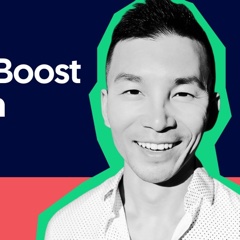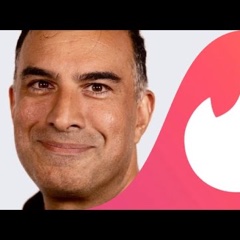
Ravi Mehta
Former Chief Product Officer at Tinder, ex-Facebook, TripAdvisor and Xbox product leader
Where to hear and read about Ravi Mehta2 episodes and tests

 SubversiveHow Tinder's Monetization Strategy Propelled it to $1B+ in Revenue

 Lenny's PodcastHow to build your product strategy stack | Ravi Mehta (Tinder, Facebook, Tripadvisor, Outpace)
Ravi Mehta is a consumer product leader who was Chief Product Officer at Tinder, after roles at Facebook, TripAdvisor and Xbox, and is now co-founder and CEO of Outpace. The thing most worth learning from him is to charge for value users already get, and to set strategy and a destination before setting goals.
how do we monetize the value that they're getting rather than try to extract from it
How Tinder's Monetization Strategy Propelled it to $1B+ in Revenue
Ravi Mehta: the story and the lessons
1Ravi Mehta's path from game coder to Tinder CPO
Mehta started coding at 9 or 10 and began building games early. He learned on an Apple computer his father brought home from American Express, then started a game company in high school.
That habit of building carried through to the startup he runs now.
Mehta joined Xbox Live early, when Microsoft bet its gaming future on the internet. He spent about six years at Microsoft as one of the first 20 or so people on the Xbox team.
The internet bet set Microsoft apart from Nintendo and Sony.
After business school he went to startups before returning to big consumer products. He was employee number one at a fintech startup, then joined Brian Balfour's first startup.
At TripAdvisor he led consumer product and moved it toward transactions. He led consumer product there for about five years and was VP of product. He helped shift the company from user reviews toward a transactional marketplace.
This is also where he developed his strategy framework.
He went to Facebook to understand how a social-media-native generation would date. He led a Gen Z team at Facebook as product director. In 2017 he saw people moving to Instagram and Snapchat, which made him want to know what dating would look like for them.
He then joined Tinder, drawn by the size of the impact, and became Chief Product Officer.
He left Tinder after about ten years because he missed building new things. He spent about 18 months at Reforge as an executive in residence, helping launch the product leadership and product strategy programs. He then co-founded Outpace.
Outpace came from a gap he saw while at Reforge: content and courses had become accessible, but one-on-one coaching had not. It uses systems and content to structure coaching, and AI to make coaches more efficient.
2How Tinder spread: mobile, USC and dense networks
Tinder won by being built for mobile as mobile reached critical mass. Facebook sign-in and light profiles cut onboarding to under five minutes. Desktop dating sites took 20 to 30 minutes and only reached people with a serious need.
The swipe came from scanning a bar or nightclub, and location replaced neighborhood search. Mehta says the early team knew where to cut friction and where to add it.
Tinder added friction on purpose with mutual matching before messaging. Both people must swipe right before they can talk, unlike apps where anyone can message anyone.
Mehta's point is that you only want to talk to someone who is interested in you and you in them, and on a phone it feels like chatting with a friend.
Tinder seeded one close-knit campus network at USC. The team introduced the app one fraternity or sorority house at a time. Location showed new users the other USC people already on it, so use spread to nearly everyone.
The playbook then scaled to every US college and beyond. Mehta notes that successful consumer social apps often vault off an existing close-knit network, as early Facebook did.
Tinder pushed campus growth with ambassadors first, then with product. A campus ambassador network sped adoption, and Bumble and dozens of other companies now copy it. Tinder U moved that push into the app. In the swipe off, colleges competed over swipe counts.
Students cared about beating other schools, not only about meeting each other.
Tinder treated people in the same place and time as a community. Festival Mode let users swipe on others going to Coachella or Stagecoach, which covered the summer usage dip. Swipe Search sent notifications to a region at the hours people usually came online.
The notification bursts created moments with many swipes and many matches.
3How Tinder's monetization reached $1B+ a year
Tinder built paid features that lift a limit of free use. Seeing who liked you breaks the rule that you must swipe blind and shortens the time to a match. A person you swiped left on is about 30% likely to change their mind three weeks later.
The feature speeds engagement up instead of slowing it down, so free users are not harmed. Mehta says it "essentially allows you to break the rules of the game".
Tinder had almost no revenue for its first three or four years. That left a large pool of users who had never paid. Viral growth was getting harder, so monetization mattered more to unlock paid acquisition channels.
Advertising was considered, but any friction risked shrinking the network. The open question was where in the flow to introduce payment without hurting a product that works.
Each Tinder tier has its own promise and job. Plus gives more swipes, Gold gives more matches, and Platinum gives better conversations, including messaging before a match a limited number of times.
Messaging before matching had been an ironclad Tinder rule. A super like makes the receiver three times more likely to swipe right, and that idea inspired the Platinum feature.
Mehta designed in-app purchases to multiply tiers, not cannibalize them. A Gold user who has gone through everyone who liked them buys a Boost or sends a Super Like. Big spenders add $50 to $100 in purchases on top of the subscription.
His test for any feature mix is whether the features negate or multiply each other. More tiers also add complexity to the purchase decision.
Tinder used bright-line principles to decide what stays free. Height is the most requested filter and Tinder never added it, because Tinder wants to be a way to find people by chance, not a search engine.
Those lines show where zero friction is right and where friction is fine because users get enough value to pay.
The monetization system added north of $100M in revenue a year. In its fastest growth years Tinder added more than $100M in revenue year over year, and it now earns well past $1B a year.
Mehta says Tinder borrowed from social gaming, where grinders spend time and whales spend money. Younger users grind more, and older users who want a long-term partner can pay more.
4What Mehta learned from Tinder's biggest spenders
A few heavy spenders drove much of Tinder's a la carte revenue. A single-digit percent of users produced a large share of it. Average revenue per user was about $30, while whales spent $200 to $300.
The team guessed they were wealthy people flaunting money.
Talking to whales showed the team's assumption was wrong. They were military, salespeople or newcomers to a city, earning no more than average. They had an intense use case, not more money.
The data showed the lever and only conversations explained why. Mehta urges PMs to pick up the phone and learn users' psychology.
Whales priced Tinder against the cost of dating, not other subscriptions. A couple of hundred dollars a month looked small next to a few dates. That reference point let Tinder price a super like with a note well above expectations.
The calls led to Tinder Platinum, a third tier with a bundle of super likes and boosts, and to a super like with a note that lets you message before matching. The PM ran the calls for about a week and kept reporting back.
5Mehta's rules for monetizing consumer products
Mehta says to charge for value users get, not extract from it. Monetization teams should start from what the consumer wants and how they get value. Price rises are company motivated and shrink the surplus users keep.
Dating apps raised prices and added products, and some users now find them too expensive and turn to Instagram for social discovery.
He leaves surplus with users to protect organic growth. Surplus gives delighted users, high net promoter scores and word of mouth. Take all of it and organic growth falls, so the extra money goes to buying users on Facebook and Google.
He treats value creation, delivery and capture as one system with tensions to balance. Setting a revenue target of 20% and then hunting for price rises starts from the company's needs.
He says to get one tier working before adding more. If a single tier can't work, that is a product market fit problem, not a monetization problem. Over 100,000 consumer subscription apps exist and fewer than 50 have reached billion-dollar valuations.
Tiers and consumables suit high-churn, novelty-driven products like Tinder and games better than habit products like Netflix, Calm or Headspace. He calls them "optimizations".
Mehta looks for the weak link in growth, which moves as you fix it. Early on Tinder created huge value and grew virally at low cost. By 2019 the organic loop was slowing and the focus moved to capturing value from whales.
Dating apps now monetize well, and the weak link has shifted to engagement and churn. Solving one problem highlights the next.
He warns that dormant subscribers are not proof of value. Forgotten subscriptions bring free revenue but dull the sense that users must be given a reason to stay. Consumers want to be delighted every month or they cancel.
He expects AI costs to push more apps to tiers while subscription fatigue grows, with a few AI tools already totaling $60 to $70 a month.
A longer checkout can lift conversion in health and wellness. At Sesame, a healthcare company, a 3-page checkout became a 25-page intake and conversion rose 40%.
By checkout the person is already convinced, and the intake data personalizes their experience. It does not work in every category.
6Mehta's product strategy stack
Mehta splits strategy into five layers: mission, company strategy, product strategy, roadmap, goals. Teams define it top down and debug it from the bottom up. If goals slip, check whether the roadmap can move them, then whether the product strategy is clear, then whether the team understands the company strategy and mission.
He says prioritization stalls when PMs can't choose between two features of similar size, and the gap usually traces back to a strategy that is unclear or not understood.
Mehta says a strategy doc is incomplete without wireframes. He began this at TripAdvisor with a top-down trip planning strategy, a problem Google and several startups had not nailed. Words alone let everyone read a different strategy.
His test is to ask what the four or five nav bar items are. He compares it to an architect who must provide a blueprint, which can be low fidelity.
Mehta wants PMs to sketch their own wireframes. Paper works, and Balsamiq lets you build conceptual wireframes in an afternoon. He has used Balsamiq for about 10 years whenever he gets stuck on a UX issue.
Limited screen space forces trade-offs, and wireframes make them visible early.
Similar roadmaps can sit on different strategies. Slack and Discord ship near-identical features but have different missions. Tinder and Hinge diverge on mission, company strategy and product strategy, then converge on goals.
Hinge is designed to be deleted and avoided swiping, while Tinder is built around fast swiping and makes single life more fun. Both measure success by meaningful conversations.
Tinder resisted dating-app filters to protect serendipity. Most dating apps filter by occupation, income, religion, height and smoking. Tinder wanted people to chat and meet, not to treat it as a search engine for people.
Users say they meet people they otherwise never would have, and filters would narrow the pool.
At TripAdvisor, strategy kept booking experiments from undermining trip planning. Usage was interleaved with Google. Optimizing for bookings in the moment pushed people past planning a trip and building a wish list.
With the strategy of getting people to plan on the site, the team could opportunity-size roadmap items and measure them against that destination.
Mehta says not to over-polish mission and vision. Vision is the future the company sees and mission is its role in it. He is fine merging them into one line.
His advice is to write something that sounds right and excites people. His rule is "whatever works".
7How Mehta sets goals
Mehta puts goals after strategy and roadmap, so they serve a destination. Companies usually set revenue and retention targets first and then ask for a strategy. He calls his order contrarian, and a few people have yelled at him about it.
Driving 250 miles only counts if the destination is Vegas. If a goal pulls away from the destination, decide whether to leave that gain on the table or change the destination.
He commits only to outcomes the team knows how to move. At the frontier of understanding, a team that lacks the levers should set a goal to learn them. Four risks follow in order: understanding, dependency, execution and strategic.
He could brainstorm 10 retention experiments without knowing why people keep using the product. If the team can't yet execute well, a goal like 20 experiments in a quarter still moves the frontier.
When leadership demands an outcome, he splits the quarter into learning and executing. Spend a couple of weeks on customer talks and analysis, form hypotheses, then execute to validate them.
If the goal is missed, the team can say what it learned, where it went off track and what to commit to next. He finds a clear learning path often earns more trust than expected.
Mehta tracks whether the team knows why it hit or missed. His two by two crosses hitting the goal with knowing why. The ideal is hit and know why, and a miss should at least come with progress on understanding.
Hitting a goal without knowing why "is eventually going to catch up with you".
8How Mehta leads and develops product people
Mehta matches his leadership mode to his confidence in the direction. If he is confident and the team has autonomy, he leads in a scalable way. If not, he micromanages briefly and in detail, teaching the framework behind each decision.
Fully hands off lets the team drift, and micromanaging forever caps team size and signals distrust. Success is a team that reaches answers better than his own. He names Jobs, Musk and Zuckerberg as famous micromanagers.
He built a 12 competency framework to train PMs fast. Newly public TripAdvisor needed to grow quickly, but hiring an experienced PM in Boston took three to six months. It hired from business school and undergrad into four six-month rotations over two years.
The four areas are execution, customer insight, strategy and leadership, three competencies each. The structure holds from APM to CPO, though an APM sees execution as daily work and a CPO as systems.
He uses the competencies to give root-cause feedback. You rate yourself as needs focus, on track or outperforming on each competency, and your manager does the same in five to ten minutes. The gaps start the deep conversation.
A fix for a tactical symptom is finished once made, while understanding underlying behaviors lets people diagnose their own performance. He says to invite real-time feedback and thank people enthusiastically, even if it hurts.
Mehta tests product sense by asking about a product the candidate loves. He uses the word love on purpose, to see what they gravitate toward. Follow-ups cover why they love it, a feature they would build and how they would measure it.
The same logic applies to picking a coach: ask about the client they are most proud of helping.
9What Mehta learned moving from big company to startup
Mehta says a startup's edge is low latency, not high velocity. Big companies can always ship more. A startup can have an idea one day and test it the next. His test is how long it takes to go from deciding to change a button's text to seeing results.
Starting out felt slower to him, with fewer engineers, no team around him and no existing users to research.
He decides on informed conviction early, not on experiments. A startup lacks the users to reach statistical significance, so experiments take too long or rest on tiny samples. He asks whether there is enough data to move forward and stop digging.
After executing, you double down if right or shift direction quickly if wrong.
He tells would-be founders to build an early-stage network before leaping. A big-company network rarely transfers, since people build careers around one stage. Early-stage people are generalists who write code and specs.
He points to founder-dating communities, Indie Hackers and Everything Marketplaces, and to angels who see what is top of mind.
At Outpace he uses AI to give coaches a starting point. Outpace prompts OpenAI with participants' written answers to draft feedback, which coaches edit with what they know of the person. Prompts simulate action oriented, sympathetic, inquisitive and informative styles.
The year's model advances pulled the AI roadmap forward, which required a pivot. In his words, it is less about AI doing all the work and more about AI "providing a really good starting point".
How Tinder's Monetization Strategy Propelled it to $1B+ in Revenue
Tinder grew virally on campuses first, then built a layered monetization system of three subscription tiers plus in-app purchases that each lift a specific limit on matching. That system added north of $100 million in year-over-year revenue in its fastest growth years and took Tinder to significantly over $1B a year.
Mehta started coding at 9 or 10 and began building games early. He learned on an Apple computer his father brought home from American Express, then started a game company in high school.
That habit of building carried through to the startup he runs now.
Mehta joined Xbox Live early, when Microsoft bet its gaming future on the internet. He spent about six years at Microsoft as one of the first 20 or so people on the Xbox team.
The internet bet set Microsoft apart from Nintendo and Sony.
At TripAdvisor he led consumer product and moved it toward transactions. He led consumer product there for about five years and was VP of product. He helped shift the company from user reviews toward a transactional marketplace.
This is also where he developed his strategy framework.
He went to Facebook to understand how a social-media-native generation would date. He led a Gen Z team at Facebook as product director. In 2017 he saw people moving to Instagram and Snapchat, which made him want to know what dating would look like for them.
He then joined Tinder, drawn by the size of the impact, and became Chief Product Officer.
Tinder won by being built for mobile as mobile reached critical mass. Facebook sign-in and light profiles cut onboarding to under five minutes. Desktop dating sites took 20 to 30 minutes and only reached people with a serious need.
The swipe came from scanning a bar or nightclub, and location replaced neighborhood search. Mehta says the early team knew where to cut friction and where to add it.
Tinder added friction on purpose with mutual matching before messaging. Both people must swipe right before they can talk, unlike apps where anyone can message anyone.
Mehta's point is that you only want to talk to someone who is interested in you and you in them, and on a phone it feels like chatting with a friend.
Tinder seeded one close-knit campus network at USC. The team introduced the app one fraternity or sorority house at a time. Location showed new users the other USC people already on it, so use spread to nearly everyone.
The playbook then scaled to every US college and beyond. Mehta notes that successful consumer social apps often vault off an existing close-knit network, as early Facebook did.
Tinder pushed campus growth with ambassadors first, then with product. A campus ambassador network sped adoption, and Bumble and dozens of other companies now copy it. Tinder U moved that push into the app. In the swipe off, colleges competed over swipe counts.
Students cared about beating other schools, not only about meeting each other.
Tinder treated people in the same place and time as a community. Festival Mode let users swipe on others going to Coachella or Stagecoach, which covered the summer usage dip. Swipe Search sent notifications to a region at the hours people usually came online.
The notification bursts created moments with many swipes and many matches.
Tinder built paid features that lift a limit of free use. Seeing who liked you breaks the rule that you must swipe blind and shortens the time to a match. A person you swiped left on is about 30% likely to change their mind three weeks later.
The feature speeds engagement up instead of slowing it down, so free users are not harmed. Mehta says it "essentially allows you to break the rules of the game".
Tinder had almost no revenue for its first three or four years. That left a large pool of users who had never paid. Viral growth was getting harder, so monetization mattered more to unlock paid acquisition channels.
Advertising was considered, but any friction risked shrinking the network. The open question was where in the flow to introduce payment without hurting a product that works.
Each Tinder tier has its own promise and job. Plus gives more swipes, Gold gives more matches, and Platinum gives better conversations, including messaging before a match a limited number of times.
Messaging before matching had been an ironclad Tinder rule. A super like makes the receiver three times more likely to swipe right, and that idea inspired the Platinum feature.
Mehta designed in-app purchases to multiply tiers, not cannibalize them. A Gold user who has gone through everyone who liked them buys a Boost or sends a Super Like. Big spenders add $50 to $100 in purchases on top of the subscription.
His test for any feature mix is whether the features negate or multiply each other. More tiers also add complexity to the purchase decision.
Tinder used bright-line principles to decide what stays free. Height is the most requested filter and Tinder never added it, because Tinder wants to be a way to find people by chance, not a search engine.
Those lines show where zero friction is right and where friction is fine because users get enough value to pay.
The monetization system added north of $100M in revenue a year. In its fastest growth years Tinder added more than $100M in revenue year over year, and it now earns well past $1B a year.
Mehta says Tinder borrowed from social gaming, where grinders spend time and whales spend money. Younger users grind more, and older users who want a long-term partner can pay more.
Mehta says to charge for value users get, not extract from it. Monetization teams should start from what the consumer wants and how they get value. Price rises are company motivated and shrink the surplus users keep.
Dating apps raised prices and added products, and some users now find them too expensive and turn to Instagram for social discovery.
He leaves surplus with users to protect organic growth. Surplus gives delighted users, high net promoter scores and word of mouth. Take all of it and organic growth falls, so the extra money goes to buying users on Facebook and Google.
He treats value creation, delivery and capture as one system with tensions to balance. Setting a revenue target of 20% and then hunting for price rises starts from the company's needs.
He says to get one tier working before adding more. If a single tier can't work, that is a product market fit problem, not a monetization problem. Over 100,000 consumer subscription apps exist and fewer than 50 have reached billion-dollar valuations.
Tiers and consumables suit high-churn, novelty-driven products like Tinder and games better than habit products like Netflix, Calm or Headspace. He calls them "optimizations".
Mehta looks for the weak link in growth, which moves as you fix it. Early on Tinder created huge value and grew virally at low cost. By 2019 the organic loop was slowing and the focus moved to capturing value from whales.
Dating apps now monetize well, and the weak link has shifted to engagement and churn. Solving one problem highlights the next.
He warns that dormant subscribers are not proof of value. Forgotten subscriptions bring free revenue but dull the sense that users must be given a reason to stay. Consumers want to be delighted every month or they cancel.
He expects AI costs to push more apps to tiers while subscription fatigue grows, with a few AI tools already totaling $60 to $70 a month.
A longer checkout can lift conversion in health and wellness. At Sesame, a healthcare company, a 3-page checkout became a 25-page intake and conversion rose 40%.
By checkout the person is already convinced, and the intake data personalizes their experience. It does not work in every category.
How to build your product strategy stack | Ravi Mehta (Tinder, Facebook, Tripadvisor, Outpace)
Ravi Mehta explains his product strategy stack (mission, company strategy, product strategy, roadmap, goals), the frontier of understanding for setting goals, and how to lead product teams. His Tinder and Tripadvisor examples show how strategy resolves prioritization fights and how talking to users overturned a wrong assumption about big spenders.
Mehta started coding at 9 or 10 and began building games early. He learned on an Apple computer his father brought home from American Express, then started a game company in high school.
That habit of building carried through to the startup he runs now.
Mehta joined Xbox Live early, when Microsoft bet its gaming future on the internet. He spent about six years at Microsoft as one of the first 20 or so people on the Xbox team.
The internet bet set Microsoft apart from Nintendo and Sony.
After business school he went to startups before returning to big consumer products. He was employee number one at a fintech startup, then joined Brian Balfour's first startup.
At TripAdvisor he led consumer product and moved it toward transactions. He led consumer product there for about five years and was VP of product. He helped shift the company from user reviews toward a transactional marketplace.
This is also where he developed his strategy framework.
He went to Facebook to understand how a social-media-native generation would date. He led a Gen Z team at Facebook as product director. In 2017 he saw people moving to Instagram and Snapchat, which made him want to know what dating would look like for them.
He then joined Tinder, drawn by the size of the impact, and became Chief Product Officer.
He left Tinder after about ten years because he missed building new things. He spent about 18 months at Reforge as an executive in residence, helping launch the product leadership and product strategy programs. He then co-founded Outpace.
Outpace came from a gap he saw while at Reforge: content and courses had become accessible, but one-on-one coaching had not. It uses systems and content to structure coaching, and AI to make coaches more efficient.
A few heavy spenders drove much of Tinder's a la carte revenue. A single-digit percent of users produced a large share of it. Average revenue per user was about $30, while whales spent $200 to $300.
The team guessed they were wealthy people flaunting money.
Talking to whales showed the team's assumption was wrong. They were military, salespeople or newcomers to a city, earning no more than average. They had an intense use case, not more money.
The data showed the lever and only conversations explained why. Mehta urges PMs to pick up the phone and learn users' psychology.
Whales priced Tinder against the cost of dating, not other subscriptions. A couple of hundred dollars a month looked small next to a few dates. That reference point let Tinder price a super like with a note well above expectations.
The calls led to Tinder Platinum, a third tier with a bundle of super likes and boosts, and to a super like with a note that lets you message before matching. The PM ran the calls for about a week and kept reporting back.
Mehta splits strategy into five layers: mission, company strategy, product strategy, roadmap, goals. Teams define it top down and debug it from the bottom up. If goals slip, check whether the roadmap can move them, then whether the product strategy is clear, then whether the team understands the company strategy and mission.
He says prioritization stalls when PMs can't choose between two features of similar size, and the gap usually traces back to a strategy that is unclear or not understood.
Mehta says a strategy doc is incomplete without wireframes. He began this at TripAdvisor with a top-down trip planning strategy, a problem Google and several startups had not nailed. Words alone let everyone read a different strategy.
His test is to ask what the four or five nav bar items are. He compares it to an architect who must provide a blueprint, which can be low fidelity.
Mehta wants PMs to sketch their own wireframes. Paper works, and Balsamiq lets you build conceptual wireframes in an afternoon. He has used Balsamiq for about 10 years whenever he gets stuck on a UX issue.
Limited screen space forces trade-offs, and wireframes make them visible early.
Similar roadmaps can sit on different strategies. Slack and Discord ship near-identical features but have different missions. Tinder and Hinge diverge on mission, company strategy and product strategy, then converge on goals.
Hinge is designed to be deleted and avoided swiping, while Tinder is built around fast swiping and makes single life more fun. Both measure success by meaningful conversations.
Tinder resisted dating-app filters to protect serendipity. Most dating apps filter by occupation, income, religion, height and smoking. Tinder wanted people to chat and meet, not to treat it as a search engine for people.
Users say they meet people they otherwise never would have, and filters would narrow the pool.
At TripAdvisor, strategy kept booking experiments from undermining trip planning. Usage was interleaved with Google. Optimizing for bookings in the moment pushed people past planning a trip and building a wish list.
With the strategy of getting people to plan on the site, the team could opportunity-size roadmap items and measure them against that destination.
Mehta says not to over-polish mission and vision. Vision is the future the company sees and mission is its role in it. He is fine merging them into one line.
His advice is to write something that sounds right and excites people. His rule is "whatever works".
Mehta puts goals after strategy and roadmap, so they serve a destination. Companies usually set revenue and retention targets first and then ask for a strategy. He calls his order contrarian, and a few people have yelled at him about it.
Driving 250 miles only counts if the destination is Vegas. If a goal pulls away from the destination, decide whether to leave that gain on the table or change the destination.
He commits only to outcomes the team knows how to move. At the frontier of understanding, a team that lacks the levers should set a goal to learn them. Four risks follow in order: understanding, dependency, execution and strategic.
He could brainstorm 10 retention experiments without knowing why people keep using the product. If the team can't yet execute well, a goal like 20 experiments in a quarter still moves the frontier.
When leadership demands an outcome, he splits the quarter into learning and executing. Spend a couple of weeks on customer talks and analysis, form hypotheses, then execute to validate them.
If the goal is missed, the team can say what it learned, where it went off track and what to commit to next. He finds a clear learning path often earns more trust than expected.
Mehta tracks whether the team knows why it hit or missed. His two by two crosses hitting the goal with knowing why. The ideal is hit and know why, and a miss should at least come with progress on understanding.
Hitting a goal without knowing why "is eventually going to catch up with you".
Mehta matches his leadership mode to his confidence in the direction. If he is confident and the team has autonomy, he leads in a scalable way. If not, he micromanages briefly and in detail, teaching the framework behind each decision.
Fully hands off lets the team drift, and micromanaging forever caps team size and signals distrust. Success is a team that reaches answers better than his own. He names Jobs, Musk and Zuckerberg as famous micromanagers.
He built a 12 competency framework to train PMs fast. Newly public TripAdvisor needed to grow quickly, but hiring an experienced PM in Boston took three to six months. It hired from business school and undergrad into four six-month rotations over two years.
The four areas are execution, customer insight, strategy and leadership, three competencies each. The structure holds from APM to CPO, though an APM sees execution as daily work and a CPO as systems.
He uses the competencies to give root-cause feedback. You rate yourself as needs focus, on track or outperforming on each competency, and your manager does the same in five to ten minutes. The gaps start the deep conversation.
A fix for a tactical symptom is finished once made, while understanding underlying behaviors lets people diagnose their own performance. He says to invite real-time feedback and thank people enthusiastically, even if it hurts.
Mehta tests product sense by asking about a product the candidate loves. He uses the word love on purpose, to see what they gravitate toward. Follow-ups cover why they love it, a feature they would build and how they would measure it.
The same logic applies to picking a coach: ask about the client they are most proud of helping.
Mehta says a startup's edge is low latency, not high velocity. Big companies can always ship more. A startup can have an idea one day and test it the next. His test is how long it takes to go from deciding to change a button's text to seeing results.
Starting out felt slower to him, with fewer engineers, no team around him and no existing users to research.
He decides on informed conviction early, not on experiments. A startup lacks the users to reach statistical significance, so experiments take too long or rest on tiny samples. He asks whether there is enough data to move forward and stop digging.
After executing, you double down if right or shift direction quickly if wrong.
He tells would-be founders to build an early-stage network before leaping. A big-company network rarely transfers, since people build careers around one stage. Early-stage people are generalists who write code and specs.
He points to founder-dating communities, Indie Hackers and Everything Marketplaces, and to angels who see what is top of mind.
At Outpace he uses AI to give coaches a starting point. Outpace prompts OpenAI with participants' written answers to draft feedback, which coaches edit with what they know of the person. Prompts simulate action oriented, sympathetic, inquisitive and informative styles.
The year's model advances pulled the AI roadmap forward, which required a pivot. In his words, it is less about AI doing all the work and more about AI "providing a really good starting point".
 Tinder