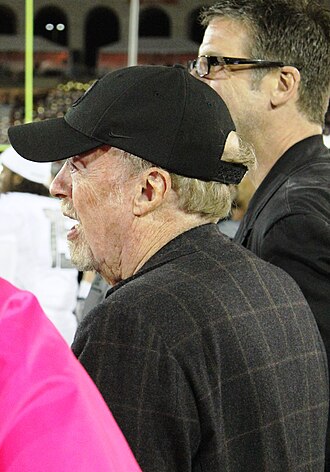
Phil Knight
Founder of Nike, author of Shoe Dog
Where to hear and read about Phil Knight1 book · 2 episodes and tests
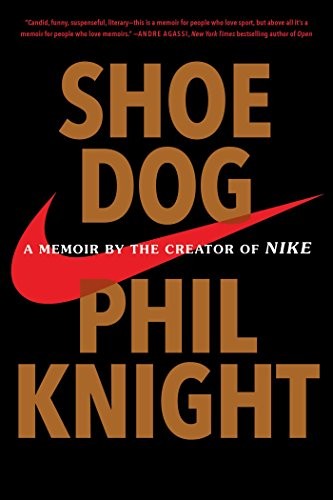


Phil Knight co-founded Nike with his coach Bill Bowerman, growing a side business importing Japanese running shoes into the largest athletic brand in the world, and told the story in his memoir Shoe Dog. The lesson most worth taking from him is how a cash-starved challenger survives: total belief in the product, growth pursued as a condition of survival, creative financing that kept control in his hands, and a team given goals rather than instructions.
Don't tell people how to do things, tell them what to do, and let them surprise you with the results.
Phil Knight: Founder of Nike
Phil Knight: the story and the lessons
1How Phil Knight found his crazy idea
Knight came home at 24 wanting a life that felt like play. In 1962 he returned to Oregon with a University of Oregon degree, a Stanford master's and a year in the army, sleeping in his childhood bed among old trophies.
His goals were vague, but he wanted work that was meaningful, creative and different. On a six-minute-mile run he resolved to chase a dream with an athlete's dedication, and his rule was simply "Don't stop."
A Stanford class paper predicted Japanese shoes would beat Adidas. In Frank Schallenberger's entrepreneurship course in 1962, Knight argued that Japanese running shoes could undercut Adidas and Puma the way Nikon had undercut Leica in cameras.
Classmates met the presentation with boredom and not one question, and faculty saw no big market since few people ran track. He spent weeks in the library on importing and exporting anyway.
He bluffed his way into an Onitsuka distribution deal. In Japan in 1963 the shy 23-year-old walked into Onitsuka, maker of Tiger shoes, invented a company called Blue Ribbon on the spot and claimed a $1 billion running shoe market.
His pitch was to price below Adidas, which most American athletes wore. Samples took almost a year to arrive, and Onitsuka, which had already studied the US market, gave him 13 western states.
Knight rejected the respectable path his father valued. His father kept asking how long he would keep "jackassing around with these shoes" and said he had not sent him to Oregon and Stanford to become a door-to-door shoe salesman.
His mother took $7 from her purse and bought a pair loudly enough for his father to hear, then wore them around the house. Running was so marginal that drivers threw soda at runners.
Belief, not sales skill, sold the shoes. Knight had failed at selling encyclopedias and felt dead inside selling mutual funds, yet selling Tigers from his car trunk at Pacific Northwest track meets he could not write orders fast enough.
He concluded it was not selling at all, because people sensed his belief and wanted some of it. "Belief is irresistible."
2Building Blue Ribbon with Bowerman and Johnson
Bowerman took 49% of the company to get a shoemaking lab. Knight approached his old Oregon coach hoping to get his runners into Tigers, and Bowerman instead asked to be a partner, settling at 51-49 in Knight's favor. Each put in $500 for the first inventory.
Bowerman had written to makers for years, including Adi Dassler, and been ignored. He obsessed over lightness: one ounce saved per step at 880 steps a mile is 55 pounds.
Knight ran Blue Ribbon as a side job for about seven years. He worked as an accountant, then taught at Portland State, putting his own paycheck into the company. In 1969 he quit to work full-time at $18,000 a year.
He wore his Army Reserve uniform to hop free military flights to California with a duffel of Tigers. Early economics were thin: Tigers sold at $6.95, cost $3.50, and commissions left about $1.75 a pair.
Jeff Johnson begged for a job on a sinking ship. Knight told him he owed the bank $11,000 with negative cash flow, and Johnson still asked to go full-time, becoming the first full-time employee in summer 1965.
Johnson kept an index card on every customer, sent birthday and race congratulation cards, opened the first store as a sanctuary with yard-sale chairs and books for runners, and later dreamed up the name Nike.
Celebrating running grew the market more than pushing shoes. Bowerman's 1967 book Jogging sold millions of copies when almost nobody ran, built on the idea that "If you have a body, you're an athlete."
Knight thought his coach had popped a screw. Blue Ribbon's western distribution and Bowerman's nylon Cortez put shoes on the new joggers' feet.
3How Phil Knight financed Nike on debt and growth
Knight put every dollar back into inventory and called it grow or die. He kept debt near 100% of assets and doubled his order each time he repaid the bank, believing true demand always exceeded sales.
Sales doubled year after year, from $8,000 in 1964 to $150 million in 1979, but the strategy left the company repeatedly near collapse. He wrote that "the roadside was littered with cautious, conservative, prudent entrepreneurs."
Oregon banks lent only against book value, so they kept cutting him off. In 1970 banks threw him out for asking for a $1.2 million credit line, and his banker declared his credit "officially, irrevocably, immediately maxed out."
A banker warned that growth off the balance sheet was dangerous. A local offering under the name Sports-Tek failed, and neither venture investors nor Portland business people bought in.
A Japanese trading company kept Nike alive. Nissho Iwai offered to finance all of Blue Ribbon's inventory for market interest plus a 4% royalty, and introduced Knight to Japanese factories.
Its people spent days going through every book before extending credit, because they were more entrepreneurs than bankers. One told him, "There are worse things than ambition."
Employees' families and suppliers put money on the line. Bob Woodell's parents gave $5,000, then their last $3,000, with no interest and no papers; it became $1.6 million in stock at the IPO.
Knight pledged his house and told Penny they would lose it if Blue Ribbon failed. When paychecks bounced, the box supplier, which depended on Nike for about 80% of its business, fronted money.
The Futures program made retailers fund Nike's inventory. Knight offered Nordstrom, Kinney and Athlete's Foot discounts of up to 7% for nonrefundable orders six months ahead.
Retailers refused at first, then signed because the waffle trainer was too scarce to get any other way. The commitments broke the cycle of late shipments, late repayment and no new credit, and helped squeeze more credit from lenders.
Debt instead of equity let Knight keep 46% at the IPO. With no venture dilution, he owned 46% when Nike listed in December 1980 at about $400 million, a $178 million stake.
He resisted going public for fear of losing control, until his mentor Chuck reviewed the books, found only debt and told him it was mandatory.
4How Knight broke from Onitsuka and created Nike
Knight answered Onitsuka's double-cross by quietly building a replacement. He learned Onitsuka was secretly lining up other US distributors, and from his recliner asked what he knew and what the next step was.
Onitsuka also offered to buy 51% of Blue Ribbon, reportedly at book value. Knight stalled, hired a spy, photocopied documents from a visiting manager's briefcase, and began visiting Adidas-linked factories.
The swoosh and the name were rushed deadline choices. Art student Carolyn Davidson drew the logo for $35, and Johnson proposed Nike the night before the shoe name was due, beating Knight's favorite, Dimension Six.
Knight said of the logo, "I don't love it but maybe it'll grow on me." The first Nike shoe was a football cleat made in Mexico that cracked in cold weather.
Knight called the cutoff Nike's independence day. When Onitsuka cut them off early during a recession, he reminded a slumping team they had posted $2 million in sales the prior year with nothing to do with Onitsuka.
"We've got them right where we want them," he said, and heads came up around the table. His pitch was to succeed or fail on their own terms.
Customers followed Blue Ribbon and Bowerman, not the Tiger name. Bowerman's waffle sole, poured into his wife's waffle iron, gave Nike its first hit, and revenue reached $3.2 million in 1972 from about $0.5 million two years earlier.
Nike won in court in 1974 and Onitsuka paid $400,000 to settle. The case brought in junior attorney Rob Strasser, who became Knight's marketing lieutenant.
5How Nike turned athletes into its marketing
Knight put Steve Prefontaine on payroll to get around amateur rules. Prefontaine held every American record from 2,000 to 10,000 meters but was bartending; Knight hired him as national director of public affairs at $5,000 a year.
Asked what the title meant, Knight said "it means he can run fast." Pre's line about making rivals bleed to beat him became Knight's own creed.
Nike signed college coaches so whole teams wore the swoosh. Strasser and Sonny Vaccaro signed coaches, not players, and UNLV, Georgetown, Texas, Arkansas and Iona joined within a month.
Football cleats barely sell, but every televised swoosh built the brand behind the shoes people could buy.
The Jordan deal offered terms bigger rivals could not match. Nike gave Jordan a $2.5 million guarantee plus a 5% royalty on the Air Jordan line, while Converse paid Magic Johnson and Larry Bird about $100,000 a year.
Air Jordan sold $126 million in year one against a goal of $3 million over three years. Rivals with many stars could not offer such upside without angering them.
A designer saved the Jordan relationship by listening. When Jordan was set to leave, Tinker Hatfield built the Air Jordan 3 to his complaints: soft leather, mid-cut, off-court style and a small swoosh.
The deal ran seven more years with a guarantee of at least $18 million, and the Jordan brand later did $6.6 billion in revenue.
Scale lets Nike outbid everyone for the biggest athletes. Nike is more than twice Adidas's size and holds 86% of performance basketball and 96% of lifestyle basketball.
The brand shows up as loyalty rather than price: Nike's 44% gross margin sits below Adidas's 46%. Knight put it plainly: "We're a marketing company and the product is our most important marketing tool."
6Phil Knight's rules for leading a team
Knight named the goal and left the method to his people. His only order to Johnson was to sell more shoes, and Johnson responded with customer files, ad campaigns and the first store.
Johnson hit a store target Knight thought was out of reach. Knight read military history and biographies of Churchill and Kennedy, drawn to leadership under extreme conditions.
He hoarded praise the way Bowerman did. Bowerman weighed words of praise "like uncut diamonds," and Knight did the same, never sending the encouragement Johnson pleaded for.
Knight loved and feared Bowerman, and craved approval from a man who rarely gave it.
Knight put people in over their heads and admitted everyone was. When a trusted employee feared running a bankrupt factory Nike had bought, Knight laughed: "We're all in over our heads. Way over."
The team learned manufacturing and brand building on the job.
He hated losing and cast Adidas as a monster to stay driven. He once played his cousin at badminton 116 times in a summer because the cousin won the first 115.
He admitted Adidas may not have been arrogant at all: "I needed to see them as a monster." He said, "The world is without beauty when you lose."
7Phil Knight's mistakes and what they cost
Nike mistook the running boom for the whole fitness boom. After the $22 million IPO, Nike refused on principle to make aerobics shoes, and Reebok, selling soft white leather shoes to women, passed Nike in sales by 1988.
The IPO cash made a once-starved underdog fat and lazy, though the Futures program kept revenue from falling much.
Channel stuffing in Jordan's first year created a hangover. Year-one sales were pushed into retailers, and total Jordan sales across three years were only about $150 million.
Strasser's rogue product division made the stiff $100 Air Jordan 2 from Italian leather, which Jordan disliked. Strasser left in 1987 for Adidas, and Knight skipped his funeral.
Nike first denied responsibility for its factories. Facing 1990s reports of child labor and toxic glue, Nike said it did not make shoes, before setting supplier standards, publishing supplier lists and running third-party audits.
Mark Parker later said "ignorance is not Bliss," and Nike shared its non-toxic glue with competitors.
Knight's biggest regret was missing his sons' childhood. He kept promising Matthew and Travis more time and falling back into his routine, and gave himself low marks as a father.
Matthew vowed never to wear Nikes. "Above all, I regret not spending more time with my sons."
8What Phil Knight came to believe about business
Money is the blood of a business, not its purpose. By the late 1970s Knight saw winning as creating and contributing to strangers' lives, not merely avoiding loss.
"Business was no more about making money than being human is about making blood."
Success changed nothing on IPO night. Worth $178 million, he turned off the lights, told himself the first part was behind them, and was at his desk before anyone the next rainy morning.
He felt regret and wished he could do it all again. He wrote, "I was no longer making Nikes. Nikes were making me."
Seek a calling, and know giving up is not stopping. He tells people in their mid-20s not to settle for a job or career, because a calling makes fatigue easier to bear and disappointments become fuel.
He calls those who say never give up charlatans, since knowing when to switch can be genius, and warns the best innovators always carry a bull's-eye.

Phil Knight: Founder of Nike
Phil Knight turned a college paper about Japanese running shoes into Nike by betting everything on a market nobody else believed in, and he survived a decade of cash crises through relentless growth and a loyal team. The story is worth hearing for the decisions that nearly killed the company, such as plowing every dollar back into inventory, and the ones that saved it, such as presales, Japanese trade financing and the break with Onitsuka.
Knight came home at 24 wanting a life that felt like play. In 1962 he returned to Oregon with a University of Oregon degree, a Stanford master's and a year in the army, sleeping in his childhood bed among old trophies.
His goals were vague, but he wanted work that was meaningful, creative and different. On a six-minute-mile run he resolved to chase a dream with an athlete's dedication, and his rule was simply "Don't stop."
A Stanford class paper predicted Japanese shoes would beat Adidas. In Frank Schallenberger's entrepreneurship course in 1962, Knight argued that Japanese running shoes could undercut Adidas and Puma the way Nikon had undercut Leica in cameras.
Classmates met the presentation with boredom and not one question, and faculty saw no big market since few people ran track. He spent weeks in the library on importing and exporting anyway.
He bluffed his way into an Onitsuka distribution deal. In Japan in 1963 the shy 23-year-old walked into Onitsuka, maker of Tiger shoes, invented a company called Blue Ribbon on the spot and claimed a $1 billion running shoe market.
His pitch was to price below Adidas, which most American athletes wore. Samples took almost a year to arrive, and Onitsuka, which had already studied the US market, gave him 13 western states.
Knight rejected the respectable path his father valued. His father kept asking how long he would keep "jackassing around with these shoes" and said he had not sent him to Oregon and Stanford to become a door-to-door shoe salesman.
His mother took $7 from her purse and bought a pair loudly enough for his father to hear, then wore them around the house. Running was so marginal that drivers threw soda at runners.
Belief, not sales skill, sold the shoes. Knight had failed at selling encyclopedias and felt dead inside selling mutual funds, yet selling Tigers from his car trunk at Pacific Northwest track meets he could not write orders fast enough.
He concluded it was not selling at all, because people sensed his belief and wanted some of it. "Belief is irresistible."
Bowerman took 49% of the company to get a shoemaking lab. Knight approached his old Oregon coach hoping to get his runners into Tigers, and Bowerman instead asked to be a partner, settling at 51-49 in Knight's favor. Each put in $500 for the first inventory.
Bowerman had written to makers for years, including Adi Dassler, and been ignored. He obsessed over lightness: one ounce saved per step at 880 steps a mile is 55 pounds.
Knight ran Blue Ribbon as a side job for about seven years. He worked as an accountant, then taught at Portland State, putting his own paycheck into the company. In 1969 he quit to work full-time at $18,000 a year.
He wore his Army Reserve uniform to hop free military flights to California with a duffel of Tigers. Early economics were thin: Tigers sold at $6.95, cost $3.50, and commissions left about $1.75 a pair.
Jeff Johnson begged for a job on a sinking ship. Knight told him he owed the bank $11,000 with negative cash flow, and Johnson still asked to go full-time, becoming the first full-time employee in summer 1965.
Johnson kept an index card on every customer, sent birthday and race congratulation cards, opened the first store as a sanctuary with yard-sale chairs and books for runners, and later dreamed up the name Nike.
Celebrating running grew the market more than pushing shoes. Bowerman's 1967 book Jogging sold millions of copies when almost nobody ran, built on the idea that "If you have a body, you're an athlete."
Knight thought his coach had popped a screw. Blue Ribbon's western distribution and Bowerman's nylon Cortez put shoes on the new joggers' feet.
Knight put every dollar back into inventory and called it grow or die. He kept debt near 100% of assets and doubled his order each time he repaid the bank, believing true demand always exceeded sales.
Sales doubled year after year, from $8,000 in 1964 to $150 million in 1979, but the strategy left the company repeatedly near collapse. He wrote that "the roadside was littered with cautious, conservative, prudent entrepreneurs."
Oregon banks lent only against book value, so they kept cutting him off. In 1970 banks threw him out for asking for a $1.2 million credit line, and his banker declared his credit "officially, irrevocably, immediately maxed out."
A banker warned that growth off the balance sheet was dangerous. A local offering under the name Sports-Tek failed, and neither venture investors nor Portland business people bought in.
A Japanese trading company kept Nike alive. Nissho Iwai offered to finance all of Blue Ribbon's inventory for market interest plus a 4% royalty, and introduced Knight to Japanese factories.
Its people spent days going through every book before extending credit, because they were more entrepreneurs than bankers. One told him, "There are worse things than ambition."
Employees' families and suppliers put money on the line. Bob Woodell's parents gave $5,000, then their last $3,000, with no interest and no papers; it became $1.6 million in stock at the IPO.
Knight pledged his house and told Penny they would lose it if Blue Ribbon failed. When paychecks bounced, the box supplier, which depended on Nike for about 80% of its business, fronted money.
The Futures program made retailers fund Nike's inventory. Knight offered Nordstrom, Kinney and Athlete's Foot discounts of up to 7% for nonrefundable orders six months ahead.
Retailers refused at first, then signed because the waffle trainer was too scarce to get any other way. The commitments broke the cycle of late shipments, late repayment and no new credit, and helped squeeze more credit from lenders.
Debt instead of equity let Knight keep 46% at the IPO. With no venture dilution, he owned 46% when Nike listed in December 1980 at about $400 million, a $178 million stake.
He resisted going public for fear of losing control, until his mentor Chuck reviewed the books, found only debt and told him it was mandatory.
Knight answered Onitsuka's double-cross by quietly building a replacement. He learned Onitsuka was secretly lining up other US distributors, and from his recliner asked what he knew and what the next step was.
Onitsuka also offered to buy 51% of Blue Ribbon, reportedly at book value. Knight stalled, hired a spy, photocopied documents from a visiting manager's briefcase, and began visiting Adidas-linked factories.
The swoosh and the name were rushed deadline choices. Art student Carolyn Davidson drew the logo for $35, and Johnson proposed Nike the night before the shoe name was due, beating Knight's favorite, Dimension Six.
Knight said of the logo, "I don't love it but maybe it'll grow on me." The first Nike shoe was a football cleat made in Mexico that cracked in cold weather.
Knight called the cutoff Nike's independence day. When Onitsuka cut them off early during a recession, he reminded a slumping team they had posted $2 million in sales the prior year with nothing to do with Onitsuka.
"We've got them right where we want them," he said, and heads came up around the table. His pitch was to succeed or fail on their own terms.
Knight put Steve Prefontaine on payroll to get around amateur rules. Prefontaine held every American record from 2,000 to 10,000 meters but was bartending; Knight hired him as national director of public affairs at $5,000 a year.
Asked what the title meant, Knight said "it means he can run fast." Pre's line about making rivals bleed to beat him became Knight's own creed.
Knight named the goal and left the method to his people. His only order to Johnson was to sell more shoes, and Johnson responded with customer files, ad campaigns and the first store.
Johnson hit a store target Knight thought was out of reach. Knight read military history and biographies of Churchill and Kennedy, drawn to leadership under extreme conditions.
He hoarded praise the way Bowerman did. Bowerman weighed words of praise "like uncut diamonds," and Knight did the same, never sending the encouragement Johnson pleaded for.
Knight loved and feared Bowerman, and craved approval from a man who rarely gave it.
Knight put people in over their heads and admitted everyone was. When a trusted employee feared running a bankrupt factory Nike had bought, Knight laughed: "We're all in over our heads. Way over."
The team learned manufacturing and brand building on the job.
He hated losing and cast Adidas as a monster to stay driven. He once played his cousin at badminton 116 times in a summer because the cousin won the first 115.
He admitted Adidas may not have been arrogant at all: "I needed to see them as a monster." He said, "The world is without beauty when you lose."
Knight's biggest regret was missing his sons' childhood. He kept promising Matthew and Travis more time and falling back into his routine, and gave himself low marks as a father.
Matthew vowed never to wear Nikes. "Above all, I regret not spending more time with my sons."
Money is the blood of a business, not its purpose. By the late 1970s Knight saw winning as creating and contributing to strangers' lives, not merely avoiding loss.
"Business was no more about making money than being human is about making blood."
Success changed nothing on IPO night. Worth $178 million, he turned off the lights, told himself the first part was behind them, and was at his desk before anyone the next rainy morning.
He felt regret and wished he could do it all again. He wrote, "I was no longer making Nikes. Nikes were making me."
Seek a calling, and know giving up is not stopping. He tells people in their mid-20s not to settle for a job or career, because a calling makes fatigue easier to bear and disappointments become fuel.
He calls those who say never give up charlatans, since knowing when to switch can be genius, and warns the best innovators always carry a bull's-eye.

Nike
Nike grew from a shoe importer starved for capital into the world's biggest apparel brand by turning athletes into its marketing, borrowing heavily to grow, and breaking the rules of its industry. The Michael Jordan royalty deal, which Adidas and Converse could not match, shows how a cash-poor challenger can build a structural edge.
A Stanford class paper predicted Japanese shoes would beat Adidas. In Frank Schallenberger's entrepreneurship course in 1962, Knight argued that Japanese running shoes could undercut Adidas and Puma the way Nikon had undercut Leica in cameras.
Classmates met the presentation with boredom and not one question, and faculty saw no big market since few people ran track. He spent weeks in the library on importing and exporting anyway.
He bluffed his way into an Onitsuka distribution deal. In Japan in 1963 the shy 23-year-old walked into Onitsuka, maker of Tiger shoes, invented a company called Blue Ribbon on the spot and claimed a $1 billion running shoe market.
His pitch was to price below Adidas, which most American athletes wore. Samples took almost a year to arrive, and Onitsuka, which had already studied the US market, gave him 13 western states.
Bowerman took 49% of the company to get a shoemaking lab. Knight approached his old Oregon coach hoping to get his runners into Tigers, and Bowerman instead asked to be a partner, settling at 51-49 in Knight's favor. Each put in $500 for the first inventory.
Bowerman had written to makers for years, including Adi Dassler, and been ignored. He obsessed over lightness: one ounce saved per step at 880 steps a mile is 55 pounds.
Knight ran Blue Ribbon as a side job for about seven years. He worked as an accountant, then taught at Portland State, putting his own paycheck into the company. In 1969 he quit to work full-time at $18,000 a year.
He wore his Army Reserve uniform to hop free military flights to California with a duffel of Tigers. Early economics were thin: Tigers sold at $6.95, cost $3.50, and commissions left about $1.75 a pair.
Celebrating running grew the market more than pushing shoes. Bowerman's 1967 book Jogging sold millions of copies when almost nobody ran, built on the idea that "If you have a body, you're an athlete."
Knight thought his coach had popped a screw. Blue Ribbon's western distribution and Bowerman's nylon Cortez put shoes on the new joggers' feet.
Knight put every dollar back into inventory and called it grow or die. He kept debt near 100% of assets and doubled his order each time he repaid the bank, believing true demand always exceeded sales.
Sales doubled year after year, from $8,000 in 1964 to $150 million in 1979, but the strategy left the company repeatedly near collapse. He wrote that "the roadside was littered with cautious, conservative, prudent entrepreneurs."
Oregon banks lent only against book value, so they kept cutting him off. In 1970 banks threw him out for asking for a $1.2 million credit line, and his banker declared his credit "officially, irrevocably, immediately maxed out."
A banker warned that growth off the balance sheet was dangerous. A local offering under the name Sports-Tek failed, and neither venture investors nor Portland business people bought in.
A Japanese trading company kept Nike alive. Nissho Iwai offered to finance all of Blue Ribbon's inventory for market interest plus a 4% royalty, and introduced Knight to Japanese factories.
Its people spent days going through every book before extending credit, because they were more entrepreneurs than bankers. One told him, "There are worse things than ambition."
Employees' families and suppliers put money on the line. Bob Woodell's parents gave $5,000, then their last $3,000, with no interest and no papers; it became $1.6 million in stock at the IPO.
Knight pledged his house and told Penny they would lose it if Blue Ribbon failed. When paychecks bounced, the box supplier, which depended on Nike for about 80% of its business, fronted money.
The Futures program made retailers fund Nike's inventory. Knight offered Nordstrom, Kinney and Athlete's Foot discounts of up to 7% for nonrefundable orders six months ahead.
Retailers refused at first, then signed because the waffle trainer was too scarce to get any other way. The commitments broke the cycle of late shipments, late repayment and no new credit, and helped squeeze more credit from lenders.
Debt instead of equity let Knight keep 46% at the IPO. With no venture dilution, he owned 46% when Nike listed in December 1980 at about $400 million, a $178 million stake.
He resisted going public for fear of losing control, until his mentor Chuck reviewed the books, found only debt and told him it was mandatory.
Knight answered Onitsuka's double-cross by quietly building a replacement. He learned Onitsuka was secretly lining up other US distributors, and from his recliner asked what he knew and what the next step was.
Onitsuka also offered to buy 51% of Blue Ribbon, reportedly at book value. Knight stalled, hired a spy, photocopied documents from a visiting manager's briefcase, and began visiting Adidas-linked factories.
The swoosh and the name were rushed deadline choices. Art student Carolyn Davidson drew the logo for $35, and Johnson proposed Nike the night before the shoe name was due, beating Knight's favorite, Dimension Six.
Knight said of the logo, "I don't love it but maybe it'll grow on me." The first Nike shoe was a football cleat made in Mexico that cracked in cold weather.
Customers followed Blue Ribbon and Bowerman, not the Tiger name. Bowerman's waffle sole, poured into his wife's waffle iron, gave Nike its first hit, and revenue reached $3.2 million in 1972 from about $0.5 million two years earlier.
Nike won in court in 1974 and Onitsuka paid $400,000 to settle. The case brought in junior attorney Rob Strasser, who became Knight's marketing lieutenant.
Knight put Steve Prefontaine on payroll to get around amateur rules. Prefontaine held every American record from 2,000 to 10,000 meters but was bartending; Knight hired him as national director of public affairs at $5,000 a year.
Asked what the title meant, Knight said "it means he can run fast." Pre's line about making rivals bleed to beat him became Knight's own creed.
Nike signed college coaches so whole teams wore the swoosh. Strasser and Sonny Vaccaro signed coaches, not players, and UNLV, Georgetown, Texas, Arkansas and Iona joined within a month.
Football cleats barely sell, but every televised swoosh built the brand behind the shoes people could buy.
The Jordan deal offered terms bigger rivals could not match. Nike gave Jordan a $2.5 million guarantee plus a 5% royalty on the Air Jordan line, while Converse paid Magic Johnson and Larry Bird about $100,000 a year.
Air Jordan sold $126 million in year one against a goal of $3 million over three years. Rivals with many stars could not offer such upside without angering them.
A designer saved the Jordan relationship by listening. When Jordan was set to leave, Tinker Hatfield built the Air Jordan 3 to his complaints: soft leather, mid-cut, off-court style and a small swoosh.
The deal ran seven more years with a guarantee of at least $18 million, and the Jordan brand later did $6.6 billion in revenue.
Scale lets Nike outbid everyone for the biggest athletes. Nike is more than twice Adidas's size and holds 86% of performance basketball and 96% of lifestyle basketball.
The brand shows up as loyalty rather than price: Nike's 44% gross margin sits below Adidas's 46%. Knight put it plainly: "We're a marketing company and the product is our most important marketing tool."
Nike mistook the running boom for the whole fitness boom. After the $22 million IPO, Nike refused on principle to make aerobics shoes, and Reebok, selling soft white leather shoes to women, passed Nike in sales by 1988.
The IPO cash made a once-starved underdog fat and lazy, though the Futures program kept revenue from falling much.
Channel stuffing in Jordan's first year created a hangover. Year-one sales were pushed into retailers, and total Jordan sales across three years were only about $150 million.
Strasser's rogue product division made the stiff $100 Air Jordan 2 from Italian leather, which Jordan disliked. Strasser left in 1987 for Adidas, and Knight skipped his funeral.
Nike first denied responsibility for its factories. Facing 1990s reports of child labor and toxic glue, Nike said it did not make shoes, before setting supplier standards, publishing supplier lists and running third-party audits.
Mark Parker later said "ignorance is not Bliss," and Nike shared its non-toxic glue with competitors.
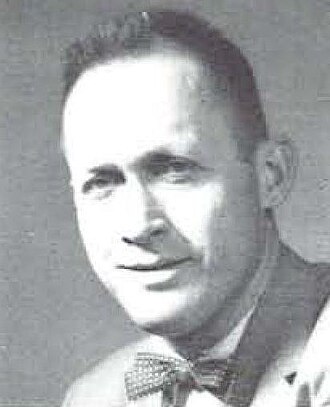
 Nike