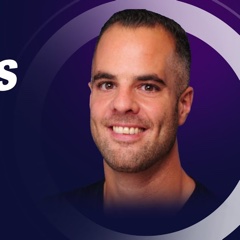
Niels Beenen
Strategic Partnerships at Singular, mobile measurement partner
Where to hear and read about Niels Beenen1 episode or test

Niels Beenen is a strategic partnerships lead at the mobile measurement partner Singular, with 15 years in performance marketing from travel bookings to mobile gaming. The thing most worth learning from him is to judge every channel and country by return on spend after install, not by cost per install.
The harsh reality is for performance marketing it needs to click, it needs to engage and it needs to convert.
Mobile User Acquisition: How to Get Started and What You Need
Niels Beenen: the story and the lessons
1Niels Beenen's path into mobile marketing
Beenen learned mobile marketing while the field was still being invented. He started at a London ad agency generating flight and hotel bookings for large travel brands, then moved to Berlin to work with mobile app developers.
Back then nobody knew how to do mobile marketing, or whether apps would last. That period grew into the free-to-play boom of games like Candy Crush and Clash Royale.
His work at Singular covers platforms, investors and small businesses. His team makes sure Singular's products work with Meta, TikTok and Google advertising. He also advises VCs, incubators and startups on which partners and tools they need.
On the side he freelances as a growth consultant for small and mid-sized businesses.
2How Beenen measures paid mobile acquisition
Beenen wants every signal in one measurement report from the first click. The ad link passes through the MMP's servers, sends the user to the app store, and the install and later events come back to the MMP. Those events include swipes, subscriptions, in-app purchases, ad views and abandoned carts.
He calls these post-install events, or PIEs. Each team must define its own ROI success parameter first. The first goal is a report that shows campaign performance in a second or two, before any optimizing.
He judges channels and countries by ROI, not cost per install. A subscription fitness app got installs in India for one or two cents, but nobody bought. Australia and New Zealand performed far better.
For a subscription app he calls CPI close to irrelevant. His line: "if you don't get converting users like what's the point in buying there in the first place".
Beenen pays more per install in markets where the app converts better. In his example, with an $8 CPI in a tier-one market, an app that converts twice as well in New Zealand can raise its CPI bid there and move budget toward it.
He calls paying more for better markets "step two and step three" of performance marketing.
He tells teams to skip Apple Search Ads Basic campaigns. Basic campaigns show cheap installs but weak post-install events. Apple Search Ads is a high-converting channel overall, so Basic is the exception.
An MMP shows which ad group or campaign earns the revenue, which may be exact match. His words: "do not run a basic campaign it sucks".
3Beenen's starting playbook for user acquisition
Beenen starts with three to five partners that the team picks itself. He suggests big networks such as Google and Meta plus Apple Search Ads, then scaling from there. Inbound pitches from vendors are mostly long-tail networks.
He points to Singular's ROI index, which covers about $20 billion in ad spend, more than 5,000 apps and 300 ad networks, and is ranked per vertical. "Choose your partners and reach out to them that always works better."
He warns small companies against depending on one big partner. Smaller companies often get stuck with a single large partner. He advises trying at least three.
If the team lacks the resources, he suggests a consultant or agency with years of experience. "Don't put your eggs in one basket."
He runs a soft launch to test ads, partners and channel mix. The test compares conversion rate and click-through rate across creatives, messaging and audiences. It also checks what the publisher earns per placement (eCPM).
It can include more than the final three to five partners, with search, social and video run together, and the data picks the winners.
Beenen finds ugly, plain creatives often beat polished ones. Startups often arrived with beautifully designed creatives that lost to rougher ones. He skips themed ideas such as a Christmas creative.
He looks for the message, colors, text or video moment that drives installs. Voodoo's meme-like videos and fake gameplay ads still work.
He changes the early event a campaign optimizes toward as he learns. The first in-app signal may not identify the most valuable users, and the right one can differ by channel and targeting.
A fintech could test sign-up, account opened or a step in between.
4What Beenen expects from iOS privacy and new channels
Beenen plans around most iOS users declining tracking. Under ATT, about 75% of users do not opt in, so their installs are measured through SKAdNetwork.
He says using the device ad ID (IDFA) as before is "simply not going to happen" again, though even seasoned marketers still hope it returns.
He assumes about 20% of SKAdNetwork data is missing and models it. Apple censors data below privacy thresholds, so ROI looks worse than it is, especially for small budgets or spread-out campaigns.
Singular models the gap with about 98% accuracy, which also allows day 7 and day 30 ROI cohorts for faster optimization.
He tells small teams to budget engineering time for SKAdNetwork postbacks. Postbacks differ from what teams collected before. Teams must pick one of seven or eight conversion schemes and build a method to decode what Apple returns.
Indie teams can use an MMP that handles the decoding. Singular started working on this with Apple two years earlier.
Beenen expects Android's Privacy Sandbox to allow ROI by creative. SKAdNetwork cannot report ROI on a specific creative, but Google's approach is expected to. He calls that "a massive win for performance marketeers".
He avoids calling it Google's answer to SKAdNetwork, since that would devalue what Google is doing.
He recommends small teams try connected TV on a CPI basis. Hulu and smart TV apps can be bought on CPI without hundreds of thousands of dollars. Installs are matched probabilistically by IP address.
The MMP stops two networks claiming the same install. He says small teams should read up on media mix modeling, which suits big spenders more for now, but not run it.

Mobile User Acquisition: How to Get Started and What You Need
Explains the measurement setup needed before paid mobile user acquisition: what an MMP does, how iOS privacy changes (ATT and SKAdNetwork) limit data, and how to pick partners and test creatives. The useful result is a concrete starting playbook: soft launch, 3 to 5 partners, ROI over CPI, and plain creatives.
Beenen learned mobile marketing while the field was still being invented. He started at a London ad agency generating flight and hotel bookings for large travel brands, then moved to Berlin to work with mobile app developers.
Back then nobody knew how to do mobile marketing, or whether apps would last. That period grew into the free-to-play boom of games like Candy Crush and Clash Royale.
His work at Singular covers platforms, investors and small businesses. His team makes sure Singular's products work with Meta, TikTok and Google advertising. He also advises VCs, incubators and startups on which partners and tools they need.
On the side he freelances as a growth consultant for small and mid-sized businesses.
Beenen wants every signal in one measurement report from the first click. The ad link passes through the MMP's servers, sends the user to the app store, and the install and later events come back to the MMP. Those events include swipes, subscriptions, in-app purchases, ad views and abandoned carts.
He calls these post-install events, or PIEs. Each team must define its own ROI success parameter first. The first goal is a report that shows campaign performance in a second or two, before any optimizing.
He judges channels and countries by ROI, not cost per install. A subscription fitness app got installs in India for one or two cents, but nobody bought. Australia and New Zealand performed far better.
For a subscription app he calls CPI close to irrelevant. His line: "if you don't get converting users like what's the point in buying there in the first place".
Beenen pays more per install in markets where the app converts better. In his example, with an $8 CPI in a tier-one market, an app that converts twice as well in New Zealand can raise its CPI bid there and move budget toward it.
He calls paying more for better markets "step two and step three" of performance marketing.
He tells teams to skip Apple Search Ads Basic campaigns. Basic campaigns show cheap installs but weak post-install events. Apple Search Ads is a high-converting channel overall, so Basic is the exception.
An MMP shows which ad group or campaign earns the revenue, which may be exact match. His words: "do not run a basic campaign it sucks".
Beenen starts with three to five partners that the team picks itself. He suggests big networks such as Google and Meta plus Apple Search Ads, then scaling from there. Inbound pitches from vendors are mostly long-tail networks.
He points to Singular's ROI index, which covers about $20 billion in ad spend, more than 5,000 apps and 300 ad networks, and is ranked per vertical. "Choose your partners and reach out to them that always works better."
He warns small companies against depending on one big partner. Smaller companies often get stuck with a single large partner. He advises trying at least three.
If the team lacks the resources, he suggests a consultant or agency with years of experience. "Don't put your eggs in one basket."
He runs a soft launch to test ads, partners and channel mix. The test compares conversion rate and click-through rate across creatives, messaging and audiences. It also checks what the publisher earns per placement (eCPM).
It can include more than the final three to five partners, with search, social and video run together, and the data picks the winners.
Beenen finds ugly, plain creatives often beat polished ones. Startups often arrived with beautifully designed creatives that lost to rougher ones. He skips themed ideas such as a Christmas creative.
He looks for the message, colors, text or video moment that drives installs. Voodoo's meme-like videos and fake gameplay ads still work.
He changes the early event a campaign optimizes toward as he learns. The first in-app signal may not identify the most valuable users, and the right one can differ by channel and targeting.
A fintech could test sign-up, account opened or a step in between.
Beenen plans around most iOS users declining tracking. Under ATT, about 75% of users do not opt in, so their installs are measured through SKAdNetwork.
He says using the device ad ID (IDFA) as before is "simply not going to happen" again, though even seasoned marketers still hope it returns.
He assumes about 20% of SKAdNetwork data is missing and models it. Apple censors data below privacy thresholds, so ROI looks worse than it is, especially for small budgets or spread-out campaigns.
Singular models the gap with about 98% accuracy, which also allows day 7 and day 30 ROI cohorts for faster optimization.
He tells small teams to budget engineering time for SKAdNetwork postbacks. Postbacks differ from what teams collected before. Teams must pick one of seven or eight conversion schemes and build a method to decode what Apple returns.
Indie teams can use an MMP that handles the decoding. Singular started working on this with Apple two years earlier.
Beenen expects Android's Privacy Sandbox to allow ROI by creative. SKAdNetwork cannot report ROI on a specific creative, but Google's approach is expected to. He calls that "a massive win for performance marketeers".
He avoids calling it Google's answer to SKAdNetwork, since that would devalue what Google is doing.
He recommends small teams try connected TV on a CPI basis. Hulu and smart TV apps can be bought on CPI without hundreds of thousands of dollars. Installs are matched probabilistically by IP address.
The MMP stops two networks claiming the same install. He says small teams should read up on media mix modeling, which suits big spenders more for now, but not run it.