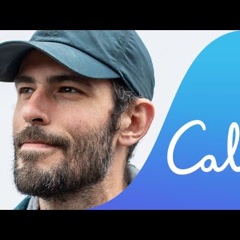
Nick Candler
Former Director of Growth Marketing at Calm, founder of performance marketing agency 10 Scale
Where to hear and read about Nick Candler1 episode or test

Nick Candler is a former bond trader who led growth marketing at Calm from 2019 to 2022 and now runs the performance agency 10 Scale. The lesson most worth taking: at scale, protect unit economics with a steady flow of fresh, trend-aware creative, and let paid ads capture demand that other channels build.
it's not about making your unit economics better. It's about sustaining your unit economics
How Calm Added 1.2M Subscribers with Creative Marketing Tactics
Nick Candler: the story and the lessons
1Nick Candler's path from bond trading to Calm
Candler started in overnight bond trading before moving into user acquisition. He traded Treasury spreads on overnight, 16-hour days at an old-school Chicago prop shop. A fellow trader who had switched careers brought him into user acquisition, and he spent a year in gaming.
Gaming is where he saw how much creative iteration matters, a lesson he carried to Calm.
Prop trading taught him the arbitrage logic behind paid media. Trading spreads are razor thin and contested by people he calls rocket scientists. Early performance marketing felt like the easy old days of arbitrage, though it is more competitive now.
Mindfulness pulled him toward Calm, which he joined in 2019. A mindfulness practice shifted his priorities toward making an impact. Calm then had about 50 people, a performance marketing team of three and almost no paid competition.
He led growth marketing there from 2019 to 2022. Few meditation apps besides Headspace existed, and paid media best practices were still unwritten.
His one regret at Calm was too little time with its founders. He calls Alex Tew and Michael Acton Smith legendary, creative entrepreneurs. Heads-down user acquisition work left him too little time with them.
In a brainstorm on 100 ways to make more money, he says Tew never ran out of ideas.
2How Candler scaled paid social at Calm
Candler fixed creative volume first, and the early wins snowballed. He joined a team spending over $100,000 a day on Meta with only 5 to 10 new creatives a month. Over his time the team made 5,500 ads.
He broke messaging down analytically, learned formats from the agency Tube Science and absorbed those methods in-house. Calm put resources behind whatever worked.
Constant new creative kept acquisition costs from decaying. When output slowed to five to 10 ads a week, CAC worsened by about 10% a week. When the team was cranking, the decay stayed near zero.
At scale attrition never stops because growth moves past early adopters, so LTV tends to fall and CAC to rise. The goal becomes holding CAC flat, or letting it degrade as slowly as possible.
He turned viral internet trends into ads through social listening. Calm built ads from oddly satisfying content like kinetic sand, power washing and 3D Rube Goldberg machines. They changed the growth trajectory for months.
He says he has not seen more explosive user-acquisition growth since those first ads. Ads that fit the feed around them feel less like ads.
A fried egg cracking in a pan doubled Calm's growth overnight. Made with Tube Science, the hook was tied to the line about hitting snooze seven times versus waking up refreshed.
It came when Calm's ads were not competitive at all. Eggs became an inside joke among Calm alumni.
Candler judged ads by who converted, not by clicks. Some Calm ads converted only 5% of trials to purchase, while others reached 60 or 70%. The team predicted what each cohort would pay, down to the single creative, and passed those signals back to the ad channels.
He says user quality by ad mattered more at Calm than anywhere else he has worked. The gaps showed up at massive spend, so they were not noise.
He ran 60-second ads against the standard 10 to 15 seconds. Top-of-funnel response was no different between 10-second and 60-second ads. The longer ad had time to run through value propositions and speak to personas.
Fewer people clicked, but those who did were more qualified and converted better. A viewer who watches a full minute shows higher intent.
When easy growth faded, he invested in measurement. Tailwinds make growth easy until they fade. After that, gains come from better technical and operational processes and predictive signals.
"You're not going to get more growth unless you really dig down."
3How Calm grew beyond paid social
Calm mined usage data to find Sleep Stories. Analysis of usage patterns showed when people needed support, and Sleep Stories followed. Sleep was a painkiller rather than a vitamin.
Co-CEO Michael Acton Smith saw a person scrolling at 2 a.m. who can't sleep as a perfect activation moment. Sleep and meditation users also showed different retention patterns.
Celebrity narrators made every Sleep Story a PR event. Narrators ranged from Matthew McConaughey and Harry Styles to cult-following names like Cillian Murphy. Each release expanded the addressable market and created a PR wave.
The offbeat, cult-favorite choices were deliberate, and the aim was PR buzz, not only content.
Paid social was the only channel that matched Calm's scale. Calm tried Taboola, Outbrain, online video carriers, influencers and TV, including remnant slots at 2 a.m. when sleepless people were watching. None matched paid social's size.
Candler says there was no channel Calm wasn't testing.
He treats paid ads as the cleanup crew for organic demand. Calm's PR, social, lifecycle and B2B partnerships (Amex, Kaiser Permanente) helped it through the SKAdNetwork shock. Paid-only advertisers were hit much harder.
"It's easier to think of the paid ads as like the cleanup crew." He says it is hard to build a good business that leans only on paid acquisition.
Paid social added 1.2 million subscribers, and partnerships added more. Beyond paid, subscribers came from organic and from partnerships, including unexpected ones like Amex. Spotify and credit cards were named as other big deals.
He warns that spending more on paid because of a word-of-mouth halo is a slippery slope. That logic works best for new apps and games with a real K factor.
4Candler's views on creative, AI and the limits of marketing
Candler aims creative at where the esoteric crosses into the mainstream. Good creative is different enough to get attention and familiar enough to be understood. His team watches big platforms and odd corners of the internet, then acts fast.
The book The Creative Curve gave him his best framing. A MS Paint wizard concept built from social listening went massively viral for a client. He says marketers should stay on the curve, not ahead of it.
He matches the funnel to the product's price and model. AllTrails users are already on the trail, so short onboarding fits. Noom's long quiz builds confidence for people who have failed elsewhere, and Finch pairs fast onboarding with a low price.
Creative should follow the approach, and copying everyone else means not standing out.
10 Scale takes only social impact clients and blurs ad and content. The agency works almost only with social impact businesses, mostly in mental health and education. Its copy frameworks come from close competitor intelligence.
He brought over social listening, data-driven scaling frameworks and consistency from Calm.
He uses AI for insights and angles, not final copy. AI is strongest at information consolidation and angle development, while humans still write the copy and own the last mile. 10 Scale is also testing fully autonomous ads as a hedge.
His finance background shaped this view: in fully automated markets, anyone who didn't adopt got run over. He takes the future one week at a time.
He says performance marketers overrate their solo impact. Product and product growth execution matter most. Marketers are like the power forward who scores while everyone else does most of the work.
He shared his learning in a blog, then stopped when competing again. He started The Meta Game to give back after Eric Seufert's user acquisition primer taught him the job. No source material explained how to run ads when he began.
He stopped publishing because he is now in it competing again.

How Calm Added 1.2M Subscribers with Creative Marketing Tactics
Nick Candler explains how Calm scaled paid social through heavy creative iteration, social listening and long-form video ads, while leaning on a strong organic and PR engine. His paid social work added 1.2 million subscribers, and ad creative alone swung trial-to-purchase conversion from 5% to 60 or 70%.
Candler started in overnight bond trading before moving into user acquisition. He traded Treasury spreads on overnight, 16-hour days at an old-school Chicago prop shop. A fellow trader who had switched careers brought him into user acquisition, and he spent a year in gaming.
Gaming is where he saw how much creative iteration matters, a lesson he carried to Calm.
Prop trading taught him the arbitrage logic behind paid media. Trading spreads are razor thin and contested by people he calls rocket scientists. Early performance marketing felt like the easy old days of arbitrage, though it is more competitive now.
Mindfulness pulled him toward Calm, which he joined in 2019. A mindfulness practice shifted his priorities toward making an impact. Calm then had about 50 people, a performance marketing team of three and almost no paid competition.
He led growth marketing there from 2019 to 2022. Few meditation apps besides Headspace existed, and paid media best practices were still unwritten.
His one regret at Calm was too little time with its founders. He calls Alex Tew and Michael Acton Smith legendary, creative entrepreneurs. Heads-down user acquisition work left him too little time with them.
In a brainstorm on 100 ways to make more money, he says Tew never ran out of ideas.
Candler fixed creative volume first, and the early wins snowballed. He joined a team spending over $100,000 a day on Meta with only 5 to 10 new creatives a month. Over his time the team made 5,500 ads.
He broke messaging down analytically, learned formats from the agency Tube Science and absorbed those methods in-house. Calm put resources behind whatever worked.
Constant new creative kept acquisition costs from decaying. When output slowed to five to 10 ads a week, CAC worsened by about 10% a week. When the team was cranking, the decay stayed near zero.
At scale attrition never stops because growth moves past early adopters, so LTV tends to fall and CAC to rise. The goal becomes holding CAC flat, or letting it degrade as slowly as possible.
He turned viral internet trends into ads through social listening. Calm built ads from oddly satisfying content like kinetic sand, power washing and 3D Rube Goldberg machines. They changed the growth trajectory for months.
He says he has not seen more explosive user-acquisition growth since those first ads. Ads that fit the feed around them feel less like ads.
A fried egg cracking in a pan doubled Calm's growth overnight. Made with Tube Science, the hook was tied to the line about hitting snooze seven times versus waking up refreshed.
It came when Calm's ads were not competitive at all. Eggs became an inside joke among Calm alumni.
Candler judged ads by who converted, not by clicks. Some Calm ads converted only 5% of trials to purchase, while others reached 60 or 70%. The team predicted what each cohort would pay, down to the single creative, and passed those signals back to the ad channels.
He says user quality by ad mattered more at Calm than anywhere else he has worked. The gaps showed up at massive spend, so they were not noise.
He ran 60-second ads against the standard 10 to 15 seconds. Top-of-funnel response was no different between 10-second and 60-second ads. The longer ad had time to run through value propositions and speak to personas.
Fewer people clicked, but those who did were more qualified and converted better. A viewer who watches a full minute shows higher intent.
When easy growth faded, he invested in measurement. Tailwinds make growth easy until they fade. After that, gains come from better technical and operational processes and predictive signals.
"You're not going to get more growth unless you really dig down."
Calm mined usage data to find Sleep Stories. Analysis of usage patterns showed when people needed support, and Sleep Stories followed. Sleep was a painkiller rather than a vitamin.
Co-CEO Michael Acton Smith saw a person scrolling at 2 a.m. who can't sleep as a perfect activation moment. Sleep and meditation users also showed different retention patterns.
Celebrity narrators made every Sleep Story a PR event. Narrators ranged from Matthew McConaughey and Harry Styles to cult-following names like Cillian Murphy. Each release expanded the addressable market and created a PR wave.
The offbeat, cult-favorite choices were deliberate, and the aim was PR buzz, not only content.
Paid social was the only channel that matched Calm's scale. Calm tried Taboola, Outbrain, online video carriers, influencers and TV, including remnant slots at 2 a.m. when sleepless people were watching. None matched paid social's size.
Candler says there was no channel Calm wasn't testing.
He treats paid ads as the cleanup crew for organic demand. Calm's PR, social, lifecycle and B2B partnerships (Amex, Kaiser Permanente) helped it through the SKAdNetwork shock. Paid-only advertisers were hit much harder.
"It's easier to think of the paid ads as like the cleanup crew." He says it is hard to build a good business that leans only on paid acquisition.
Paid social added 1.2 million subscribers, and partnerships added more. Beyond paid, subscribers came from organic and from partnerships, including unexpected ones like Amex. Spotify and credit cards were named as other big deals.
He warns that spending more on paid because of a word-of-mouth halo is a slippery slope. That logic works best for new apps and games with a real K factor.
Candler aims creative at where the esoteric crosses into the mainstream. Good creative is different enough to get attention and familiar enough to be understood. His team watches big platforms and odd corners of the internet, then acts fast.
The book The Creative Curve gave him his best framing. A MS Paint wizard concept built from social listening went massively viral for a client. He says marketers should stay on the curve, not ahead of it.
He matches the funnel to the product's price and model. AllTrails users are already on the trail, so short onboarding fits. Noom's long quiz builds confidence for people who have failed elsewhere, and Finch pairs fast onboarding with a low price.
Creative should follow the approach, and copying everyone else means not standing out.
10 Scale takes only social impact clients and blurs ad and content. The agency works almost only with social impact businesses, mostly in mental health and education. Its copy frameworks come from close competitor intelligence.
He brought over social listening, data-driven scaling frameworks and consistency from Calm.
He uses AI for insights and angles, not final copy. AI is strongest at information consolidation and angle development, while humans still write the copy and own the last mile. 10 Scale is also testing fully autonomous ads as a hedge.
His finance background shaped this view: in fully automated markets, anyone who didn't adopt got run over. He takes the future one week at a time.
He says performance marketers overrate their solo impact. Product and product growth execution matter most. Marketers are like the power forward who scores while everyone else does most of the work.
He shared his learning in a blog, then stopped when competing again. He started The Meta Game to give back after Eric Seufert's user acquisition primer taught him the job. No source material explained how to run ads when he began.
He stopped publishing because he is now in it competing again.