Morrie Schonfeld
Co-founder, Pingo (AI language learning app)
Where to hear and read about Morrie Schonfeld1 episode or test

Morrie Schonfeld is co-founder of Pingo, an AI language conversation app that reached nearly $500k a month about 14 months after launching from a college dorm. The lesson most worth taking is to build growth on virality that shows the product, then manage creators like a portfolio and cut the weak ones.
Virality that converts shows and doesn't tell.
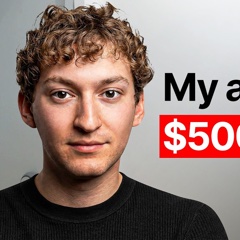
How I built a $500k/mo ai app (so you can just copy me)
Morrie Schonfeld: the story and the lessons
1How Pingo went from a dorm room to nearly $500k a month
Morrie built Pingo with a roommate who was his Chinese practice partner. Morrie learned Chinese for 7 to 8 years, and his roommate Michael, a fluent speaker, was his practice partner. Michael had built apps for years and brought Morrie on in sophomore year.
Pingo began as role-play scenarios in about 20 languages and aims at conversation, not drills. Morrie's view is that Duolingo-style apps do not make people conversationally fluent, which is what most learners want.
Michael chose an inherently viral feature before building anything. After his earlier food app did poorly, Michael decided virality is the best growth lever. Talking to an AI looked like an interesting hook, so that became the product. The look is four colored sound-wave lines with no avatar.
The founders' reasoning: "there's kind of not a point in building a consumer app that won't go viral".
The two founders made every video themselves for the first three months. They just talked to Pingo on an iPad until about $20k MRR. The first videos went up around December 16 or 17, when the app launched.
With the founders as the only creators, any spike in users could be traced to a single video.
Beginner and culture hooks produced the first hits. The first viral video got about 100k views, with the hook "POV your Chinese teacher on Sundays used to hit you, so now you seek validation from an AI". A Chinese cultural hook tied to the TikTok ban and RedNote reached about a million.
Humor layered on culture and learning went more viral than either alone, and the same concept then worked in French.
Pingo now goes viral every month in many languages. The app logged 350 to 370 million views in 30 days, which Morrie calls conservative. Korean, German, French, Arabic and Japanese have all hit.
The team was two people until mid-October and is now four, adding a content hire and an engineer.
2Why Morrie only counts virality that shows the product
Every Pingo creator video must show the actual app. Videos usually feature someone talking to Pingo on screen. Everything that has gone viral since August used Pingo, and one creator's videos without the app got views but did not convert.
Early hooks about language learning that did not use Pingo never went viral, whether talking, demos or learning tips. Morrie's rule: "virality that converts shows and doesn't tell".
Morrie dropped slideshows because they burned accounts out fast. Slideshows could hit 1 million views, but accounts burned out quickly. Their conversion compared with videos showing Pingo was night and day.
AI-automated slideshows are not being tried for now.
A flexible product mode let creators discover the viral format themselves. Custom scenarios existed from day one and were never built for marketing. Creators prompt Pingo to be mean, and one such video hit 52 million views.
The crying format has worked since September, so the team did not have to keep hunting for new ideas. Users now ask for a built-in "mean" or "18+" toggle, which is on the roadmap but not built.
An AI that insults the user is the hook. The first version had the creator mispronounce a word, Pingo roast them, and the creator cry. The format spread to Russian, Arabic and other languages and went viral again in mid-October.
Variations now add props, such as writing in Russian or knitting in Japanese. Crying is optional, and some videos just have Pingo be mean.
Morrie briefs creators with a working example and why it worked. The brief has the example video, the likely reason it went viral and the key steps. Creators recreate it as closely as possible in their target language.
For a format nobody has made, the team films the example first. A crying-Pingo variant went viral with one creator and was then sent to everyone.
3How Morrie runs about 100 creators like a VC portfolio
Morrie cut the weak creators and kept the strong ones. The top 20 to 30% of creators drive most views and the bottom adds almost nothing. The team cut 30 to 50 and now sits near 100.
Each new creator gets an internal clock before a keep-or-cut decision. In Morrie's words: "We cut the bottom of the portfolio. Kept the top, working on the mid-range."
He recruits micro creators who have gone viral at least once. Targets are creators under 10k followers, up to about 30k, who make content about learning the language. A prior breakout makes the bonus feel reachable.
Searches start with keywords like learning or practicing German, then college majors and minors, with native speakers last. Some creators under 2k followers blew up, so follower count does not predict success.
Creators get base pay plus non-stacking view bonuses. Base pay values their time, with bonus tiers at 50k, 100k, 200k, 500k and 1M views. A creator earns only the highest tier reached.
A creator at 200,000 views gets the $100 tier, not $150.
Spend runs in two pools, one fixed and one flexible. The in-house program pays base plus tier bonuses and cannot be switched off. Noise pays on a CPM model with a cap, scales winners and tests ideas quickly.
Core in-house creators act as the testing cohort: "Make it like this, post it next week, and we'll see how it does."
Outreach moved to VAs with one simple, repeatable DM. The DM says Morrie loves their language content, names the app and its user count, and invites them to make content. Interested creators move to email so a CRM can track follow-ups.
The user count in the DM grew from tens of thousands to three million without changing the message. TikTok DMs got slow and messy after outreach to a few thousand creators.
He coaches lighting, framing and audio before chasing new ideas. Funny videos flop on bad lighting, odd camera angles, weak audio or awkward framing. About 30 of roughly 100 creators supply ideas, with 20 good and 10 standouts, and a Discord lets the rest learn from them.
Coaching only just started, so the improvement is unknown. Morrie also wants language-specific coaches for cultural angles. The content lead, who lived in Germany, coaches the German creators.
Creators who speak the language make better content. They know the culture and the pain points of learners. Morrie made French videos himself and says he faked it.
Mid-range creators with 10 to 30k followers often make better content, though they do not always want to do UGC.
4Morrie's paywall and trial experiments
A trial timeline paywall beat testimonials and value pitches. The best paywall spells out what happens today, in 5 days, and at 7 days when billing starts. It adds a reminder 2 days before the trial ends and cancel-anytime messaging.
It beat the older one-page paywall and a "join over 3 million learners" social-proof page, and became the control for later tests. "Reinforcing the low risk nature of this trial" lifted conversion.
He offers a 7-day trial to users who abandon the 3-day offer. Internationally the 7-day trial converted about 2% higher than the 3-day. In the US the gap was mild, around 0.3 to 0.7%.
Users see the second offer as a better deal. Pingo plans to test a 10 or 14 day trial on the abandon flow, but must check how those users convert after the trial.
Morrie weighs trial length against voice usage cost, not just conversion. Voice usage drives cost, so he checks how much people use Pingo on days 4 to 7 versus the first 3 days. Cancel rates ran 5 to 7% higher on the 3-day trial, and ARPU differed by about 20 cents in the US.
If usage drops after day 3, a 7-day trial costs little and higher ARPU wins, but the call also depends on CAC. The data is iOS only, and Android users are far more susceptible to the offer.
Pingo pushes the annual plan and hides the monthly one. The trial applies only to annual. Monthly has no trial and sits behind "view all plans".
Because $99.99 a year feels daunting, the paywall shows a weekly or monthly equivalent price. Morrie: "You don't get a trial on the monthly plan. And we don't even show it."
He tests US and international paywalls separately. Stripe web checkout, with better margins, works only in the US, so the groups are split. The split also showed 3-day versus 7-day trials perform differently by region.
The original one-page paywall ran about a year before the move to a multi-page flow with the first two pages held constant.
5Where Pingo's virality went wrong, and what Morrie changed
Russian virality brought users who could never pay. About 200-something thousand Russian users arrived in February. Apple and Google block payments there, and about 5,000 of 12,000 new Android users in one month were Russian.
Viewer country did not follow creator location: a UK-based creator had 90-something percent Russian viewership. The fix was to track the country each video goes viral in and whether those users can convert. Morrie calls them "dead users" and says the cause of the Russian views is a guess.
Viral videos often reach native speakers instead of learners. A US creator making Spanish videos gets half the viewership from Latin America, Spain or Mexico. Morrie's hunch is native speakers find the humor funnier because they get it more.
He plans to work on this in March. English learners act as a catch-all audience that still converts, though only in countries that convert well by default.
Morrie replaced scale mode with deliberate creator management. For a long time the aim was as many creators as possible. Now the team lacks the bandwidth to give everyone the tools to succeed, so volume is managed by hand.
Coaching, outreach by VAs and keep-or-cut clocks came out of that shift.
6Y Combinator and why Morrie took venture money
Morrie found Y Combinator worth it for network, advice and fundraising. Strong metrics got about 100 investor meetings booked, and the round closed in 3 days. Partners have seen about 5,000 companies and give direct feedback.
The advice was to keep pushing the one lever that works, here UGC, rather than chase new tactics. The ease came with an asterisk: it rested on high revenue and a good CAC to LTV ratio.
Venture funding suits a costly voice app but demands full commitment. Store payouts arrive late, so cash flow ran negative for a while. Funding meant that never threatened the company.
Morrie calls bootstrapping equally valid and says the choice depends on the lifestyle you want. Investors expect the company to be your full-time job, so someone staying in school may prefer bootstrapping.
7What is still unproven in Morrie's playbook
He wants 20 core creators to post one format on the same day. With 10 creators, two going viral at once meant 20% of the base spiking together. If conversions follow a same-day post, that would show the format works.
Morrie calls it a shower thought and says he has no idea if it would work. A second idea is to ask new users which creator they saw.
Morrie's figures are self-reported, rounded and missing costs. No creator cost or CAC is given, and coaching results and the 3-day versus 7-day data were incomplete when discussed.
His claim that others can copy the playbook is untested.

How I built a $500k/mo ai app (so you can just copy me)
Pingo grew to nearly $500k a month in about 14 months by having around 100 creators post videos that always show the product, plus a paywall built around a trial timeline. The episode covers creator recruiting and coaching, geo-aware virality, and detailed paywall and trial experiments.
Morrie built Pingo with a roommate who was his Chinese practice partner. Morrie learned Chinese for 7 to 8 years, and his roommate Michael, a fluent speaker, was his practice partner. Michael had built apps for years and brought Morrie on in sophomore year.
Pingo began as role-play scenarios in about 20 languages and aims at conversation, not drills. Morrie's view is that Duolingo-style apps do not make people conversationally fluent, which is what most learners want.
Michael chose an inherently viral feature before building anything. After his earlier food app did poorly, Michael decided virality is the best growth lever. Talking to an AI looked like an interesting hook, so that became the product. The look is four colored sound-wave lines with no avatar.
The founders' reasoning: "there's kind of not a point in building a consumer app that won't go viral".
The two founders made every video themselves for the first three months. They just talked to Pingo on an iPad until about $20k MRR. The first videos went up around December 16 or 17, when the app launched.
With the founders as the only creators, any spike in users could be traced to a single video.
Beginner and culture hooks produced the first hits. The first viral video got about 100k views, with the hook "POV your Chinese teacher on Sundays used to hit you, so now you seek validation from an AI". A Chinese cultural hook tied to the TikTok ban and RedNote reached about a million.
Humor layered on culture and learning went more viral than either alone, and the same concept then worked in French.
Pingo now goes viral every month in many languages. The app logged 350 to 370 million views in 30 days, which Morrie calls conservative. Korean, German, French, Arabic and Japanese have all hit.
The team was two people until mid-October and is now four, adding a content hire and an engineer.
Every Pingo creator video must show the actual app. Videos usually feature someone talking to Pingo on screen. Everything that has gone viral since August used Pingo, and one creator's videos without the app got views but did not convert.
Early hooks about language learning that did not use Pingo never went viral, whether talking, demos or learning tips. Morrie's rule: "virality that converts shows and doesn't tell".
Morrie dropped slideshows because they burned accounts out fast. Slideshows could hit 1 million views, but accounts burned out quickly. Their conversion compared with videos showing Pingo was night and day.
AI-automated slideshows are not being tried for now.
A flexible product mode let creators discover the viral format themselves. Custom scenarios existed from day one and were never built for marketing. Creators prompt Pingo to be mean, and one such video hit 52 million views.
The crying format has worked since September, so the team did not have to keep hunting for new ideas. Users now ask for a built-in "mean" or "18+" toggle, which is on the roadmap but not built.
An AI that insults the user is the hook. The first version had the creator mispronounce a word, Pingo roast them, and the creator cry. The format spread to Russian, Arabic and other languages and went viral again in mid-October.
Variations now add props, such as writing in Russian or knitting in Japanese. Crying is optional, and some videos just have Pingo be mean.
Morrie briefs creators with a working example and why it worked. The brief has the example video, the likely reason it went viral and the key steps. Creators recreate it as closely as possible in their target language.
For a format nobody has made, the team films the example first. A crying-Pingo variant went viral with one creator and was then sent to everyone.
Morrie cut the weak creators and kept the strong ones. The top 20 to 30% of creators drive most views and the bottom adds almost nothing. The team cut 30 to 50 and now sits near 100.
Each new creator gets an internal clock before a keep-or-cut decision. In Morrie's words: "We cut the bottom of the portfolio. Kept the top, working on the mid-range."
He recruits micro creators who have gone viral at least once. Targets are creators under 10k followers, up to about 30k, who make content about learning the language. A prior breakout makes the bonus feel reachable.
Searches start with keywords like learning or practicing German, then college majors and minors, with native speakers last. Some creators under 2k followers blew up, so follower count does not predict success.
Creators get base pay plus non-stacking view bonuses. Base pay values their time, with bonus tiers at 50k, 100k, 200k, 500k and 1M views. A creator earns only the highest tier reached.
A creator at 200,000 views gets the $100 tier, not $150.
Spend runs in two pools, one fixed and one flexible. The in-house program pays base plus tier bonuses and cannot be switched off. Noise pays on a CPM model with a cap, scales winners and tests ideas quickly.
Core in-house creators act as the testing cohort: "Make it like this, post it next week, and we'll see how it does."
Outreach moved to VAs with one simple, repeatable DM. The DM says Morrie loves their language content, names the app and its user count, and invites them to make content. Interested creators move to email so a CRM can track follow-ups.
The user count in the DM grew from tens of thousands to three million without changing the message. TikTok DMs got slow and messy after outreach to a few thousand creators.
He coaches lighting, framing and audio before chasing new ideas. Funny videos flop on bad lighting, odd camera angles, weak audio or awkward framing. About 30 of roughly 100 creators supply ideas, with 20 good and 10 standouts, and a Discord lets the rest learn from them.
Coaching only just started, so the improvement is unknown. Morrie also wants language-specific coaches for cultural angles. The content lead, who lived in Germany, coaches the German creators.
Creators who speak the language make better content. They know the culture and the pain points of learners. Morrie made French videos himself and says he faked it.
Mid-range creators with 10 to 30k followers often make better content, though they do not always want to do UGC.
A trial timeline paywall beat testimonials and value pitches. The best paywall spells out what happens today, in 5 days, and at 7 days when billing starts. It adds a reminder 2 days before the trial ends and cancel-anytime messaging.
It beat the older one-page paywall and a "join over 3 million learners" social-proof page, and became the control for later tests. "Reinforcing the low risk nature of this trial" lifted conversion.
He offers a 7-day trial to users who abandon the 3-day offer. Internationally the 7-day trial converted about 2% higher than the 3-day. In the US the gap was mild, around 0.3 to 0.7%.
Users see the second offer as a better deal. Pingo plans to test a 10 or 14 day trial on the abandon flow, but must check how those users convert after the trial.
Morrie weighs trial length against voice usage cost, not just conversion. Voice usage drives cost, so he checks how much people use Pingo on days 4 to 7 versus the first 3 days. Cancel rates ran 5 to 7% higher on the 3-day trial, and ARPU differed by about 20 cents in the US.
If usage drops after day 3, a 7-day trial costs little and higher ARPU wins, but the call also depends on CAC. The data is iOS only, and Android users are far more susceptible to the offer.
Pingo pushes the annual plan and hides the monthly one. The trial applies only to annual. Monthly has no trial and sits behind "view all plans".
Because $99.99 a year feels daunting, the paywall shows a weekly or monthly equivalent price. Morrie: "You don't get a trial on the monthly plan. And we don't even show it."
He tests US and international paywalls separately. Stripe web checkout, with better margins, works only in the US, so the groups are split. The split also showed 3-day versus 7-day trials perform differently by region.
The original one-page paywall ran about a year before the move to a multi-page flow with the first two pages held constant.
Russian virality brought users who could never pay. About 200-something thousand Russian users arrived in February. Apple and Google block payments there, and about 5,000 of 12,000 new Android users in one month were Russian.
Viewer country did not follow creator location: a UK-based creator had 90-something percent Russian viewership. The fix was to track the country each video goes viral in and whether those users can convert. Morrie calls them "dead users" and says the cause of the Russian views is a guess.
Viral videos often reach native speakers instead of learners. A US creator making Spanish videos gets half the viewership from Latin America, Spain or Mexico. Morrie's hunch is native speakers find the humor funnier because they get it more.
He plans to work on this in March. English learners act as a catch-all audience that still converts, though only in countries that convert well by default.
Morrie replaced scale mode with deliberate creator management. For a long time the aim was as many creators as possible. Now the team lacks the bandwidth to give everyone the tools to succeed, so volume is managed by hand.
Coaching, outreach by VAs and keep-or-cut clocks came out of that shift.
Morrie found Y Combinator worth it for network, advice and fundraising. Strong metrics got about 100 investor meetings booked, and the round closed in 3 days. Partners have seen about 5,000 companies and give direct feedback.
The advice was to keep pushing the one lever that works, here UGC, rather than chase new tactics. The ease came with an asterisk: it rested on high revenue and a good CAC to LTV ratio.
Venture funding suits a costly voice app but demands full commitment. Store payouts arrive late, so cash flow ran negative for a while. Funding meant that never threatened the company.
Morrie calls bootstrapping equally valid and says the choice depends on the lifestyle you want. Investors expect the company to be your full-time job, so someone staying in school may prefer bootstrapping.
He wants 20 core creators to post one format on the same day. With 10 creators, two going viral at once meant 20% of the base spiking together. If conversions follow a same-day post, that would show the format works.
Morrie calls it a shower thought and says he has no idea if it would work. A second idea is to ask new users which creator they saw.
Morrie's figures are self-reported, rounded and missing costs. No creator cost or CAC is given, and coaching results and the 3-day versus 7-day data were incomplete when discussed.
His claim that others can copy the playbook is untested.