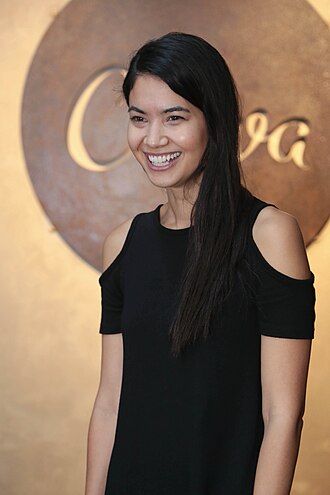
Melanie Perkins
CEO and co-founder of Canva
Where to hear and read about Melanie Perkins1 episode or test

Melanie Perkins is CEO and co-founder of Canva, which she grew from a student's idea into a company valued at over $42 billion. The thing most worth learning from her is to plan from the future you want and climb toward it in small, visible steps, using rejection as feedback along the way.
If you don't imagine it, you can't will it into existence. And in fact, everything great that we experience in life was first imagined.
She turned 100+ rejections into a $42B company | Melanie Perkins
Melanie Perkins: the story and the lessons
1How Melanie Perkins built Canva from a student's idea
Perkins started with no company, product or software experience. She was a university student when she began, so starting from what she had would have produced nothing. Her first company, Fusion Books, applied the idea to the school yearbook market in Australia.
She was sure design would end up online, collaborative and simple, but did not know whether she could build that future herself.
Canva's wedge was an unsolved problem, not a competitor. Australian yearbook coordinators had no design experience and no good tools. Her team spoke to every customer and gave each a phone tutorial.
A school then asked to design newsletters with it, and nothing on the market did that. That showed a wider gap and led from Fusion Books to a general design platform.
Perkins solves a small group's problem well before going wide. She holds that it is better to solve a few people's problem really well than many people's problem badly. The problem must still map to a larger market, or it won't become a great company.
Canva is now a large, steadily profitable company. It is valued at over $42 billion, earns over $3.3 billion a year and has been profitable for 8 years straight.
It has moved beyond social graphics to spreadsheets, docs, whiteboards, charts and an AI coding tool. 100 million people design a presentation in Canva each month.
2Perkins plans from the dream future backwards
Perkins plans from the castle she wants, not the bricks at hand. She calls it column B. Column A stacks the bricks in front of you and only produces so much, while column B starts with an improbable, crazy big dream and works to make it real.
In practice she writes what wild success and terrible failure look like in 10 years, for the company and for each area. "Most planning is often done by looking at the bricks and trying to stack them."
She turns a huge vision into tiny visible steps. The first step can be writing the idea down, then a pitch deck, designs and a prototype. Each step lets more people see and react to it.
Her line: "How do you go from chaos to clarity? You add clarity." Canva uses a vision deck to kick off every project.
Perkins sets goals big enough to survive roadblocks. A merely realistic goal is easy to drop at the first obstacle. She picks goals that make her feel inadequate, because they push her to work to will them into existence.
The mission to empower the world to design started that way and has compounded for over a decade.
She splits the mission into pillars and yearly goals. The pillars are designing anything, with every ingredient, in every language, on every device. Languages went from English to Spanish to 20 to 100 plus, and devices from web to iPad, iPhone and Android.
This ties the mission to what people build, fund and spend time on, instead of a slogan on a wall. She calls it a deeply underloved way of building a company.
Perkins pairs each goal with a celebration. Canva lands goals at a set moment and marks them, for example with smashed Greek plates, released doves and a festival.
Without a pause to pat yourself on the back, she says the climb feels arduous. Celebrations also signal what everyone should focus on.
She accepts that big goals run late. Canva reliably hits its crazy big goals but misses on timing. Six months often becomes a year or two.
A 2021 vision deck about 2026 shows much delivered and some still in flight. "We have not been very accurate with timing."
3What Perkins learned from 100+ investor rejections
Perkins turned every investor objection into a pitch slide. When investors said the market was too small, she added a market-size page. When they said Canva was the same as another company, she mapped all the players and the gap.
Investors with no design knowledge got the lay of the land and the problem up front. Her 2012 deck still describes Canva today. "Their feedback made us stronger and made our pitch deck stronger."
She opens pitches with the problem, not the solution. Early pitches led with the cool solution and barely described the problem. She reworked the first pages to be problem-based.
The vision stayed the same and only the telling changed. "If people don't understand the problem then they can't understand or care about your solution."
She replaced a six-hour explanation with a short pitch. One investor spent hours with her and finally got it, but most people won't give that time. She packed what that conversation taught into a deck that needs only minutes.
Perkins treats rejection as feedback on what she controls. She controlled her deck and how many people she pitched, and she spoke to literally everyone. Some investors will never like you, so the aim is to find your tribe.
One investor had the lean startup book behind them, and she knew Canva would never fit that approach.
4How Perkins got Canva through the rewrite and each doubling
A six-month rewrite took two years with no shipped product. The front-end rewrite was needed for cross-platform, right-to-left languages and simultaneous collaboration, since only five people could work in the editor at once. It now supports 2,500 engineers.
She calls it both fun and distressing, because investors kept asking about it.
She made the no-ship stretch a team game. Perkins bought rubber duck bath toys, one per component, and moved them across a game board at weekly stand-ups. Stages ran from kicked off to an emergency lane, ending at home and hosed.
It kept morale up when shipping, the team's core motivation, was missing. "A product company not shipping product is not really a recipe for fun."
Every doubling in size broke Canva's systems. Goal sharing moved from stand-ups to monthly meetings to season openers, which also drove teams to ship before each one. With so many teams the openers hit six hours, so the format changed again.
She keeps the philosophy and rebuilds the system at each scale. New hires often proposed importing how bigger companies worked, and it often failed. Her fix is to keep deep context, celebrations and goals, and find the version that fits each stage.
"If you go and try and take some bricks from someone else's house and stick it in your house, it's probably going to not look very matched." Working from Australia, away from the Bay Area, made this easier.
5How Perkins decides what Canva builds
Perkins closes the loop on community requests. Canva gets over a million requests a year, and a team tallies them for product teams. More than 200 loops were closed this year.
Requests led to gradient text, the Sheets product, and releasing AI tools to teachers with safety controls. Each request speaks for many people who never fill out the form.
She runs user tests herself and watches for hesitation. Perkins has run hundreds, if not thousands, of online user tests. She notes where people hesitate on a button or misunderstand something.
She finds ten random people give representative feedback, and online tests more frank because it is just the person and their camera.
She takes the mission literally to pick the next product. The aim is to design anything and publish anywhere, then choose the most strategically important next step. Printing now reaches 50-something countries, and 3D is launching.
Perkins adds AI only where it helps customers. She says investor enthusiasm doesn't mean AI should be front and center. It fits Canva because the mission is removing friction between an idea and a design.
Canva's early decks already imagined AI. Users can now tag Canva in a comment to ask for edits with the full design context.
6Perkins on impact, balance and the world she wants
She built giving into Canva from the start. Canva took the 1% pledge of time, money, equity and profit early. Perkins first planned to finish step one before starting step two, then saw the two could run together.
"Step one can fuel step two and step two can fuel step one."
Perkins and Cliff committed their stake to doing good. She and co-founder Cliff own a little over 30% of Canva and committed it to the Canva Foundation. It has given $50 million to people in extreme poverty in Malawi, with another $100 million planned.
Canva also gives away about $1.5 billion of product a year through education and nonprofit programs. She says she would not do Canva without a positive impact.
She switches fully off when she stops working. She worked seven days a week early on, even running printing presses for yearbooks in her mom's house. Now she has no email or Slack on her phone, and only an emergency call reaches her after she closes the laptop.
Sleep, walks, yoga and journaling are part of her routine. "When I'm working, I'm all in. And then when I'm not working, I'm all out."
She uses voice-note walks to turn thoughts into actions. Perkins talks through everything on her mind into an AI while walking, then filters it into actions. She dictates into Apple Notes or Canva Docs and asks for a summary.
It lifts her out of Slack and email into a macro view.
A 2050 wall keeps her aimed at the world she wants. She wrote it out of fear that humanity is on a freight train, and it lists basic human needs for all and global education as a right.
She says there is zero chance she can achieve this alone, and that it takes a global collective effort.

She turned 100+ rejections into a $42B company | Melanie Perkins
Canva's CEO explains how she plans from a dream future backwards ("column B"), turns big goals into steps and celebrations, and used 100+ investor rejections to sharpen her pitch. The result is a company valued at over $42 billion, with over $3.3 billion in annual revenue and 8 years of profitability.
Perkins started with no company, product or software experience. She was a university student when she began, so starting from what she had would have produced nothing. Her first company, Fusion Books, applied the idea to the school yearbook market in Australia.
She was sure design would end up online, collaborative and simple, but did not know whether she could build that future herself.
Canva's wedge was an unsolved problem, not a competitor. Australian yearbook coordinators had no design experience and no good tools. Her team spoke to every customer and gave each a phone tutorial.
A school then asked to design newsletters with it, and nothing on the market did that. That showed a wider gap and led from Fusion Books to a general design platform.
Perkins solves a small group's problem well before going wide. She holds that it is better to solve a few people's problem really well than many people's problem badly. The problem must still map to a larger market, or it won't become a great company.
Canva is now a large, steadily profitable company. It is valued at over $42 billion, earns over $3.3 billion a year and has been profitable for 8 years straight.
It has moved beyond social graphics to spreadsheets, docs, whiteboards, charts and an AI coding tool. 100 million people design a presentation in Canva each month.
Perkins plans from the castle she wants, not the bricks at hand. She calls it column B. Column A stacks the bricks in front of you and only produces so much, while column B starts with an improbable, crazy big dream and works to make it real.
In practice she writes what wild success and terrible failure look like in 10 years, for the company and for each area. "Most planning is often done by looking at the bricks and trying to stack them."
She turns a huge vision into tiny visible steps. The first step can be writing the idea down, then a pitch deck, designs and a prototype. Each step lets more people see and react to it.
Her line: "How do you go from chaos to clarity? You add clarity." Canva uses a vision deck to kick off every project.
Perkins sets goals big enough to survive roadblocks. A merely realistic goal is easy to drop at the first obstacle. She picks goals that make her feel inadequate, because they push her to work to will them into existence.
The mission to empower the world to design started that way and has compounded for over a decade.
She splits the mission into pillars and yearly goals. The pillars are designing anything, with every ingredient, in every language, on every device. Languages went from English to Spanish to 20 to 100 plus, and devices from web to iPad, iPhone and Android.
This ties the mission to what people build, fund and spend time on, instead of a slogan on a wall. She calls it a deeply underloved way of building a company.
Perkins pairs each goal with a celebration. Canva lands goals at a set moment and marks them, for example with smashed Greek plates, released doves and a festival.
Without a pause to pat yourself on the back, she says the climb feels arduous. Celebrations also signal what everyone should focus on.
She accepts that big goals run late. Canva reliably hits its crazy big goals but misses on timing. Six months often becomes a year or two.
A 2021 vision deck about 2026 shows much delivered and some still in flight. "We have not been very accurate with timing."
Perkins turned every investor objection into a pitch slide. When investors said the market was too small, she added a market-size page. When they said Canva was the same as another company, she mapped all the players and the gap.
Investors with no design knowledge got the lay of the land and the problem up front. Her 2012 deck still describes Canva today. "Their feedback made us stronger and made our pitch deck stronger."
She opens pitches with the problem, not the solution. Early pitches led with the cool solution and barely described the problem. She reworked the first pages to be problem-based.
The vision stayed the same and only the telling changed. "If people don't understand the problem then they can't understand or care about your solution."
She replaced a six-hour explanation with a short pitch. One investor spent hours with her and finally got it, but most people won't give that time. She packed what that conversation taught into a deck that needs only minutes.
Perkins treats rejection as feedback on what she controls. She controlled her deck and how many people she pitched, and she spoke to literally everyone. Some investors will never like you, so the aim is to find your tribe.
One investor had the lean startup book behind them, and she knew Canva would never fit that approach.
A six-month rewrite took two years with no shipped product. The front-end rewrite was needed for cross-platform, right-to-left languages and simultaneous collaboration, since only five people could work in the editor at once. It now supports 2,500 engineers.
She calls it both fun and distressing, because investors kept asking about it.
She made the no-ship stretch a team game. Perkins bought rubber duck bath toys, one per component, and moved them across a game board at weekly stand-ups. Stages ran from kicked off to an emergency lane, ending at home and hosed.
It kept morale up when shipping, the team's core motivation, was missing. "A product company not shipping product is not really a recipe for fun."
Every doubling in size broke Canva's systems. Goal sharing moved from stand-ups to monthly meetings to season openers, which also drove teams to ship before each one. With so many teams the openers hit six hours, so the format changed again.
She keeps the philosophy and rebuilds the system at each scale. New hires often proposed importing how bigger companies worked, and it often failed. Her fix is to keep deep context, celebrations and goals, and find the version that fits each stage.
"If you go and try and take some bricks from someone else's house and stick it in your house, it's probably going to not look very matched." Working from Australia, away from the Bay Area, made this easier.
Perkins closes the loop on community requests. Canva gets over a million requests a year, and a team tallies them for product teams. More than 200 loops were closed this year.
Requests led to gradient text, the Sheets product, and releasing AI tools to teachers with safety controls. Each request speaks for many people who never fill out the form.
She runs user tests herself and watches for hesitation. Perkins has run hundreds, if not thousands, of online user tests. She notes where people hesitate on a button or misunderstand something.
She finds ten random people give representative feedback, and online tests more frank because it is just the person and their camera.
She takes the mission literally to pick the next product. The aim is to design anything and publish anywhere, then choose the most strategically important next step. Printing now reaches 50-something countries, and 3D is launching.
Perkins adds AI only where it helps customers. She says investor enthusiasm doesn't mean AI should be front and center. It fits Canva because the mission is removing friction between an idea and a design.
Canva's early decks already imagined AI. Users can now tag Canva in a comment to ask for edits with the full design context.
She built giving into Canva from the start. Canva took the 1% pledge of time, money, equity and profit early. Perkins first planned to finish step one before starting step two, then saw the two could run together.
"Step one can fuel step two and step two can fuel step one."
Perkins and Cliff committed their stake to doing good. She and co-founder Cliff own a little over 30% of Canva and committed it to the Canva Foundation. It has given $50 million to people in extreme poverty in Malawi, with another $100 million planned.
Canva also gives away about $1.5 billion of product a year through education and nonprofit programs. She says she would not do Canva without a positive impact.
She switches fully off when she stops working. She worked seven days a week early on, even running printing presses for yearbooks in her mom's house. Now she has no email or Slack on her phone, and only an emergency call reaches her after she closes the laptop.
Sleep, walks, yoga and journaling are part of her routine. "When I'm working, I'm all in. And then when I'm not working, I'm all out."
She uses voice-note walks to turn thoughts into actions. Perkins talks through everything on her mind into an AI while walking, then filters it into actions. She dictates into Apple Notes or Canva Docs and asks for a summary.
It lifts her out of Slack and email into a macro view.
A 2050 wall keeps her aimed at the world she wants. She wrote it out of fear that humanity is on a freight train, and it lists basic human needs for all and global education as a right.
She says there is zero chance she can achieve this alone, and that it takes a global collective effort.

 Canva
