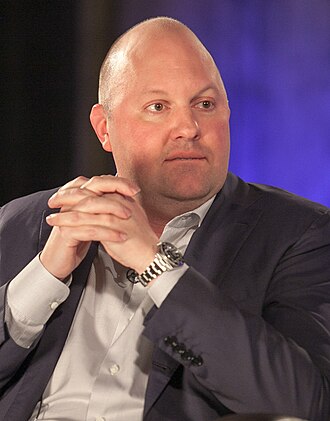
Marc Andreessen
Co-founder of Netscape and Andreessen Horowitz, author of "Why Software Is Eating the World" and "It's Time to Build"
Where to hear and read about Marc Andreessen1 episode or test

Marc Andreessen is the co-founder of Netscape and Andreessen Horowitz, and the author of the essays "Why Software Is Eating the World" and "It's Time to Build". The most useful thing to learn from him is his writing method: fill your head with the best ideas, outline 15 to 20 bullets fast, then write one pass in your own speaking voice, often driven by frustration.
the person who writes down the thing has tremendous power
Marc Andreessen: Blogposts, Tweetstorms, and Manifestos
Marc Andreessen: the story and the lessons
1How Marc Andreessen writes an essay
He waits until ideas reach critical mass before writing. Andreessen keeps no note-taking system. He reads and talks to people all day until the ideas pile up, then sits down and writes fast.
"Software Is Eating the World" took little time to write but came from years of discussion. He says he would like to be more professional about tracking ideas someday.
He outlines 15 to 20 bullets, then does one narrative pass. The outline is a fast, loose bullet list in a sensible order. Turning each point into prose would slow him down, so he saves the prose for a separate pass.
He thinks in outlines partly because code is effectively an outline. It works because he has thought about the topic long enough to know what he wants to say.
He writes in the same voice he speaks in. Most people switch to a stilted voice when they write. Andreessen puts what he would say in conversation on the page, which is why "It's Time to Build" shipped almost unedited.
He says the interesting people he knows write best when they write exactly as they talk.
He gives each piece a simple, punchy title. Trained in marketing, he knows a piece has to punch through a world awash in media. For "It's Time to Build" he wanted a phrase broad enough to mean recapturing an industrial spirit, not just software.
He writes at night in a home office built around books. He is a night owl and buys every book he might want to read, stacking them rather than shelving them. He drinks green tea for a steady, moderate dose of caffeine.
He writes to synthwave, future garage or lo-fi with a consistent beat and little going on, because it keeps the buzzing part of his brain stable without distracting him.
2What set off Andreessen's best-known pieces
Rage at a PPE shortage produced "It's Time to Build". During the first COVID lockdowns, New York hospitals were short of equipment and states competed for masks. A front-page Wall Street Journal story about New York asking for donated rain ponchos pushed him to write.
He wrote it late at night in the breakfast room, with no home office yet. He called the poncho appeal the "event horizon of stupidity" and said the country had lost its national productive spirit.
When people miss an idea, he blames his own explaining. "Software Is Eating the World" ran in the Wall Street Journal around 2012, after years of thought and frustration with negative headlines. He thought it was obvious and worried it wasn't provocative enough.
His rule: "no, it's my fault because I haven't explained it, and I should at least try to explain it".
He started his blog because startup advice was bad. He saw the world oversupplying bad startup advice, much of it from people who had not lived through what they described. He had made the mistakes himself, so he wrote some of it down.
He invented the tweetstorm because 140 characters was too few. He had more to say, so he kept adding tweets. Critics said he was abusing the medium, and he said he would gladly do it, because that is what media are for.
He argues old literary forms keep returning on the internet: "Twitter is aphorisms as a service". Blog posts revived the essay.
Major papers refused "It's Time to Build", so he self-published. In 2020 the Journal and other major outlets all said no, and the piece went out on his own site. It convinced him the mainstream press was no longer the venue for serious thought.
He now thinks he should have built a much bigger independent audience much faster.
3How Andreessen fills his head with ideas
He barbells his reading between the very new and the timeless. He reads either what is current, like Twitter and experts he talks to, or what is timeless, mostly history and biography. He skips everything from yesterday to ten years ago.
He listens to audio two to three hours a day. Ten or twenty hours of audiobooks is how he goes deep on a subject he knows nothing about.
His day job gives him expert tutorials from founders. Founders who reach his firm are often the leading people in the world on their topics. They explain themselves in depth, hoping for a partner who understands them, and don't even sign NDAs.
He also gets what his partners learn in their meetings, plus the firm's notes from meetings he missed.
He learns from lateral thinkers and asks how they would see it. He names Venkatesh Rao, Balaji Srinivasan and Peter Thiel as the only three people he knows who are perpetually lateral thinkers. Time with them taught him not to take a claim at face value and to view a plan from several angles.
Rao was the firm's first and only philosopher in residence. Keeping such people on staff is hard because everyone waits to hear what they say and younger staff may resent their seats.
4How Andreessen is writing his technology manifesto
His biggest piece yet is late, and he accepts that. The manifesto on the philosophy of technology runs 30 to 40 pages, and he has already missed his self-imposed release date. Ben Horowitz called him "the Kanye of blog post writers".
He takes that to mean the work takes its time and then lands well. His bar is that it holds up over time.
He wants informed readers to see he did the homework. Many smart people have argued both sides of this topic for a long time. He wants them to think "I may or may not agree with him, but he at least understands the topic".
He cites nothing in the text and plans a closing reading list that documents his claims.
He reads older manifestos to catch their spirit. Because the piece must persuade and rally believers, he is rereading earlier manifestos, including the Communist and Futurist ones, for their energy and impact.
He notes that neither Marx nor Marinetti could predict what followed from their texts.
He writes the polemic for effect, not as a neutral observer. Critics say he is too aggressive and the piece too polemic. He says that is the intent, because the subject is happening now, around him, and he is not a "30,000 foot observer".
He asks early readers three specific questions. Will it anger people for unintended reasons? Is it clear? Does it move, or bog down stylistically? By the end the author is too close to read with fresh eyes.
"If I'm going to make people mad, I want to know I'm going to make them mad." He has angered people by accident before.
He tests moving the last paragraph to the front. He uses the old advice to check whether the order is right, whether the piece hits hard up front, and whether it keeps its force to the end.
5Why Andreessen says writing is power
He says whoever writes down the plan gains power. Few people write things down with real comprehensiveness and quality. At tech companies the up and comers are often the ones who wrote down the plan, whether or not they had the ideas.
He adds that with writing now so easy and bad content everywhere, a well written email from a stranger almost always gets read.
He tells young people to take the notes and write the summary. Note-taking is low status, which is why so few people do it, but it is the way in. The summary must fairly represent everyone's views, which builds trust.
He writes long internal memos only when a debate comes to a head. Day to day it is emails and texts. A long document follows a long period of discussion, around a new initiative or a topic with serious conflict or ambiguity.
It lists the considerations in one place and suggests what to do, the same process as his public essays.
He favors essays over tweets because he speaks for a firm. He represents his partners and portfolio companies, so he picks his topics and methods carefully. A single tweet can be used against someone, while an essay shows its context.
Reporters wrote hit pieces on his Twitter likes. The firm works with roughly 500 companies whose CEOs would have to explain what he likes, so he keeps his Twitter lists private and blocks liberally.
6What Andreessen wants to write next, and where writing is going
He wants to write a roman à clef from 30 years in tech. Names, dates and events would be fictional, but everything in it actually happened. It would let him use what he has seen without a tell-all that identifies anyone.
A day with David Milch, the writer behind Deadwood, convinced him to try fiction. He has not written it yet.
He admires writers who research a period obsessively. He calls James Ellroy the greatest living American novelist. Ellroy writes on a typewriter and reads 1940s newspapers on microfilm to give readers a sense of being there.
He says Milch does the same in Deadwood, down to the mud, the stench and the constant drinking.
He expects writers to work in continuous dialogue with an AI. He compares it to coding with a copilot. The author stays in charge of the overall product while an AI comments or drafts in a running conversation.
He also expects a tool within a year or two that turns an essay into a short film, and thinks a manifesto could become an eight-minute animated short.

Marc Andreessen: Blogposts, Tweetstorms, and Manifestos
Marc Andreessen explains how he writes essays that move people: he lets an idea build up through heavy reading and talking, then gets it down in his own speaking voice. The technique worth hearing is his two-pass method of a fast bullet outline of 15 to 20 points followed by a narrative pass, often fuelled by frustration.
He waits until ideas reach critical mass before writing. Andreessen keeps no note-taking system. He reads and talks to people all day until the ideas pile up, then sits down and writes fast.
"Software Is Eating the World" took little time to write but came from years of discussion. He says he would like to be more professional about tracking ideas someday.
He outlines 15 to 20 bullets, then does one narrative pass. The outline is a fast, loose bullet list in a sensible order. Turning each point into prose would slow him down, so he saves the prose for a separate pass.
He thinks in outlines partly because code is effectively an outline. It works because he has thought about the topic long enough to know what he wants to say.
He writes in the same voice he speaks in. Most people switch to a stilted voice when they write. Andreessen puts what he would say in conversation on the page, which is why "It's Time to Build" shipped almost unedited.
He says the interesting people he knows write best when they write exactly as they talk.
He gives each piece a simple, punchy title. Trained in marketing, he knows a piece has to punch through a world awash in media. For "It's Time to Build" he wanted a phrase broad enough to mean recapturing an industrial spirit, not just software.
He writes at night in a home office built around books. He is a night owl and buys every book he might want to read, stacking them rather than shelving them. He drinks green tea for a steady, moderate dose of caffeine.
He writes to synthwave, future garage or lo-fi with a consistent beat and little going on, because it keeps the buzzing part of his brain stable without distracting him.
Rage at a PPE shortage produced "It's Time to Build". During the first COVID lockdowns, New York hospitals were short of equipment and states competed for masks. A front-page Wall Street Journal story about New York asking for donated rain ponchos pushed him to write.
He wrote it late at night in the breakfast room, with no home office yet. He called the poncho appeal the "event horizon of stupidity" and said the country had lost its national productive spirit.
When people miss an idea, he blames his own explaining. "Software Is Eating the World" ran in the Wall Street Journal around 2012, after years of thought and frustration with negative headlines. He thought it was obvious and worried it wasn't provocative enough.
His rule: "no, it's my fault because I haven't explained it, and I should at least try to explain it".
He started his blog because startup advice was bad. He saw the world oversupplying bad startup advice, much of it from people who had not lived through what they described. He had made the mistakes himself, so he wrote some of it down.
He invented the tweetstorm because 140 characters was too few. He had more to say, so he kept adding tweets. Critics said he was abusing the medium, and he said he would gladly do it, because that is what media are for.
He argues old literary forms keep returning on the internet: "Twitter is aphorisms as a service". Blog posts revived the essay.
Major papers refused "It's Time to Build", so he self-published. In 2020 the Journal and other major outlets all said no, and the piece went out on his own site. It convinced him the mainstream press was no longer the venue for serious thought.
He now thinks he should have built a much bigger independent audience much faster.
He barbells his reading between the very new and the timeless. He reads either what is current, like Twitter and experts he talks to, or what is timeless, mostly history and biography. He skips everything from yesterday to ten years ago.
He listens to audio two to three hours a day. Ten or twenty hours of audiobooks is how he goes deep on a subject he knows nothing about.
His day job gives him expert tutorials from founders. Founders who reach his firm are often the leading people in the world on their topics. They explain themselves in depth, hoping for a partner who understands them, and don't even sign NDAs.
He also gets what his partners learn in their meetings, plus the firm's notes from meetings he missed.
He learns from lateral thinkers and asks how they would see it. He names Venkatesh Rao, Balaji Srinivasan and Peter Thiel as the only three people he knows who are perpetually lateral thinkers. Time with them taught him not to take a claim at face value and to view a plan from several angles.
Rao was the firm's first and only philosopher in residence. Keeping such people on staff is hard because everyone waits to hear what they say and younger staff may resent their seats.
His biggest piece yet is late, and he accepts that. The manifesto on the philosophy of technology runs 30 to 40 pages, and he has already missed his self-imposed release date. Ben Horowitz called him "the Kanye of blog post writers".
He takes that to mean the work takes its time and then lands well. His bar is that it holds up over time.
He wants informed readers to see he did the homework. Many smart people have argued both sides of this topic for a long time. He wants them to think "I may or may not agree with him, but he at least understands the topic".
He cites nothing in the text and plans a closing reading list that documents his claims.
He reads older manifestos to catch their spirit. Because the piece must persuade and rally believers, he is rereading earlier manifestos, including the Communist and Futurist ones, for their energy and impact.
He notes that neither Marx nor Marinetti could predict what followed from their texts.
He writes the polemic for effect, not as a neutral observer. Critics say he is too aggressive and the piece too polemic. He says that is the intent, because the subject is happening now, around him, and he is not a "30,000 foot observer".
He asks early readers three specific questions. Will it anger people for unintended reasons? Is it clear? Does it move, or bog down stylistically? By the end the author is too close to read with fresh eyes.
"If I'm going to make people mad, I want to know I'm going to make them mad." He has angered people by accident before.
He tests moving the last paragraph to the front. He uses the old advice to check whether the order is right, whether the piece hits hard up front, and whether it keeps its force to the end.
He says whoever writes down the plan gains power. Few people write things down with real comprehensiveness and quality. At tech companies the up and comers are often the ones who wrote down the plan, whether or not they had the ideas.
He adds that with writing now so easy and bad content everywhere, a well written email from a stranger almost always gets read.
He tells young people to take the notes and write the summary. Note-taking is low status, which is why so few people do it, but it is the way in. The summary must fairly represent everyone's views, which builds trust.
He writes long internal memos only when a debate comes to a head. Day to day it is emails and texts. A long document follows a long period of discussion, around a new initiative or a topic with serious conflict or ambiguity.
It lists the considerations in one place and suggests what to do, the same process as his public essays.
He favors essays over tweets because he speaks for a firm. He represents his partners and portfolio companies, so he picks his topics and methods carefully. A single tweet can be used against someone, while an essay shows its context.
Reporters wrote hit pieces on his Twitter likes. The firm works with roughly 500 companies whose CEOs would have to explain what he likes, so he keeps his Twitter lists private and blocks liberally.
He wants to write a roman à clef from 30 years in tech. Names, dates and events would be fictional, but everything in it actually happened. It would let him use what he has seen without a tell-all that identifies anyone.
A day with David Milch, the writer behind Deadwood, convinced him to try fiction. He has not written it yet.
He admires writers who research a period obsessively. He calls James Ellroy the greatest living American novelist. Ellroy writes on a typewriter and reads 1940s newspapers on microfilm to give readers a sense of being there.
He says Milch does the same in Deadwood, down to the mud, the stench and the constant drinking.
He expects writers to work in continuous dialogue with an AI. He compares it to coding with a copilot. The author stays in charge of the overall product while an AI comments or drafts in a running conversation.
He also expects a tool within a year or two that turns an essay into a short film, and thinks a manifesto could become an eight-minute animated short.