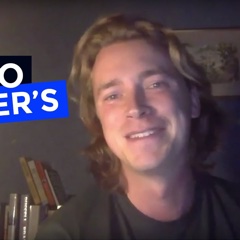
Leo J Barnett
Entrepreneur, designer and actor, creator of the Reelshot video editor app
Where to hear and read about Leo J Barnett2 episodes and tests

 App MastersHow to Slide Into an Influencer's Direct Message (DM)
 App MastersHow to Validate App Idea With Simple One-Page Website
Leo J Barnett is a designer, actor and entrepreneur who built the Reelshot video editor app and got it featured by Apple. The most useful thing to learn from him is to ship something simple and polished, then act within days to turn attention into users, while validating with real people before and after.
it's so hard to find five minutes of someone's time and we have to make it easy for people to validate things
How to Validate App Idea With Simple One-Page Website
Leo J Barnett: the story and the lessons
1Leo J Barnett's path from odd jobs to apps
Barnett added a J to his name to separate film from apps. He wanted a plain name for his app career, so he settled on Leo J Barnett. He has stepped back from film and TV, though he appears in The Crown.
Screen credits tend to bring stage names that feel glorified and over the top, which he wanted to avoid.
Extra work and odd jobs paid for his startup projects. He worked as an extra in film and TV for about two and a half years. Before that he did freelance jobs like gardening and fencing to pay the bills.
He used repetitive work as thinking time to design apps. Painting hundreds of walls the same colour left his mind free, and he wrote ideas down as they came. On a Pokemon film set he sat in a tent designing apps between scenes.
Days could start at 4:00 a.m. and end around 9:00 p.m., with client messages still arriving. Low pay meant more hours for the same money, and he calls the stress hard to do.
2Barnett's mistakes and what he changed
His first startup failed because he barely spoke to artists. First Roots Media let independent musicians sell or share music and track how far fans spread it. He built it around how he liked to download music as a fan, and the project was abandoned.
He calls building without talking to real users the biggest mistake in launching an app: "I barely spoke to any artists about this at all". His one-page validation method came from this.
A developer held Reelshot's source code to ransom at 85% built. Barnett had put his savings into the app. The developer went off the radar and held the code to ransom, which cost about a year and a half.
His advice is to vet outsourced developers carefully and keep control of the code before handing over savings.
The forced redesign made Reelshot simpler and more refined. The app had been designed and ready about a year and a half before launch, then went back to the drawing board. Barnett doubts it would have been featured had the first version launched.
His lesson is to use a delay to ask whether the app is as simple and good as it can be before shipping.
3How Reelshot earned an Apple feature
Barnett relied on the product, not favors, to earn the feature. His first principle was to make the app beautiful, simple, unique and fun. Some developers take Apple reviewers out for dinner and still get nothing.
He admits he does not know how Apple really picks, and notes that timing may help for a video app.
He hired a testing company to try every way the app could break. A Ukraine-based team led by a contact named Alexander tested every possible fault. Early builds crashed all the time, and the shipped app was stable.
A crash in the App Store is the last thing anyone wants. He says the app is bulletproof for what it does, which is simple.
He wrote friendly notes to App Review and TestFlight reviewers. In the What's New text and review notes he greeted reviewers, explained what was new and thanked them.
His guess is that a reviewer mentioned the nice developer to the editorial team. He treats it as a possible edge, not a proven tactic.
4What Barnett did in the days after the feature
He asked his app network for advice the moment impressions climbed. The feature landed on his mom's birthday and impressions reached about a million. He messaged people he knew in the app industry, and Ryan at Gummicube told him to make marketing materials at once.
He felt he had to be proactive to make the most of the wave.
He posted a 'Featured by Apple' graphic and spent about $20. As a designer he made a simple Instagram-friendly post within a day or so of learning of the feature. He put about $20 behind it on Instagram and Facebook.
The feature gives instant credibility to borrow.
He cut the price in half while impressions were high. A summer sale at half price gave people a reason to try the app now, and many signed up. He called it the perfect approach.
His aim early on was to "grow your users grow grow grow grow as much as you can".
He followed the feature to China and localized the app. Reelshot was featured in China, so he ran targeted marketing in the Guangdong region. He then fully localized the app into Simplified Mandarin.
Watching where the feature appears shows where to invest next.
5How Barnett writes influencer DMs
He keeps a DM to about three sentences. Use their name, mention something specific and recent from their feed, say why they fit, and link one page. His example praised a new scooter in a pitch for a scooter app.
He advises you to "keep it very brief like keep it super simple to the point". Do not comment on posts years old.
He opens with his best credibility signal and a photo. Barnett says who he is, references his role in The Crown, and includes a picture of himself. Then he engages with their recent posts so the message feels genuine.
He sends short video messages instead of text. Video lets personality and passion show, and younger audiences communicate in video. He found it fairly effective and planned a heavier test the following week.
His reasoning: people haven't got time to be reading anymore, they want to see you and your passion.
He lets influencers reply by video or voice note. He invites whichever format is easiest and tells them the content is not going anywhere.
Lowering the effort of replying raises the chance of feedback: "make their life easy".
6Barnett's one-page method for validating an app idea
He tests ideas with a single mobile-friendly page. The page has a short intro, what it is, who it is for and how it works. A beginner can build it in a drag-and-drop tool like Wix with a few screens, even napkin sketches.
One page leaves people no excuse not to look, and you do not need a working app to get feedback.
He asks what people love, what they hate and what next. The words love and hate stir up emotion, so people feel invested and give a truer response.
He sends the page to target users on Twitter and Instagram. He aims at perfect-fit people such as Instagram influencers. Cold outreach is tedious at first, so each message stays personal and says why that person's feedback matters.
He asks every respondent for introductions and names the referrer. Each person who answers opens doors to others, building a snowball through their network. Opening with 'Sarah just recommended I speak to you' can dramatically raise response rate.
He gives no figure for the increase.
After feedback he checks competitors and names, then compiles a spreadsheet. He puts responses in one spreadsheet and looks for positives. He checks whether the name is taken and, if a rival exists, studies why it isn't succeeding and aims to do that part better.
He shows use cases and memorable images to prompt ideas. A 'what is it for' line does not pigeonhole the product. It prompts people to think of their own uses, and he also asks what would trigger someone to use it.
A few images help even if they don't show the app, such as a character or object people remember.
How to Slide Into an Influencer's Direct Message (DM)
Covers how a polished, well-tested app earned an Apple feature, what to do in the first days after it lands, and how to write short, personal DMs to influencers. After the feature Reelshot's App Store impressions reached about a million, and the follow-up marketing, sale and localization were built to use that wave.
A developer held Reelshot's source code to ransom at 85% built. Barnett had put his savings into the app. The developer went off the radar and held the code to ransom, which cost about a year and a half.
His advice is to vet outsourced developers carefully and keep control of the code before handing over savings.
The forced redesign made Reelshot simpler and more refined. The app had been designed and ready about a year and a half before launch, then went back to the drawing board. Barnett doubts it would have been featured had the first version launched.
His lesson is to use a delay to ask whether the app is as simple and good as it can be before shipping.
Barnett relied on the product, not favors, to earn the feature. His first principle was to make the app beautiful, simple, unique and fun. Some developers take Apple reviewers out for dinner and still get nothing.
He admits he does not know how Apple really picks, and notes that timing may help for a video app.
He hired a testing company to try every way the app could break. A Ukraine-based team led by a contact named Alexander tested every possible fault. Early builds crashed all the time, and the shipped app was stable.
A crash in the App Store is the last thing anyone wants. He says the app is bulletproof for what it does, which is simple.
He wrote friendly notes to App Review and TestFlight reviewers. In the What's New text and review notes he greeted reviewers, explained what was new and thanked them.
His guess is that a reviewer mentioned the nice developer to the editorial team. He treats it as a possible edge, not a proven tactic.
He asked his app network for advice the moment impressions climbed. The feature landed on his mom's birthday and impressions reached about a million. He messaged people he knew in the app industry, and Ryan at Gummicube told him to make marketing materials at once.
He felt he had to be proactive to make the most of the wave.
He posted a 'Featured by Apple' graphic and spent about $20. As a designer he made a simple Instagram-friendly post within a day or so of learning of the feature. He put about $20 behind it on Instagram and Facebook.
The feature gives instant credibility to borrow.
He cut the price in half while impressions were high. A summer sale at half price gave people a reason to try the app now, and many signed up. He called it the perfect approach.
His aim early on was to "grow your users grow grow grow grow as much as you can".
He followed the feature to China and localized the app. Reelshot was featured in China, so he ran targeted marketing in the Guangdong region. He then fully localized the app into Simplified Mandarin.
Watching where the feature appears shows where to invest next.
He keeps a DM to about three sentences. Use their name, mention something specific and recent from their feed, say why they fit, and link one page. His example praised a new scooter in a pitch for a scooter app.
He advises you to "keep it very brief like keep it super simple to the point". Do not comment on posts years old.
He opens with his best credibility signal and a photo. Barnett says who he is, references his role in The Crown, and includes a picture of himself. Then he engages with their recent posts so the message feels genuine.
He sends short video messages instead of text. Video lets personality and passion show, and younger audiences communicate in video. He found it fairly effective and planned a heavier test the following week.
His reasoning: people haven't got time to be reading anymore, they want to see you and your passion.
He lets influencers reply by video or voice note. He invites whichever format is easiest and tells them the content is not going anywhere.
Lowering the effort of replying raises the chance of feedback: "make their life easy".
How to Validate App Idea With Simple One-Page Website
Leo J Barnett shares a simple validation process: build a mobile-friendly one-page site for an app idea, send it to the target audience on social media, and ask three feedback questions. He learned it after his first startup, a platform for independent musicians, failed because he barely spoke to real artists.
Barnett added a J to his name to separate film from apps. He wanted a plain name for his app career, so he settled on Leo J Barnett. He has stepped back from film and TV, though he appears in The Crown.
Screen credits tend to bring stage names that feel glorified and over the top, which he wanted to avoid.
Extra work and odd jobs paid for his startup projects. He worked as an extra in film and TV for about two and a half years. Before that he did freelance jobs like gardening and fencing to pay the bills.
He used repetitive work as thinking time to design apps. Painting hundreds of walls the same colour left his mind free, and he wrote ideas down as they came. On a Pokemon film set he sat in a tent designing apps between scenes.
Days could start at 4:00 a.m. and end around 9:00 p.m., with client messages still arriving. Low pay meant more hours for the same money, and he calls the stress hard to do.
His first startup failed because he barely spoke to artists. First Roots Media let independent musicians sell or share music and track how far fans spread it. He built it around how he liked to download music as a fan, and the project was abandoned.
He calls building without talking to real users the biggest mistake in launching an app: "I barely spoke to any artists about this at all". His one-page validation method came from this.
He tests ideas with a single mobile-friendly page. The page has a short intro, what it is, who it is for and how it works. A beginner can build it in a drag-and-drop tool like Wix with a few screens, even napkin sketches.
One page leaves people no excuse not to look, and you do not need a working app to get feedback.
He asks what people love, what they hate and what next. The words love and hate stir up emotion, so people feel invested and give a truer response.
He sends the page to target users on Twitter and Instagram. He aims at perfect-fit people such as Instagram influencers. Cold outreach is tedious at first, so each message stays personal and says why that person's feedback matters.
He asks every respondent for introductions and names the referrer. Each person who answers opens doors to others, building a snowball through their network. Opening with 'Sarah just recommended I speak to you' can dramatically raise response rate.
He gives no figure for the increase.
After feedback he checks competitors and names, then compiles a spreadsheet. He puts responses in one spreadsheet and looks for positives. He checks whether the name is taken and, if a rival exists, studies why it isn't succeeding and aims to do that part better.
He shows use cases and memorable images to prompt ideas. A 'what is it for' line does not pigeonhole the product. It prompts people to think of their own uses, and he also asks what would trigger someone to use it.
A few images help even if they don't show the app, such as a character or object people remember.