Koby Conrad
Founder and CEO of Sunflower, a sobriety app; former head of growth at Rupa
Where to hear and read about Koby Conrad1 episode or test
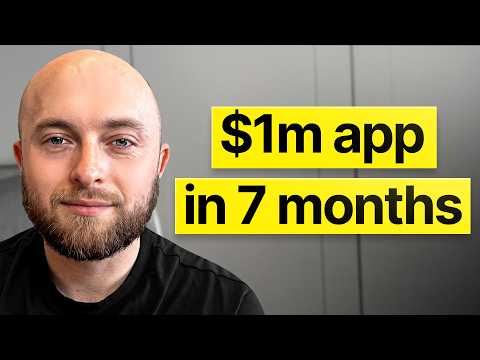
Koby Conrad is the founder and CEO of Sunflower, an AI-powered sobriety app, and previously led growth at Rupa. The most useful lesson is to land one big partner as a teammate and build a simple core product around a daily need, rather than spreading effort thin.
You never want to be the smallest sponsor. You want to be the biggest sponsor this person has.
I speedran an ai app from 0 to $1m/yr in 10 months
Koby Conrad: the story and the lessons
1Koby Conrad's path from Rupa to Sunflower
Conrad built an audience before he built products. He started a Facebook page at 19 and built products for it once the audience existed.
He tells bootstrappers to follow the same order: audience first, then product.
Conrad led growth at Rupa from $5M to $75M. The growth took 3.5 years. Rupa sold for a nine-figure exit about three months after he left.
He has spent $10 to 20 million on influencer marketing in his career, which is where his views on creator deals come from.
A strong growth record still did not get him funded. He could not raise money for three or four years, so he taught himself to code because nobody would build version zero.
He built the first version after a coding bootcamp, before vibe coding. It looked like a Product Hunt 1.0.
Conrad funded the start with his own money and people he had made rich. He put in $100,000 and asked people he had made rich, raising about $350K. YC, a16z Speedrun and Flybridge, which led the seed, came in later.
Sunflower has raised about $6.5M in total. He says that capital let him hire his lead influencer before the app had revenue.
Sunflower reached $1M annualized revenue in about 10 months. It passed 10,000 paying subscribers and covers alcohol, cannabis, methamphetamines, cocaine and gambling.
Conrad is seven years sober himself. Some claims rest on his anecdotes: no comparison data was given for the AI's effect or the influencer deal, and no retention figures or effect on actual sobriety were shared.
2How Conrad built Sunflower's growth on one influencer
Conrad hired the top sobriety influencer as an employee. Eric (Mr. Impulsive) gets 50 to 100 million views a month and sends 50 to 100k link clicks monthly. He joined as VP of Sobriety before Sunflower had revenue.
Conrad's pitch is a role on the go-to-market team with salary, equity and a mission, not a request to buy one post. He did the same at Reddit and has seen it at Replicate and Function Health.
An employee creator is cheaper in bulk and harder to lose. Conrad compares it to buying wholesale instead of one-off posts. Other apps pitch Eric all the time, but the team relationship makes him less likely to leave.
Eric also learned how to push the product, so his link-driving today is very different from a year ago.
Conrad puts the creator in the team's feedback loop. Eric sits in the Slack channel where user feedback is dropped constantly, and sees that his memes reach people who are no longer suicidal.
Conrad says the mission motivates Eric more than per-post pay would, and that it helps team building in general.
Conrad wants to be a partner's biggest sponsor, never the smallest. At an earlier company he spent about $500k a year on conferences. He asked for the $100,000 package, then asked what $200,000 would buy.
A top sponsor can be 50 to 75% of an influencer's income, so they protect it. The audience also notices the headliner and asks who the unknown app is.
Without venture money, Conrad would offer a creator a 50/50 partnership. He would say: you have the audience, I build the app for it, we split it 50/50, with the creator as the hero of the story.
He thinks equity-for-promotion caps how big the app can get. Creators have heard similar pitches about 20 times, and some clients ghost them on payment for 60 days.
3How Conrad builds the product: timer first, AI second
Conrad built the simplest core feature first and launched it ugly. Version one had three features: a sobriety timer, Fiverr sunflower graphics and a journal. He coded it himself.
His rule: find what people do every day, segment your ICP, and build everything around it. "Just build the smallest thing you freaking can. It can be ugly as hell and just launch it."
The AI sponsor works because a full product surrounds it. Sam began as a ChatGPT wrapper and became an agent that follows up on payday, replies to community posts and sends scary cases to a clinical team. It has handled over 4 million messages in a year.
Conrad says the chat alone had horrible engagement and retention. Courses, community and content bundle around it, and a teletherapy clinic is launching.
Conrad builds where model labs lack outcome data. He says OpenAI staff told him in YC they avoid behavioral health over legal liability and unclear targets. Sunflower tracks loneliness, cravings, days sober and returns to hospital.
The goal is to keep a person sober, not to train a new model, so the gains come from memory, tooling and function calls.
A user story changed Conrad's own doubts about the AI. Patty, a 60-year-old who had been an alcoholic for 30 years, went thousands of messages deep with Sam and is now over a year sober.
Conrad did not expect to use the AI himself and says the usage blew him away. He now builds several features, watches the data and trims the rest.
Conrad designed privacy in because users may be at risk. Some users have abusive partners, so the app has biometric lock and data erasure. The team can read conversations while staying HIPAA compliant.
4Conrad's paywall and pricing tests
Conrad copied Duolingo's free-first model, then had to charge. AI token costs grew to hundreds of thousands of dollars and investors wanted to see money, so Sunflower added a paywall.
Duolingo waited six or seven years to charge. In Conrad's words, "turns out investors want to see money."
Making annual the default raised revenue at each step. The paywall moved from monthly only, to adding annual, to annual as default, to an upfront annual plan with a toggle to switch it off.
His rule: put the thing you want users to do as the default. No single number was given for these steps.
Trial reminders lifted revenue 48%. A priming screen says we'll remind you before your trial ends, shown just before the paywall. Trial conversions rose 46%, trial starts 30% and annual revenue 70%.
Sunflower is A/B testing a couple of versions of the screen. Conrad says trial anxiety is a bigger factor than most teams assume.
Lowering the price made Conrad more money. Users struggling with addiction are price sensitive. Sunflower made more gains by lowering its price than by raising it.
It shows $9 a month and $35 a year, and offers weekly, monthly and annual plans so users can self-select.
5Conrad's views on marketing, fundraising and where apps are heading
Conrad says never do pure brand marketing. He treats all marketing as brand marketing, because every exposure is a repetition. Spend should convert or build an audience.
He says a Super Bowl budget of $5 to 10 million could buy 30 to 40 million followers instead. A bad showing creates negative brand equity.
Conrad avoids UGC account farms because they cap out. He calls running 100 TikTok accounts arbitrage, and platforms have burned him before.
Small hacks can reach $1M, but $100M needs a handful of large channels: 10 to 30 million followers, ads, your own community, or retail partnerships.
His first deck failed, and the second sold the future. The first deck led with 4,000% user acquisition growth, 22,000 monthly actives and 762 reviews, and raised little. The second showed a huge market, product-market fit, an AI position and rising revenue.
It also included letters of intent from pilots. "You can't raise funds based off of a playbook that came out of 2025."
Conrad expects subscriptions to fade as software gets cheap. He expects apps to act like free content that sells something else, such as milestone pins for 1-day, 7-day and 1-month sobriety.
Most addiction spending goes to therapy, not apps, which is why Sunflower is launching a teletherapy clinic.
Conrad aims for 100 million users and political influence. About 90% of people with addiction get no care at all. He wants a free, Duolingo-style version in the hands of 100 million to a billion people.
His plan is a $40 to 50M Series A and a $100 to 200M Series B spent on followers, growing Eric from 3.5 million to 30 million. He calls $1M a year boring.

I speedran an ai app from 0 to $1m/yr in 10 months
Koby Conrad explains how Sunflower, an AI-powered app for quitting addictions, went from zero to $1M annualized revenue in about 10 months by hiring a top influencer as an employee, building an AI sponsor inside a larger product, and iterating on paywalls. The episode is worth hearing for the 48% revenue lift from trial reminders and his view on where app monetization is heading.
Conrad built an audience before he built products. He started a Facebook page at 19 and built products for it once the audience existed.
He tells bootstrappers to follow the same order: audience first, then product.
Conrad led growth at Rupa from $5M to $75M. The growth took 3.5 years. Rupa sold for a nine-figure exit about three months after he left.
He has spent $10 to 20 million on influencer marketing in his career, which is where his views on creator deals come from.
A strong growth record still did not get him funded. He could not raise money for three or four years, so he taught himself to code because nobody would build version zero.
He built the first version after a coding bootcamp, before vibe coding. It looked like a Product Hunt 1.0.
Conrad funded the start with his own money and people he had made rich. He put in $100,000 and asked people he had made rich, raising about $350K. YC, a16z Speedrun and Flybridge, which led the seed, came in later.
Sunflower has raised about $6.5M in total. He says that capital let him hire his lead influencer before the app had revenue.
Sunflower reached $1M annualized revenue in about 10 months. It passed 10,000 paying subscribers and covers alcohol, cannabis, methamphetamines, cocaine and gambling.
Conrad is seven years sober himself. Some claims rest on his anecdotes: no comparison data was given for the AI's effect or the influencer deal, and no retention figures or effect on actual sobriety were shared.
Conrad hired the top sobriety influencer as an employee. Eric (Mr. Impulsive) gets 50 to 100 million views a month and sends 50 to 100k link clicks monthly. He joined as VP of Sobriety before Sunflower had revenue.
Conrad's pitch is a role on the go-to-market team with salary, equity and a mission, not a request to buy one post. He did the same at Reddit and has seen it at Replicate and Function Health.
An employee creator is cheaper in bulk and harder to lose. Conrad compares it to buying wholesale instead of one-off posts. Other apps pitch Eric all the time, but the team relationship makes him less likely to leave.
Eric also learned how to push the product, so his link-driving today is very different from a year ago.
Conrad puts the creator in the team's feedback loop. Eric sits in the Slack channel where user feedback is dropped constantly, and sees that his memes reach people who are no longer suicidal.
Conrad says the mission motivates Eric more than per-post pay would, and that it helps team building in general.
Conrad wants to be a partner's biggest sponsor, never the smallest. At an earlier company he spent about $500k a year on conferences. He asked for the $100,000 package, then asked what $200,000 would buy.
A top sponsor can be 50 to 75% of an influencer's income, so they protect it. The audience also notices the headliner and asks who the unknown app is.
Without venture money, Conrad would offer a creator a 50/50 partnership. He would say: you have the audience, I build the app for it, we split it 50/50, with the creator as the hero of the story.
He thinks equity-for-promotion caps how big the app can get. Creators have heard similar pitches about 20 times, and some clients ghost them on payment for 60 days.
Conrad built the simplest core feature first and launched it ugly. Version one had three features: a sobriety timer, Fiverr sunflower graphics and a journal. He coded it himself.
His rule: find what people do every day, segment your ICP, and build everything around it. "Just build the smallest thing you freaking can. It can be ugly as hell and just launch it."
The AI sponsor works because a full product surrounds it. Sam began as a ChatGPT wrapper and became an agent that follows up on payday, replies to community posts and sends scary cases to a clinical team. It has handled over 4 million messages in a year.
Conrad says the chat alone had horrible engagement and retention. Courses, community and content bundle around it, and a teletherapy clinic is launching.
Conrad builds where model labs lack outcome data. He says OpenAI staff told him in YC they avoid behavioral health over legal liability and unclear targets. Sunflower tracks loneliness, cravings, days sober and returns to hospital.
The goal is to keep a person sober, not to train a new model, so the gains come from memory, tooling and function calls.
A user story changed Conrad's own doubts about the AI. Patty, a 60-year-old who had been an alcoholic for 30 years, went thousands of messages deep with Sam and is now over a year sober.
Conrad did not expect to use the AI himself and says the usage blew him away. He now builds several features, watches the data and trims the rest.
Conrad designed privacy in because users may be at risk. Some users have abusive partners, so the app has biometric lock and data erasure. The team can read conversations while staying HIPAA compliant.
Conrad copied Duolingo's free-first model, then had to charge. AI token costs grew to hundreds of thousands of dollars and investors wanted to see money, so Sunflower added a paywall.
Duolingo waited six or seven years to charge. In Conrad's words, "turns out investors want to see money."
Making annual the default raised revenue at each step. The paywall moved from monthly only, to adding annual, to annual as default, to an upfront annual plan with a toggle to switch it off.
His rule: put the thing you want users to do as the default. No single number was given for these steps.
Trial reminders lifted revenue 48%. A priming screen says we'll remind you before your trial ends, shown just before the paywall. Trial conversions rose 46%, trial starts 30% and annual revenue 70%.
Sunflower is A/B testing a couple of versions of the screen. Conrad says trial anxiety is a bigger factor than most teams assume.
Lowering the price made Conrad more money. Users struggling with addiction are price sensitive. Sunflower made more gains by lowering its price than by raising it.
It shows $9 a month and $35 a year, and offers weekly, monthly and annual plans so users can self-select.
Conrad says never do pure brand marketing. He treats all marketing as brand marketing, because every exposure is a repetition. Spend should convert or build an audience.
He says a Super Bowl budget of $5 to 10 million could buy 30 to 40 million followers instead. A bad showing creates negative brand equity.
Conrad avoids UGC account farms because they cap out. He calls running 100 TikTok accounts arbitrage, and platforms have burned him before.
Small hacks can reach $1M, but $100M needs a handful of large channels: 10 to 30 million followers, ads, your own community, or retail partnerships.
His first deck failed, and the second sold the future. The first deck led with 4,000% user acquisition growth, 22,000 monthly actives and 762 reviews, and raised little. The second showed a huge market, product-market fit, an AI position and rising revenue.
It also included letters of intent from pilots. "You can't raise funds based off of a playbook that came out of 2025."
Conrad expects subscriptions to fade as software gets cheap. He expects apps to act like free content that sells something else, such as milestone pins for 1-day, 7-day and 1-month sobriety.
Most addiction spending goes to therapy, not apps, which is why Sunflower is launching a teletherapy clinic.
Conrad aims for 100 million users and political influence. About 90% of people with addiction get no care at all. He wants a free, Duolingo-style version in the hands of 100 million to a billion people.
His plan is a $40 to 50M Series A and a $100 to 200M Series B spent on followers, growing Eric from 3.5 million to 30 million. He calls $1M a year boring.