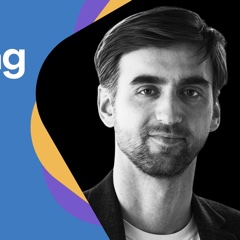
Kenneth Schlenker
Founder and CEO of Opal
Where to hear and read about Kenneth Schlenker2 episodes and tests

 Sub ClubWhy Opal Stopped Chasing Revenue to Build a Billion-User App – Kenneth Schlenker

 SubversiveHow Opal Reached $10M ARR with 11 Employees
Kenneth Schlenker is the founder and CEO of Opal, the screen time and focus app, a former Google product builder who set out to align technology with human well-being. The thing most worth learning from him is how Opal used a hard paywall to find who pays, then gave much of the product away and bet on retention, brand and word of mouth to reach a billion users.
Retention really really is the only way to have like lasting value. It's the only kind of real moat.
Why Opal Stopped Chasing Revenue to Build a Billion-User App – Kenneth Schlenker
Kenneth Schlenker: the story and the lessons
1Kenneth Schlenker's path from Google to Opal
Schlenker built addictive products at Google, then set out to undo that. He left Google in 2012 and started a fine arts and collectibles marketplace, which sold in 2017. He then built SaaS products to learn how to market and sell software at scale, and Opal in 2020 was his third business.
At Google his research team predicted the unemployment rate from search queries, and search data alone could show that a user was a pregnant woman. That showed him how much data could predict and influence behavior.
Opal began with a manifesto, not a tested product. Before any product existed he wrote a manifesto about trillion-dollar companies stealing attention. The first idea was Opal OS, a fork of Android, which proved too hard and became a VPN app in 2020.
He describes the early product as "No MVP, you know, no testing." Traction came only after the team found a specific use case on iPhone, and the relaunch came about two years later.
Apple's Screen Time API made Opal trusted and easy overnight. In 2022 an Apple-branded permission screen replaced the VPN setup most people would never do. Onboarding completion and trial start rates rose overnight, and the API gave precise usage data and let Opal show its own block screen.
The late 2022 relaunch also blended two years of learnings into one product, and more people cared about the topic than ever. He credits the permission screen, the relationship with Apple's editorial team and the timing together.
2How Opal reached $10M ARR with 11 people
Schlenker started with a hard paywall and paid ads to find who pays. Opal ran performance marketing behind a hard paywall to learn who would pay and for what. That focus took it from zero to roughly $5 to 7 million in ARR.
Early payers were ambitious people who wanted a life outside work. He says you can start paid and learn who your core user is.
Day 8 return on ad spend was the metric that mattered. With a 7-day free trial, the team checked whether ad spend paid back by day 8. The metric drove work on ad messages, onboarding, trial starts and keeping users past the trial so they did not refund.
He says "That's pretty much the only thing that really mattered" in the first phase.
He sold productivity first and well-being second. Buyers wanted productivity, which is a direct return on investment because it saves time. Opal measures that it saves users over an hour and 20 minutes a day.
In his experience it is much easier to sell productivity than well-being alone when you ask people to pay.
He reversed the Duolingo playbook because 2020 differed from 2010. Organic discovery is much harder now and willingness to pay for subscriptions is much higher. The app stores hold roughly 100,000 to 200,000 consumer subscription apps.
A Duolingo co-founder advised him to go freemium first and monetize later. He chose paid first, knowing a second step of opening up would be needed.
Opal stayed lean, and almost all of the first 11 stayed. Opal reached $10M ARR with 11 people, and little funding meant no pressure to grow too fast too soon. The team is now 24 and has shipped Android, sleep and a schools product.
He insists every engineer has published their own app, which he calls part of the fabric of the company. Early hires now recruit their own teammates and know what to look for.
3Why Schlenker moved Opal from a paywall to freemium
Paid growth caps out, so he chose reach over revenue. Heavy monetization can build a business of a few million in ARR, maybe 10 or 20. After hitting $10M ARR with about 11 people, user growth slowed, and the team asked what product could reach a billion users.
He says changing the world needs a second step that few companies take. Past a certain size the turn away from paid is complete and not easy.
He accepted paid penetration falling from 20% to 9%. Paid penetration is paying subscribers as a share of monthly active users. After going free, organic growth surged and daily active users passed 1 million.
He calls it a scary short-term drop that pays back tenfold. He gives no figures for the tenfold payback or the net revenue effect.
Free users must feel complete enough to recommend the app. His test is whether a non-paying user would recommend the app, and if not, give away more. A small, trial-like free tier loses the word-of-mouth gain.
He says free users have to be recommending the app for the freemium dynamic to pay out.
He set free limits by testing install LTV and retention together. Opal tried one to four free blocks and settled on three. Install LTV and retention across free and paid users had to rise together, which he calls really hard.
The cap sits on the feature power users value most, so free users get a full experience and heavy users still pay for more.
Free access unlocked students, now two thirds of daily users. The first segment was professionals who value saving time. Students rarely convert to paid but have large needs, and they push the app to peers and parents.
Students then asked their schools to adopt it, which opened a third segment.
His north star moved from payback speed to daily users. After the paid phase, the priority became daily active users, using a definition of active that fits the mission. The team also counts press articles and social posts that name Opal.
Marketing still tracks return on investment.
4Schlenker on retention, brand and product soul
Schlenker calls retention the only real moat for a consumer app. Opal's early retention matches or beats Duolingo, Spotify and Strava, with over a million daily active users from just over 10 million downloads. He says if a user comes back you are creating something real.
The retention rates are not given. He calls apps built only to reach a paywall short-term arbitrage.
He builds in a set order: team, brand, retention, then AI. Companies that reach billions need a team, a brand and retention before AI adds large value. Soul comes from people who care, not from headcount.
A product that is only a function is, in his view, a recipe for failure.
He argues you cannot vibe code a brand. AI builds a note app or calendar easily but cannot build the emotional pull that makes people connect. Copycats can reproduce features, not the taste.
His line is "Teams create product soul. You can't vibe code a brand."
The gemstone crack became Opal's most loved interaction. Users earn gems for focus time and crack them open at milestones. It took weeks to get right and cannot be measured directly.
The name Opal was chosen as the opposite of a warm, electric glass phone, a gemstone said to calm the mind. Schlenker says unreasonably sophisticated details are what the brand is built on, and the team picks only a few moments to polish this way.
Streaks tied to focus time were the biggest win of the year. Opal counts streaks its own way, with an animated flame rather than an emoji and gems at milestones. They lifted retention and growth.
Many apps try streaks and fail, so he treats the result as notable.
5How Opal grows beyond ads
Opal ran a user's organic video as its ad. A video made by a user inspired by the app looked like an Opal ad. Opal licensed it and added only its logo, and dozens of millions of people have seen it.
It has kept running as a top paid creative a year or two later.
Opal hired a user as a full-time creator. It spotted a user mentioning the app on TikTok and hired her to run Olivia Unplugged, a media account powered by Opal. The channels reached about 700,000 followers in a few months.
It covers focus and what to do instead of scrolling, like hobbies and making friends. Opal plans to copy the approach with other creators.
Referrals and leaderboards give users reasons to share. Inviting five friends who create accounts earns a free year of Opal Pro, and invitees get gradual rewards. Leaderboards compare screen time with friends and schools.
He says nobody knows what good screen time is, so the leaderboard gives a reference point. Word of mouth is by far the largest organic channel.
He calls the New York billboard half a failure. The Scrolling Kills billboard had no attribution, and downloads and revenue did not move. The head of a New York school was more comfortable signing after seeing it.
Opal also handed out thousands of stickers with the same message that do not mention Opal. Searching the phrase now returns mostly Opal results.
He welcomes rival screen time apps as category education. Of 5 billion smartphone owners, only a few dozen million have used a screen time app. Competitors help show the problem is real.
The bigger opening is people who say they spend too much time on their phone but balk at an app that blocks apps. Opal wants an app that needs no setup and coaches rather than restricts.
6Opal for schools and where Schlenker expands next
Opal for schools began when students asked for it. Harvard-Westlake in Los Angeles emailed Opal after students named it as how to handle a phone ban. Schlenker had only imagined working with colleges.
It began with one school and is now scaling to many US high schools. Nobody told students to use Opal.
He priced schools low because the value is the family and community. Schools pay a low per-student fee that is very competitive. The product blocks banned apps on campus and stays useful after class, which he calls bell-to-bed.
He compares it to Apple placing Macs in college libraries. Students will graduate into professionals who can afford the pro tier.
He built a sleep tab because users were already using Opal for sleep. Many people used Opal for sleep without a feature for it, so the team quietly launched a sleep tab, with sleep stories and soundscapes being built in.
A mission of aligning technology with well-being lets the product move into sleep. A screen time app mission would not.
He plans to carry the brand into health, insurers and employers. Next segments are health and lifestyle, insurers and employers. Research on screen time and productivity should draw insurers and employers who license tools for teams.
Opal began with a mission before a product, so the brand can travel. He cites Oura and Whoop, and Calm and Headspace, as examples of the path. The next 100 million users need a much easier first step.
7Schlenker's views on AI and advice to founders
He says AI must be on the user's side. Every consumer app will add AI, and the test is whether it delivers more of the core value. His rule is "If your user wins, you win."
Server-side AI adds marginal cost, so the value created has to exceed what it costs to run.
He calls the one-person billion-dollar company a lie. He rejects the idea that someone can code their way to $10M to $30M in revenue and build a massive company. Much AI-driven hypergrowth makes quick products with no retention, brand or value.
He also expects AI to make addictive apps stronger, so the need for Opal grows.
He tells first-time founders to charge early. He calls waiting to charge a typical first-founder mistake. Paying customers align the company with the people it serves.
A product with a real purpose can find a way to get paid.
He sees aligning technology with well-being as a design problem. He is optimistic that more people caring will mean more products like Opal. He says "It's just a design problem."
His biggest gap is reach, since Opal mostly talks to people with high discipline and motivation.
Why Opal Stopped Chasing Revenue to Build a Billion-User App – Kenneth Schlenker
Opal's CEO explains why the app moved from a hard paywall to freemium, aiming at a billion-user product built on retention, brand and a real team rather than short-term revenue. Paid penetration fell from 20% to 9%, yet daily active users passed a million, organic growth rose sharply, and he says the payback is tenfold.
Opal began with a manifesto, not a tested product. Before any product existed he wrote a manifesto about trillion-dollar companies stealing attention. The first idea was Opal OS, a fork of Android, which proved too hard and became a VPN app in 2020.
He describes the early product as "No MVP, you know, no testing." Traction came only after the team found a specific use case on iPhone, and the relaunch came about two years later.
Paid growth caps out, so he chose reach over revenue. Heavy monetization can build a business of a few million in ARR, maybe 10 or 20. After hitting $10M ARR with about 11 people, user growth slowed, and the team asked what product could reach a billion users.
He says changing the world needs a second step that few companies take. Past a certain size the turn away from paid is complete and not easy.
He accepted paid penetration falling from 20% to 9%. Paid penetration is paying subscribers as a share of monthly active users. After going free, organic growth surged and daily active users passed 1 million.
He calls it a scary short-term drop that pays back tenfold. He gives no figures for the tenfold payback or the net revenue effect.
Free users must feel complete enough to recommend the app. His test is whether a non-paying user would recommend the app, and if not, give away more. A small, trial-like free tier loses the word-of-mouth gain.
He says free users have to be recommending the app for the freemium dynamic to pay out.
He set free limits by testing install LTV and retention together. Opal tried one to four free blocks and settled on three. Install LTV and retention across free and paid users had to rise together, which he calls really hard.
The cap sits on the feature power users value most, so free users get a full experience and heavy users still pay for more.
Free access unlocked students, now two thirds of daily users. The first segment was professionals who value saving time. Students rarely convert to paid but have large needs, and they push the app to peers and parents.
Students then asked their schools to adopt it, which opened a third segment.
Schlenker calls retention the only real moat for a consumer app. Opal's early retention matches or beats Duolingo, Spotify and Strava, with over a million daily active users from just over 10 million downloads. He says if a user comes back you are creating something real.
The retention rates are not given. He calls apps built only to reach a paywall short-term arbitrage.
He builds in a set order: team, brand, retention, then AI. Companies that reach billions need a team, a brand and retention before AI adds large value. Soul comes from people who care, not from headcount.
A product that is only a function is, in his view, a recipe for failure.
He argues you cannot vibe code a brand. AI builds a note app or calendar easily but cannot build the emotional pull that makes people connect. Copycats can reproduce features, not the taste.
His line is "Teams create product soul. You can't vibe code a brand."
The gemstone crack became Opal's most loved interaction. Users earn gems for focus time and crack them open at milestones. It took weeks to get right and cannot be measured directly.
The name Opal was chosen as the opposite of a warm, electric glass phone, a gemstone said to calm the mind. Schlenker says unreasonably sophisticated details are what the brand is built on, and the team picks only a few moments to polish this way.
Streaks tied to focus time were the biggest win of the year. Opal counts streaks its own way, with an animated flame rather than an emoji and gems at milestones. They lifted retention and growth.
Many apps try streaks and fail, so he treats the result as notable.
Opal ran a user's organic video as its ad. A video made by a user inspired by the app looked like an Opal ad. Opal licensed it and added only its logo, and dozens of millions of people have seen it.
It has kept running as a top paid creative a year or two later.
Opal hired a user as a full-time creator. It spotted a user mentioning the app on TikTok and hired her to run Olivia Unplugged, a media account powered by Opal. The channels reached about 700,000 followers in a few months.
It covers focus and what to do instead of scrolling, like hobbies and making friends. Opal plans to copy the approach with other creators.
He calls the New York billboard half a failure. The Scrolling Kills billboard had no attribution, and downloads and revenue did not move. The head of a New York school was more comfortable signing after seeing it.
Opal also handed out thousands of stickers with the same message that do not mention Opal. Searching the phrase now returns mostly Opal results.
He welcomes rival screen time apps as category education. Of 5 billion smartphone owners, only a few dozen million have used a screen time app. Competitors help show the problem is real.
The bigger opening is people who say they spend too much time on their phone but balk at an app that blocks apps. Opal wants an app that needs no setup and coaches rather than restricts.
Opal for schools began when students asked for it. Harvard-Westlake in Los Angeles emailed Opal after students named it as how to handle a phone ban. Schlenker had only imagined working with colleges.
It began with one school and is now scaling to many US high schools. Nobody told students to use Opal.
He priced schools low because the value is the family and community. Schools pay a low per-student fee that is very competitive. The product blocks banned apps on campus and stays useful after class, which he calls bell-to-bed.
He compares it to Apple placing Macs in college libraries. Students will graduate into professionals who can afford the pro tier.
He plans to carry the brand into health, insurers and employers. Next segments are health and lifestyle, insurers and employers. Research on screen time and productivity should draw insurers and employers who license tools for teams.
Opal began with a mission before a product, so the brand can travel. He cites Oura and Whoop, and Calm and Headspace, as examples of the path. The next 100 million users need a much easier first step.
He says AI must be on the user's side. Every consumer app will add AI, and the test is whether it delivers more of the core value. His rule is "If your user wins, you win."
Server-side AI adds marginal cost, so the value created has to exceed what it costs to run.
He calls the one-person billion-dollar company a lie. He rejects the idea that someone can code their way to $10M to $30M in revenue and build a massive company. Much AI-driven hypergrowth makes quick products with no retention, brand or value.
He also expects AI to make addictive apps stronger, so the need for Opal grows.
How Opal Reached $10M ARR with 11 Employees
Opal's founder explains how a hard paywall, paid acquisition measured on day 8 ROAS, and early access to Apple's Screen Time API took a screen time app from a failed start to the world's number one in its category. The result is $10M in ARR with 11 people, then a deliberate shift to free tiers, daily active users and organic channels.
Schlenker built addictive products at Google, then set out to undo that. He left Google in 2012 and started a fine arts and collectibles marketplace, which sold in 2017. He then built SaaS products to learn how to market and sell software at scale, and Opal in 2020 was his third business.
At Google his research team predicted the unemployment rate from search queries, and search data alone could show that a user was a pregnant woman. That showed him how much data could predict and influence behavior.
Opal began with a manifesto, not a tested product. Before any product existed he wrote a manifesto about trillion-dollar companies stealing attention. The first idea was Opal OS, a fork of Android, which proved too hard and became a VPN app in 2020.
He describes the early product as "No MVP, you know, no testing." Traction came only after the team found a specific use case on iPhone, and the relaunch came about two years later.
Apple's Screen Time API made Opal trusted and easy overnight. In 2022 an Apple-branded permission screen replaced the VPN setup most people would never do. Onboarding completion and trial start rates rose overnight, and the API gave precise usage data and let Opal show its own block screen.
The late 2022 relaunch also blended two years of learnings into one product, and more people cared about the topic than ever. He credits the permission screen, the relationship with Apple's editorial team and the timing together.
Schlenker started with a hard paywall and paid ads to find who pays. Opal ran performance marketing behind a hard paywall to learn who would pay and for what. That focus took it from zero to roughly $5 to 7 million in ARR.
Early payers were ambitious people who wanted a life outside work. He says you can start paid and learn who your core user is.
Day 8 return on ad spend was the metric that mattered. With a 7-day free trial, the team checked whether ad spend paid back by day 8. The metric drove work on ad messages, onboarding, trial starts and keeping users past the trial so they did not refund.
He says "That's pretty much the only thing that really mattered" in the first phase.
He sold productivity first and well-being second. Buyers wanted productivity, which is a direct return on investment because it saves time. Opal measures that it saves users over an hour and 20 minutes a day.
In his experience it is much easier to sell productivity than well-being alone when you ask people to pay.
He reversed the Duolingo playbook because 2020 differed from 2010. Organic discovery is much harder now and willingness to pay for subscriptions is much higher. The app stores hold roughly 100,000 to 200,000 consumer subscription apps.
A Duolingo co-founder advised him to go freemium first and monetize later. He chose paid first, knowing a second step of opening up would be needed.
Opal stayed lean, and almost all of the first 11 stayed. Opal reached $10M ARR with 11 people, and little funding meant no pressure to grow too fast too soon. The team is now 24 and has shipped Android, sleep and a schools product.
He insists every engineer has published their own app, which he calls part of the fabric of the company. Early hires now recruit their own teammates and know what to look for.
Paid growth caps out, so he chose reach over revenue. Heavy monetization can build a business of a few million in ARR, maybe 10 or 20. After hitting $10M ARR with about 11 people, user growth slowed, and the team asked what product could reach a billion users.
He says changing the world needs a second step that few companies take. Past a certain size the turn away from paid is complete and not easy.
Free access unlocked students, now two thirds of daily users. The first segment was professionals who value saving time. Students rarely convert to paid but have large needs, and they push the app to peers and parents.
Students then asked their schools to adopt it, which opened a third segment.
His north star moved from payback speed to daily users. After the paid phase, the priority became daily active users, using a definition of active that fits the mission. The team also counts press articles and social posts that name Opal.
Marketing still tracks return on investment.
The gemstone crack became Opal's most loved interaction. Users earn gems for focus time and crack them open at milestones. It took weeks to get right and cannot be measured directly.
The name Opal was chosen as the opposite of a warm, electric glass phone, a gemstone said to calm the mind. Schlenker says unreasonably sophisticated details are what the brand is built on, and the team picks only a few moments to polish this way.
Opal hired a user as a full-time creator. It spotted a user mentioning the app on TikTok and hired her to run Olivia Unplugged, a media account powered by Opal. The channels reached about 700,000 followers in a few months.
It covers focus and what to do instead of scrolling, like hobbies and making friends. Opal plans to copy the approach with other creators.
Referrals and leaderboards give users reasons to share. Inviting five friends who create accounts earns a free year of Opal Pro, and invitees get gradual rewards. Leaderboards compare screen time with friends and schools.
He says nobody knows what good screen time is, so the leaderboard gives a reference point. Word of mouth is by far the largest organic channel.
He welcomes rival screen time apps as category education. Of 5 billion smartphone owners, only a few dozen million have used a screen time app. Competitors help show the problem is real.
The bigger opening is people who say they spend too much time on their phone but balk at an app that blocks apps. Opal wants an app that needs no setup and coaches rather than restricts.
He built a sleep tab because users were already using Opal for sleep. Many people used Opal for sleep without a feature for it, so the team quietly launched a sleep tab, with sleep stories and soundscapes being built in.
A mission of aligning technology with well-being lets the product move into sleep. A screen time app mission would not.
He plans to carry the brand into health, insurers and employers. Next segments are health and lifestyle, insurers and employers. Research on screen time and productivity should draw insurers and employers who license tools for teams.
Opal began with a mission before a product, so the brand can travel. He cites Oura and Whoop, and Calm and Headspace, as examples of the path. The next 100 million users need a much easier first step.
He calls the one-person billion-dollar company a lie. He rejects the idea that someone can code their way to $10M to $30M in revenue and build a massive company. Much AI-driven hypergrowth makes quick products with no retention, brand or value.
He also expects AI to make addictive apps stronger, so the need for Opal grows.
He tells first-time founders to charge early. He calls waiting to charge a typical first-founder mistake. Paying customers align the company with the people it serves.
A product with a real purpose can find a way to get paid.
He sees aligning technology with well-being as a design problem. He is optimistic that more people caring will mean more products like Opal. He says "It's just a design problem."
His biggest gap is reach, since Opal mostly talks to people with high discipline and motivation.