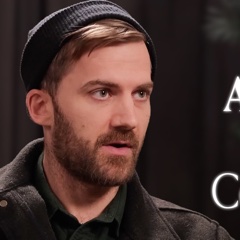
Johnny Harris
YouTube journalist and documentary storyteller, former Vox video journalist
Where to hear and read about Johnny Harris1 episode or test

Johnny Harris is a YouTube journalist and documentary storyteller, formerly of Vox, who runs a team of 25 making about 30 videos a year. The thing most worth learning from him is to write plain, active language about people doing things and to direct the visuals in the same pass, so that curiosity carries any topic.
Everything is interesting. Everything has a story. It just needs to have that life breathed into it.
Johnny Harris Reveals How He Writes YouTube Videos
Johnny Harris: the story and the lessons
1How Johnny Harris's channel is built
Harris left Vox when it grew centralized and boxed in his style. Vox gave him freedom and rigor at first. He calls the early video team a wild west petri dish, and it taught him to be factual and rigorous.
On voice, Vox only said it had to be good and cool. As the team centralized, the walls closed in and he left. He says he needs to be a stallion and finds constraint hard.
Each video runs through a four-month pipeline with a four-day writing core. A video moves from pitch to research to script to edit. A researcher spends 3 to 4 weeks building a 60 to 80 page info doc, and scripting is 3 to 4 days of writing, visual direction and art direction.
The edit goes through radio edit, rough cut, fine cut, audio lock and picture lock, with about 150 notes per cut. Everything is scheduled six months ahead for roughly 30 videos a year.
Harris writes for the ear because he has only ever written for video. He is very dyslexic, so he listens to audiobooks and dictates to his phone. When he writes, he speaks the line in his mind and visualizes it at the same time.
He does not know what a purely read piece would look like. A book is a 'maybe someday'.
He hires scrappy self-taught people and keeps the team's polish loose. The team of 25 is mostly editors and animators, plus a visual producer, researchers and a business side. He avoids people from traditional TV.
The team sets a high standard, does a few rounds, then moves on. He says overly branded, perfect work 'wouldn't be us'.
Harris built a shared vocabulary so his vision survives handoff to the team. Each video's art direction is written in words first, then the visual producer, Alex, turns it into a mood board. Words like 'cozy' and 'moody' now mean the same thing to everyone.
In the first years of having a team, the vision didn't carry and the results were bad. His first draft is just screenshots he grabs while writing, from Google image searches, Pinterest and old videos.
2How Johnny Harris writes a video script
He writes a two-column script: narration left, visual direction right. Each row is a sentence or two of prose, with the matching animation note or annotated reference screenshot beside it. He calls the right column coding, and says every word must pair with a motion or action on screen.
The team builds a 'shame cut' straight from it, with voiceover, screenshots of the right column and music on a timeline. His wife, the company's executive producer, gives feedback on flow, clarity and story, and length gets cut at that stage.
He writes who did what to whom, not concepts. Following Steven Pinker, he writes 'they fled' instead of 'the migration of 6,000 Mormons', and replaces 'globalization' with America sending Ford to Japan.
He calls Pinker's The Sense of Style 'my entire Bible of writing'. People acting hit the visual brain, while concepts stay vague.
He opens with action and tone, never a preview. His Mormon video begins 'It started with the murder of their prophet in Illinois', not 'I want to tell you the story of the Mormons'. The script marks gunshot, suspenseful sound and slow motion.
History gives him a ready backbone because chronology settles where he starts and ends. About a third of his videos are like this, and he calls fighting for structure on the others brutal.
He loads each group with motives so tension builds before anything happens. The Mormons and the federal government become map icons. The Mormons carry fear for their spiritual vision, and the government carries a drive to expand west.
The viewer feels 'here they come' as the government icon moves toward them. Short modern dialogue stands in for a four-year lobbying effort.
He imagines the viewer's reaction to every word. He wrestled over adding 'husband to 40 wives' to the opening line. It risked the polygamy trope for believing Mormons, but he judged most viewers would find it fascinating and hooked.
He calls empathizing with the viewer as each fact lands his most important sensibility.
Every claim stays red until it has a citation, and the sources are published. Claims turn green with a citation tag once checked, and some carry three or four checks, from academic articles to census data. The team publishes a source doc so viewers can scrutinize it.
They built the process after learning the hard way that things fall through the cracks when production is high.
He ends on reflection and holds praise and criticism in one sentence. The music signals 'conclusion energy'. One sentence pairs a 'beautiful Valley' with a 'sugarcoated version of this history'.
His wife pushed him not to apologize too much, so the Mormon video's conclusion also names the exploitation of women, children and native people. He says viewers are tired of one-sided rants.
3How Harris packages and holds attention
He settles the reason to click before he writes the story. He tests two or three packagings and drafts seven or more titles, most starting with 'how' or 'why'. He checks past videos on tools like 1 of 10 and ViewStats.
The Saudi Arabia video promised to explain a trillion-dollar desert city, then led viewers into oil history and the resource curse. He calls this folding in the vegetables.
He restates the headline promise in the first minute and pays it off. He does not answer the title in ten seconds, but within a minute he reinforces what the thumbnail promised. The full answer comes by the end.
Packaging that outruns the video makes viewers feel betrayed. A Mormon video got about 50x the channel's normal views, which the team thinks came from its packaging.
He talks like a curious friend and assumes the viewer is smart. He uses lines like 'let me show you', paired with a circle or shine on the object. He sees much journalism as language written for peers to show how much the writer knows.
He borrows Cleo Abram's line that people overestimate the audience's context and underestimate its intelligence. Saying 'we're learning together' puts viewers in a space of better absorption.
He climbs the canal wall to find fresh words for familiar facts. Most writers sit at the bottom of the canal, using words heard a million times, like an LLM filling in the next word. His Antarctica video was written as if an alien were marveling at a precise map.
The intro calls it 'an impossibility made manifest by superhumans in the future'. The topic could easily have been jargon about a British explorer and satellite mapping.
He drops in one concrete detail to make abstract news visible. He admires an Economist line noting the new Syrian leader's palace is five times the size of the White House, with no staff to serve coffee. 'Unifying a country' shows the reader nothing.
He says including a detail that might fall flat takes bravery.
He alternates a precise explainer voice with a softer human one. On Okinawa he set undetonated bombs next to abandoned bones. He calls the switch between thinky and feeling 'sweet and sour', and says people remember what they felt.
He describes his mode as contemplative, surfacing paradoxes in human stories where news reduces events to faceless forces.
He simplifies on purpose and accepts the loss. Making complex politics plain and visual means reducing it, and he says there is no easy line for what is too simple. Poetic moments signal that a deeper story sits underneath.
In his words: 'I rest good at night knowing that I'm making these stories accessible even if I'm simplifying them'.
He guards his early curiosity against the curse of knowledge. Every project hits a point where facts and art direction make it far less cool than the first rough vision. He remembers what it felt like not to know and pushes that curiosity up the other side of the valley.
His style comes from how he wished things had been explained to him, since he resented know-it-alls who used big words.
4Harris's work habits and what he changed
He protects a 9 to 2 writing block with no meetings, Slack or email. It runs three days a week, sometimes four. He clears his desk, takes a ten-minute ramp-up, and plays his composer's music or synthwave mixes.
He wakes nervous 'like I'm in the locker room'. He admits it is a bit voodoo, that an afternoon block would not work, and that the system fails if he misses it.
He uses a hard four-day deadline to sharpen his writing. A year of four videos a month in three-day sprints made the team good fast, because they could not be precious. The cost is dread on day two or three if he hasn't cracked the explanation.
They now make about 30 videos a year instead of 48, so some weeks can run longer.
He stopped over-scripting on location after his 2018 Hong Kong shoot. He recorded every date, fact and explanation on camera, got every shot, and couldn't wrestle with the story afterward. On Vox's Borders he pre-produced every shot and the story got shoehorned into his scaffold.
He now reacts in the field and writes the narration word for word at home once it has settled. For Finland he deliberately set no framing in advance.
He talks his field notes into his phone instead of typing. He dictates for minutes at a time into Apple Notes, because every interview changes his mind about what the story is.
He sometimes finds he never pressed the microphone button and has to repeat himself.
He dialed back data optimization when it drained his passion. Optimizing to 17 videos in flight made him feel he was manufacturing passion. The team dialed back and accepted him as the bottleneck.
They went down data-driven rabbit holes several times, such as thumbnail testing, and kept a few lessons each time. Craft stays first, and he still has to feel a story 'in my belly'.
His next growth edge is letting other people's lived stories carry the work. His process funnels everything through one pair of eyes, and he says 'I'm just one brain'. He has favored how things work over what it feels like to be someone.
He wants to help people with strong stories tell them, and two more channels have launched beyond his own as a media company for journalists with individual brands.
He bets audiences will keep wanting a human telling stories. Computers beat humans at chess in the 80s, yet people still watch two humans play for the tension. He expects journalism and storytelling to stay such a pocket.
His advice is to find something you care about as much as he cares about his stories, and put in the reps, because early work is bad.

Johnny Harris Reveals How He Writes YouTube Videos
Johnny Harris walks through how he writes a 20 to 30 minute video, from a package-first pitch to a two-column script where every sentence is paired with a visual. The technique worth hearing is writing in active, who-did-what-to-whom language and coding the visuals beside the prose as he writes.
Harris left Vox when it grew centralized and boxed in his style. Vox gave him freedom and rigor at first. He calls the early video team a wild west petri dish, and it taught him to be factual and rigorous.
On voice, Vox only said it had to be good and cool. As the team centralized, the walls closed in and he left. He says he needs to be a stallion and finds constraint hard.
Each video runs through a four-month pipeline with a four-day writing core. A video moves from pitch to research to script to edit. A researcher spends 3 to 4 weeks building a 60 to 80 page info doc, and scripting is 3 to 4 days of writing, visual direction and art direction.
The edit goes through radio edit, rough cut, fine cut, audio lock and picture lock, with about 150 notes per cut. Everything is scheduled six months ahead for roughly 30 videos a year.
Harris writes for the ear because he has only ever written for video. He is very dyslexic, so he listens to audiobooks and dictates to his phone. When he writes, he speaks the line in his mind and visualizes it at the same time.
He does not know what a purely read piece would look like. A book is a 'maybe someday'.
He hires scrappy self-taught people and keeps the team's polish loose. The team of 25 is mostly editors and animators, plus a visual producer, researchers and a business side. He avoids people from traditional TV.
The team sets a high standard, does a few rounds, then moves on. He says overly branded, perfect work 'wouldn't be us'.
Harris built a shared vocabulary so his vision survives handoff to the team. Each video's art direction is written in words first, then the visual producer, Alex, turns it into a mood board. Words like 'cozy' and 'moody' now mean the same thing to everyone.
In the first years of having a team, the vision didn't carry and the results were bad. His first draft is just screenshots he grabs while writing, from Google image searches, Pinterest and old videos.
He writes a two-column script: narration left, visual direction right. Each row is a sentence or two of prose, with the matching animation note or annotated reference screenshot beside it. He calls the right column coding, and says every word must pair with a motion or action on screen.
The team builds a 'shame cut' straight from it, with voiceover, screenshots of the right column and music on a timeline. His wife, the company's executive producer, gives feedback on flow, clarity and story, and length gets cut at that stage.
He writes who did what to whom, not concepts. Following Steven Pinker, he writes 'they fled' instead of 'the migration of 6,000 Mormons', and replaces 'globalization' with America sending Ford to Japan.
He calls Pinker's The Sense of Style 'my entire Bible of writing'. People acting hit the visual brain, while concepts stay vague.
He opens with action and tone, never a preview. His Mormon video begins 'It started with the murder of their prophet in Illinois', not 'I want to tell you the story of the Mormons'. The script marks gunshot, suspenseful sound and slow motion.
History gives him a ready backbone because chronology settles where he starts and ends. About a third of his videos are like this, and he calls fighting for structure on the others brutal.
He loads each group with motives so tension builds before anything happens. The Mormons and the federal government become map icons. The Mormons carry fear for their spiritual vision, and the government carries a drive to expand west.
The viewer feels 'here they come' as the government icon moves toward them. Short modern dialogue stands in for a four-year lobbying effort.
He imagines the viewer's reaction to every word. He wrestled over adding 'husband to 40 wives' to the opening line. It risked the polygamy trope for believing Mormons, but he judged most viewers would find it fascinating and hooked.
He calls empathizing with the viewer as each fact lands his most important sensibility.
Every claim stays red until it has a citation, and the sources are published. Claims turn green with a citation tag once checked, and some carry three or four checks, from academic articles to census data. The team publishes a source doc so viewers can scrutinize it.
They built the process after learning the hard way that things fall through the cracks when production is high.
He ends on reflection and holds praise and criticism in one sentence. The music signals 'conclusion energy'. One sentence pairs a 'beautiful Valley' with a 'sugarcoated version of this history'.
His wife pushed him not to apologize too much, so the Mormon video's conclusion also names the exploitation of women, children and native people. He says viewers are tired of one-sided rants.
He settles the reason to click before he writes the story. He tests two or three packagings and drafts seven or more titles, most starting with 'how' or 'why'. He checks past videos on tools like 1 of 10 and ViewStats.
The Saudi Arabia video promised to explain a trillion-dollar desert city, then led viewers into oil history and the resource curse. He calls this folding in the vegetables.
He restates the headline promise in the first minute and pays it off. He does not answer the title in ten seconds, but within a minute he reinforces what the thumbnail promised. The full answer comes by the end.
Packaging that outruns the video makes viewers feel betrayed. A Mormon video got about 50x the channel's normal views, which the team thinks came from its packaging.
He talks like a curious friend and assumes the viewer is smart. He uses lines like 'let me show you', paired with a circle or shine on the object. He sees much journalism as language written for peers to show how much the writer knows.
He borrows Cleo Abram's line that people overestimate the audience's context and underestimate its intelligence. Saying 'we're learning together' puts viewers in a space of better absorption.
He climbs the canal wall to find fresh words for familiar facts. Most writers sit at the bottom of the canal, using words heard a million times, like an LLM filling in the next word. His Antarctica video was written as if an alien were marveling at a precise map.
The intro calls it 'an impossibility made manifest by superhumans in the future'. The topic could easily have been jargon about a British explorer and satellite mapping.
He drops in one concrete detail to make abstract news visible. He admires an Economist line noting the new Syrian leader's palace is five times the size of the White House, with no staff to serve coffee. 'Unifying a country' shows the reader nothing.
He says including a detail that might fall flat takes bravery.
He alternates a precise explainer voice with a softer human one. On Okinawa he set undetonated bombs next to abandoned bones. He calls the switch between thinky and feeling 'sweet and sour', and says people remember what they felt.
He describes his mode as contemplative, surfacing paradoxes in human stories where news reduces events to faceless forces.
He simplifies on purpose and accepts the loss. Making complex politics plain and visual means reducing it, and he says there is no easy line for what is too simple. Poetic moments signal that a deeper story sits underneath.
In his words: 'I rest good at night knowing that I'm making these stories accessible even if I'm simplifying them'.
He guards his early curiosity against the curse of knowledge. Every project hits a point where facts and art direction make it far less cool than the first rough vision. He remembers what it felt like not to know and pushes that curiosity up the other side of the valley.
His style comes from how he wished things had been explained to him, since he resented know-it-alls who used big words.
He protects a 9 to 2 writing block with no meetings, Slack or email. It runs three days a week, sometimes four. He clears his desk, takes a ten-minute ramp-up, and plays his composer's music or synthwave mixes.
He wakes nervous 'like I'm in the locker room'. He admits it is a bit voodoo, that an afternoon block would not work, and that the system fails if he misses it.
He uses a hard four-day deadline to sharpen his writing. A year of four videos a month in three-day sprints made the team good fast, because they could not be precious. The cost is dread on day two or three if he hasn't cracked the explanation.
They now make about 30 videos a year instead of 48, so some weeks can run longer.
He stopped over-scripting on location after his 2018 Hong Kong shoot. He recorded every date, fact and explanation on camera, got every shot, and couldn't wrestle with the story afterward. On Vox's Borders he pre-produced every shot and the story got shoehorned into his scaffold.
He now reacts in the field and writes the narration word for word at home once it has settled. For Finland he deliberately set no framing in advance.
He talks his field notes into his phone instead of typing. He dictates for minutes at a time into Apple Notes, because every interview changes his mind about what the story is.
He sometimes finds he never pressed the microphone button and has to repeat himself.
He dialed back data optimization when it drained his passion. Optimizing to 17 videos in flight made him feel he was manufacturing passion. The team dialed back and accepted him as the bottleneck.
They went down data-driven rabbit holes several times, such as thumbnail testing, and kept a few lessons each time. Craft stays first, and he still has to feel a story 'in my belly'.
His next growth edge is letting other people's lived stories carry the work. His process funnels everything through one pair of eyes, and he says 'I'm just one brain'. He has favored how things work over what it feels like to be someone.
He wants to help people with strong stories tell them, and two more channels have launched beyond his own as a media company for journalists with individual brands.
He bets audiences will keep wanting a human telling stories. Computers beat humans at chess in the 80s, yet people still watch two humans play for the tension. He expects journalism and storytelling to stay such a pocket.
His advice is to find something you care about as much as he cares about his stories, and put in the reps, because early work is bad.